FEEL IT.STREAM
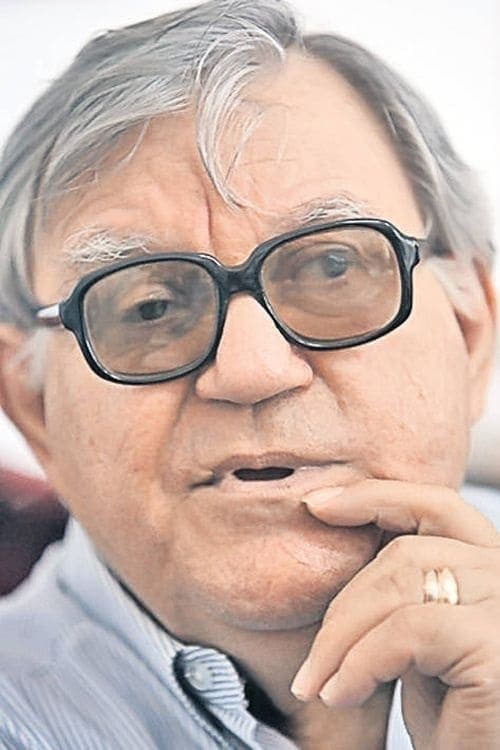
Geo Saizescu

Geo Saizescu

Directing

Biography

Geo Saizescu (14 November 1932 – 23 September 2013) was a Romanian film director, screenwriter, and actor. He appeared in 22 films between 1963 and 2009 and directed 16 films between 1956 and 2012. He was born in Prisăceaua, Mehedinți County in 1932, the twelfth child of his parents; his father was a notary in the village. After his secondary studies at the Traian High School in Turnu Severin, he studied at the I.L. Caragiale Institute of Theatre and Film Arts (IATC) in Bucharest, film directing department, graduating in 1957. He made his directorial debut in 1956 with the film Aventurile bravului soldat Svejk; in 1958 he wrote the script and directed the film Doi vecini [ro]. In 2002 he was awarded the National Order of Faithful Service, Knight rank. He died at the age of 80 in Bucharest and was buried in the cemetery at Cernica Monastery [ro], in nearby Pantelimon. Saizescu was the founder of the Faculty of Arts at the Hyperion University [ro] in Bucharest; the faculty now bears his name. His son, Cătălin Saizescu [ro] (born in 1976) is an actor, film director, and producer.
Known For

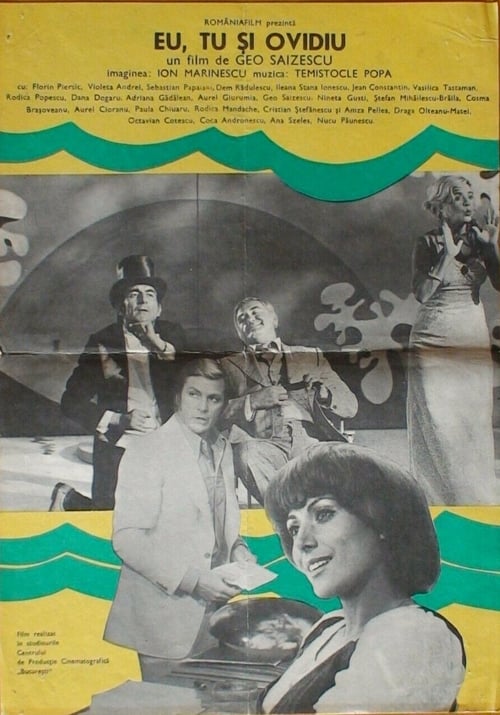
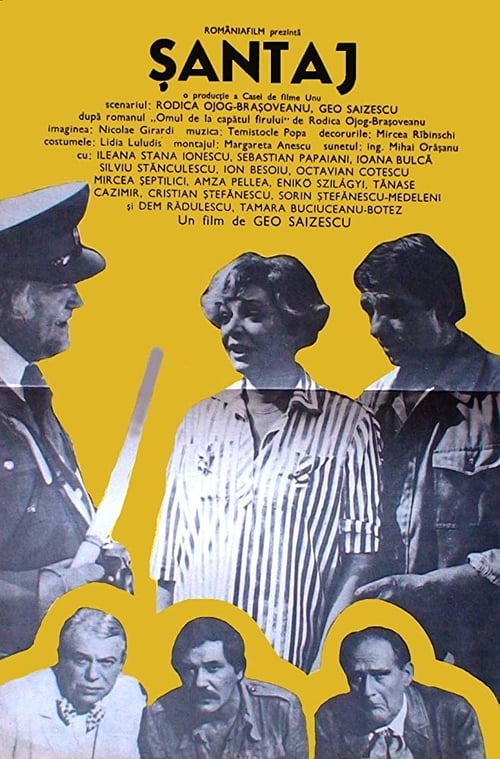
Blackmail
7.1

A gang falsifies college degrees and sells them. They also help their careers, so that later they can blackmail them to obtain industrial espionage.

Blackmail

1981
No image
7.3

A group of geologists are in a prospecting expedition. Their personalities are explored as well.

At the Gates of Earth

1965
No image
8.0

No description available.

Călătorie de neuitat

1994
The Secret of Bacchus
7.8

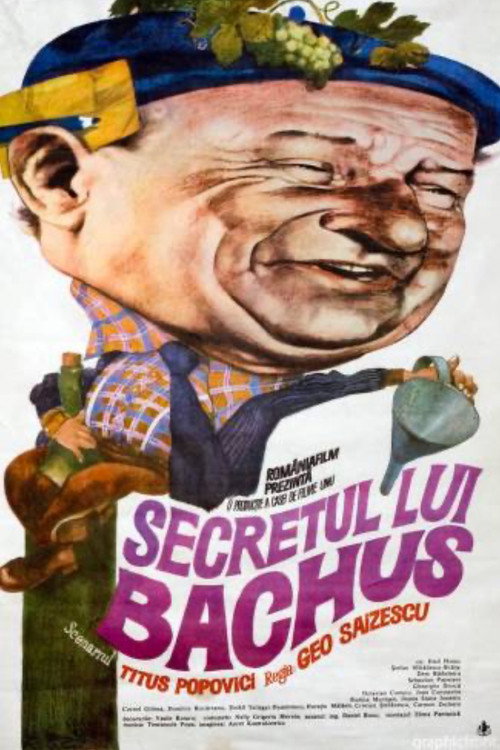
Victor, an incisive journalist, discovers a series of irregularities in a State farming enterprise. His investigations will unmask the fraud committed by the person in charge of the wine section, called Bachus. Although aided by an impressive number of cronies, Bachus will not be able to hide forever infamous secret.

The Secret of Bacchus

1984
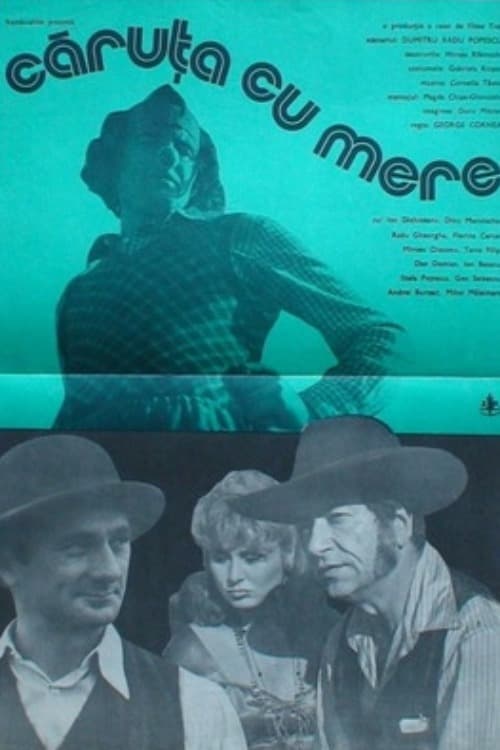
Căruța cu mere
5.8

Romania in the year 1947: two years after the end of the second World War, the King (Mihai of Hohenzollern and Romania) has to leave the country, the communism is knocking at the door, and in these uncertain times, two young people are fighting to get their dream become real artists.

Căruța cu mere

1983
Secretul lui Nemesis
7.4

The administrator of a huge apartment block in Bucharest, a former great Communist Party activist, now in disgrace, eliminated from politics and perched at the head of a tenants' association, through methods he used in his former political positions - blackmail and anonymous letters - a sex obsessed man, ends up terrorizing honest people, people who are looking for justice. Will they find it?

Secretul lui Nemesis

1987
Hurry Slowly
7.9

An important man, always in a hurry, but especially when behind the wheel, runs over a strange pedestrian: a young globe-trotting, absent-minded young man who is treading firmly, but in the wrong place, on the wide road. After hesitating for a moment, the man behind the wheel turns back to the scene and can't find his victim. Out of nowhere, however, the victim appears in the man's life, upsetting an entire family with dramatic and comic-sentimental entanglements.

Hurry Slowly

1981
Bucharest Identity Card
7.7

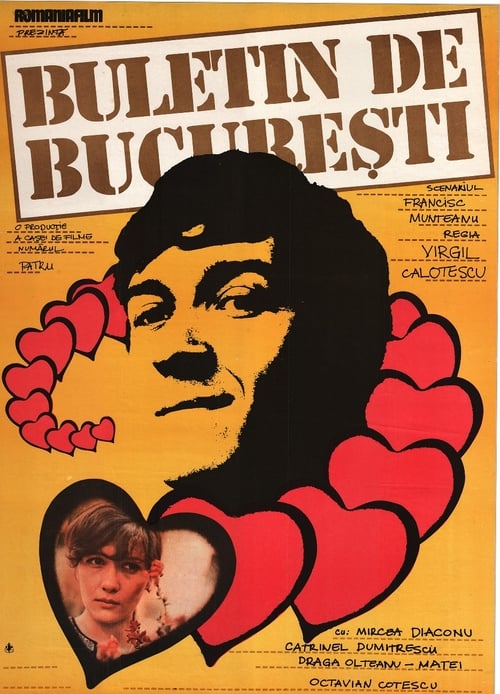
A provincial young girl, a farming engineer, does not want to return to the countryside on graduating, but stay in the capital. But she needs a Bucharest identity card to do this. Her solution is to "buy" a husband...

Bucharest Identity Card

1982
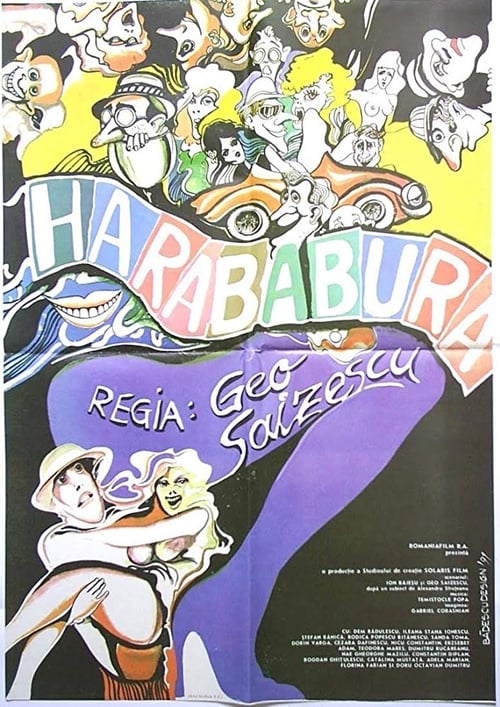
Harababura
6.3

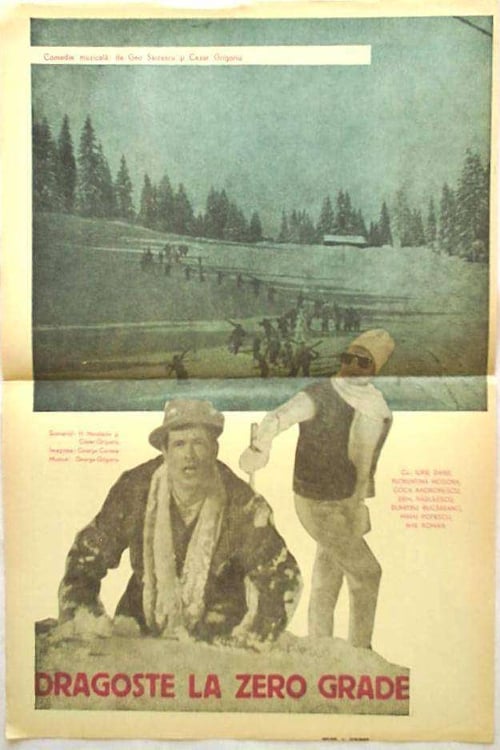
A few unrelated groups of people leave for vacation from Bucharest for the mountains. They meet by chance in Poiana Brașov.

Harababura

1990
Tonight We'll Celebrate in the Family
6.7

The main characters are two "Don Juans", professional "fiancees", who travel the country in search of desperate women willing to spend money to find their soulmates.

Tonight We'll Celebrate in the Family

1972
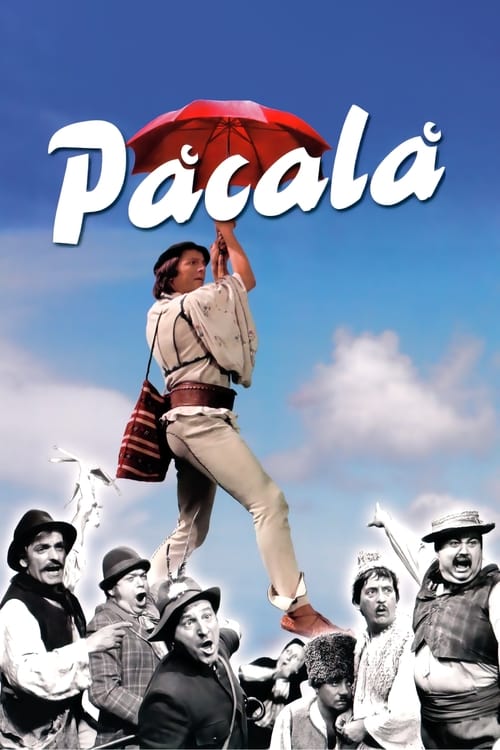
Păcală
7.1

Pacala is an important hero in Romanian popular tradition. He is always making fun of everything wrong with the human behaviour such as stupidity, greed or vanity. His attitude and actions always bring damages to the mean, evil and materialistic people. So beside the jokes, the movie has this philosophical layer, undoubtedly because Pacala's independent way of being, free spirit and his love for the nature creates a way of seeing life, bringing joy. Filmed in a very beautiful part of Romania in 1974, the movie had an important success at that time and it is considered one of the most loved movies in Romania ever. Like the hero, found in many stories and jokes, the movie forwards the spirit of true freedom and pure link with the nature, forgetting about times and governments.

Păcală

1974
Păcală se întoarce
7.3

Păcală, a young man without too many expectations from life, is tired of wandering around the world and driven by the longing for his parental home he decides to return to his homeland, from somewhere "outside" - a timeless space located outside the borders of Romania.

Păcală se întoarce

2006
On the Left Bank of the Blue Danube
6.6

The search for a list of Nazi spies that had been hidden in the house of a widowed noblewoman.

On the Left Bank of the Blue Danube

1983
Celebrul 702
6.2

In the imaginary country of "Allergica", a group of gangsters have made a fat hit by pinning the blame on the Kid, who awaits execution in the terrible "Bing-Bing" prison. At the last moment the electric chair is unplugged because the lawyer has persuaded the doomed man to dictate his gangster memoirs for the use of the Books & Books publishing house. Its director offers him a "bonus to life" only if he plays along. But the Kid prefers to write about truth, people and love.

Celebrul 702

1962
The Pale Light of Sorrow
6.4

Summer 1913, in a village near Buzăul. Ionica, the schoolteacher's son, witnesses the hard life of the poor villagers. The war is coming and his landless neighbors have to work 16 hours a day at the oil wells for miserable wages. Is there hope for them?

The Pale Light of Sorrow

1980
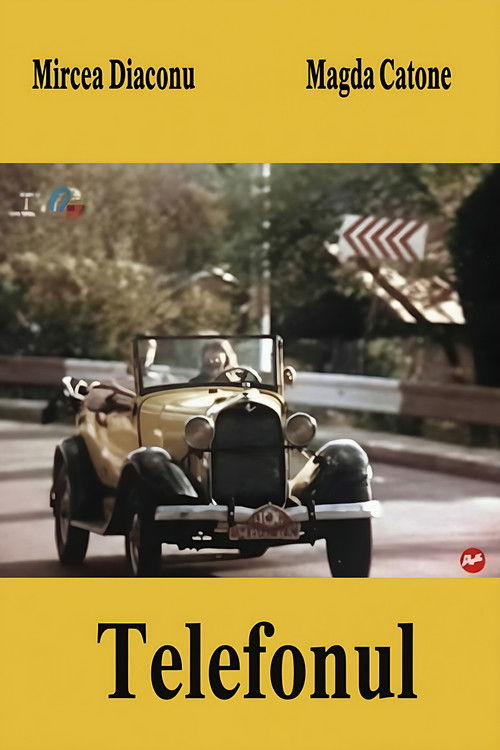
The Telephone
7.3

A young, single engineer divides his time between work and an uneventful schedule at home, where TV is front and center. One rainy evening he is disturbed by a woman's phone call and finds himself drawn into an adventure full of the unexpected.

The Telephone

1992
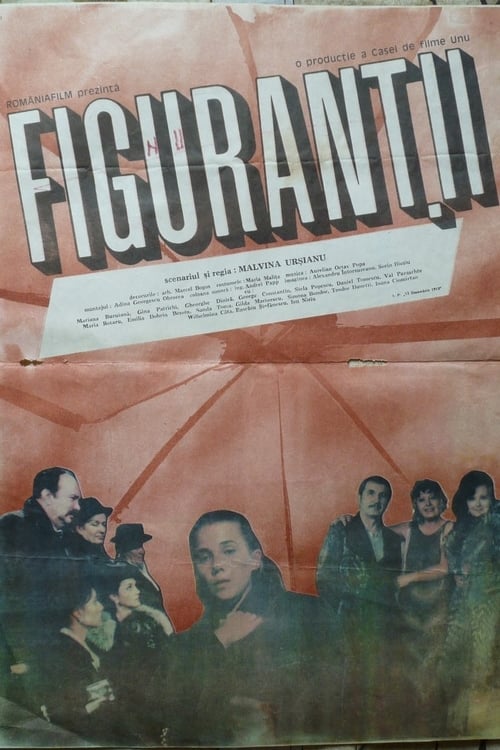
The Extras
8.2

After 1950, when the comunist regime is fully entrenched, some Bourgeois descendants have to make a living being movie extras. Continuation of "On the Left Bank of the Blue Danube"

The Extras

1987
The Second Fall of Constantinople
7.3

Caught up in the crazes of the "transition", Suflețel also dreams of great adventure. When he learns that his old friend Ismail is his son's real father, Suflețel plans to flee the country. But in Istanbul, he stumbles upon the miraculous money machine...

The Second Fall of Constantinople

1994
Your Part of the Blame
7.3

This movie follows the story of a young man - Mihai Brad, who works for a industrial plant. He reaches a turning point in his life when his bosses discuss his admittance in the Young Worker Union, a communist organization, which can help propel his career forward. Mihai calls to remembrance his early days of his job after leaving his village with dreams of having his own house and a decent life. He first starts low as a unqualified worker and each month he saves all his money. The UTM organization tries to convince him to improve his skills become a qualified worker but he refuses saying that he soon wants to go back to his village and be a shepherd.

Your Part of the Blame

1963
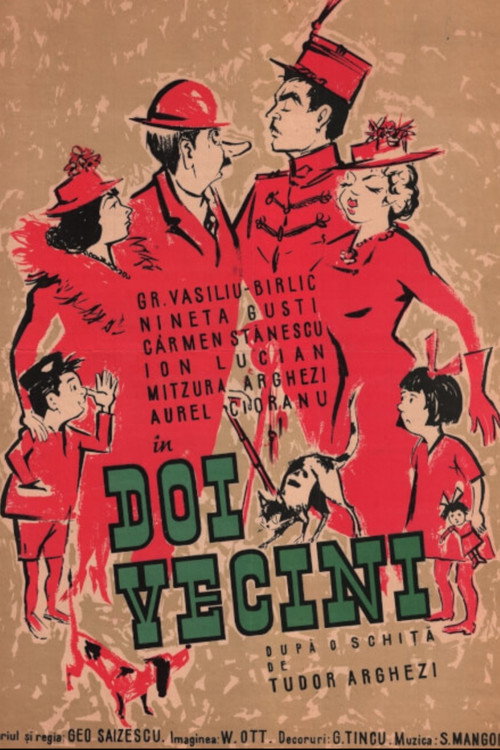
Doi vecini
7.8

Adaptation based on the sketch "Doi vecini" by Tudor Arghezi.

Doi vecini

1959