Tonino De Bernardi
Directing
Biography
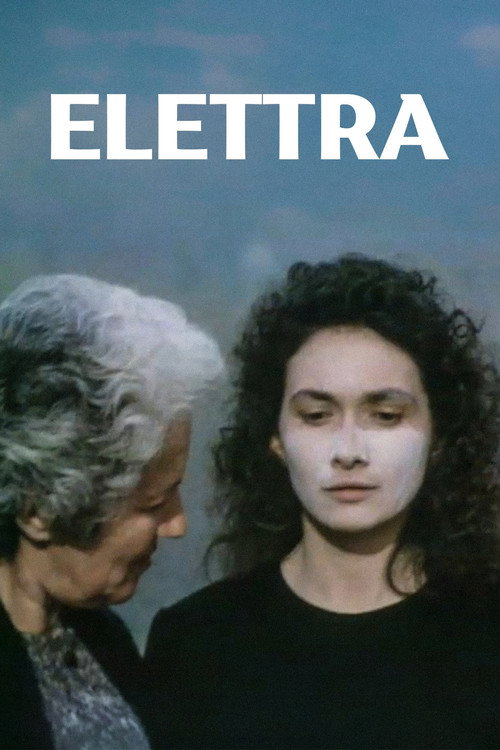
Tonino De Bernardi (1937, Italy) made his first work at the end of the 1960s. His underground films were often projected in museums and art galleries. In his films, De Bernardi mixes life with his interest in literature, music and art. In 1987 he made his first official feature, Elettra, after Sophocles.
Known For

A video by Tonino De Bernardi
Ventaglio

Cinématon is a 156-hour long experimental film by French director Gérard Courant. It was the longest film ever released until 2011. Composed over 36 years from 1978 until 2006, it consists of a series of over 2,821 silent vignettes (cinématons), each 3 minutes and 25 seconds long, of various celebrities, artists, journalists and friends of the director, each doing whatever they want for the allotted time. Subjects of the film include directors Barbet Schroeder, Nagisa Oshima, Volker Schlöndorff, Ken Loach, Benjamin Cuq, Youssef Chahine, Wim Wenders, Joseph Losey, Jean-Luc Godard, Samuel Fuller and Terry Gilliam, chess grandmaster Joël Lautier, and actors Roberto Benigni, Stéphane Audran, Julie Delpy and Lesley Chatterley. Gilliam is featured eating a 100-franc note, while Fuller smokes a cigar. Courant's favourite subject was a 7-month-old baby. The film was screened in its then-entirety in Avignon in November 2009 and was screened in Redondo Beach, CA on April 9, 2010.

Cinématon

This exhibition focuses on Jonas Mekas’ 365 Day Project, a succession of films and videos in calendar form. Every day as of January 1st, 2007 and for an entire year, as indicated in the title, a large public (the artist's friends, as well as unknowns) were invited to view a diary of short films of various lengths (from one to twenty minutes) on the Internet. A movie was posted each day, adding to the previously posted pieces, resulting altogether in nearly thirty-eight hours of moving images.
365 Day Project

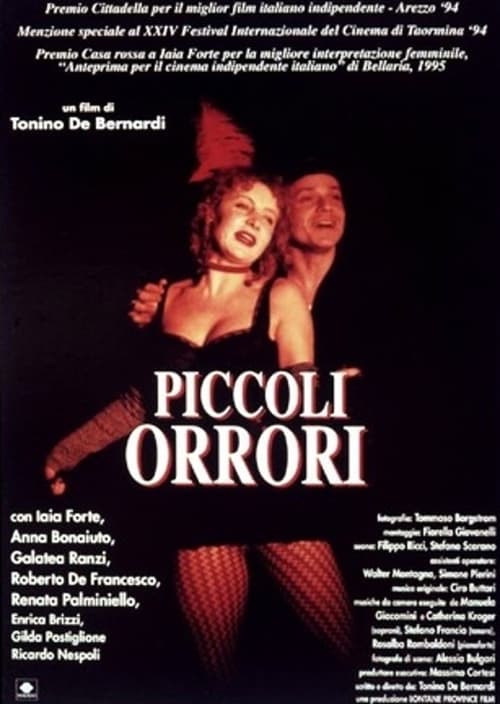
A woman in her flooded kitchen thinks of Ophelia and death by drowning. A nun wonders about her vocation. A girl, dumb by choice, walks around in Naples. A ballerina in a wheelchair. Three youths around a bonfire in a little island. A man secluded in a tower waiting for the end of the world. And many other stories.
Little Horrors

Pina was born in Portugal but now lives in poor circumstances in Naples. Pina has two daughters, Rosa, who has been wearing a wedding dress since she was left stranded at the altar several years ago, and Caterina, who murdered a man who wronged her as he left the church following his wedding. Caterina winds up in prison alongside Maddalena, a prostitute who witnessed the murder and was inspired to kill a man in her own life who had hurt her. The incidents from these women's lives are interspersed with another story, set in 1929 and filmed in black-and-white, about a man who shoots his wife in a movie theater and must run to avoid the police.
Appassionate
The film is a rendition of Resurrection, Tolstoy’s last novel. It begins with a reading of the beginning of the first part in Naples, in September 2012. It moves on to Berlin, Locarno 2013, Oneglia, Paris, Casalborgone, and it ends in Milan with the beginning of the second part. The places and times change, and so do the people doing the reading. But also, in the middle, real people and voices surface, like Adamo Vergine at his home and Jean François Neplaz in Marseilles. The film searches for the possible faces of Tolstoy’s two protagonists in Oneglia, Procida, and Casalborgone.
Resurrection

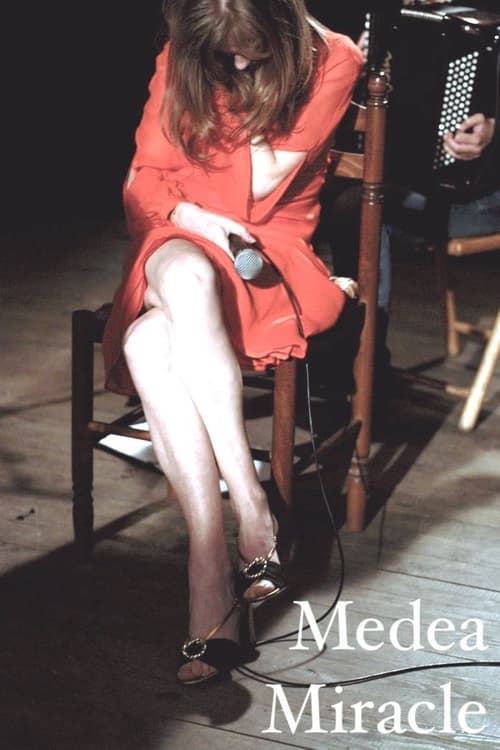
Irene moves to Paris to begin a new life with her husband Jason and their two daughters, but an act of betrayal and her desire for revenge soon sends her to the brink of madness.
Medea Miracle

Giovanni, a young boy who left Sicily for Bolzano to perform his military service , arrives five days early and is forced to stay outside the barracks before the official day of the call-up. Between surreal encounters and situations of all kinds, Giovanni is the protagonist of various events and movements from various cities and countries; however, once he returns to Bolzano, the boy decides not to show up for the call and flees to Australia where his cousin Vince lives and works.
Cinque Giorni Di Tempesta

This is a story about a Neapolitan guy, Antonello, immigrant in Turin, who, for a living, hooks on the street as Rosatigre. Sasà, a friend of his, tries to bring him back to Naples, but, after a tortured decision, Antonello chooses to come back North and to keep living “on the street”.
RosaTigre

No description available.
Lei
A film commissioned by the Centre Pompidou, where the director captures moments of his daily life and of his relatives.
Où en êtes-vous, Tonino De Bernardi?

A young woman wanders down an endless corridor, while other people knock at a door at night. A man takes a picture of Montmartre, two women hand him some money, while a patron manages from rue de Mhyra a network of Italian call girls. Adiba sings an ancient Moroccan song in a room full of children, while Vidya is performing her daily puja in Pune (India). Giuli sings to herself as she drives at night through Turin and runs to the station at day. Parallel stories where every character is caught “in a situation,” closed.
Home Sweet Home
No description available.
You Are My Destiny

Betty, a famous brasilian 'telenovelas' star, is in search of her twin sister Marlene, who vanished when the kids were four years old (Marlene is now a prostitute). Fragments of other stories, like that of an italian traveller Filippo who left in Italy Giuli, pregnant, and claims to have a split-personality, are inter-twined with the main one
Marlene de Sousa

"The Man With The Golden Eye" tells the extraordinary figure of Marco Melani through a live projection of materials collected in over ten years of research. Found footage, unpublished interviews with cinema and television personalities, fragments of films, extracts from television programs, photographs, readings and interventions by the author, intertwine giving voice to a chorus of precious testimonies.
Marco Melani - The Man With The Golden Eye
A Neopolitan hustler named Antonello is living his life in Torino. He turns tricks as a transvestite, using the name Rosatigre, or more commonly, Rosa. His closest pal is Wanda, who exercises the same “profession” and, being his best friend, is also the incarnation of his feminine alter ego. While we watch the two of them hanging out on the street, sweet and carefree as the young Moll Flanders, we eavesdrop on their exchange of confidences and learn the secret details of their private lives. Wanda could have been a teacher but she preferred the street, where she can indulge her sentimental, dreamy nature in sighing over the "Americano" she once met in Naples, for whom she still carries a torch.
Working the Streets

For Filmmaker Film Festival (2023), Fulvio Baglivi and Cristina Piccino asked some filmmakers (R. Beckermann, J. Bressane, D’Anolfi/Parenti, T. De Bernardi, L. Di Costanzo, A. Fasulo, F. Ferraro, M. Frammartino, S. George, ghezzi/Gagliardo, C. Hintermann, G. Maderna, A. Momo, A. Rossetto, M. Santini, C. Simon, S. Savona) to give us their own "lost road," that is, a sequence, scene or piece of editing that did not later find its way into the final version of one of their works. Each fragment has its own accomplished presence, often has a different title from the film it was made for, which is not necessary to have seen in order to find meaning; on the contrary, those who set out thinking they know the world they are walking through will find themselves displaced.
Strade perdute - Filmmaker 23
Independent documentary about the hidden side of the 1990 FIFA World Cup.
Italia '90: lavori in corso

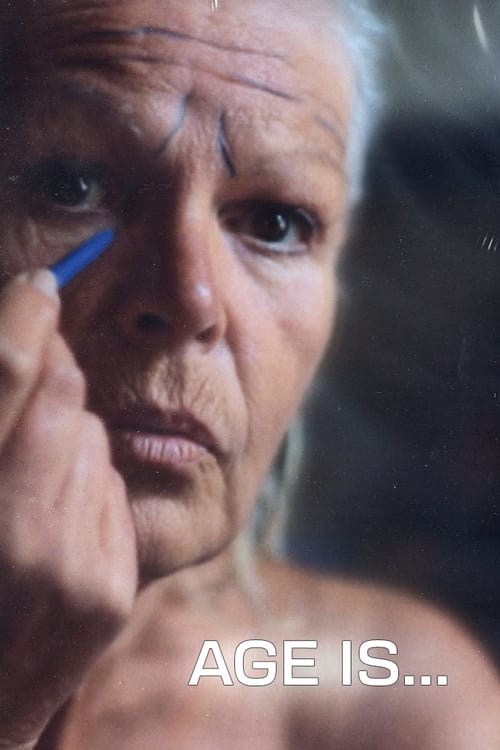
Stephen Dwoskin’s final film is a meditation on the subjective experience and cultural concepts of ageing. The film is an ode to the texture, the beauty, the singularity of aging faces and silhouettes, a hypnotic poem in the Dwoskin meaning of the term which is long observations of very tiny details. A gesture, a pause, a look, a moment. Throughout his films intimacy has always played a leading role and this is also true for Age is..., all the faces being close friends, or close friends relatives and sometimes even Stephen himself.
Age Is...

Three young women at home, the eye of the camera doesn't leave them for a moment and shows them first in a narrow kitchen, then in a small bathroom in front of a mirror, then in a bare living room where they spend part of the evening. The three are the mistress of the house and her servants, and the film is based on Les Bonnes by Genet. The servants pretend to unite to varying degrees against their mistress, and she, in turn, pretends to be a mistress who doesn't give explicit orders but who makes herself admired anyway. Each one of them plays the part that is most congenial to her.