Directing
An exploration of Keats’s proposition, that “when a man is capable of being in uncertainties, mysteries, doubts, without any irritable reaching after fact and reason…the sense of Beauty overcomes every other consideration, or rather obliterates all consideration.” We live in an age of contradictions and uncertainties and no one was more adept at holding these contradictions together visually and with more finesse than Vincent Grenier to whose memory this film is dedicated, along with a certain amount of lunacy.
A slow four-part film on death and the persistence of the dead. Where ignorant armies clash by night: the dolphin-torn and gong-tormented sea.
1982, 3.5 min, 16mm, anaglyph 3D
A short essay on the triangular Square du Vert-Galant, one of the favorite repairs of the vanishing Paris of Guy Debord. Yet another slow film.
1980-88, 11 min, 16mm, silent. Preserved by Anthology Film Archives. Separate digital soundtrack accompaniment.
This exhibition focuses on Jonas Mekas’ 365 Day Project, a succession of films and videos in calendar form. Every day as of January 1st, 2007 and for an entire year, as indicated in the title, a large public (the artist's friends, as well as unknowns) were invited to view a diary of short films of various lengths (from one to twenty minutes) on the Internet. A movie was posted each day, adding to the previously posted pieces, resulting altogether in nearly thirty-eight hours of moving images.
Heretic is composed from the outtakes of Joe Gibbons's no-budget feature The Genius, set to John Zorn's Naked City "soundtrack" album Heretic, and recomposed as a satire on Psychotherapy. Features original narration performed by Frank Snider. A study of editing and its relation to the mechanics of the brain, HERETIC initially poses as a preview to the Gibbons film which it then deconstructs and reforms into a satire on psychotherapy.
"The Gillian Hills Trilogy" is a three-part project celebrating the screen presence of Gillia Hills in three of her most widely seen but unrecognized roles A Clockwork Orange, Blow-Up, and Beat Girl. In her peripheral roles in Kubrick’s and Antonioni’s films—which became iconic moments for the films she is invisible in plain sight, barely even credited. In Edmond T. Gréville’s lurid Beat Girl, she plays the title rôle and ironically enjoys not only name recognition but vastly greater agency.
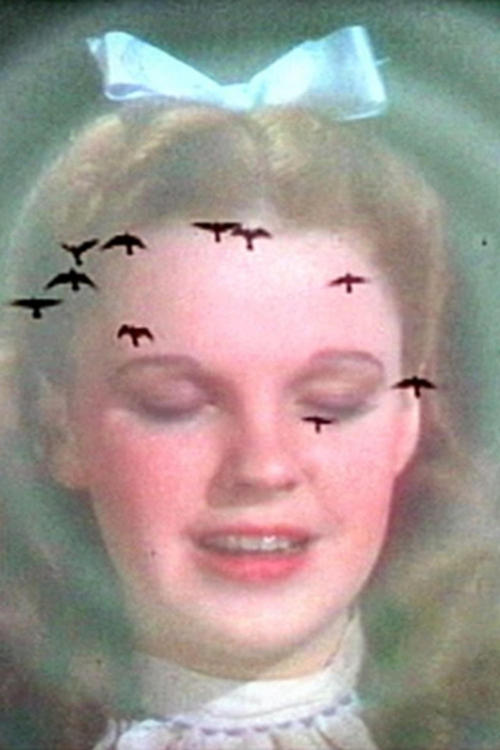
Joan of Arc and Dorothy of Kansas become one thanks to Hildegard von Bingen.
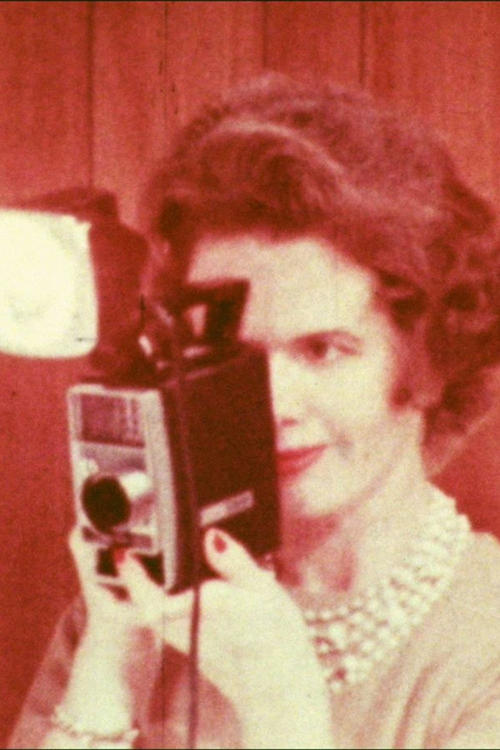
Based on a series of ads in 2008 on Телеканал звезда [the Star Channel], owned by the Russian Department of Defense. The ads seek to draw parallels between stereotypical feminine daily gestures of fashionable self-imaging and stereotypical activities of male soldiers. These ads are sequenced, then juxtaposed with “upskirt” footage of a famous Italian fashion model, downloaded from Youtube. By means of this juxtaposition and strategic interventions in speed and chronological orientation (backwards and forwards) two forms of gendered construction of the gaze are compared and contrasted. This work is a single channel version of part of an on-going series, called Equivalences, generally presented in the format of a site specific installation.
8mm-to-digital and 16mm projector performance. This work includes the film NAVIGATION, which has been preserved by Anthology Film Archives.
A philosophical dream narrative, structured around conceptions and representations of the reversibility and irreversibility of time and desire. The title is more or less exact. Several layers of Freudian fun, from exploding/imploding houses, to collapsing walls that re-erect themselves, to the dead Lenin, lying for his film portrait. As a Lacanian once said: he does not have the phallus: he is the phallus. Historical psychological fun for the whole family. “Everyone over ninety in the company of both parents admitted free.” (UbuWeb)
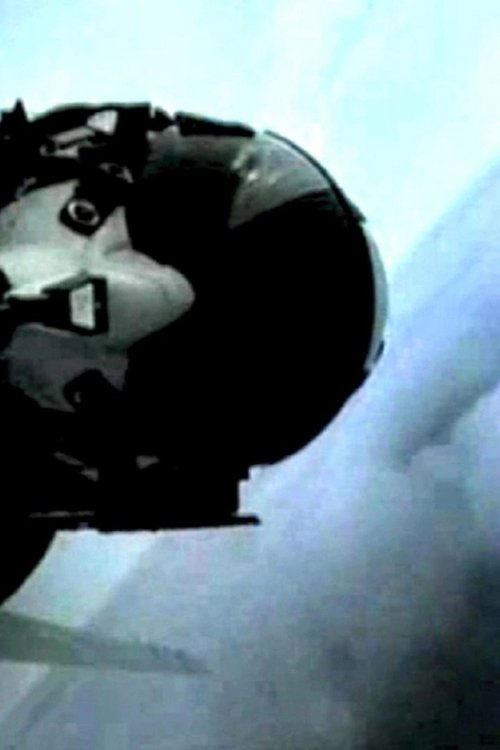
A simple and, possibly as a result of this, effective reworking of a recent propaganda film. The original film is Enduring Freedom: The Opening Chapter. It was made for a large scale cinema release as a short or commercial and was commissioned by the US Marine Corps and the US Navy. Sanborn copied the film and showed each scene in its glorious bombast and heroism twice.
An experimental film essay on architectural excess, with its aim not functional shelter but conspicuous destruction of wealth
“DREADFUL PENNY DREADFUL dares to violate every remaining shred of ‘good taste’ using the vehicle of Brecht and Weill’s much-abused ‘Moritat von Mackie Messer,’ aka ‘Mack the Knife.’ Over 200 versions collide, taking you from its origins in Weimar Berlin to the multiple travesties of Rat Pack Vegas and the many imitators of each on East Block TV and in cheesy Jersey nightclubs. Further stops along the way include Midwestern High School chorus practice and performances of ivy college a capella groups, not to mention jazz improvisation sessions, talent shows, and rockers doing high Kultur! A splendid time is guaranteed for all.” –Keith Sanborn
"A didactic treatment of the Reagan assassination event /coverage as spectacle. Nearly anyone in the world who turned on a television that day, or with regularity in the following six months, has had the images of the event burnt into his or her consciousness at the level of myth. Like language itself, these images have entered consciousness at a depth and with such universality that they seem for the present to be inaccessible to analysis. These are 'images that understand us.' The film is an attempt to display something of the institutional quality of the event/experience as it exists in us: as the control of images and the images of control. An anti-Report ." - K.S.
A film by Keith Sanborn
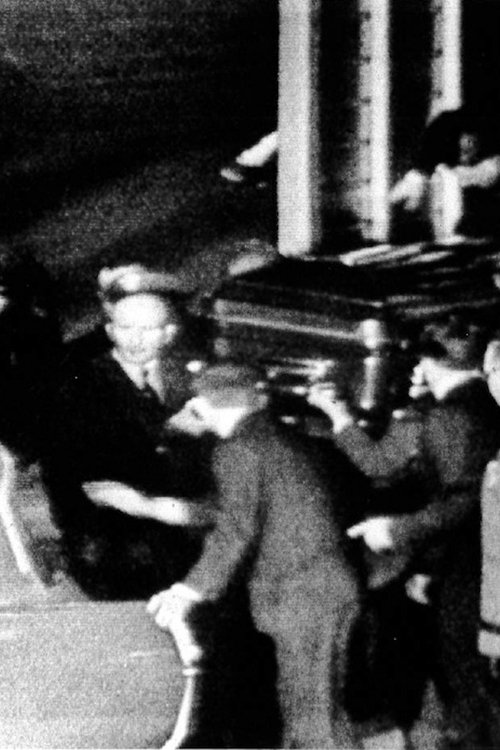
In one incredibly long take we see the arrival and disappearance of John Kennedy's body as it is delivered from Dallas aboard Air Force One.
2019, 1 min, digital
Made in collaboration with Keith Sanborn, The Deadman is based on a story by Bataille, charting "the adventures of a near-naked heroine who sets in motion a scabrous free-form orgy before returning to the house to die — a combination of elegance, raunchy defilement and barbaric splendor." — Jonathan Rosenbaum, Chicago Reader.