FEEL IT.STREAM
Jud Yalkut

Jud Yalkut

Directing

Biography

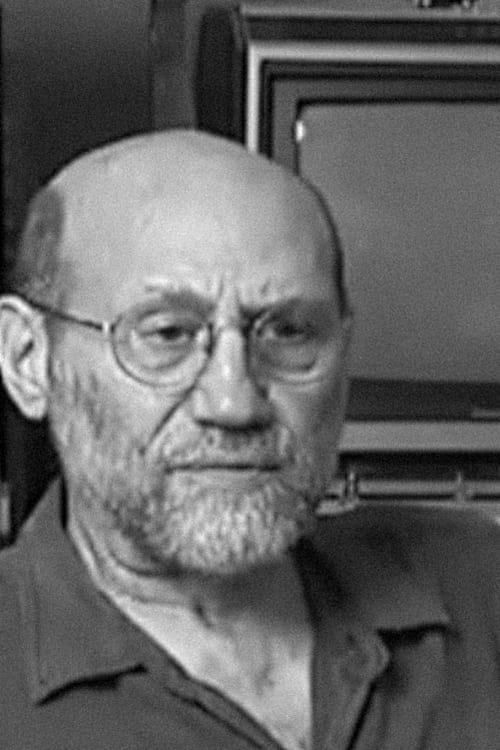
Jud Yalkut was a pioneering intermedia artist and filmmaker. His remarkable body of moving image work, which spanned fifty years, ranged from early performance renderings and poetic filmic experiments to a series of groundbreaking hybrid video-film collaborations with Nam June Paik. Transcending and transforming media as he explored and merged film, video, expanded cinema, electronic manipulations, performance and installation, Yalkut created and collaborated on seminal intermedia projects with numerous artists, filmmakers, musicians and performers in the avant-garde and experimental scenes.
Known For

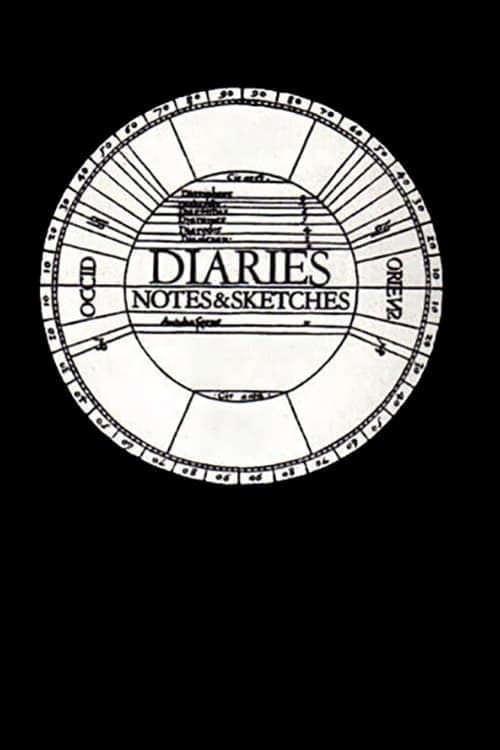
Diaries, Notes, and Sketches
7.2

Also known as Walden, Jonas Mekas’s first diary film is a six-reel chronicle of his life in 1960s New York, interweaving moments with family, friends, lovers, and artistic idols. Blending everyday encounters with portraits of the avant-garde art scene, it forms an epic, personal meditation on community, creativity, and the passage of time.

Diaries, Notes, and Sketches

1968
No image
N/A

An unreleased diary film shot during the Fairleigh-Dickinson Artist Seminar simultaneous to the production of Back and Forth by Michael Snow.

Seminar

1969
Global Groove
7.7

Global Groove was a collaborative piece by Nam June Paik and John Godfrey. Paik, amongst other artists who shared the same vision in the 1960s, saw the potential in the television beyond it being a one-sided medium to present programs and commercials. Instead, he saw it more as a place to facilitate a free flow of information exchange. He wanted to strip away the limitations from copyright system and network restrictions and bring in a new TV culture where information could be accessed inexpensively and conveniently. The full length of the piece ran 28 minutes and was first broadcasted in January 30, 1974 on WNET.

Global Groove

1973
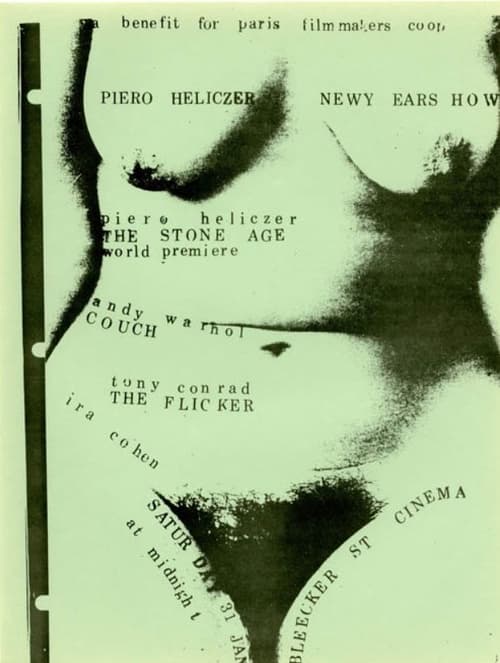
The Stone Age
N/A

"The question is, it is either going to be a stoned age or a new Stone Age" - Louis Brigante

The Stone Age

1970
Us Down by the Riverside
N/A

USCO light, Beatles sound. A visionary realization of the USCO Riverside Museum installation exhibition in New York, the show which introduced the word 'Be-In' to the English language. Acid visuals accompanied by a muddy recording of The Beatles playing Tomorrow Never Knows.

Us Down by the Riverside

1966
Suite 212
N/A

Suite 212 is Paik's "personal New York sketchbook," an electronic collage that presents multiple perspectives of New York's media landscape as a fragmented tour of the city. Paik critiques the selling of New York by multinational corporations and the city's role as the master of the media and information industries; Collaborators Yalkut, Davis and Kubota contribute their own vibrant and punchy segments.

Suite 212

1974
Beatles Electroniques
8.0

Part of a collection of restored early works by Nam June Paik, the haunting Beatles Electronique reveals Paik's engagement with manipulation of pop icons and electronic images. Snippets of footage from A Hard Day's Night are countered with Paik's early electronic processing.

Beatles Electroniques

1969
No image
4.5

Part of a collection of restored early works by Nam June Paik and Jud Yalkut, this piece is historically significant as well as remarkably prescient. Video Tape Study No.3 is a direct media intervention, in which Paik distorts and manipulates footage from news conferences by U.S. President Lyndon Johnson and New York Mayor Lindsey.

Videotape Study No. 3

1967
Kusama's Self-Obliteration
5.6

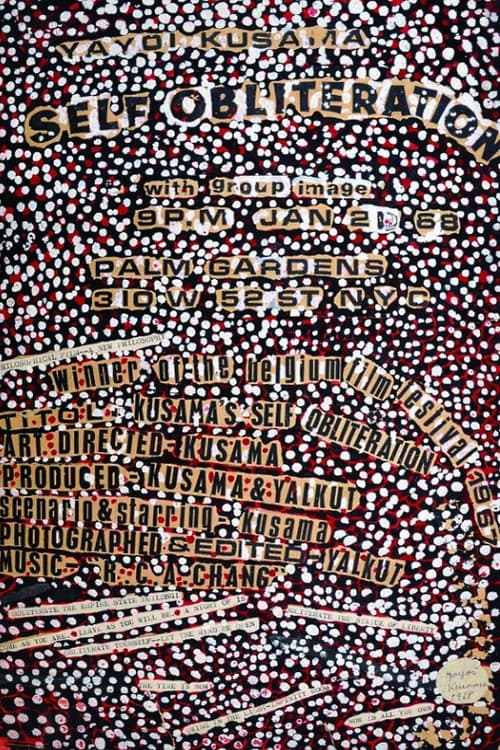
A film exploration of the work and aesthetic concepts of Yayoi Kusama, painter, sculptor, and environmentalist, conceived in terms of an intense emotional experience with metaphysical overtones, an extension of my ultimate interest in a total fusion of the arts in a spirit of mutual collaboration. —Jud Yalkut

Kusama's Self-Obliteration

1967
TV Cello Premiere
N/A

TV Cello Premiere is a silent film documentation of Charlotte Moorman in her first performance on Paik's eponymous TV Cello at the Bonino Gallery in New York in 1971.

TV Cello Premiere

1971
No image
N/A

Part of a restored collection of rare early works by Nam June Paik, Electronic Fables is an example of Paik's early improvisations and experiments with electronic image manipulation, prior to his invention of the Paik/Abe Video Synthesizer. This piece also makes use of anecdotes by John Cage and other influential artists and cultural figures.

Electronic Fables

1965
Missa of Zen
N/A

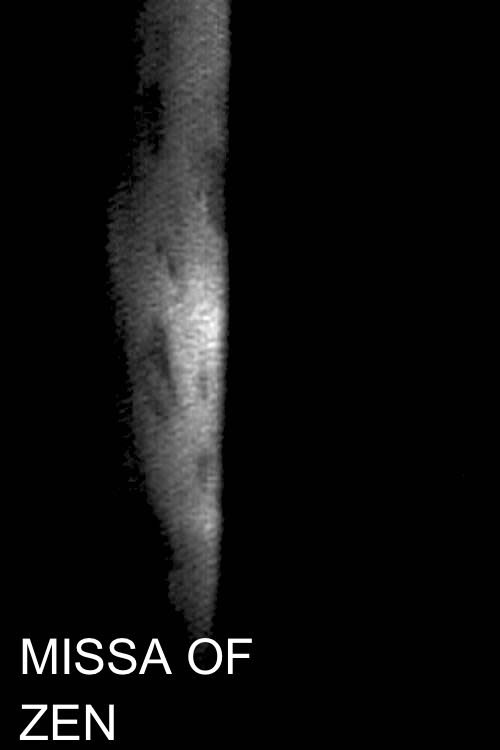
In Missa of Zen, a TV screen, filmed from an extremely oblique angle, appears as a ghostly, flickering sliver at the side of a darkened frame. The images playing across its surface are rendered abstract by the perspective: we witness the transmission of information, but at a great distance. Isolated in silence and darkness, the television set slips into the realm of the unheimlich — an uncanny object, at once familiar and unfamiliar. Situating mediated America at the crossroads of missa — Latin for the Christian mass — and Zen Buddhism, Paik highlights the connections between mass culture and the transcendental.

Missa of Zen

1967
Some Manipulations
N/A

A four-screen within one frame film, shot in un-slit regular 8mm, in four sections of four performance / happening / destruction art events presented in 1967 at the Judson Gallery below Washington Square in New York City. SOME MANIPULATIONS captures the confrontational light pieces of Jean Toche, an avant garde musical performance by Nam June Paik and cellist Charlotte Moorman, an actionist painting event by Steve Rose, and a classic Dada lecture/performance by Al Hansen. SOME MANIPULATIONS was premiered in December 1967 as one of the continuous loop elements in Jud Yalkut's DESTRUCT FILM environment, in which spectator/participants were obliged to walk, sit on, and dive into a floor covered with unrolled "junk" 16mm film in order to view the rotating slide and film projections. The film's inclusion represented an instance of ultimate feedback of events back into the space in which they had been presented.

Some Manipulations

1969
Early Color TV Manipulations
N/A

Marked by a playful, irreverent sense of improvisation and experimentation, these experiments with image manipulation and synthesis form a link between Paik's performance and sculptural works of the 1950s and early 1960s and the celebrated video works and installations of his later years.

Early Color TV Manipulations

1968
A Tribute to John Cage
6.0

A Tribute to John Cage is Paik's homage to avant-garde composer John Cage. A major figure in contemporary art and music, Cage was one of the primary influences on Paik's work, as well as his friend and frequent collaborator. In this multifaceted portrait, Paik creates a pastiche of Cage's performances and anecdotes, interviews with friends and colleagues, and examples of Paik's participatory music and television works that parallel Cage's strategies and concerns. The methodology and philosophies that inform Cage's radical musical aesthetic — chance, randomness, the democratization of sounds — are evident as he performs such seminal pieces as 4'33" (of complete silence) in Harvard Square, or throws the I Ching to determine performance sites. Among the collage of elements included in this work are segments from Paik's Zen for TV; Paik and Charlotte Moorman in early performances, including the TV Bra; and anecdotes from composer Alvin Lucier.

A Tribute to John Cage

1976
Waiting for Commercials
10.0

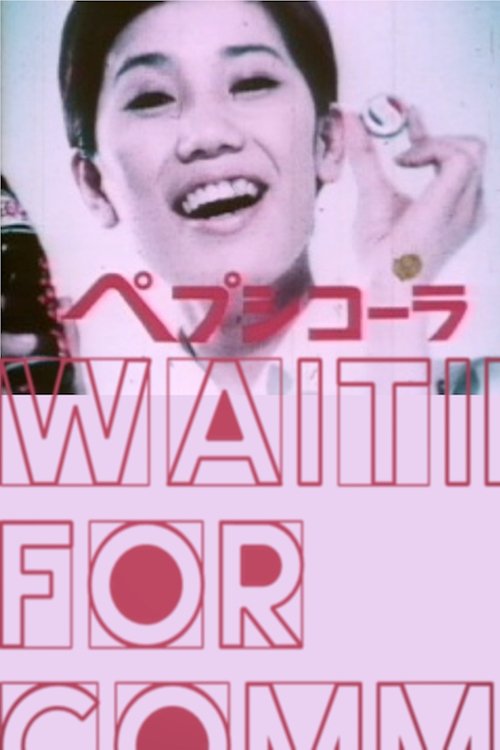
Waiting for Commercials is a hilarious compendium of Japanese TV commercials. "Beckett wrote 'Waiting for Godot' twenty years ago, but instead of Godot, TV commercial after TV commercial arrived". This early example of Paik's use of appropriated television imagery as pop cultural artifact was originally created for a performance piece of the same name, which featured Charlotte Moorman and her cello.

Waiting for Commercials

1966
26'1.1499" For A String Player
N/A

This tape is Jud Yalkut's video realization of Charlotte Moorman and Nam June Paik's concert performance of John Cage's composition 26'1.1499" For String Player. In this extraordinary performance, which is manipulated and synthesized by Yalkut, Paik and Moorman play Cage's score on a collection of "instruments" that include a pistol, a dish of mushrooms, balloons, a practice aerial bomb, and a telephone call to President Nixon.

26'1.1499" For A String Player

1973
No image
N/A

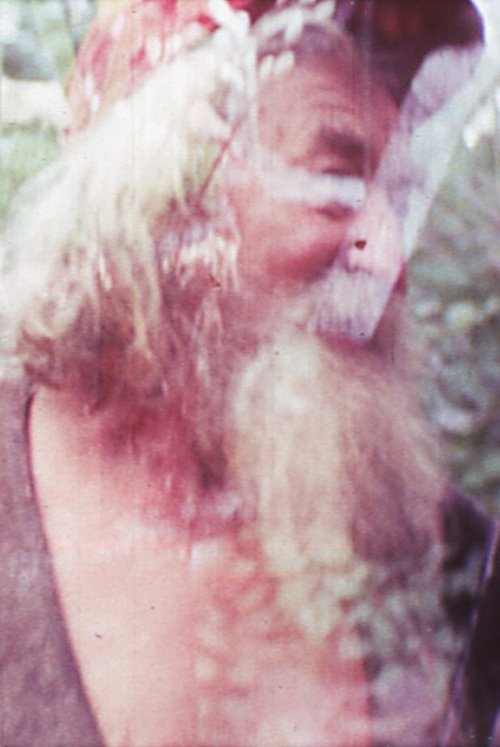
"Filmic impressions of composer John Cage, mushroom hunting on his home ground of Stony Point, New York; visiting his home for the last time; radiating love towards his friends; and buying fruits and vegetables at the farm market before returning to New York City." —Jud Yalkut

John Cage Mushroom Hunting in Stony Point

1973
Slop Print
N/A

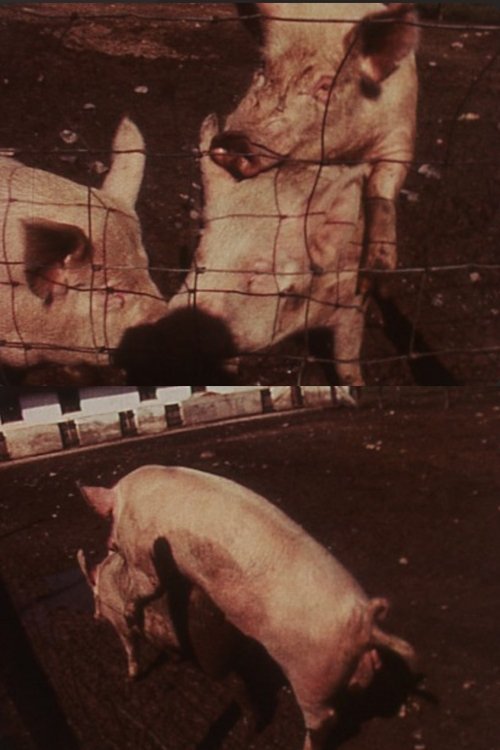
The ritual of amorous adventure among the domestic peccaries of North America.

Slop Print

1973
No image
N/A

1965, black- and-white, 8 min., double-screen projection.

GHOST REV

1963