Production
No description available.
Old Europe: dreary. Kai and Ella want to emigrate. The noble savage, romantic principle, going back as a perspective. Let's go, but the film actually runs backwards. "Someone wanted to become a Negro," and Kai's anxious, conventional neighbor turns out to be the real adventurer.
The life and death of socialist architectural monsters. An epic fairy-tale in five chapters.
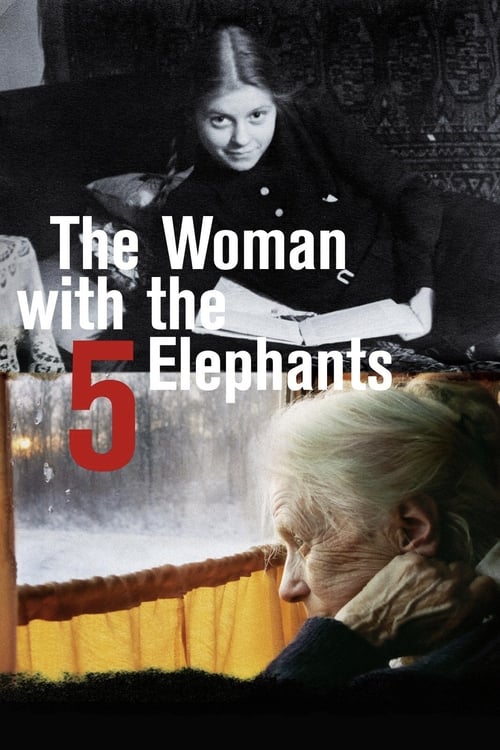
Documentary about Svetlana Geier, a Ukranian who has translated the great works of Dostoyevsky into German. First her father ends up in one of Stalin's prison camps, then young Svetlana herself experiences the German invasion. In order to survive she learns German at home in Kiev. She is good and gets work as a translator before ending up in a German camp in 1943. Now, 65 years later, she is a renowned translator who in her twilight years has translated the great works of Dostoevsky. For the first time in all these years, she returns to Kiev together with her granddaughter.
Louis-Ferdinand Céline described the period he spent in Sigmaringen in his delirious and infernal novel, Castle to Castle, published in 1957. The last months before the German “moment of truth”, as they’ve never been portrayed before: Documented in delirious reality. A documentary film based on Céline’s texts. A screen adaption with documentary material.
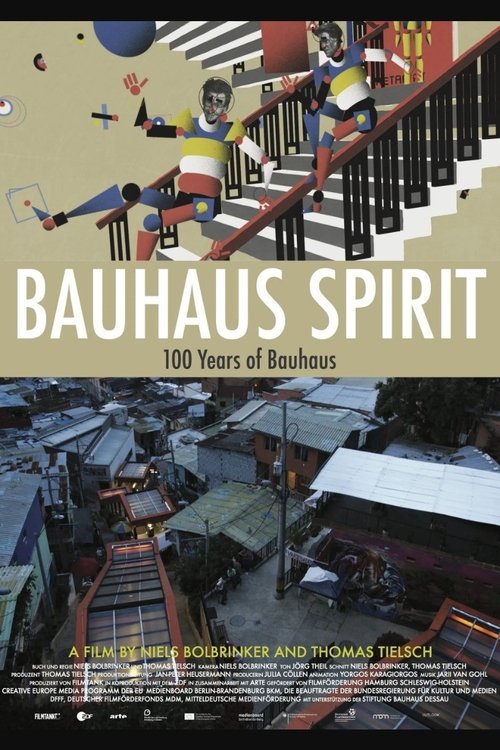
Founded in 1919 by Walter Gropius, Bauhaus was supposed to unite sculpture, painting, design and architecture into a single combined constructive discipline. It is a synthesis of liberated imagination and stringent structure; cross-medial concepts that embellish and enrich our existence, illumination and clarity, order and playfulness. But Bauhaus was never just an artistic experiment. Confronted with the social conditions of that particular time, as well as the experience of WWI, the movement concerned itself with the political and social connotations of design from the very outset. Hence, Bauhaus history is not just the history of art, but also the history of an era that stretches from the early 20th century to the modern day.
Based on French media theorist Paul Virilio's thesis that weapons and film technology inextricably influence human perception, the film interviews cameramen from German propaganda companies during World War II. It also features cinematic miniatures, including ones about the future of electronic media.
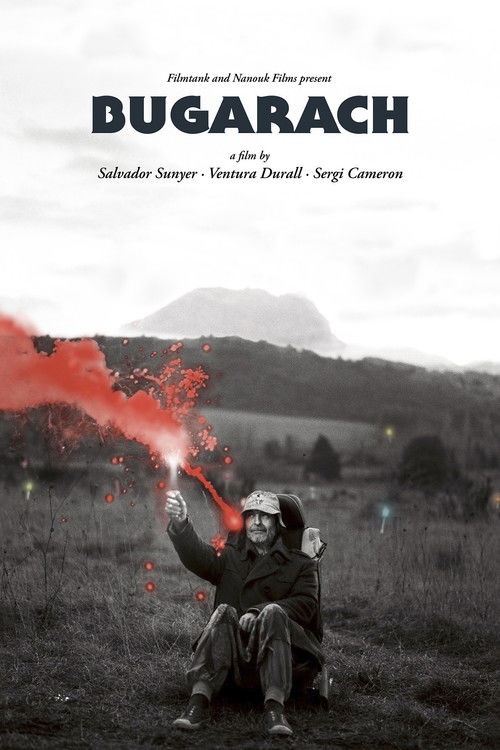
Bugarach. Nothing ever really happens in this bucolic village in Southern France at the base of the mountain that gives it its name. But the villagers' peace and quiet vanishes when the news story circulates around the globe like a viral video that this close-knit community of 194 inhabitants will be the only place on the planet to survive the December 21st apocalypse foretold by the Mayans. 'Bugarach' dives deep into the subject of the apocalypse to reflect on the fears and coping strategies of humankind in times of deep material and spiritual crisis in the Western world.
For a hundred years, the former fishing village of Campione d'Italia, an Italian enclave in Switzerland, has drawn enormous wealth from a monumental casino. There is hardly a resident who has not benefited economically or socially from it. But the bankruptcy of this colossus destroys all prospects and autonomy. The reopening gives the village one last chance.
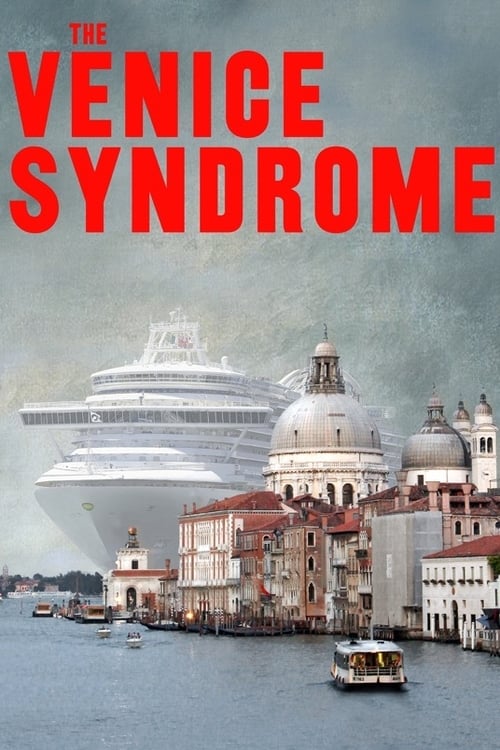
Tourism takes its toll on the inhabitability of Venice.
An environmental spy infiltrates the global syndicate for illegal timber trading. With the aid of a hidden camera he documents the chain of illegal activities, from harvesting of the wood to the marketing of “washed” products in supermarkets. This turns out to be an excellent motor for political change.
A German woman travels to San Francisco to find her mother, but winds up distracted by the sexually flamboyant culture of the city.
Donzdorf on the edge of the Swabian mountains in Southern Germany. A village just like any other, with a pointed church spire, a supermarket and a new housing estate. But Donzdorf is the seat of "Nuclear Blast Records", one of the world's most successful independent heavy-metal record companies. The company's boss, Markus Staiger, grew up with heavy metal, like many young people in rural areas, and has turned his enthusiasm into an empire with branches in Los Angeles and other major cities. Housewives from the village work for the mail order department, sending out bloody skulls to every conceivable place in the world. Listening Sessions are held in the village pub, where the offerings are commented on by the regulars as critically as by international journalists. The film takes a look at the occasionally comical interaction of the tranquil village inhabitants with the rather crude hard rock scene.
A cinematic reflection on structural change in the Ruhr region. Where coal was once mined, steel produced, and machines built, industrial buildings are now falling into disrepair, unless they are listed as historic monuments. A new world of consumption and leisure is emerging on the huge open spaces: supermarkets, shopping areas, and amusement parks. Is this new world real, or does the experience only extend to the hours of the program?
In the past, those who were convinced that they were being pursued by invisible rays or that their telephone conversations were being monitored were considered to be paranoid. Nowadays, people are being monitored as soon as they produce any sign of life. That is just the beginning, however. The research is ongoing and the reality is not far behind.
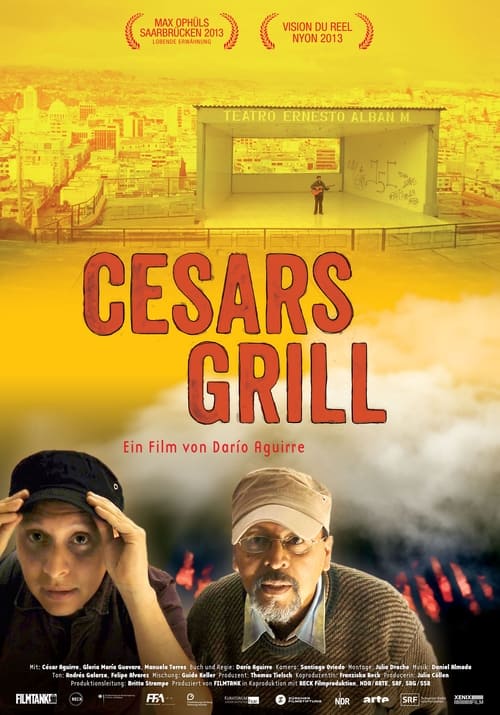
In order to rescue his father's ramshackle grill restaurant, filmmaker and vegetarian Dario Aguirre is traveling back to his homeland Ecuador. What starts out as a strange debate about opening times, chips and Excel spread sheets, develops into a moving family drama.
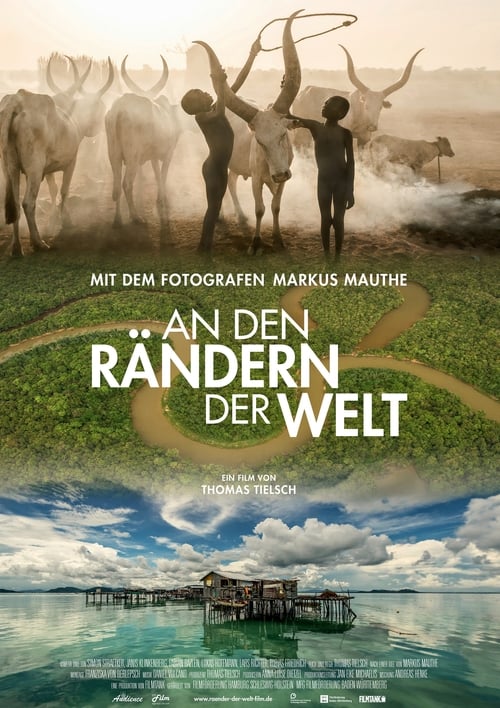
They live on the edge of the known world - far from civilization but affected by its consequences nonetheless. The photographer Markus Mauthe visited these last indigenous peoples to capture the inherent beauty of their cultures, before they too fall victim to ever-advancing globalisation. The journey leads from South Sudan and Ethiopia to Malay sea nomads and Brazilian Indians in Mato Grosso, who have started to defend themselves against the destruction of their natural habitat. The result is a film that captures intimate and unadulterated encounters with sumptuous photography – while also serving as an appeal for the preservation of indigenous cultures, which will surely perish unless we rethink and act accordingly.
Portrait about the planning and rehearsal of Richard Wagner's Parsifal directed by Calixto Bieito at the opera house in Stuttgart.