Mike Hoolboom
Directing
Biography
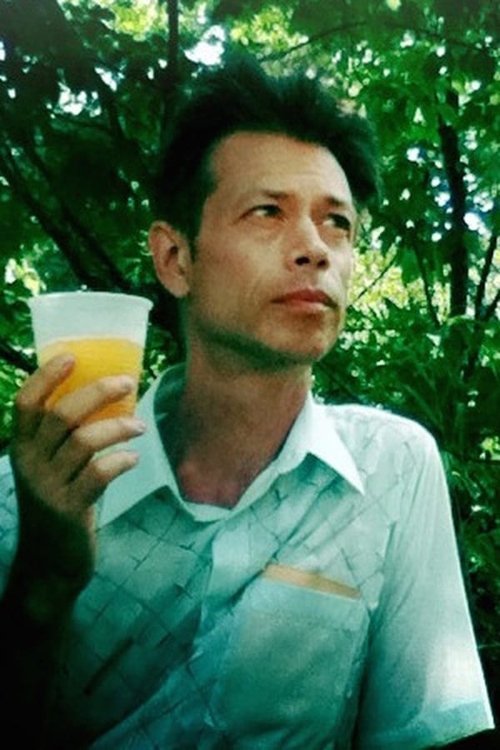
Michael "Mike" Hoolboom is a Canadian independent, experimental filmmaker. Having begun filmmaking at an early age, Hoolboom released his first major work, a "film that's not quite a film" entitled White Museum, in 1986. Although he continued to produce films, his rate of production improved drastically after he was diagnosed with HIV in 1988 or 1989; this gave a "new urgency" to his works. Since then he has made dozens of films, two of which have won Best Short Film at the Toronto International Film Festival. His films have also featured in more than 200 film festivals worldwide.
Known For

In a suite of interviews for his “second first feature” Godard submitted to the slings and arrows of North American media interrogators with polite hostility and a bristling intelligence. Here, the briefest chitchat is rendered in eight parts, which sees the maestro declaim on spectacle, memory, interpretation and being. While the impossibility of a talk show becomes a laughing matter, frozen moments occur in the aftermath in eight brief haikus.
Credit Card

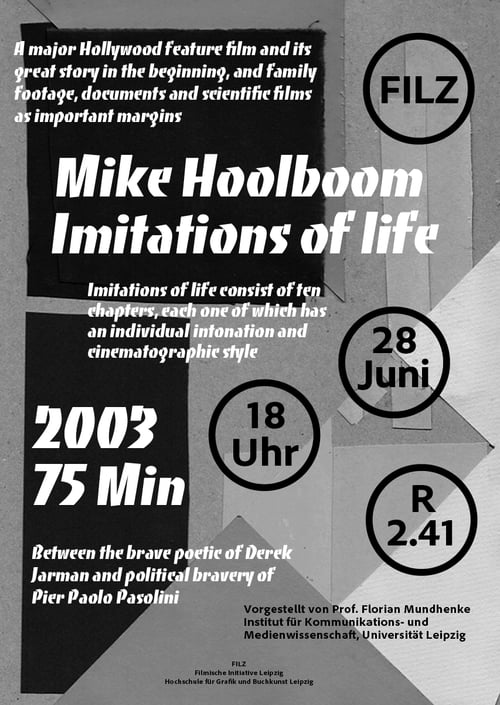
Imitations of life consist of ten chapters, each one of which has an individual intonation and cinematographic style. The chapters: In the Future, Jack, Last Thoughts, Portrait, Secret, In My Car, The Game, Scaling, Imitation of Life, and Rain.
Imitations of Life
Portrait moments collected across the world carry powerful situations and stand out from the grip of the image with an expression, a tear, a flame, a scar or a position of the body. The glances and gestures directed beyond the frame of the photograph both stun and shake; the documentary and fictional scenes highlight traces of the elements or of cruelty, but also impressive expressions of harmony and concord. A single window carries the weight or the unfolding of a dramatic story.
Promises
A lesbian call fall in and out of love while Prime Minister Wayne Gretzky wages a war against secessional Quebec for media money.
Escape in Canada
In the near future, Canada is at war with Quebec, battles are determined by television ratings, and weapons are sponsored by McDonald's and IBM. In the midst of social chaos, a lesbian couple, Barb and Alex, dress themselves in protective masks, gowns and rubber boots to spend a quiet afternoon at the zoo. Barb is gang-raped by soldiers while taking a short cut through a restrictive zone. Fearful of infection, Alex begs her to take an AIDS test. With a world imploding around them, Barb decides to announce her result as the punchline of a comic routine. At first, Alex can't see the joke, but she eventually joins in and engineers an attempt to make love without touching.
Valentine's Day

Made on a sunny afternoon. A last stand of burning light. Shot in 1985, released in 1990 with a soundtrack by Kaiser Nietzsche (John Kamevaar, Thomas Handy), new soundtrack and title in 2016.
Sugar Maple Stand
An overwhelming and luminescent reflection on death, AIDS and living, Letters from Home is a compelling montage of mini-portraits intercut with found footage, home movies, super-8 drama and pixilated imagery.
Letters From Home

In this dramatic short, a refugee crosses the ocean to escape the ravages of war, but loses family along the way. The musings of poets (Brand, Carson, Vuong) become his conscience and reflection. Shot with a lyric intensity, as if everything was being seen for the first or final time, in Colombia, Georgia and Canada.
After Drowning

The cross-country travelogue which is the basis of this film was made in the fourties. Sponsored by the Canadian government, it is pitched towards an American understanding, unfolding the blank geography of its northern neighbour as a playground for the leisure class, its untamed wilds held in check by the relentless survey of the Mounties. Rocky Mountain ski runs, Niagara Falls, rivers teeming with gold dust and plains of buffalo reassure an American audience that geography is destiny.
Escape in Canada

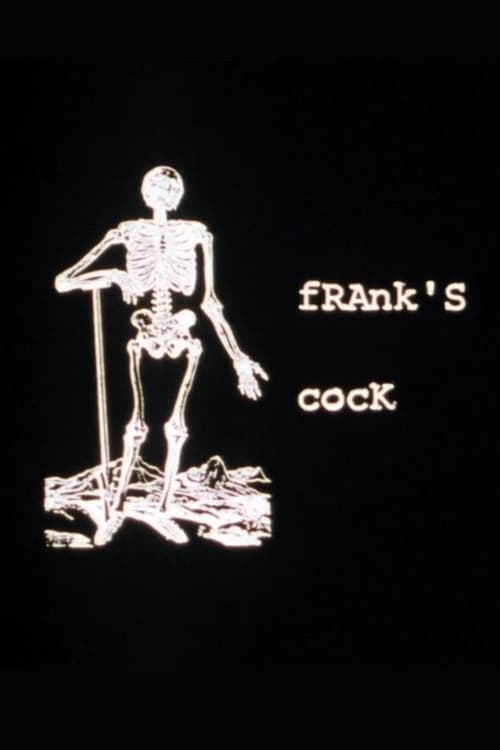
A gay man reminisces about his deceased lover, a victim of AIDS.
Frank's Cock

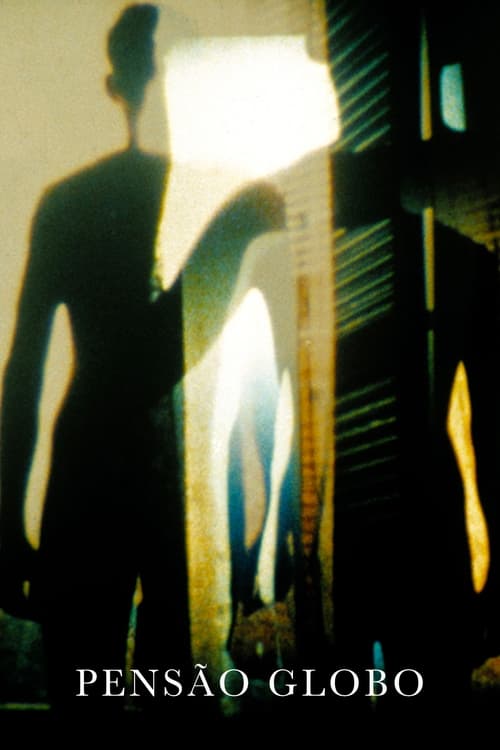
A man faces his approaching death. He takes a journey, his last perhaps, and ends up at the Pensão Globo in Lisbon, where he sets out on aimless excursions through the city. The film depicts a life in a state of transition. Sometimes it's like I'm already gone, become a ghost of myself.
Pensão Globo

The heart of the matter is friend and mentor Mike Cartmell in an outtake from Alan Zweig’s Vinyl (2000). Mike insists that listening deeply to music, the music of Coleman Hawkins for example, is an authentic relationship, equal to human company. The movie closes with Hawkins playing one of his signature tunes, the jazz standard Lover Man, along with Cozy Cole (drums), Barry Galbrath (guitar), Johnny Guaneri (piano) and Milt Hinton (bass). The midsection is occupied by an outdoors swimming pool, along with a voice-over extolling the virtues of frustration.
Lover Man

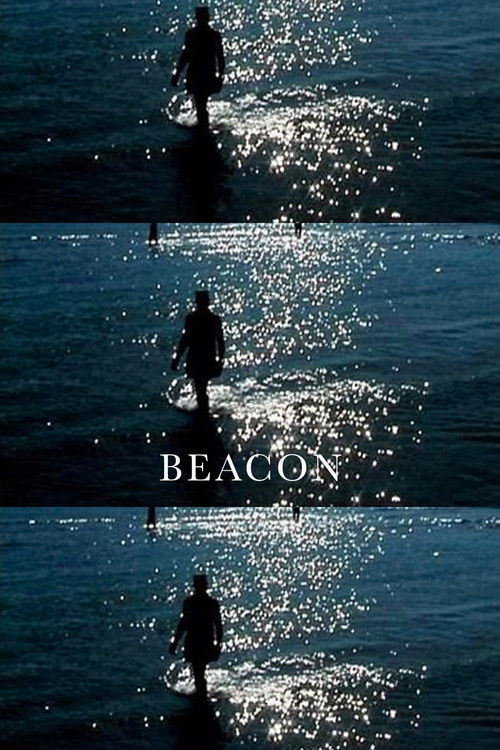
BEACON is a montage of location shots filmed at ten different places around the world. These sites are connected by the fact that each is located by the sea. Seamlessly combining travelogue footage and appropriated clips from feature films, BEACON produces a single, imaginary locale. Distant echoes of stories of the sea mingle with the banality of today's touristy beachlife. In its collage of places of expectation and with its seductive prospects of the sea, Beacon sets off on a journey with no distinct destination.
Beacon

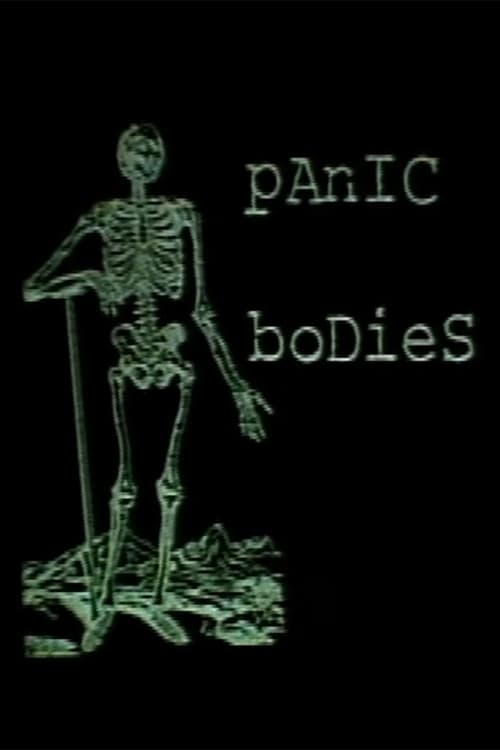
"Panic Bodies is a 70-minute, six-part exploration of the ways we experience the body's betrayals: disease, decline and death. The film is a panorama of emotionally charged recollections of strange relatives and estranged siblings, staged recreations of fast-fading pasts and personal mythologies, and reflections on the anxious states created by the body's fragile claims on time and space. It's about being a stranger in your own skin. Panic Bodies perfects the phantom quality of any good work about mourning, but it is not reducible to that. It is also enlivened by the intimacy that comes from having made a spectacle of personal secrets." (Kathleen Pirrie Adams, Xtra)
Panic Bodies

Film is made out of gelatin that comes from horses. They’re waiting to be slaughtered, so that pictures can be made. Many years ago we learned the language of our masters. Though we couldn’t help wondering why so few of you bothered to learn ours. Three scenes featuring horses, remembering Jacinto. The first is a daytime forest haunting that winds up at a carousel, the second a rainy street in Portugal, the finale a nighttime vigil of fire and water.
3 Dreams of Horses

How do we tell the story of a life? What cruel reduction of an image will stand (in the obituary, the family photo album, the memory of friends) for the years between a grave and a difficult birth? Public Lighting examines the current media obsession with biography, offering up “the six different kinds of personality” (the obsessive, the narcissist) as case studies and miniatures, possible examples.
Public Lighting

When he won his Giller Award, Saint Lucia poet/playwright Derek Walcott couldn’t make it, so Michael Ondaatje stood in his place and read Love After Love, the most beautiful poem I had ever heard. It remains a haunting and a promise. I learned it “by heart,” as the saying goes, and finally made this movie, which is only a way of keeping it with me as memento and keepsake. Using subtle repeats and rest stops for reflection, the poem’s fifteen lines are a narration of self-care, an invitation to do the deep dig of meeting that most unwanted of all visitors. The film is framed by a writer/stand-in who is in search, waiting in the pause between faces. Her writing brings her to a temporary oasis where she can reboot and refresh, invite her many personalities to arrive, and allow old encounters with friends and familiars to flow through her, to become again a living memory.
Feast

A hybrid of DeSade and Dali, House of Pain is a nightmare that takes place between sleep and death, where the performers appear as mute hallucinations. The film features a hallucinogenic blend of the domestic and perverse.
House of Pain
Vancouver composer and sound ecologist Hildegard Westerkamp was the only woman to participate in the original version of the World Soundscape project that not only brought new ears to city life, but laid the foundation for noise bylaws/pollution standards, radically upending traditional notions of music and the role of the composer. Hildegard has brought the art of sound walking to groups around the world, and she has formulated a deep feminist ecology rooted in the body. The film offers a place for the viewer to listen, the necessary precondition for personal and societal change.
Listening

Matthias Müller's SLEEPY HAVEN is explicitly taking up the spirit of Kenneth Anger's FIREWORKS. SLEEPY HAVEN materializes fantasies of an erotic daydream; the film is a cocktail that merges Müller's own shots and found footage like a love act. Nude bodies of sailors are flaring up in flickering solarization effects; they are given an ardent aura of physical desire by this tattooing of the film emulsion. Müller only gradually changes his material metaphors to metaphors of love. But it is not only FIREWORKS the film is alluding to; there is yet another classic shimmering through Müller's imagery: Jean Genet's Un Chant d'Amour.