Krzysztof Kieślowski
Directing
Biography
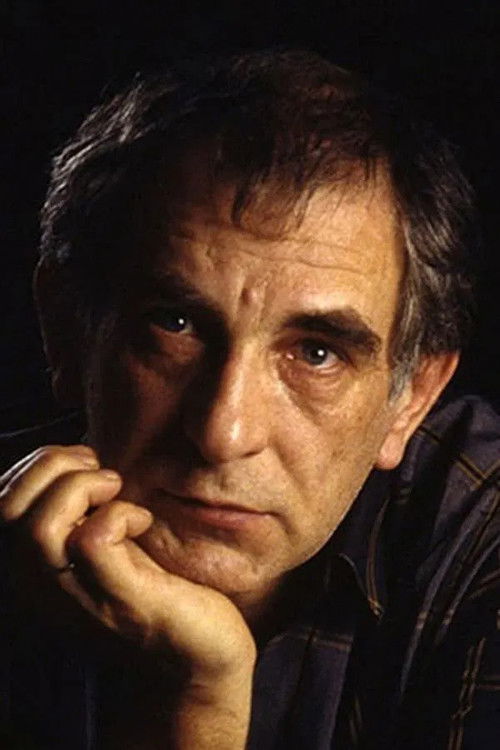
Krzysztof Kieślowski (June 27, 1941 – March 13, 1996) was an influential Polish film director and screenwriter known internationally for his television series "The Decalogue" (1989), and his feature films "The Double Life of Véronique" (1991), and the "Three Colours" trilogy (1993–1994). Kieślowski received numerous awards during his career, including the Cannes Film Festival Jury Prize (1988), FIPRESCI Prize (1988, 1991), and Prize of the Ecumenical Jury (1991); the Venice Film Festival FIPRESCI Prize (1989), Golden Lion (1993), and OCIC Award (1993); and the Berlin International Film Festival Silver Bear (1994). In 1995 he received Academy Award nominations for Best Director and Best Writing. In 2002 Kieślowski was listed at number two on the British Film Institute's Sight & Sound Top Ten Directors list of modern times. Krzysztof Kieślowski died on 13 March 1996, He was 54.
Known For

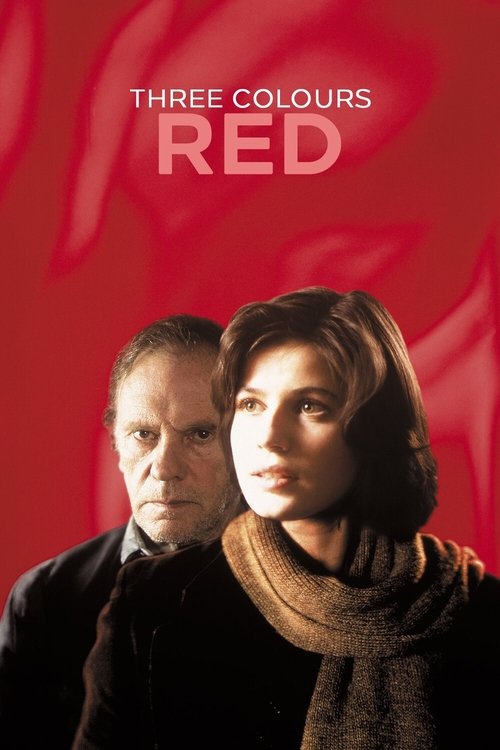
Part-time model Valentine unexpectedly befriends a retired judge after she runs over his dog. At first, the grumpy man shows no concern about the dog, and Valentine decides to keep it. But the two form a bond when she returns to his house and catches him listening to his neighbors’ phone calls.
Three Colors: Red

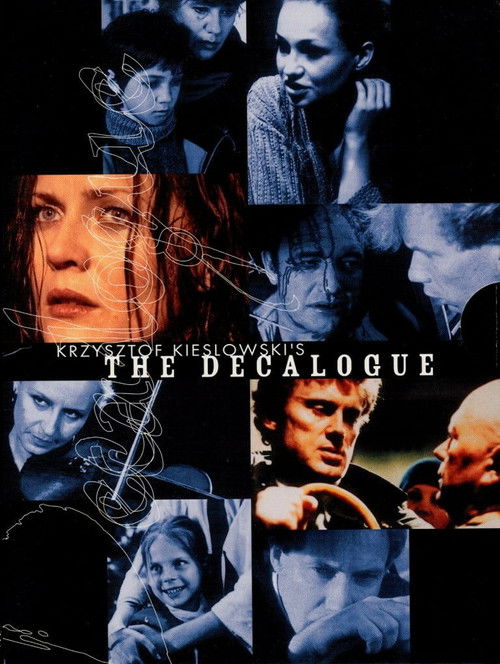
The Ten Commandments, exact and uncompromising, literally cast in stone, continues to provide a source of moral conflict in contemporary society. In the ten part epic masterpiece, The Decalogue, Krzysztof Kieslowski examines the dilemma of fundamental sin in the lives of ordinary Warsaw citizens.
Dekalog

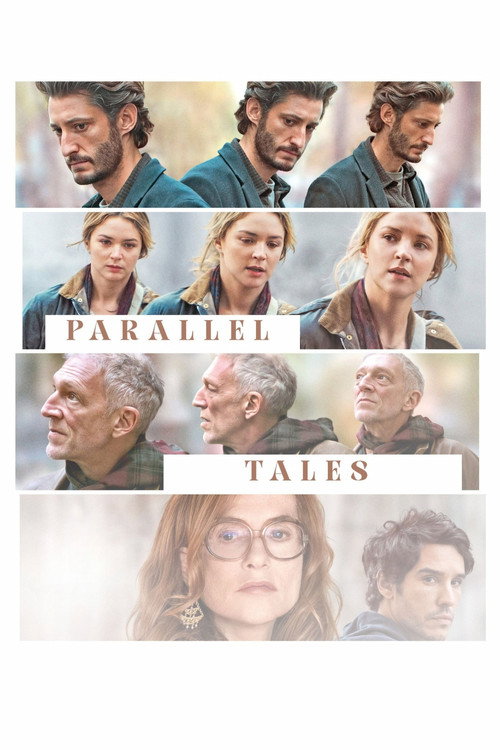
In search of inspiration for her new novel, Sylvie spies on her neighbors in the building across the street using a telescope. When she hires young Adam to help her with her daily routine, she has no idea that he will turn her life and her work upside down, until the fiction she had imagined surpasses the reality of them all.
Parallel Tales

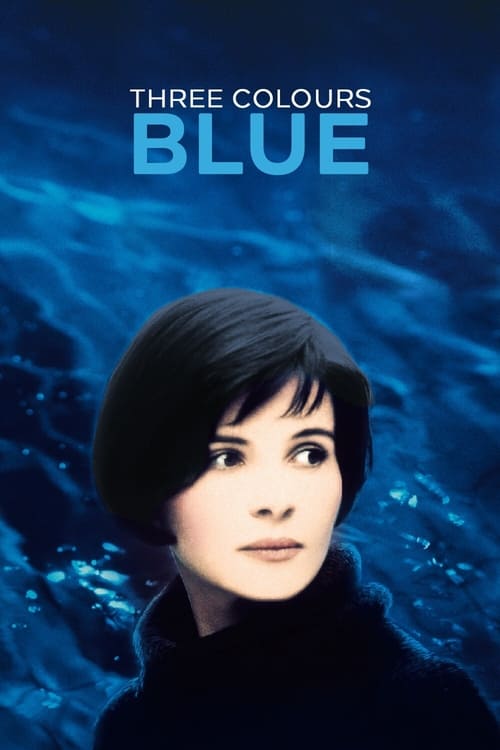
The wife of a famous composer survives a car accident that kills her husband and daughter. Now alone, she shakes off her old identity and explores her newfound freedom but finds that she is unbreakably bound to other humans, including her husband’s mistress, whose existence she never suspected.
Three Colors: Blue

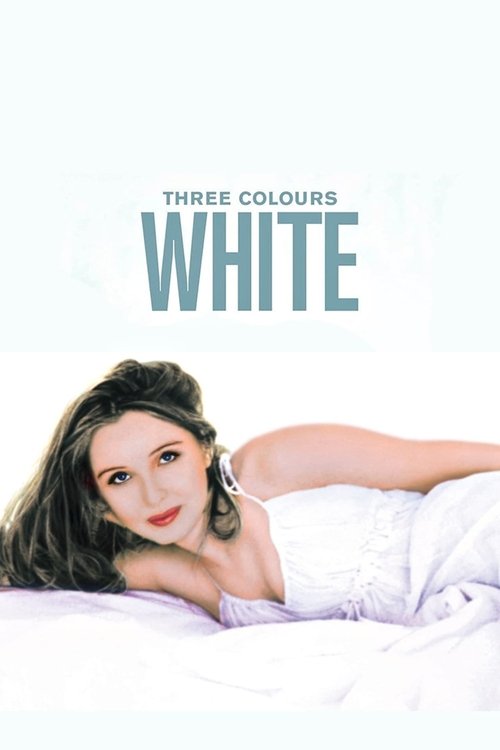
Polish immigrant Karol Karol finds himself out of a marriage, a job and a country when his French wife, Dominique, divorces him after six months due to his impotence. Forced to leave France after losing the business they jointly owned, Karol enlists fellow Polish expatriate Mikołaj to smuggle him back to their homeland.
Three Colors: White

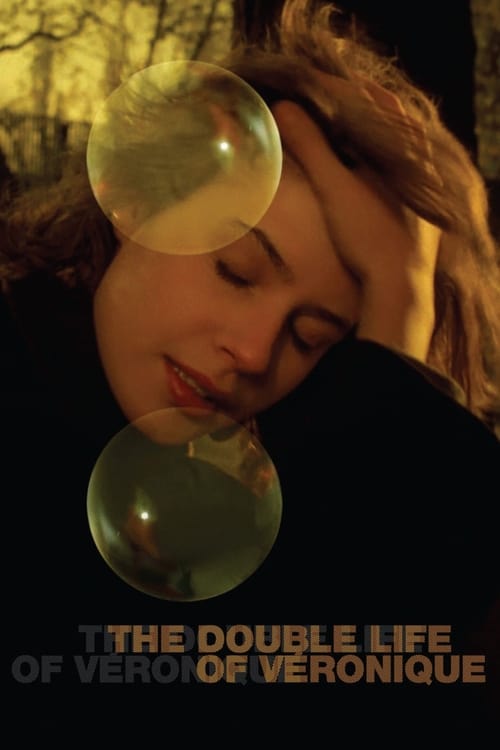
Véronique is a beautiful young French woman who aspires to be a renowned singer; Weronika lives in Poland, has a similar career goal and looks identical to Véronique, though the two are not related. The film follows both women as they contend with the ups and downs of their individual lives, with Véronique embarking on an unusual romance with Alexandre Fabbri, a puppeteer who may be able to help her with her existential issues.
The Double Life of Véronique

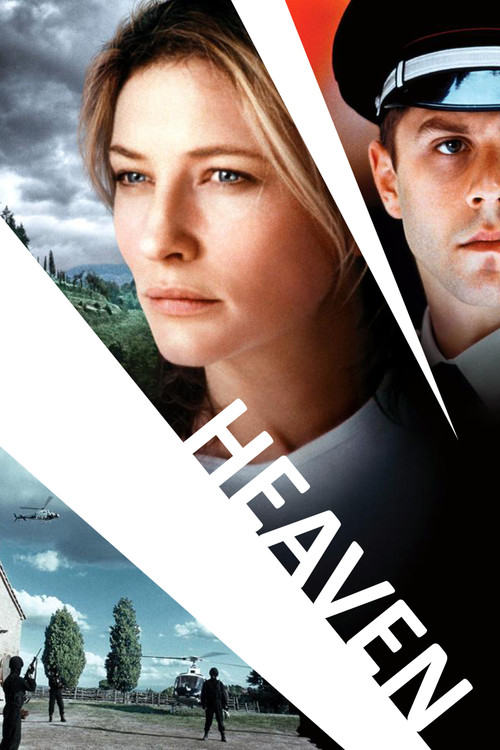
A woman takes the law into her own hands after police ignore her pleas to arrest the man responsible for her husband's death, and finds herself not only under arrest for murder but falling in love with an officer.
Heaven

Filip buys an 8mm movie camera when his first child is born. Because it's the first camera in town, he's named official photographer by the local Party boss. His horizons widen when he is sent to regional film festivals with his first works but his focus on movie making also leads to domestic strife and philosophical dilemmas.
Camera Buff

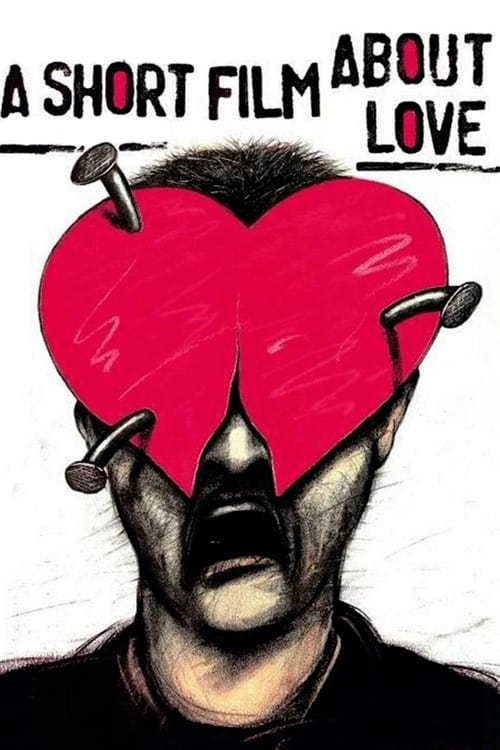
19-year-old Tomek whiles away his lonely life by spying on his opposite neighbour Magda through binoculars. She's an artist in her mid-thirties, and appears to have everything - not least a constant stream of men at her beck and call. But when the two finally meet, they discover that they have a lot more in common than appeared at first sight...
A Short Film About Love

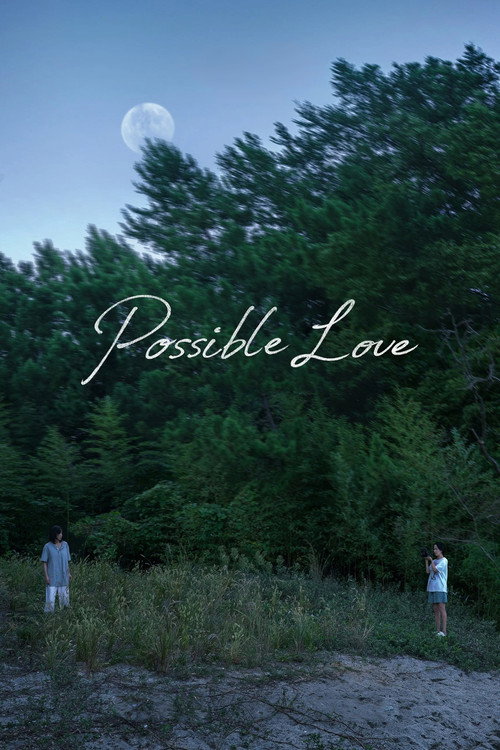
Following the intertwined lives of two married couples leading completely opposite lives. As their worlds collide, fractures begin to appear in their daily existence.
Possible Love

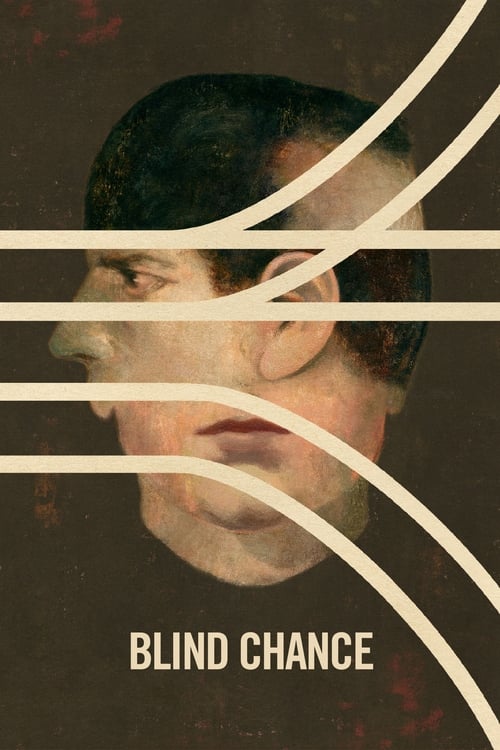
Witek runs after a train. Three variations follow on how such a seemingly banal incident could influence the rest of Witek's life.
Blind Chance

1982, Poland. A translator loses her husband and becomes a victim of her own sorrow. She looks to sex, to her son, to law, and to hypnotism when she has nothing else in this time of martial law when Solidarity was banned.
No End

Jacek climbs into the taxi driven by Waldemar, tells him to drive to a remote location, then brutally strangles him, seemingly without motive.
A Short Film About Killing

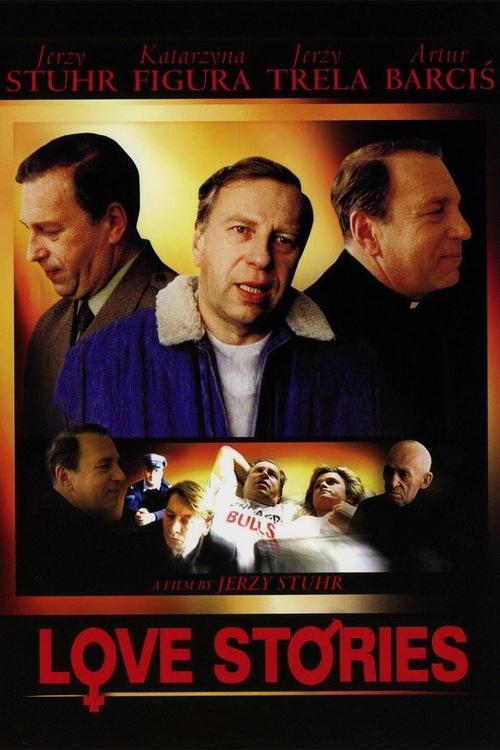
Jerzy Stuhr scripted, directed and plays four roles in this Polish comedy about four men -- an army officer, a college instructor, a priest, and a drug dealer -- and their relationships with four females. An attractive student puts the teacher in an awkward spot when she reveals her love for him. An 11-year-old informs the priest that she's his daughter. The army officer is pleased when confronted by a past lover. The drug dealer, taken prisoner, must decide whether or not to trust his wife with his hidden loot. In the wrap-up, the elderly accountant passes judgment on all four men. Stuhr acted in films by the late Krzysztof Kieslowski, who had some input here by offering advice to Stuhr on this screenplay.
Love Stories

The Midnight Sun Film Festival is held every June in the Finnish village of Sodankylä beyond the arctic circle — where the sun never sets. Founded by Aki and Mika Kaurismäki along with Anssi Mänttäri and Peter von Bagh in 1985, the festival has played host to an international who’s who of directors and each day begins with a two-hour discussion. To mark the festival’s silver anniversary, festival director Peter von Bagh edited together highlights from these dialogues to create an epic four-part choral history of cinema drawn from the anecdotes, insights, and wisdom of his all-star cast: Coppola, Fuller, Forman, Chabrol, Corman, Demy, Kieslowski, Kiarostami, Varda, Oliveira, Erice, Rouch, Gilliam, Jancso — and 64 more. Ranging across innumerable topics (war, censorship, movie stars, formative influences, America, neorealism) these voices, many now passed away, engage in a personal dialogue across the years that’s by turns charming, profound, hilarious and moving.
Sodankylä Forever

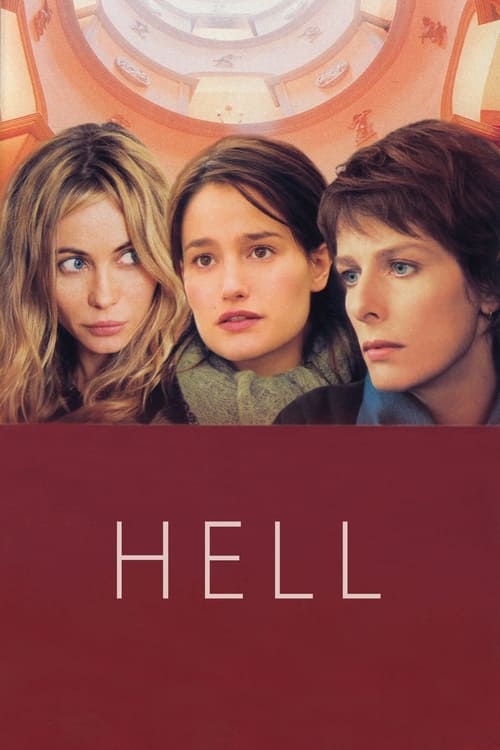
Three sisters who share a connection to a violent childhood incident reunite for the chance to come to terms with their past.
Hell

When the circus leaves town, Zygmunt and Marysia unwittingly adopt a camel into their home. The couple quickly forms a close bond with the nameless camel, but as the bond grows stronger, their neighbors slowly begin to ostracize them.
The Big Animal

A teenage postal worker, Tomek, routinely spies on his older neighbor Magda, a sexually liberated artist who lives in the apartment across the courtyard from his. As their private worlds merge, fascination turns to obsession, and the line between love and curiosity becomes violently blurred.
Decalogue VI

A young man in his twenties leaves prison after a three-year sentence. He wants to start a new life in a place where he is not known and dreams only of a job, a wife and a family. He succeeds partially in fulfilling these dreams, but then runs into a conflict on a construction job between the corrupt boss and fellow workers secretly planning a strike. He becomes a pawn in one camp while remaining true to his ideals in the other. Filmed in 1976 and shelved for five years.
The Calm

What makes European cinema so special? Find out in Paul Joyce’s feature-length documentary, Pictures of Europe, which examines the differences between American independent and Hollywood movies and films from European directors. Featuring luminary iconoclasts from European cinema such as Agnes Varda, Bernardo Bertolucci and Pedro Almodovar, as well as American counterpoints from Paul Schrader, and those who have crossed back and forth, such as Paul Verhoeven