Alice Joyce
Acting
Biography
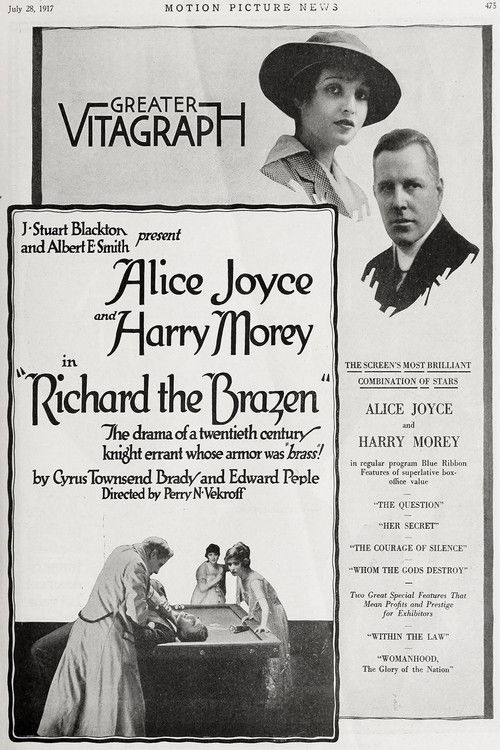
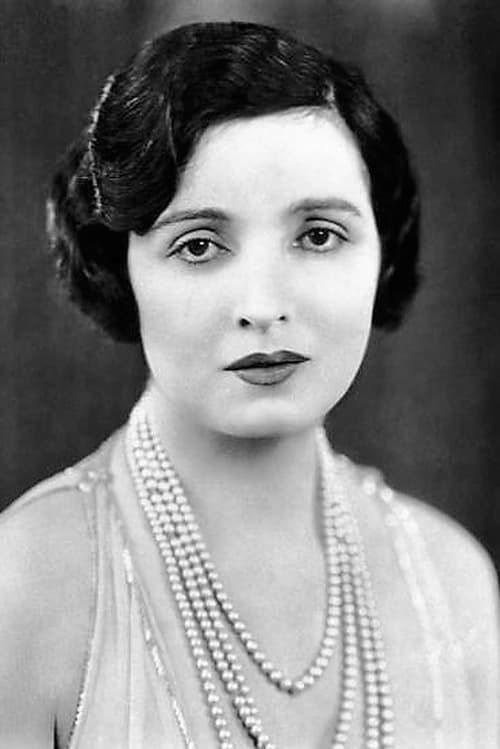
From Wikipedia Alice Joyce (October 1, 1890 – October 9, 1955) was an American actress, who appeared in more than 200 films during the 1910s and 1920s. She is known for her roles in the 1923 film The Green Goddess and its 1930 remake also called The Green Goddess. It was director Sidney Olcott at the Kalem Company in New York City who gave Alice Joyce her first chance, casting her in his 1910 production, The Deacon's Daughter. She was eventually sent to work under director Kenean Buel on the West Coast after Kalem acquired the old Essanay Studios property in East Hollywood in October 1913. Joyce spent time with Kalem (1910–1915) and Vitagraph (1916–1921), later worked as independent for various studios. Her stardom began to wane with the advent of sound motion pictures. Joyce was known as "The Madonna of the Screen" for her striking features and presence. She made her last movie in 1930, after which she and ex-husband Tom Moore worked a late vaudeville circuit for a time. She declared voluntary bankruptcy in 1933. Joyce was active in San Fernando Valley women's organizations in her later years. She did book reviews and made sketches for friends.
Known For

An eccentric lower class woman struggles to gain respect in high society after marrying a wealthy man, and the problem gets worse when their daughter starts growing up.
Stella Dallas

Brothers Beau, John and Digby Geste join the Foreign Legion, where they fall under the rule of tyrannical Sergeant Markoff. Beau and John are assigned to Fort Zinderneuf, where Markoff tries to break their spirit, aware of a dark family secret concerning a fabulous jewel one of them carries. As tensions rise, Arabs attack the fort and rivalries must be thrown aside in a desperate battle for life.
Beau Geste

A fiesty, sexy and manipulative gypsy disrupts the lives of a conservative farm family.
The Squall

In this suspenseful silent crime drama, a hijacker proves his loyalty to his mother by killing his biological father, a blackmailing gangster who has been threatening to destroy the mother's happy marriage to the governor.
The Noose

Broken hearts in Ireland. Sean is a great tenor, in semi-retirement, living in a village close to Mary, the woman he’s always loved. Mary’s aunt convinced her to marry a man for his money; he has recently deserted her, leaving her penniless. She and her two children, Eileen and Tad, move in with the selfish and austere aunt. Eileen is falling in love with Fergus, a young man who’s off to Dublin to seek his fortune. Sean is drawn out of retirement and goes on tour in America. At his first concert, he’s nervous and out of sorts until the last song, when peace descends on him like a gift. What has happened, and can family life be set right?
Song o' My Heart

Stephen Sorrell, a decorated war hero, raises his son Kit alone after Kit's mother deserts husband and child in the boy's infancy. Sorrell loses a promising job offer and is forced to take work as a menial. Both his dignity and his health are damaged as he suffers under the exhausting labor and harsh treatment he receives as a hotel porter. But Sorrell thrives in the knowledge that his son will benefit from his labors. Sorrell has allowed the boy to believe his mother dead, but when the mother shows up, wanting to re-enter the young man's life, Sorrell must make hard decisions. Preserved and restored by the Academy Film Archive in 2004.
Sorrell and Son

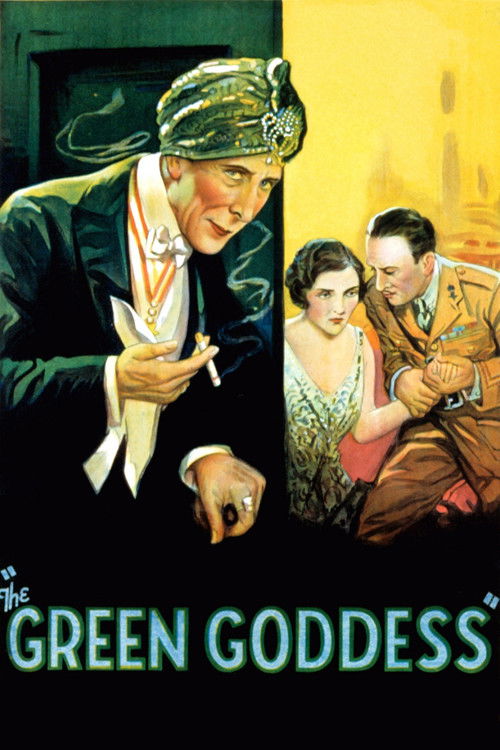
An airplane carrying three Brits crash lands in the kingdom of Rukh. The Rajah holds them prisoner because the British are about to execute his three half-brothers in neighboring India.
The Green Goddess

The Green Goddess is a 1923 American silent adventure film based on the play The Green Goddess by William Archer. Set during the British Raj, it stars George Arliss as the Rajah of Rukh, into whose land arrive three British subjects, played by Alice Joyce, David Powell, and Harry T. Morey.
The Green Goddess

Lady Andrea Pellor is engaged with a South African wealthy mine owner only to save her family from misery. Before the wedding, she changes her mind about marrying the rich man for the wrong reasons, and she begs a pilot known as "White Man" to take her with him.
White Man

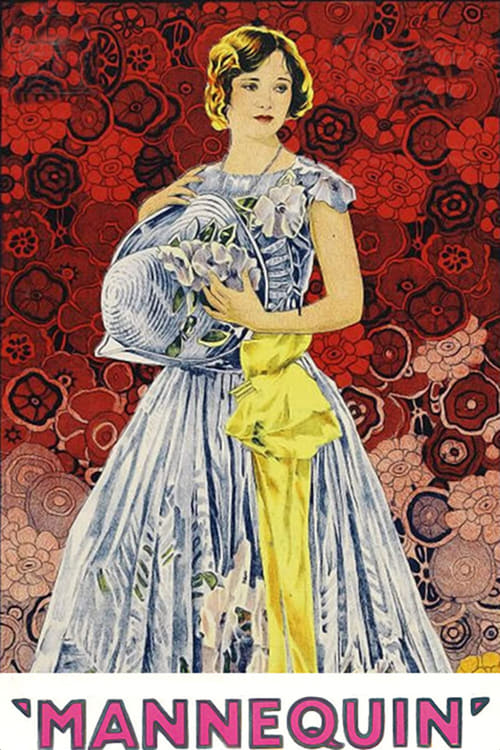
Adapted from the Fannie Hurst story of the same name, Mannequin is the story of Joan Herrick, kidnapped in infancy from her wealthy parents and raised by a slatternly slum woman. The film is still extant.
Mannequin

Little Elsie, scarcely two years of age, awakens one morning and crawls out of the house, dragging her doll. The little tot creeps to the nearby railroad station and resumes her nap in one of the flower beds. Mrs. Hastings, a wealthy widow, is taking an early morning train, after having spent several weeks at an eastern summer resort. She reaches the station before train time and while strolling about, she discovers little Elsie. While she is fondling the little one, the train arrives and Mrs. Hastings, who has no child of her own, cannot master the temptation to take this baby with her. Upon arriving in the west, Mrs. Hastings learns from a newspaper of the strange disappearance of Elsie Mason.
The Strange Story of Elsie Mason
A compilation of thirteen rare silent films digitized by the Library of Congress, selected for the 2022 Domitor conference theme “Copy/Rights and Early Cinema.” Drawn from nitrate and safety film, the program spans comedies, trick films, and dramas exploring censorship, invention, adaptation, and social rights. Titles include: Pruning the Movies (Nestor, 1914); Imperial Japanese Dance (Edison, 1894); Early Edison Camera Tests (Edison, c.1890s); Censorship and its Absurdities (Edison, 1915); In Wrong (Crystal, 1914, dir. Phillips Smalley); Tillie’s Tomato Surprise (Lubin, 1915, dir. Howell Hansell); Indian Land Grab (Champion, 1910); The Stolen Play (Falcon Features, 1917, dir. Harry Harvey); And the Villain Still Pursued Her (Vitagraph, 1906, dir. J. Stuart Blackton); The Doll’s Revenge (Hepworth, 1907, dir. Lewin Fitzhamon); The Disintegrated Convict (Vitagraph, 1907); The Mexican Joan of Arc (Kalem, 1911, dir. Kenean Buel); and Fads and Fashions of 1900 (U.S., 1940s).
Copyright Comedies and More

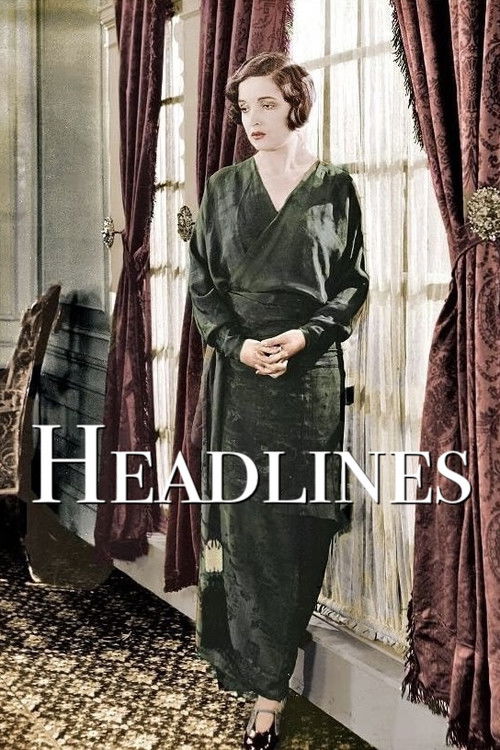
Hardworking reporter Phyllis Dale has been hiding a seventeen year old secret. But when her wild daughter Bobby is removed from boarding school, it looks like the secret is out. That is, until Bobby introduces herself as the little sister to Phyllis' fiancé Lawrence and boss Roger. Yet Bobby is bound to cause mischief by flirting with everyone. And when she draws the attention of a philandering divorcee, she is bound for scandal! Will Phyllis be able to keep wild Bobby out of the Headlines?
Headlines
Driven to desperation by the enmity of Jane, her step-daughter, Sarah, Dean's second wife, turns to Ware, a friend of the family and a former suitor, for advice. Jane learns that her stepmother has gone to call upon Ware. Realizing the unhappiness her conduct has caused, the girl is stricken with remorse. Knowing that her father would misconstrue Sarah's visit to Ware, the girl hastens to the man's home to meet her stepmother. Sarah is fallen aback when Jane finds her with Ware, but is filled with happiness when the girl announces her desire for a reconciliation.
The Shadow

An expose of the methods used by a police-department to extract a confession from a suspect, regardless of innocence or guilt, and the effect and consequences on a family when an innocent member breaks under the interrogation methods and confesses to a crime he did not commit.
The Third Degree

An unfaithful husband and his daughter go on nightly club outings, leaving the mother at home. The mother rebels against her lonesome life and attempts to prevent a man from pursuing her daughter.
Dancing Mothers

An officer in the British Guards takes to drink when a friend and fellow officer convinces the woman they both love that he has another woman.
The Ace of Cads

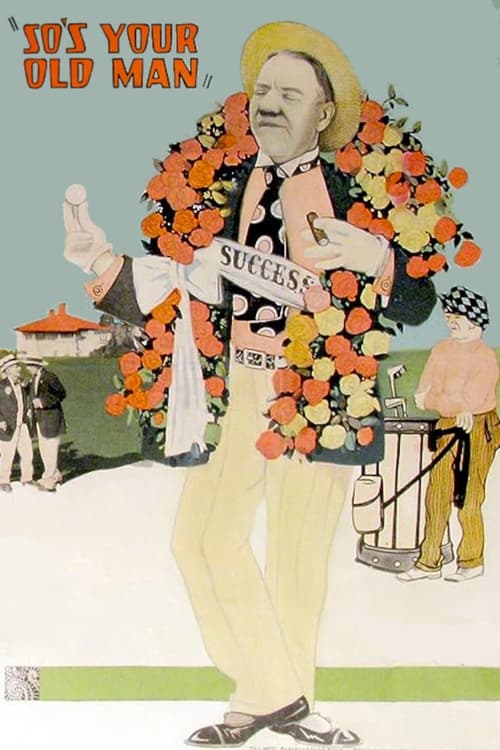
Gregory La Cava directs this comedy of errors, starring W.C. Fields as a hen-pecked, inebriated inventor who triumphantly creates unbreakable windshield glass while struggling to gain the respect of his social-climbing daughter and nagging wife.
So's Your Old Man

One of many adaptations of the comedy of manners written by Richard Brinsley Sheridan satirizing the gossip and scandal-mongering of London's high society.
The School for Scandal

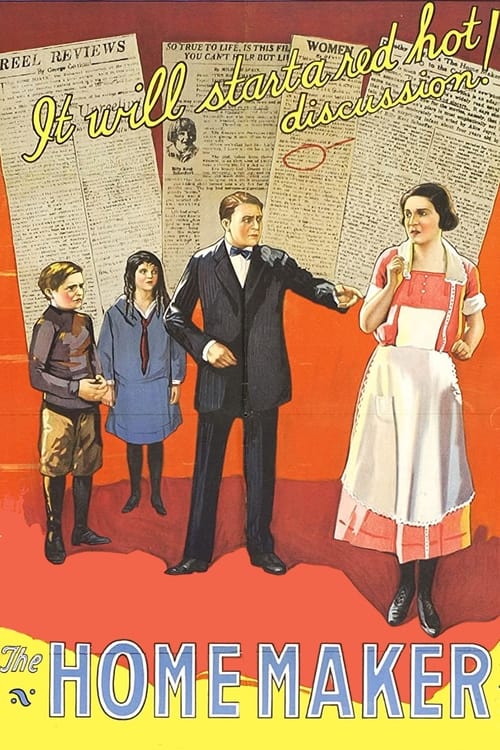
A man's life seems to be falling apart. He's bored with his job, gets passed over for a promotion and, when the pressures get to be too much, he tries to commit suicide, but he even fails at that and manages only to cripple himself instead of killing himself. Forced to stay at home, he finds the role of "househusband" enjoyable--until his wife takes a low-paying job with his old company, and rapidly rises up the corporate ladder.