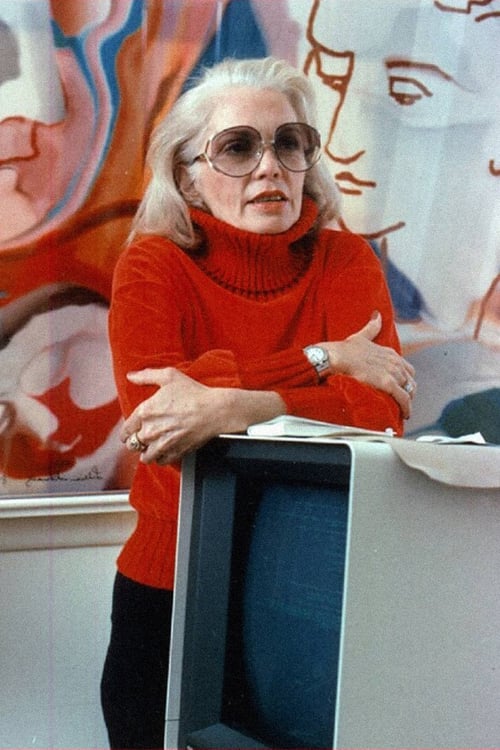
Lillian Schwartz
Directing
Biography
Lillian Schwartz is a pioneer in the field of computer animation. In the early 1970s, she became the official artist in residence at AT&T Bell Laboratories, IBM's Thomas J. Watson Research Laboratory and at Lucent Technologies Bell Labs Innovations where she would experiment with early computer graphics programs to create short works of film art. After studying traditional free-hand drawing while a nursing student at the University of Cincinnati, Schwartz became interested in incorporating technology into her artwork. Along with computer scientist Ken Knowlton, she helped create the image-generating programming language EXPLOR, with which she created many of her works in the mid to late '70s. In addition to her animation, Schwartz has also done research in the field of using computers to analyse the working methods of traditional artists such as Picasso, Matisse and Da Vinci by amassing large databases of their colour palettes and structures within their art. (from: http://www.undergroundfilmjournal.com/tag/lillian-schwartz/)
Known For
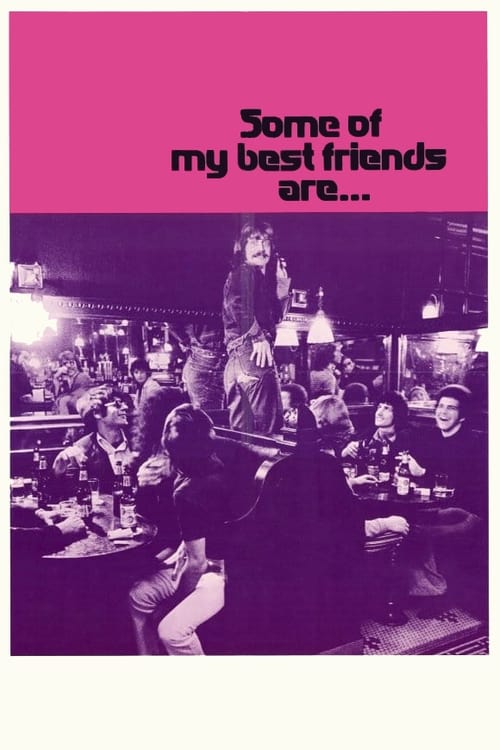
Regulars gather at The Blue Jay, a gay bar in Manhattan's Greenwich Village, to celebrate Christmas Eve 1971 with people they consider family.
Some of My Best Friends Are...

Drawing on rare performances, interviews, animations, and experimental film, this documentary surveys the formative years of electronic music from 1948 to 1980. Featuring pioneering composers and inventors—including Milton Babbitt and Leon Theremin—the film explores the experimental technologies, academic laboratories, and creative struggles that shaped the early evolution of electronic sound.
OHM+: The Early Gurus Of Electronic Music : 1948–1980
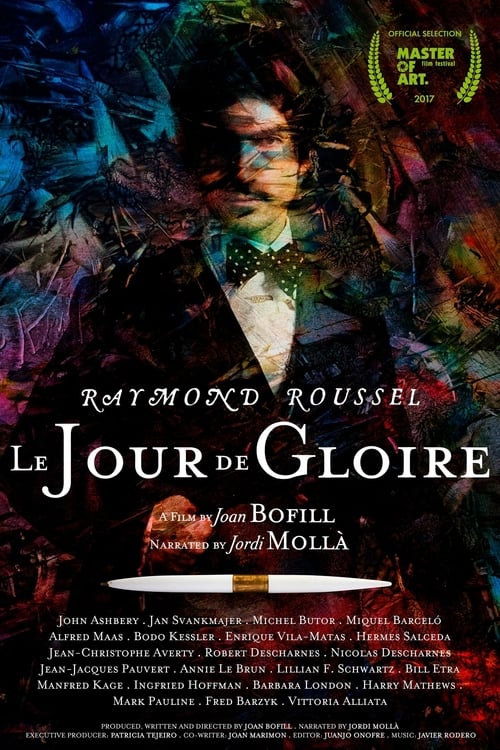
A tortuous journey, in the company of the Spanish painter Salvador Dalí, around the figure of the enigmatic and visionary French poet Raymond Roussel (1877-1933).
Raymond Roussel: The Day of Glory
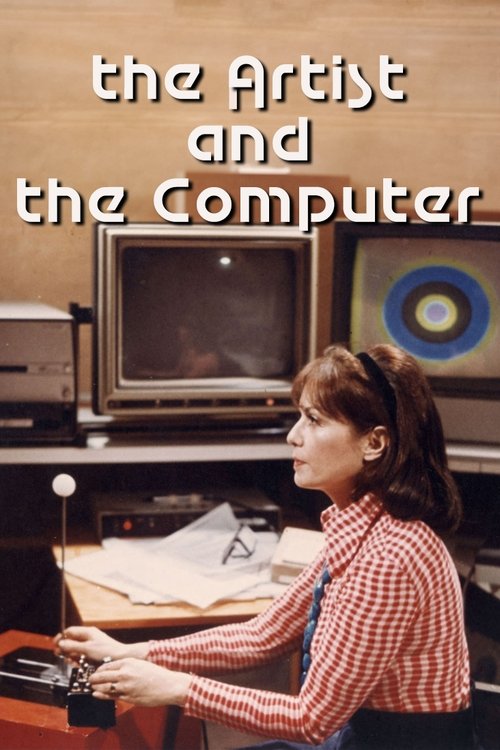
Pioneering artist Lillian Schwartz demonstrates the human input -- integrity, artistic sensibilities, and aesthetics -- that goes into producing early computer art. In voice-over she explains the intent behind a number of her films and offers insight into the artist's problems and decisions. Produced for AT&T.
The Artist and the Computer
Schwartz reordered and combined angular contours, broken planes, and distorted proportions in her own pictorial structures in an homage to Picasso's style.
Beyond Picasso
A number of telephones from the very first invention by Alexander Graham Bell to the present-day cellular and voice phones are morphed in an inventive choreographic video.
Morphing of the Telephone
This animation can be watched in 2D or using Chromadepth Glasses in 3D.
Lily's Sea
This animation can be watched in 2D or using Chromadepth Glasses in 3D.
Xtreme Sightings
This animation can be watched in 2D or using Chromadepth Glasses in 3D.
RGBCMY
Music “Canzoni per sonar a quattro” by Giovanni Gabrieli, performed by Elizabeth Cohen, Max Mathews, and Gerard Schwarz. Images generated by computer.
La Spiritata
Music “Quartet in F” by Maurice Ravel, performed by Max Mathews. Subtly colored images combining microphotography and computer generated images with unique editing sequences that propel the viewer into a spiral-like endless vortex. Three music tracks were produced by the Groove System – a computer-controlled sound synthesizer.
Experiments
This tape combines live-images filmed in the Yucatan with output from the Paik video-synthesizer ribboned with computer-generated images.
Mayan
An illusion of 3 dimensions is achieved by a blending of mathematics and physics to carry the spectator through a new range of audio and visual dynamics.
Newtonian I
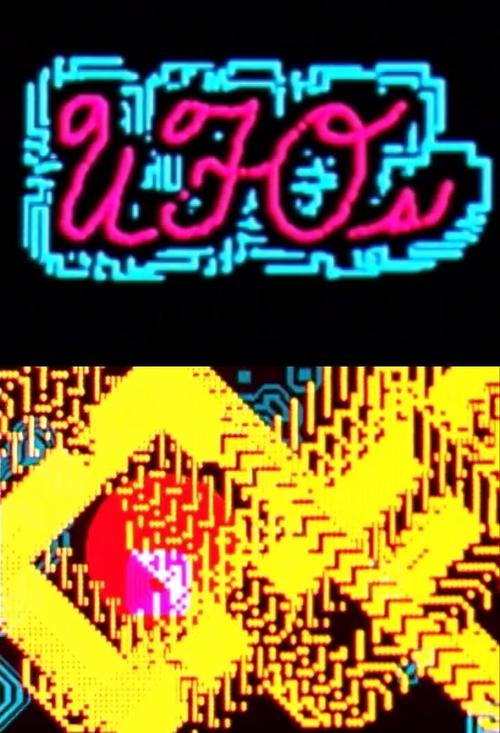
Blasting off into cosmic visual abstraction, pioneering computer artist Lillian Schwartz’s UFOs is a kinetic tour-de-force whose innovative pixel pigmentation showcased advanced stereoscopic technology as art.
UFOs
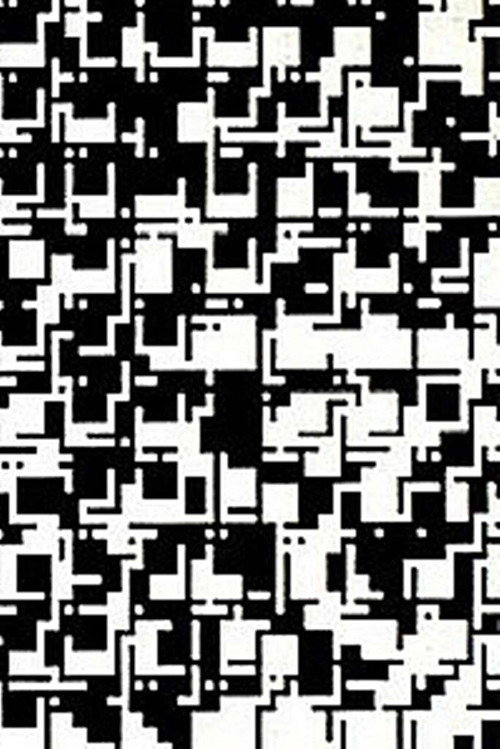
Extended editing techniques based on Land’s experiments affect the viewer’s sensory perceptions.
Googolplex
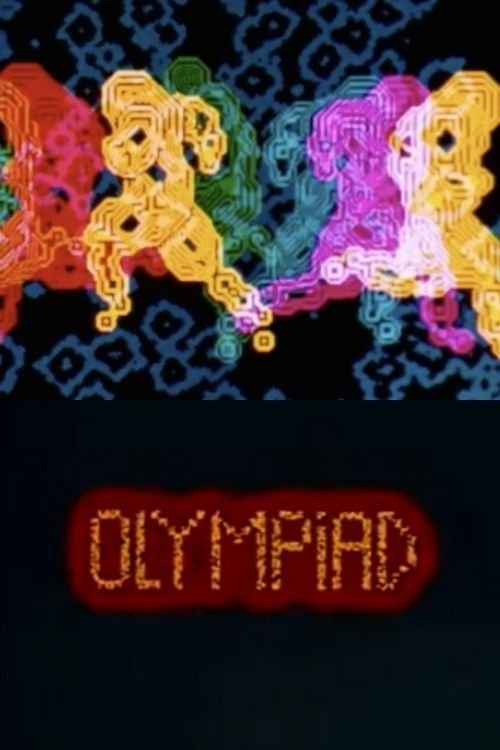
Study in motion based on Muybridge’s photographs of man running.
Olympiad

This animation can be watched in 2D or using Chromadepth Glasses in 3D.
X-STRIA2
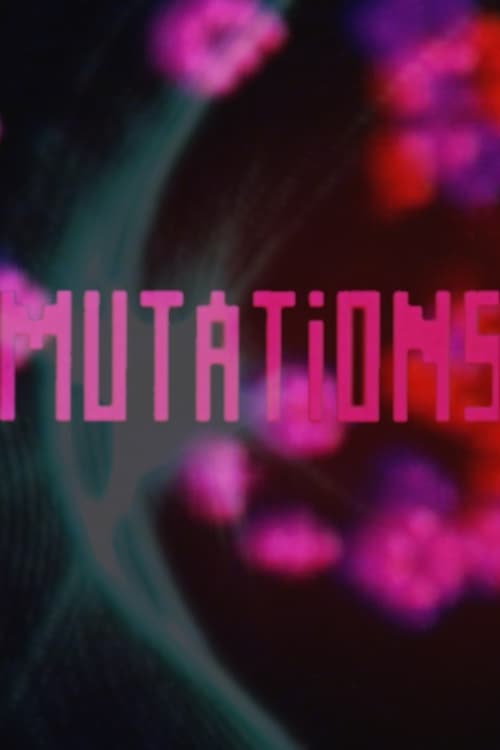
“The changing dots, ectoplasmic shapes and electronic music of L. Schwartz’s ‘Mutations’ which has been shot with the aid of computers and lasers, makes for an eye-catching view of the potentials of the new techniques.” – A. H. Weiler, N. Y. Times
Mutations
Mathematical functions are the basis for a science film on contour plots and an art film. Both are shown simultaneously at a two screen production for an IEEE conference in NYC. Beauty in Science & Art.
Papillons
Abstract images of frame-by-frame animation with subtle growing effects of crystals are enhanced by polarized colors.