FEEL IT.STREAM
Stan VanDerBeek

Stan VanDerBeek

Directing

Biography

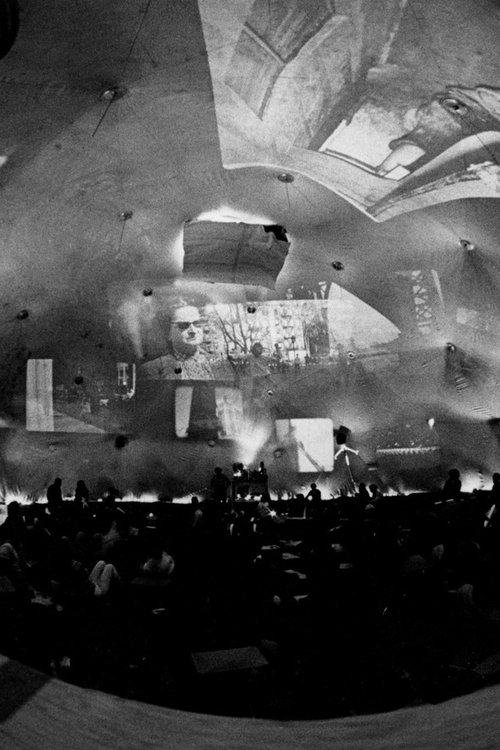
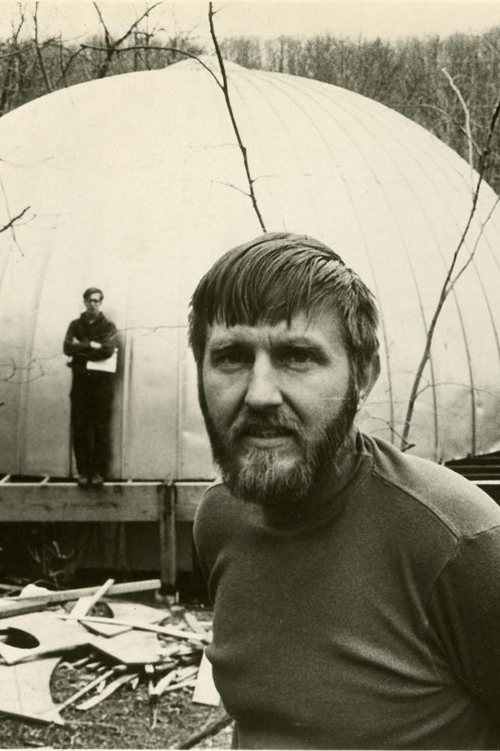
American experimental filmmaker Stan Vanderbeek began his career in the 1950’s after having studied art and architecture in New York and North Carolina. His earliest period (1955-1965) is marked by his animated painting and collage films which the artist and critic Daryl Chin regarded as having an “enormous vitality, bounding inventiveness and incendiary wit which was shared by such other collagists as Robert Breer, Bruce Conner, Dick Preston.” Films such as Science Friction (1959, 10’), Breathdeath (1963, 15’), A la Mode (1959, 7’) and Achoo Mr. Kerrooschev (1960, 2’) are from this period. In the 1960’s, in the context of his expanded cinema research, Vanderbeek started his audacious project of the “Movie Drome” theater, a space that allowed him to create an appropriate environment for his synesthetic works, which included film, performance and dance among other disciplines. The filmmaker spent about 10 years developing this project, which consisted of a huge dome that surrounded the audience and engulfed them in the images projected all around them. From the mid-1960’s, Vanderbeek ‘s appetite for exploring new technologies increased and tools such as video played a major part in the filmmaker’s work. This can be seen in his computer-animated films from this period such as Symmetricks (1972, 6’) and the Poemfield series of 8 computer generated animations (1966-1971). His work with computers and experiments with holograms reflected his desire to use the most complex technology to get as close as possible to the functioning of the human nervous system. In addition to his creative work in the fields of film and video art, Vanderbeek was a faculty member and artist-in-residence at a number of major universities. He died in 1984.
Known For

No image
5.5

A short surreal animation created with fashion magazine clippings and sound collages.

A La Mode

1959
Filmmakers
N/A

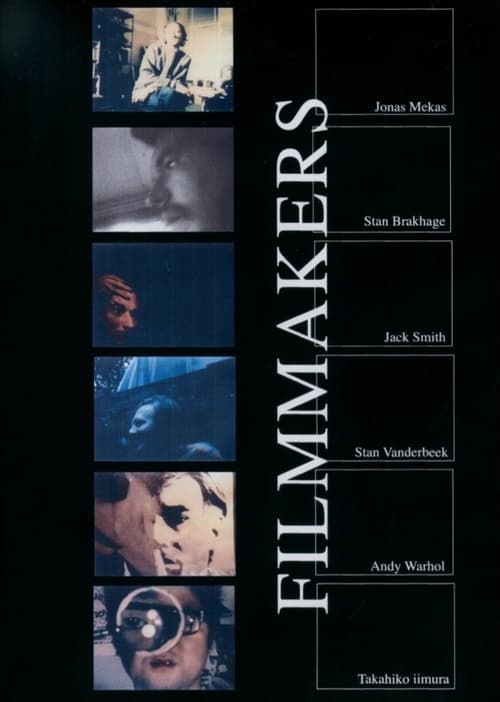
Iimura creates a short self-portrait as well as brief portraits of five of his peers: Brakhage, Vanderbeek, Smith, Mekas and Warhol. In each portrait, Iimura attempts to copy the styles and traits of each artist (Vanderbeek's constantly moving camera; Mekas' experiments with film speed; Warhol's use of flashes of white against a black background), while briefly commenting on the images being shown. The film serves effectively as an introduction to the film styles of these artists.

Filmmakers

1969
Reality's Invisible
5.9

Fulton made the film during his brief time at Harvard, where he had been invited to teach by Robert Gardner, his friend and collaborator (Fulton would later serve as a cinematographer on Gardner’s 1981 documentary Deep Hearts, among others). Reality’s Invisible could be described as a portrait of the Carpenter Center, yet it is a portrait of an extremely idiosyncratic and distinctive sort. Fulton moves us through the concrete space of the Center’s Le Corbusier-designed building—the only structure by the architect in North America—but, more centrally, presents us footage of students making and discussing their work alongside figures like Gardner, theorist Rudolf Arnheim, artist Stan Vanderbeek, filmmaker Stan Brakhage, and graphic designer Toshi Katayama.

Reality's Invisible

1972
Fluids
N/A

16mm color work by Stan Vanderbeek that takes his work away from the cutups and the commentary and lands him in the psychedelic and abstract. Opticals, repetitions, camera moves and zooms are what make up the bulk of this exploration into fluids. The results bridge that realm between hangout art piece and intersteller stoner trip.

Fluids

1964
Pittsburgh
N/A

Commissioned by the Pittsburgh Bicentennial Association to celebrate the city’s 200th anniversary, PITTSBURGH was created by a team of filmmakers that included Stan Brakhage (working under the pseudonym James Stanley), Weegee, Len Lye, and Stan Vanderbeek, and photographers W. Eugene Smith and Willard Van Dyke. Brakhage called it “weirdly interesting, but a monstrosity.”

Pittsburgh

1959
Breathdeath
4.9

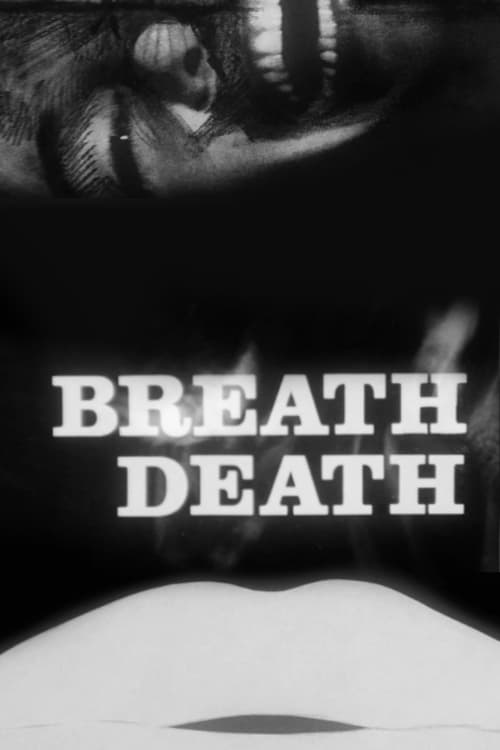
A surrealistic fantasy based on the 15th century woodcuts of the dance of the dead. A film experiment that deals with the photoreality and the surrealism of life. A collage-animation that cuts up photos and newsreel film and reassembles them, producing an image that is a mixture of unexplainable fact (Why is Harpo Marx playing a harp in the middle of a battlefield?) with inexplicable act (Why is there a battlefield?). It is a black comedy, a fantasy that mocks death ... a parabolic parable.

Breathdeath

1963
Fuses
5.8

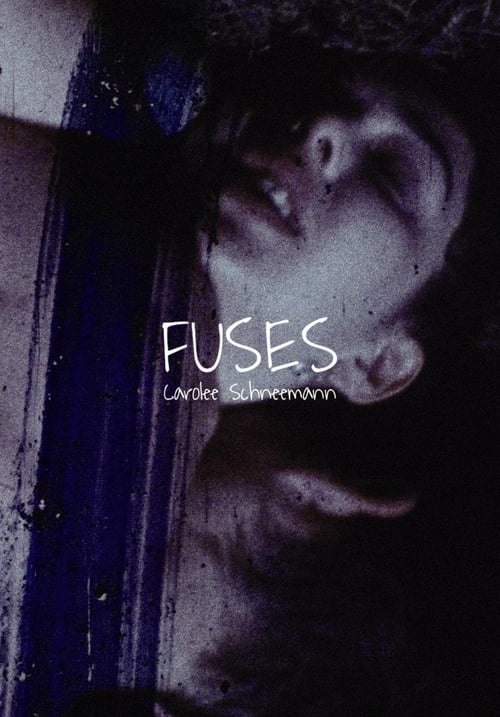
A silent film of collaged and painted sequences of lovemaking between Schneemann and her then partner, composer James Tenney; observed by the cat, Kitch.

Fuses

1967
Home Movies 1971-81
N/A

Home movies shot on Super 8mm by W+B Hein over 10 years.

Home Movies 1971-81

1985
For Life, Against the War
6.0

First shown on January 30, 1967, FOR LIFE AGAINST THE WAR was an open-call, collective statement from American independent filmmakers disparate in style and sensibility but united by their opposition to the Vietnam War. Part of the protest festival Week of the Angry Arts, the epic compilation film incorporated minute-long segments which were sent from many corners of the country, spliced together and projected. The original presentation of the works was more of an open forum with no curation or selection, and in 2000 Anthology Film Archives preserved a print featuring around 40 films from over 60 submissions.

For Life, Against the War

1967
Sonia and Stan Paint a Portrait of Ronnie
N/A

In Sonia and Stan Paint a Portrait of Ronnie, VanDerBeek and artist Sonia Sheridan assemble a pastiche of images of Ronald Reagan, metamorphosed through digital computer graphics.

Sonia and Stan Paint a Portrait of Ronnie

1983
Site
6.0

Performance by Robert Morris and Carolee Schneemann.

Site

1964
No image
5.2

A cut-out of Soviet leader Nikita Khrushchev sails over newspaper articles as they take place. Combines live photography and collage animation in one film.

Achooo Mr. Kerrooschev

1960
The Birth of the American Flag
N/A

No description available.

The Birth of the American Flag

1965
Facescapes
N/A

No description available.

Facescapes

1965
Notes on the Buffalo Conference: “Autobiography in American Independent Cinema”
N/A

During the 1970s I shot, helped to make, or commissioned about ten document films, mainly about film-makers. This film is one of them. It was made with Dan Ochiva, who acted as cameraman on about half of the footage. I shot the rest, and then edited the film. It is a record of a conference held at the State University of New York at Buffalo on March 22-25, 1973. Among the participants filmed were Gerald O'Grady (who organized the conference), Will Hindle, Stan Brakhage, Jonas Mekas, Robert Creeley, Bruce Baillie, Scott Bartlett, Hollis Frampton, Ken Jacobs, Ed Pincus, Stan Vanderbeek, Ed Emshwiller, Sally Dixon, James Cox. This footage will eventually become part of my film PEOPLE, PLACES, THE 1970S. –R. H.

Notes on the Buffalo Conference: “Autobiography in American Independent Cinema”

1973
Newsreel of Dreams 1 & 2
N/A

Dream matrix, history written in lightning image, memory and the TV syntax, images flowing and fused together to other images and electronic tapestry of images half seen, sought for, seeking man's dreams, movies as dreams, history as media. "The artist will tell you it is as much a process he is interested in ... as a result. Art is a process – life is a process – are they the same process? So many of the artists became unhappy about this eternal, unyielding quality in their art, and they began to wish their work were more like shoes, more temporary, more human, more able to admit of the possibility of change. The fixed, finished work began to be supplemented by the idea of work as a process, constantly becoming something else, tentative, allowing more than one interpretation." – Dick Higgins

Newsreel of Dreams 1 & 2

1964
Self-Poured Traits
N/A

Self Poured Traits is a tongue-in-cheek self-examination set to the poetry of Kenneth Rexroth.

Self-Poured Traits

1983
No image
N/A

"A film of video light and color. Dancers move through computer-generated patterns and fields of soft color to the music of Ravel. An experiment in video graphics combining the new technologies of video matting and analog computer patterns. One of the most successful of the Boston Symphoney Experiments, 1972, aired nationally." --S.V.

Videospace

1970
Ad Infinitum
N/A

No description available.

Ad Infinitum

1968
No image
8.0

To create his “Poemfields” (1965-71) series, VanDerBeek worked closely with computer scientist Ken Knowlton and the staff at Bell Labs. Each “Poemfield” was adapted from poems by VanDerBeek, programmed on an IBM 7094 computer in black and white using a custom language known as BEFLIX, and colored after the fact by artists Robert Brown and Frank Olvey. Poemfield No. 2 features a soundtrack by jazz percussionist Paul Motian, known for his collaborations with Bill Evans.

Poem Field No. 2

1966