
Jaume Comas
Acting
Known For

In France in the near future, revolt and chaos erupt. A right-wing politician, Philippe Muphand, is set to take control when his lady friend Caroline walks out, announcing she will take up with the first fool she sees. The fool is Serge Laine, a professor and author of the prize-winning "Le voyage qui ne finit pas," headed to the train station for tickets to Barcelona where he and his wife will enjoy a second honeymoon and he will lecture at the university. Caroline seduces Serge, and he soon abandons wife, family, job, and honesty to embrace Caroline, the romanticism of Jack London, and murder.
Heat of Desire
No description available.
Sota el signe de...

A bird that wants to become a hero, a carrier pigeon with an endless list of achievements under his belt and a mouse inventor who want to fly at all costs are some of the characters in this animated film. Peace reigns in a farm located in the forests of Argonne (France), where the rooster no mercy to his son how to wake up and the sheep are all one. But running the year 1918, and the war between humans begins to touch them closely when an army captain pigeon lands in order to enlist some birds, among which strain the little bird.
The Aviators
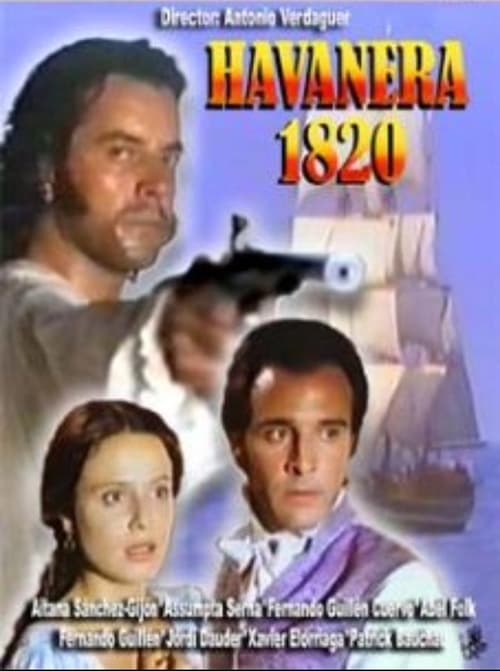
The year is 1820, and trade between Cuba and Catalonia is a booming business, although the goods that arrive to Cuba are not always the products that were shipped, in some cases, they simply arrive "lumps" or "coal". As it appears in the logbooks of the ships. 'Havanera 1820' is a film that tells stories of love and adventure in a time when Cuba confronts the Spanish colonizers.
Havanera 1820
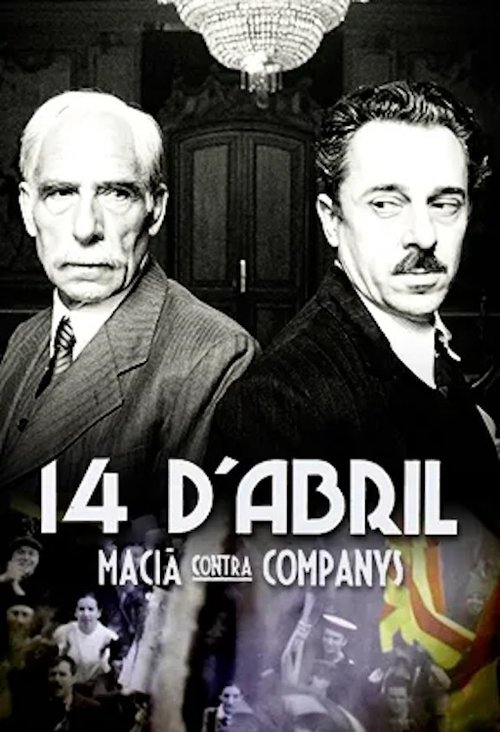
"14 d'abril. Macià contra Companys "is a television drama, allegedly recorded in 1932, but with the methods, style and own means 2010. With this temporary license, the stars of one of the episodes of the Catalan capital twentieth century discussed the facts, in first person, while a nosy camera helps us to relive what happened in Barcelona between 14 and 17 April 1931, the three-day duration of the Catalan Republic. All with the aim of showing the greatness and the precariousness of a gesture, half improvised by Companys key sovereigntist corrected by Macià, and that led to a shouting match.
14 d'abril. Macià contra Companys
No description available.
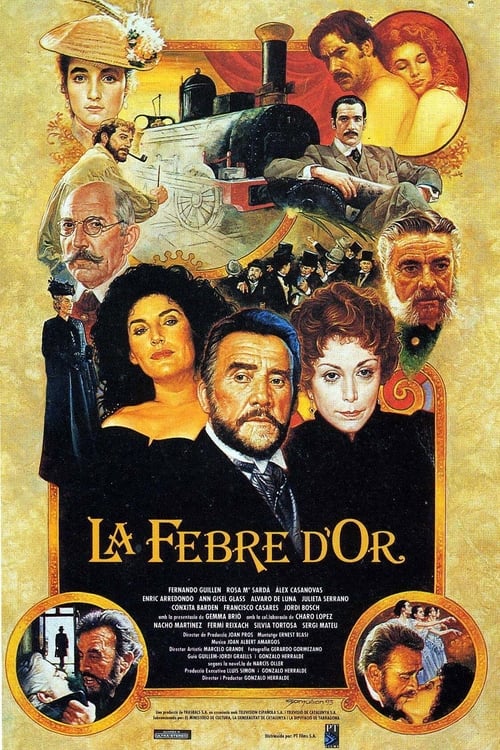
La febre d'or
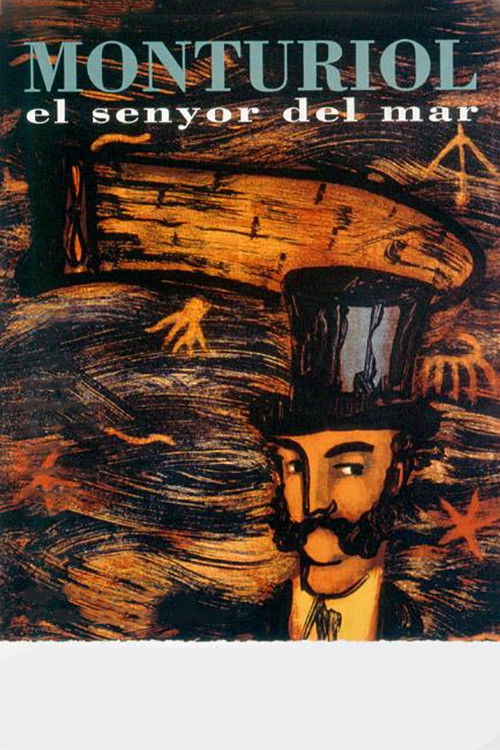
This film is based on the true story of the Catalan lawyer and engineer Narcís Monturiol i Estarriol (Figueres 1819 - Barcelona 1885) who invented the submarine.
Monturiol, el senyor del mar
Born into a humble family of Galician peasants, Carolina Otero decided to run away from home at the age of ten after suffering sexual abuse. In her personal quest for happiness and success, she traveled to countries such as France, the United States, and Russia, earning a living as an exotic dancer under the stage name "Bella Otero." In her eagerness to climb the social ladder, she became the mistress of very influential and powerful figures. Her true identity, age, and origins remain a mystery to this day, which she herself took care to perpetuate. Adapted from a fictionalized biography by Carmen Posadas.
La bella otero

No description available.
El gènere femení

In the late nineteenth century a fact shocked the Catalan society: The anarchist Santiago Salvador threw a bomb into the pit of the Gran Teatre del Liceu, resulting in twenty deaths. More than a century later, 'The Liceu bomb' is a reflection on those events, with the collaboration of various testimonies, as novelist Eduardo Mendoza or Permanyer Lluis historian, among others. Anarchism, Modernism, public executions and the nineteenth-century bourgeoisie shake hands with historical memory and claims anti-Barcelona, always with the Lyceum Theatre as a space for a confrontation that today still remains.