Acting
No description available.
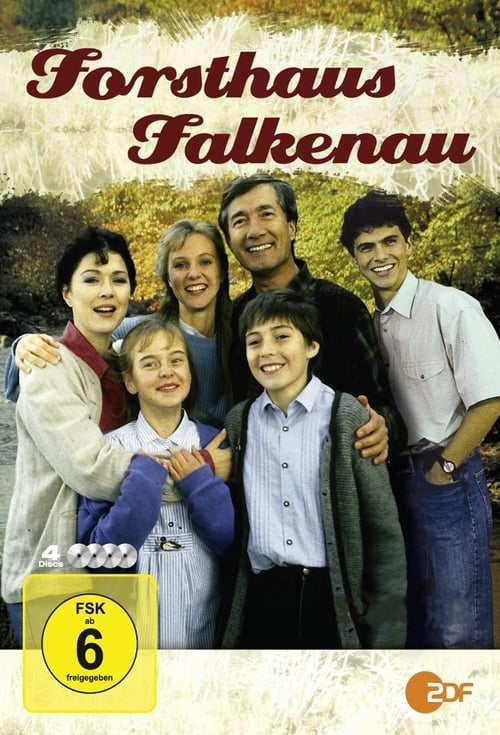
Forsthaus Falkenau is a German television series.
Der Kommissar is a German television series about a group of detectives of the Munich homicide squad. All 97 episodes, which were shot in black-and-white and first broadcast between 1969 and 1976, were written by Herbert Reinecker and starred Erik Ode as Kommissar Herbert Keller. Keller's assistants were Walter Grabert, Robert Heines, and Harry Klein who, in 1974, was replaced by his younger brother Erwin Klein.
A "children's birthday party" for adults. Each show featured a celebrity guest who had to take part in crazy, silly and often deliberately "moronic" games. Both presenters had to compete against the respective guest in various games.
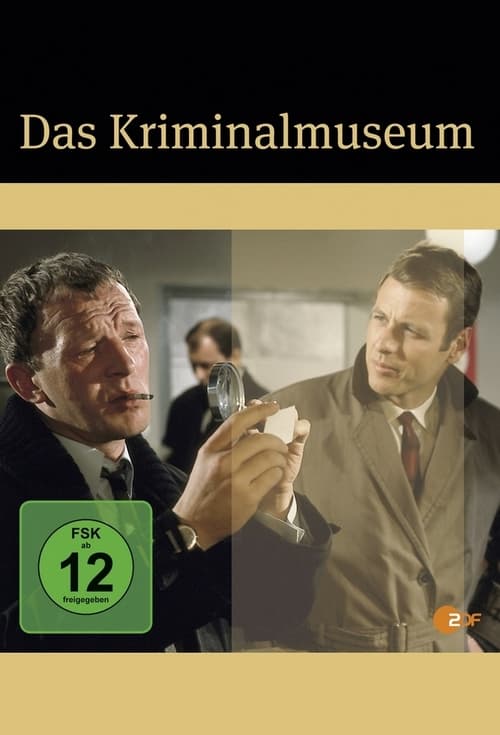
Das Kriminalmuseum was a German television series. It ran from 1963 to 1970 on ZDF and was one of its first programs. Each episode began with a tracking shot through an unspecified crime museum, stopping at one of the displays, whose story was then told. Each episode was between 60 and 75 minutes long and featured different actors as the criminal commissioner. The best known was Erik Ode, who in 1969 moved to Der Kommissar, appearing in 97 episodes. The theme music of the series was written by German composer Martin Böttcher, who also composed the complete scores for five episodes.
Inside the Kit Kat Club of 1931 Berlin, starry-eyed singer Sally Bowles and an impish emcee sound the clarion call to decadent fun, while outside a certain political party grows into a brutal force.
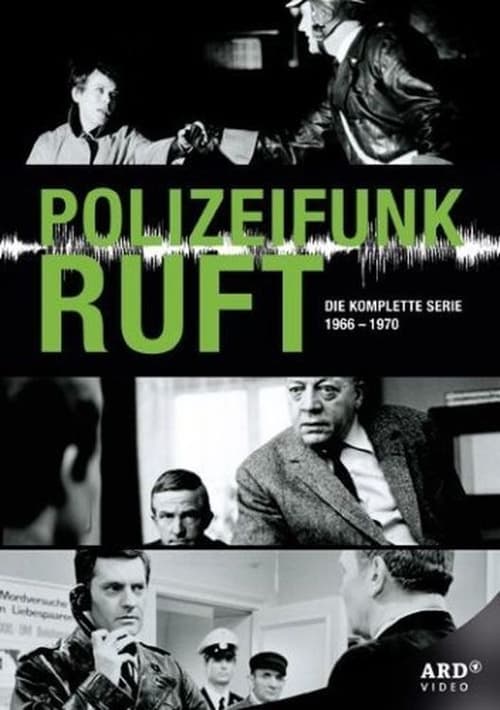
Polizeifunk ruft is a German television series.
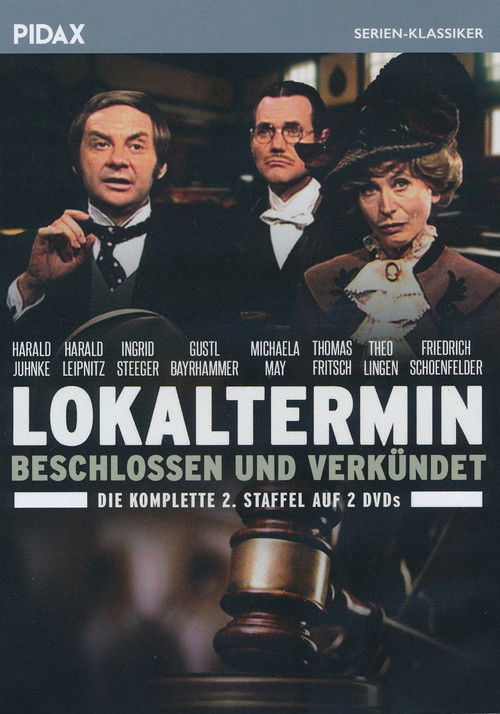
Beschlossen und verkündet is a German crime television series. 13 episodes were aired in 1975.
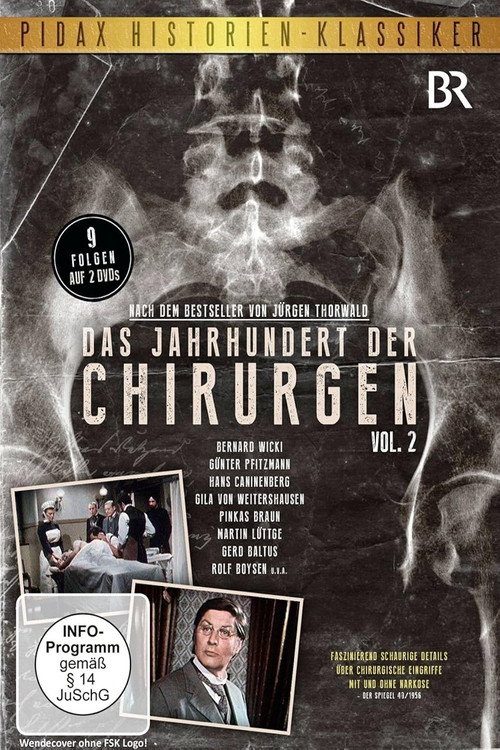
A special insight into medicine presented on film: sterile operations, hospitals used to be built by the wind, anaesthesia, surgical gloves, similar to the films Sauerbruch or Kneip.
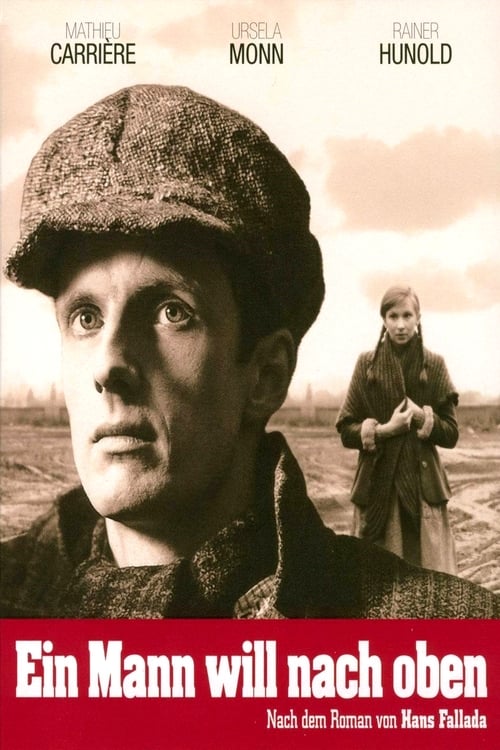
In 1909, Karl Siebrecht, who has just become an orphan, arrives in Berlin. The 16-year-old is eager to conquer the city for himself in just a few weeks. On the train ride there, he meets Rieke Busch, a girl from the working-class district of Wedding. She accompanies Karl from then on. But he soon realizes that he will have to start at the bottom. His path is characterized by small successes and setbacks. Only later does he make his breakthrough by founding a luggage transportation company. But once again, his success was short-lived as his business partner booted him out. Karl Siebrecht is faced with the ruins of his company. But he does not give up, finds new ways and seems to have achieved another breakthrough. But then the First World War breaks out...