FEEL IT.STREAM
Warren Sonbert

Warren Sonbert

Directing

Biography

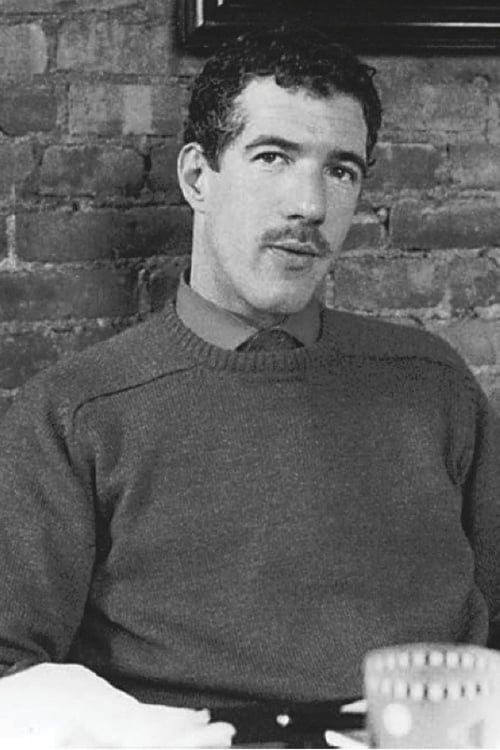
Warren Sonbert (1947-1995), was one of the key figures of American independent filmmaking. Works spanning Sonbert's entire career are now available for rental through Canyon Cinema, beginning with AMPHETAMINE (1966), made when he was still a teenager at New York University film school, through WHIPLASH (1995/1997), completed posthumously according to the filmmaker's specific instructions. Sonbert was the subject of a major retrospective at the Guggenheim Museum in April-May 1999, guest curated by Jon Gartenberg. These new prints were struck directly from the preservation internegatives made by the Academy Film Archive from the camera original and original prints in the Estate of Warren Sonbert.
Known For

Johnny Minotaur
5.5

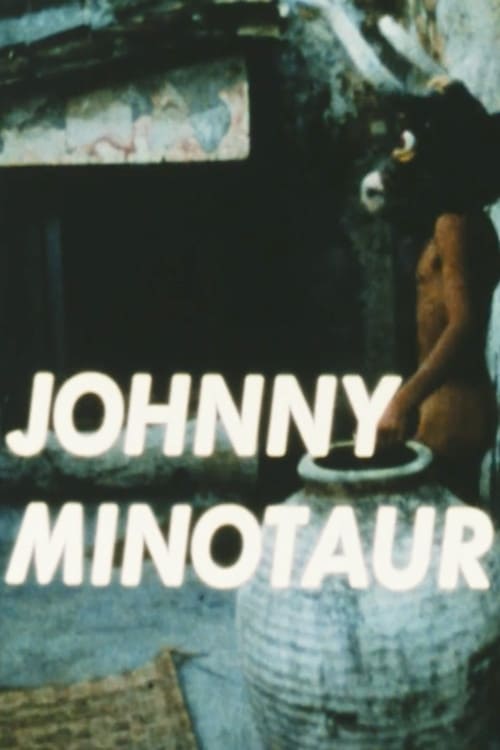
Johnny Minotaur is a lyrical explosion of taboos: incest, intergenerational desire, pansexuality and autoeroticism are a few of the issues Charles Henri Ford grapples with through mythopoeic, sensual imagery, recitations of his diaries and a philosophical debate featuring an impressive narration by such artists as Salvador Dali, Allen Ginsberg, Warren Sonbert and Lynne Tillman.

Johnny Minotaur

1971
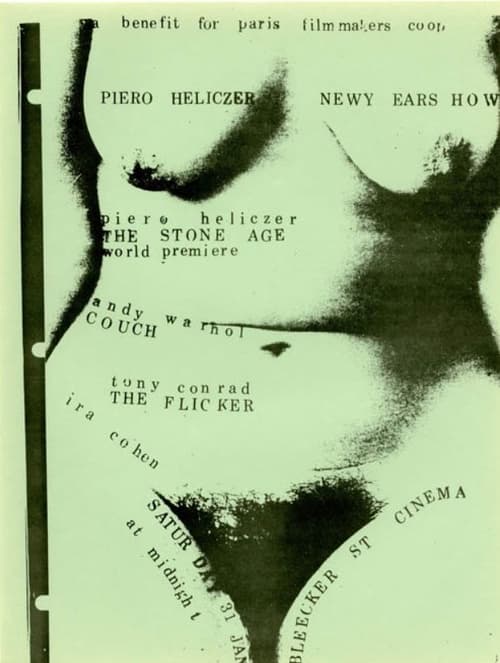
The Stone Age
N/A

"The question is, it is either going to be a stoned age or a new Stone Age" - Louis Brigante

The Stone Age

1970
Where Did Our Love Go
9.0

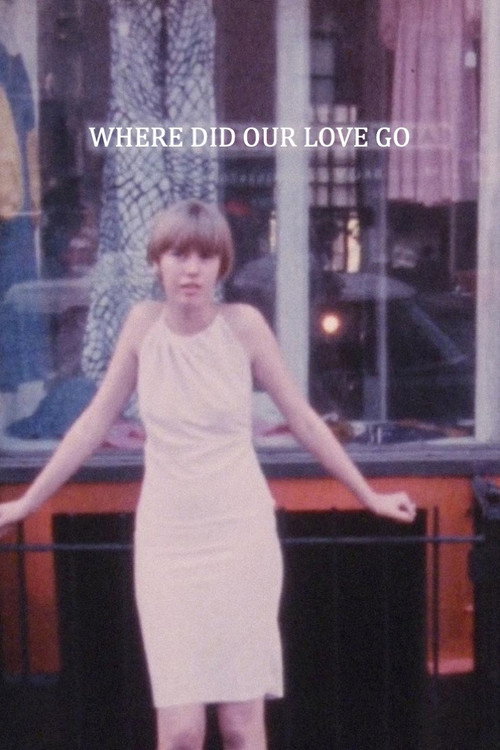
Warhol Factory days... serendipity visits, Janis and Castelli and Bellevue glances... Malanga at work ... glances at Le Mépris and North by Northwest... girl rock groups and a disco opening... a romp through the Modern. My second film. Preserved by the Academy Film Archive in partnership with Estate Project for Artists with AIDS in 1998.

Where Did Our Love Go

1966
Amphetamine
8.0

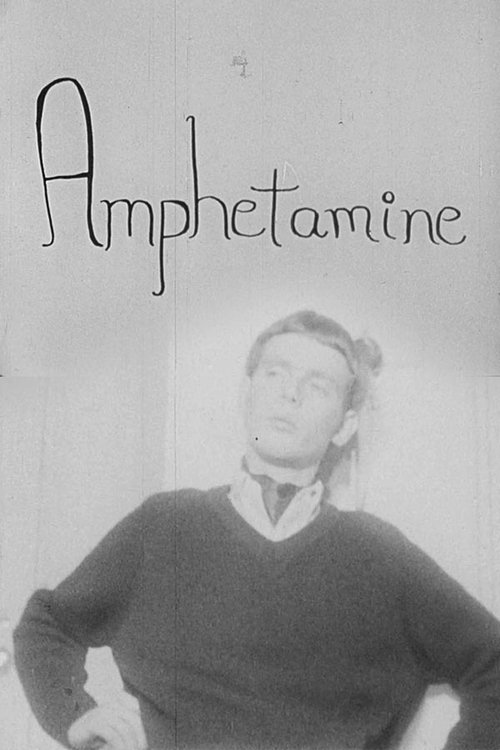
An ode to queer sex and drugs, boys shooting up and kissing. Preserved by the Academy Film Archive in 1998.

Amphetamine

1966
Divided Loyalties
10.0

Warren Sonbert described Divided Loyalties as a film 'about art vs. industry and their various crossovers.' According to film critic Amy Taubin, "There is a clear analogy between the filmmaker and the dancers, acrobats and skilled workers who make up so much of his subject matter." -- Jon Gartenberg. Preserved by the Academy Film Archive in partnership with Estate Project for Artists with AIDS in 1998.

Divided Loyalties

1978
Holiday
8.0

Experimental short subject preserved by the Academy Film Archive, in partnership with Estate Project for Artists with AIDS, in 1998.

Holiday

1968
In Search of the Miraculous
3.0

In the Search of the Miraculous is a multi-levelled story realized with extremely personal techniques and with the kind of atmosphere of Poetry and Introspection, only a poet could create. It is, in fact, the story of a poet searching himself through his love for a girl, and of the girl searching for her father. Obsequious to the iron rules of the avant-garde, the film has neither a beginning nor an ending it is a series of moods, it is a search which is at the same time spiritual and concrete, it is a moment in the life of two people. (Donatella Manganotti)

In Search of the Miraculous

1967
The Cup and the Lip
N/A

The Cup and the Lip is a complex and challenging picture that will stimulate adventurous filmmakers for years to come. Although its imagery is too dense, varied and fast-moving to be thoroughly parsed after one viewing, the film appears to be a regretful and perhaps sardonic essay on human frailty--and on the effort to stave off chaos by means of political and religious institutions, which carry their own dangers of social control and mental manipulation.

The Cup and the Lip

1986
Rude Awakening
7.5

Sonbert's vivid color palette enhances the ritualistic nature of each action observed. Set against this lush panorama, Sonbert subverts the expectation of classic cinematography with a liberal sprinkling of avant-garde techniques. The incorporation of the materiality of film, the treatment of light, and the use of a hand-held camera, all suggest the influence of Stan Brakhage (Sonbert's "hero"). Sonbert's use of the shot as the foundation of his silent montage works parallels the use of the frame as the basic filmmaking unit in the films of Gregory Markopoulos (Sonbert's "mentor"). -- Jon Gartenberg. Preserved by the Academy Film Archive in 1998.

Rude Awakening

1976
Truth Serum
7.0

Truth Serum is a rare work by Sonbert made in New York City in 1967. The completed film (that is missing its original soundtrack) provides a unique glimpse into his life and friends at the time including fellow filmmakers Nathaniel Dorsky and Jerome Hiller. Preserved by the Academy Film Archive in partnership with Estate Project for Artists with AIDS in 1998.

Truth Serum

1967
A Woman's Touch
7.0

Sonbert was also a noted film critic, and his writings about feature films are among his more extraordinarily profound and insightful creations. In them, he expressed admiration for a pantheon of American directors working within the studio system, including Alfred Hitchcock, Nicholas Ray and Douglas Sirk. An indication of his enthusiasm for Hitchcock was his reputation for conducting tours for visiting friends, associates, and filmmakers of the locations around San Francisco used by Hitchcock while filming Vertigo (1958), and for signing his reviews under the pen-name Scotty Ferguson, the so-named protagonist of this renowned film. In 1986, Sonbert gave a lecture at the Pacific Film Archive, in which he spoke of the "schizophrenic split" in Marnie between "images of /en/closure and escape", representing the interplay between male domination and female independence. Sonbert paralleled these conceits in his own film, A Woman's Touch. -- Jon Gartenberg

A Woman's Touch

1983
Carriage Trade
7.4

Carriage Trade was an evolving work-in-progress, and this 61-minute version is the definitive form in which Sonbert realized it, preserved intact from the camera original. With Carriage Trade, Sonbert began to challenge the theories espoused by the great Soviet filmmakers of the 1920’s; he particularly disliked the “knee-jerk’ reaction produced by Eisenstein’s montage. In both lectures and writings about his own style of editing, Sonbert described Carriage Trade as “a jig-saw puzzle of postcards to produce varied displaced effects.” This approach, according to Sonbert, ultimately affords the viewer multi-faceted readings of the connections between individual shots. Preserved by the Academy Film Archive in partnership with Estate Project for Artists with AIDS in 1998.

Carriage Trade

1972
Friendly Witness
N/A

In Friendly Witness, Sonbert returned, after 20 years, to sound. In the first section of the film, he deftly edits a swirling montage of images - suggestive of loves gained and love lost--to the tunes of four rock songs. Fred Camper said, "At times the words of the songs seem to relate directly to the images we see...; at other times words and images seem to be working almost at cross-purposes or relating only ironically. Similarly, at times the image rhythm and music rhythm appear to dance together, while at others they go their separate ways." -- Jon Gartenberg. Preserved by the Academy Film Archive in partnership with Estate Project for Artists with AIDS in 1998.

Friendly Witness

1989
Warren
N/A

In Warren, Scher turns the table on his former teacher and mentor, creating an intimate dialogue between friends as well as a battle of directorial wills, at a moment when Scher recognized that Sonbert was becoming ill.

Warren

1991
Noblesse Oblige
9.0

The style is relatively unchanged, but the images--press conferences, news events, disasters--convey his vision of the world in a new, direct, political fashion. Featuring startling footage of the City Hall riots after Councilman Dan White received a light prison sentence for slaying San Francisco Mayor George Moscone and Supervisor Harvey Milk, Noblesse Oblige opens a new chapter on Sonbert's career. --David Ehrenstein, LA Reader. Preserved by the Academy Film Archive in partnership with Estate Project for Artists with AIDS in 1998.

Noblesse Oblige

1981
Short Fuse
8.0

Sonbert was also a noted opera critic, and he frequently theorized about the relationship of film to other art forms, in particular, music. He analogized the notes, chords, and tone clusters of music to the progression of shots in film. The shot was the building block upon which Sonbert created the musical rhythms of his films. Sonbert published excerpts from his feature-film screenplay adaptation of Strauss' Capriccio, his favorite opera, in 1986. Short Fuse, completed six years later, can be seen as a return to Capriccio's themes, including 'Nazism and eroticism, beauty and force, detail and structure.' (William Graves) Underscoring a question raised by Capriccio--whether in opera the music or the libretto takes priority--Short Fuse is replete with a soundtrack that counterpoints the film's visuals, prompting the viewer to ask whether the music or the imagery predominates. -- Jon Gartenberg

Short Fuse

1992
Hall of Mirrors
7.5

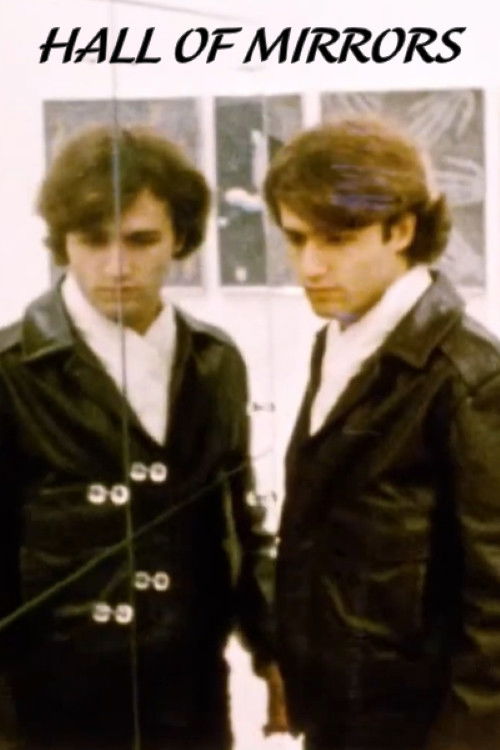
This film is an outgrowth of one of Sonbert's film classes at NYU, in which he was given outtakes from a Hollywood film photographed by Hal Mohr to re-edit into a narrative sequence. Adding to this found footage, Sonbert filmed Warhol's superstars Rene Ricard and Gerard Malanga in more private and reflective moments. -- Jon Gartenberg. Preserved by the Academy Film Archive in partnership with Estate Project for Artists with AIDS in 1998.

Hall of Mirrors

1966
The Tenth Legion
9.0

Following Sonbert's death in 1995, we recovered a 16mm reversal print of THE TENTH LEGION among the materials in the filmmaker's estate, which Sonbert had struck before disassembling it and recutting sections into CARRIAGE TRADE. -- Jon Gartenberg. Preserved by the Academy Film Archive in partnership with Estate Project for Artists with AIDS in 1998.

The Tenth Legion

1967
The Bad and the Beautiful
7.0

One of the most profound themes coursing throughout Sonbert's work is that of love between couples in all its pitfalls and perfect moments. To express this theme between his protagonists onscreen as well as in the relationship between his ever-roving hand-held camera and the human subjects in his field of vision, Sonbert employed diverse cinematic strategies, including in-camera editing (in The Bad and the Beautiful), twin-screen effects (in Ted and Jessica), and montage of discrete shots filmed in distinct spaces (in Honor and Obey). -- Jon Gartenberg. Preserved by the Academy Film Archive in partnership with the Estate Project for Artists with AIDS in 1998.

The Bad and the Beautiful

1968
Whiplash
N/A

During the years preceeding his death, Sonbert channeled his energy into making Whiplash. His vision and motor skills impaired, he gave his companion, Ascension Serrano, detailed instructions about the assembly of specific shots and the music to be used as a counterpoint to the images. Before his death in 1995, he asked filmmaker Jeff Scher (a former student of Sonbert's at Bard) to complete the film. --Jon Gartenberg. Preserved by the Academy Film Archive in partnership with Estate Project for Artists with AIDS in 1996.

Whiplash

1997