Acting
The soap opera critiques the power struggles among rural politicians in the 1920s. Joaquim is shocked when a doctor reveals that his son, Luís Jerônimo, has a lung lesion. To recover his health, the young man leaves Rio de Janeiro for Colonel Boanerges's farm in Vila da Mata, Espírito Santo. There, he meets Zuca, and the two fall in love. Zuca is the colonel's goddaughter and the fiancée of the fearless cowboy Tobias, who refuses to accept the possibility of losing her to the outsider. Zuca and Luís Jerônimo face numerous obstacles in pursuing their love. Their romance is also threatened by the arrival of Pepa in Vila da Mata; having been in love with Luís Jerônimo back when he lived in Rio, she tries by every means possible to drive the couple apart.
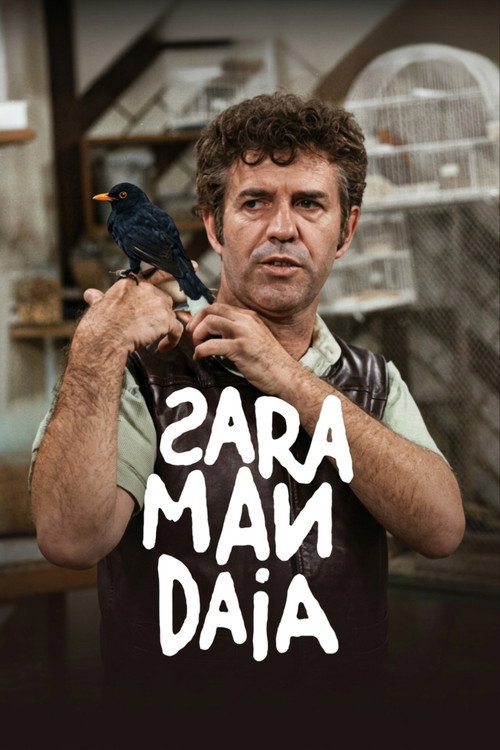
Saramandaia is a Brazilian telenovela originally written by Dias Gomes in 1976. It's considered remarkable because of the Magic Realism (used by the author to subtly criticize the Military Regime of the time) and had 160 chapters. The story centers on the name change that the city undergoes, promoted by the younger citizens and reviled by the older ones. It also focuses on the lives of the city's quirky residents.
The irreverent Dulcinéa struggles to keep her revue theater, *Mambembe*, afloat; the building itself belongs to the traditional Maldonado family. The patriarch, Salvador Maldonado—a conservative man—keeps a tight rein on the clan, maintaining control over both the business and his children: Joana, an elegant and snobbish woman who is the staunchest defender of the views held by Pops, as the children call him; Téo, who has always silently submitted to the old man's high-handedness; Walter, dominated by his older sister and his father's favorite; and Lalucha, the youngest, a film student who challenges the status quo and rebels against the family's stuffy conservatism.
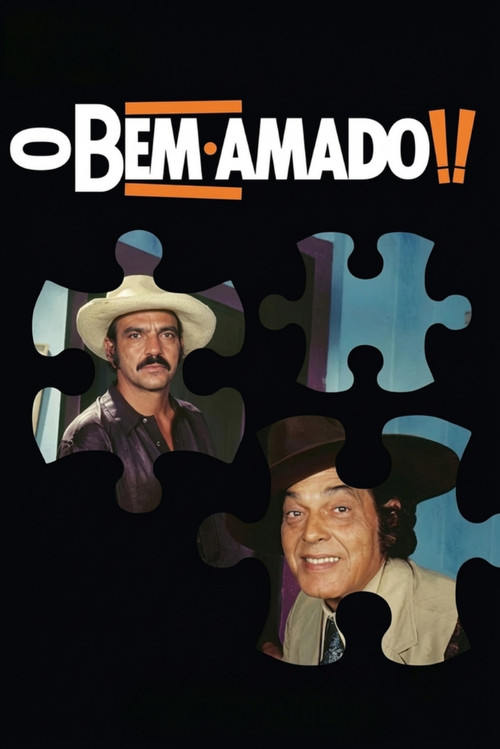
O Bem-Amado is a Brazilian telenovela that first aired on Rede Globo in 1973. It is based on a play by Dias Gomes called Odorico, o Bem-Amado ou Os Mistérios do Amor e da Morte, written in 1962. It was the first Brazilian color telenovela. It was shot in Rio de Janeiro. Broadcast by Rede Globo between January 22 and October 3, 1973.
No description available.
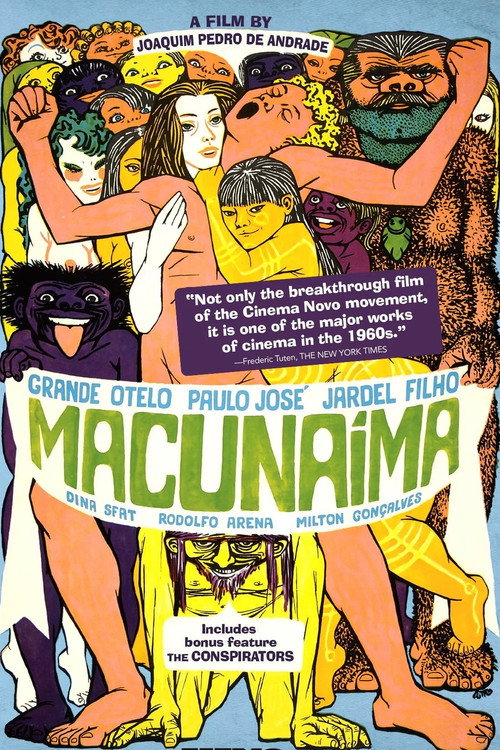
Born a fully grown black man in a village in the Brazilian jungle, Macunaíma later magically transforms into a white man before making an adventure-filled trip to the city of São Paulo. Once there, he becomes something of a dandy, falling in love with Ci, a revolutionary who dies in an accidental bombing. After robbing a ruthless industrialist, Macunaima returns to his village where he finds his newly acquired knowledge and possessions of little use.
Eldorado, a fictitious country in America, is sparkling with the internal struggle for political power. In the eye of this social convulsion, the jaded journalist Paulo Martins opposes two equally corrupt political candidates: a pseudopopulist and a conservative. In this context, Paulo is torn between the madness of the elite and the blind submission of the masses. But, in this complex tropical reality, nothing really is what it seems to be.
Cacareco is a clumsy worker at a dry cleaners who constantly causes losses for his boss, the Portuguese Rebuçado. One day, he receives a package from his relatives in the north: Maria do Socorro, his goddaughter. Pursuing his dream of working in television, Socorro ends up involving Cacareco in numerous disputes, including fights, robberies, and gambling in an underground casino.
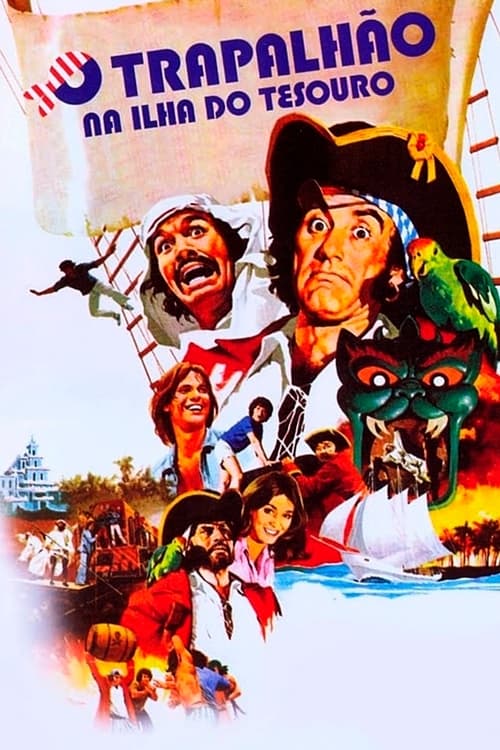
Two fishermen Dogfish names Zé Cação and Lula discover the result of a theft of a dangerous gang of smugglers and go immediately to be persecuted by them. In pursuit of the bandits is also the federal agent Carlos, passionate young Diana, of which the fishermen meet and become friends. The action takes place on board the Fishermen, however, when the weather warms there comes the pirate Long John Silver, who is looking for a fabulous map of a treasure that was hidden on a nearby island. The map, now divided into two parts, it becomes cause for persecution, with plenty of good humor and adrenaline, which changed hands throughout the film and leading everyone to the island where the treasure was buried.
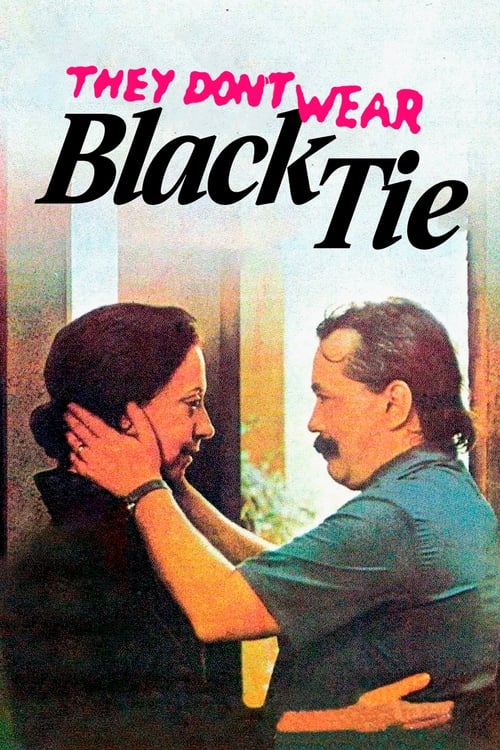
Otavio is an idealistic union leader trying to organize workers at a factory to resist the company's exploitative practices. His son, Tião, one of the employees, is more of a realist and doesn't want to risk losing his job by striking. This clash of perspectives puts the father and son at odds. Fortunately, Tião's mother, Romana, is on hand to act as a moderator between the two opinionated men.
Lambusca, a man from the State of Paraíba, Brazil, goes to São Paulo, looking for a job. But he ends up working for a group of fishy loan sharks, collecting money. In one of his visits, the debtor dies. The police then starts chasing him, believing he had murdered the man.
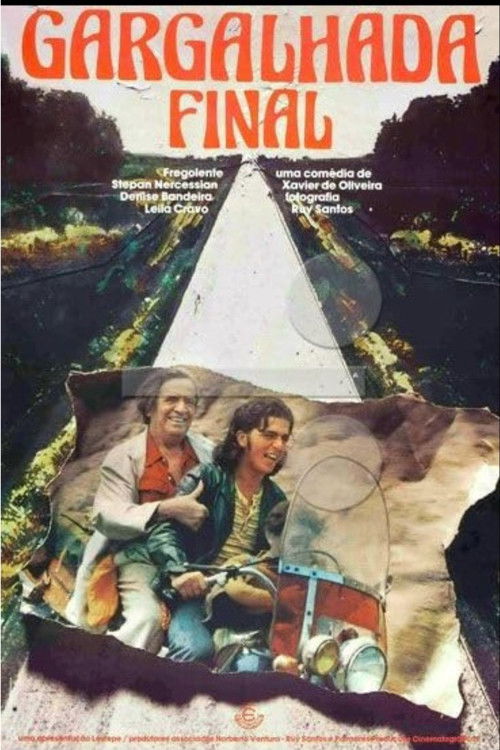
Father and son are members of a decadent circus. Tired of being constantly criticized by the owner of the circus, Trombada, the ventriloquist, makes a joke about his boss, and the two fight. The clown Marreco hits their boss on the head. Now the two have to run from the police while living an adventure.
In Esdras Baptista's film archives, kept at his home for decades, one can feel the fervor of those who believed in a new tomorrow. Filmed in Brazil in the early 1960s, in the heat of a libertarian political movement, the filmmaker's images materialize the incandescence of collective desires at the historic moment of their emergence. Utopia, though unattainable, is never a mere abstraction. A force that mobilizes actions and feelings, it constitutes the impetus necessary for human existence.
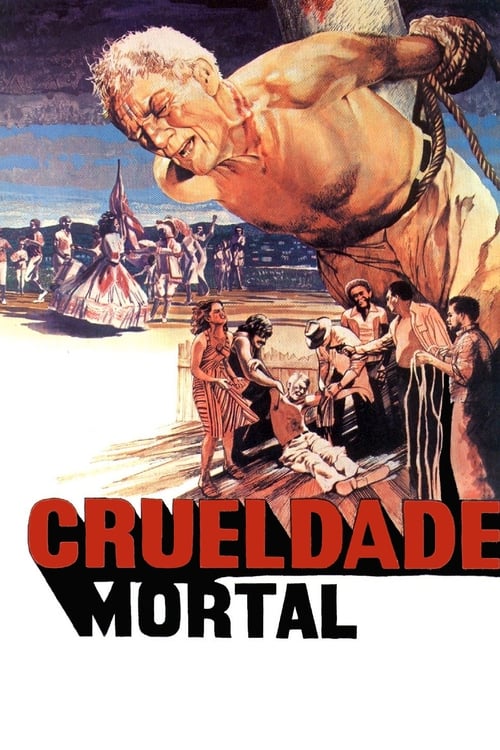
Man leaves his family behind and moves to Nova Iguaçu, a poor and violent city in the outskirts of Rio de Janeiro. He tries to rebuild his life, but falls in love with a woman who despises him, which drives him mad.
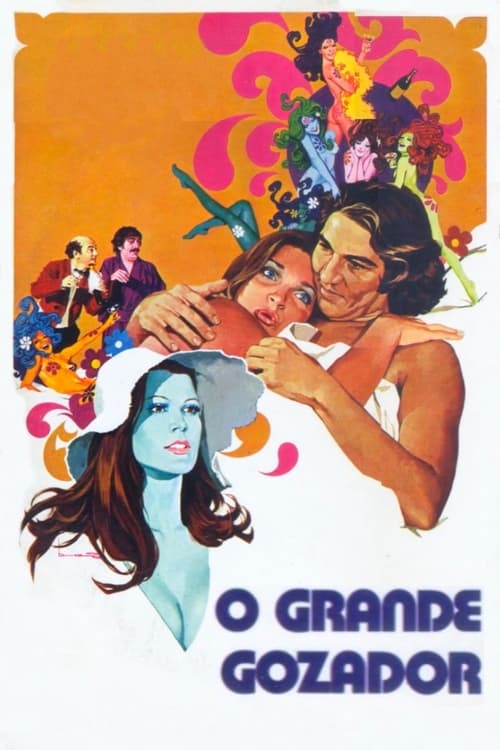
"Lula, 'bon vivant' who subsists at the expense of small blows, goes on with his life without a present or future purpose. Basically, he just tries to forget having been abandoned by his fiancee Helena, who gave in to his father's imposition. The situations in which he gets involved from then on are paradoxical, trying to survive in the best possible way and spending money he doesn't have, but which comes to him in one way or another. On a day of complete despair, Lula meets a group of "hippies" and leaves catechized. Willing to anything, he becomes a preacher of new customs and new ethics of life. In turn, Helena, whose marriage had failed, dreams of meeting Lula again, hoping to return to his arms.