Steve Reich
Sound
Biography
Steve Reich was born on October 3, 1936 in New York City, New York, USA as Stephen Michael Reich. Stephen Michael Reich (born October 3, 1936) is an American composer who, along with La Monte Young, Terry Riley, and Philip Glass, pioneered minimal music in the mid to late 1960s. Reich's style of composition influenced many composers and groups. His innovations include using tape loops to create phasing patterns (for example, his early compositions It's Gonna Rain and Come Out), and the use of simple, audible processes to explore musical concepts (for instance, Pendulum Music and Four Organs). These compositions, marked by their use of repetitive figures, slow harmonic rhythm and canons, have significantly influenced contemporary music, especially in the US. Reich's work took on a darker character in the 1980s with the introduction of historical themes as well as themes from his Jewish heritage, notably Different Trains. Writing in The Guardian, music critic Andrew Clements suggested that Reich is one of "a handful of living composers who can legitimately claim to have altered the direction of musical history".[6] The American composer and critic Kyle Gann has said that Reich "may ... be considered, by general acclamation, America's greatest living composer". From Wikipedia, the free encyclopedia
Known For

Martha is a single woman who lives for one passion: cooking. The head chef at a chic restaurant, Martha has no time for anything - or anyone - else. But Martha's solitary life is shaken when a fateful accident brings her sister's eight-year-old daughter, Lina, to her doorstep.
Mostly Martha

A grief-stricken screenwriter unknowingly enters a three-way relationship with a woman and her film executive husband - to chilling results.
The Dying Gaul

A gay cocky young man travels to Oregon to work on an apple farm. Out of his element, he finds his lifestyle and notions being picked apart by everyone who crosses his path.
C.O.G.

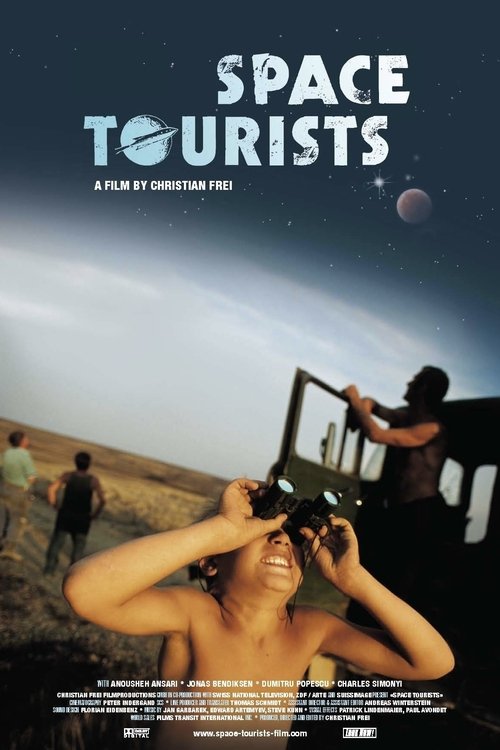
In his most recent work, Christian Frei turns to an age-old dream of man: to leave our planet as a «normal person» and travel into outer space. For 20 million dollars, the American Anousheh Ansari was able to fulfil this childhood dream. This documentary follows her journey into space and shows everyday life as it is on the International Space Station.
Space Tourists

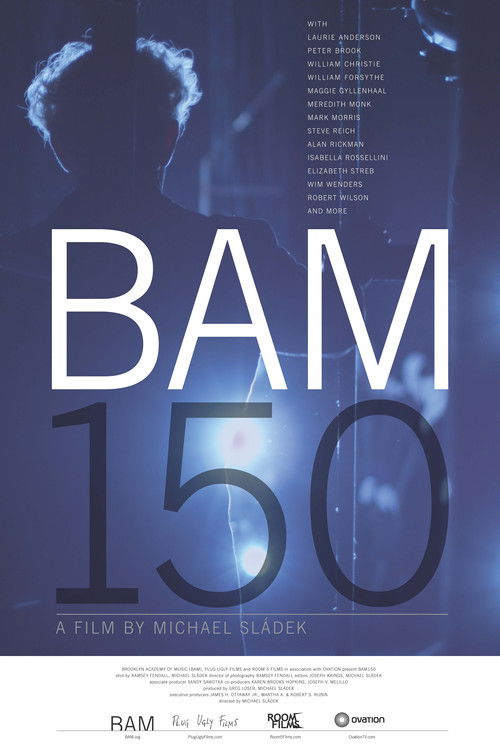
A captivating history of the nation's oldest performing arts center - which largely mirrors the evolution of experimental and progressive performing arts in 20th century America - BAM150 chronicles the vibrant past, present and future of the Brooklyn Academy of Music. Through footage of recent performances, intimate interviews, and an astonishing treasure trove of 150 years' worth of archival materials, BAM150 is a testament to the power and stamina of the institution that established Brooklyn as a cultural mecca-serving as a home to such greats as Enrico Caruso, Sarah Bernhardt, Edwin Booth, Merce Cunningham, Robert Wilson, Mark Morris, Laurie Anderson, and Pina Bausch.
BAM150

Something is about to change drastically, and the only thing to do is to witness it.
Puparia

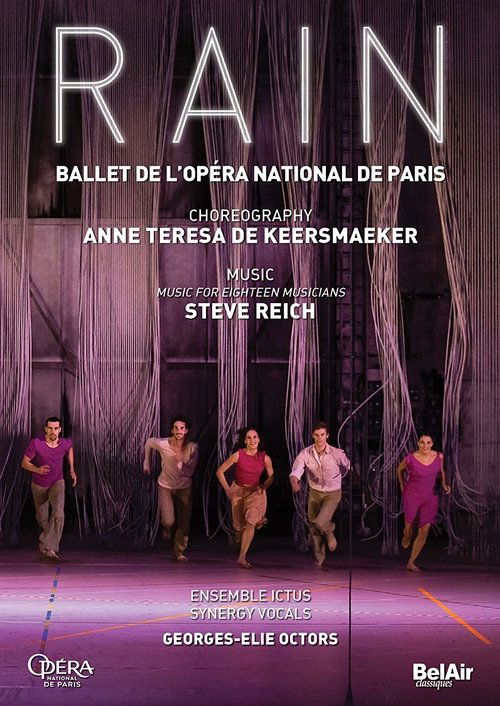
Recording of a performance by Ballet de l'Opéra national de Paris of the ballet on Music for 18 Musicians by Steve Reich, choreographed by Anne Teresa De Keersmaeker.
Rain

Experimental film with Gunvor Nelson's daughter Oona. The sound consists of Nelson’s daughter, Oona, repeating the names of the days of the week and of her saying “my name is Oona”. The latter is edited into an expressive rythmical structure that accompanies the visual structure of the film that plunges into the experience of a child where both bliss and fear reigns.
My Name Is Oona
In our terrestrial view of things, the speed of light seems incredibly fast. But as soon as you view it against the vast distances of the universe, it's unfortunately very slow. This animation illustrates, in realtime, the journey of a photon of light emitted from the surface of the sun and traveling across a portion of the solar system, from a human perspective. Liberties were taken with certain things like the alignment of planets and asteroids, as well as ignoring the laws of relativity concerning what a photon actually "sees" or how time is experienced at the speed of light, but overall the size and distances of all the objects were kept as accurate as possible. It was also decided to end the animation just past Jupiter to keep the running length below an hour.
Riding Light
Inverting the form, style and time frame of commercial television advertising, Logue has produced a unique series of dynamic video portraits of avant-garde artists, writers, musicians and performers. In 30 Second Spots: New York, which Logue terms "commercials for artists," each of the succinct vignettes conveys the artistic essence of her subject with clarity, wit, and an elegant economy of means. John Cage, Steve Reich, Philip Glass, Meredith Monk, Spalding Gray and Steve Reich are among the artists who are captured here with concise drama. Each subject performs in close-up before a stationary camera.
Thirty Second Spots: TV Commercials for Artists (1982-83)
Faces pass by in quickly edited, split-screen recordings. A 'structuralist' film in which the film material itself plays an important role. Grain, scratches and flickering give the film texture. The music is by Steve Reich.
Portraits

This film consists of five segments which interweave archival footage with interviews to highlight aspects of Miami's history. The segments are: On Flagler Street--about the old movie palaces; Down on Second Avenue--the Black entertainment mecca of the 1920's and 1930's; Waiting at the station--the railroad; Night lights--a family of neon sign makers; On the river--Plato Cook and commerce on the Miami river.
A Few Things I Know About Miami

Abstract animation assembled from newspapers.
PAPERS

A man who leads a lonely existence with his young daughter accidentally gets involved with a robbery before a manhunt ensues.
Shadow on the Snow
"Fase" consists of three duets and one solo dance, choreographed to four repetitive compositions by the American minimalist musician, Steve Reich: Piano Phase, Come Out, Violin Phase and Clapping Music. Reich allows his tones to gradually shift in rhythm and melody and between the instruments. The choreography applies the same phase-shifting principle. The purely abstract movements are executed so perfectly that they seem almost mechanical and yet affect us in a strange way.
Fase

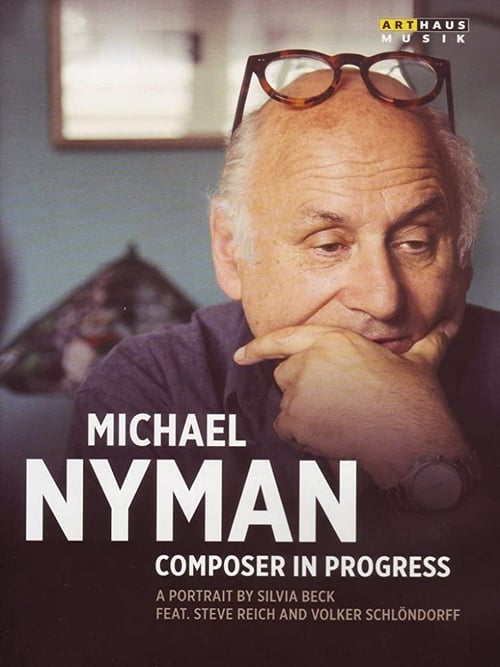
Featuring unprecedented access to Michael Nyman's working life, this film shows one of the great composers of our time in all his diversity and endless energy. From London to Berlin, Mexico, Poland, the Netherlands, and Portugal the film is also a journey through the musical world today. It shows Michael Nyman, the musician, in his concerts with The Michael Nyman Band and live collaborations with other internationally known musicians and orchestras. But throughout his journeys, this film discovers Nyman's increasing passion for filming and photography.
Michael Nyman in Progress

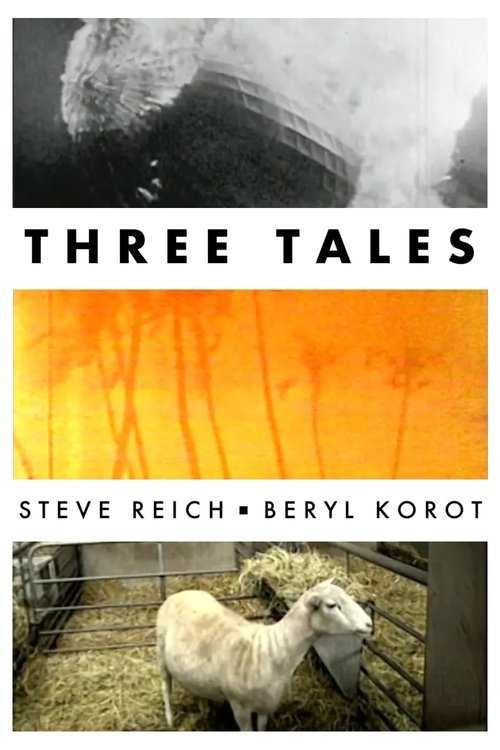
"Three Tales" is a video music work by American composer Steve Reich and video artist Beryl Korot. It is set in three "Acts", each depicting a technological advance of the 20th century and its negative implications on humanity: the dirigible airship Hindenburg and its explosion; the Atom Bomb and its testing on Bikini Atoll; and Dolly the sheep, first successful genetic cloning of a mammal.
Reich: Three Tales

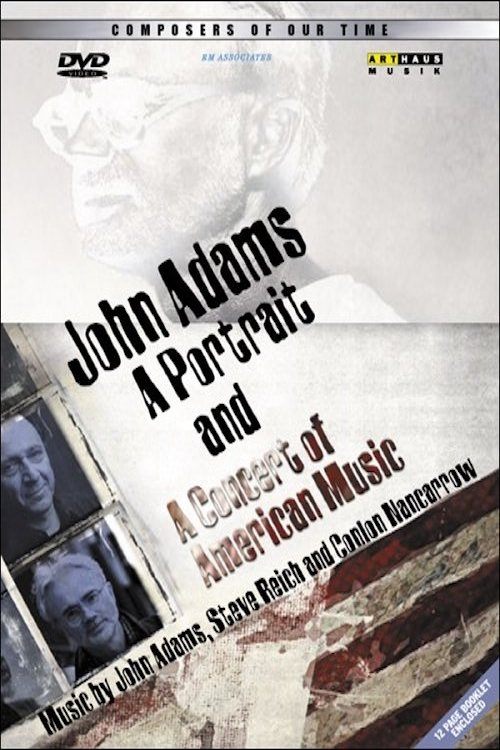
Peer into the world of contemporary composer John Adams with this documentary that blends performance footage with insightful interviews and commentary from his collaborators and the master himself. Highlights include performances of Adams's Grammy Award-winning operas “Nixon in China” and “El Niño” and excerpts from Penny Woolcock’s film adaptation of “The Death of Klinghoffer”. Works by Steve Reich and Conlon Nancarrow are also performed by the Ensemble InterContemporain at the Théâtre Musical de Paris-Châtelet.
John Adams: A Portrait and A Concert of Modern American Music
Present in nearly all cultures and used for many purposes, drums have unique shapes, sounds, names and accents in each region of the world. Behind this vast legacy are individuals who play them and are touched by these ancestral instruments. From the rare budimas used by Tonga people in Zambia to the large drums of the Chinese temples, from the religious festivals of Brazil to the rhythmic richness of the Arab World, these men and women keep this tradition alive.
Drums

Delve into the life story and professional career of musical genius Steve Reich, considered one of the greatest American composers of the 20th century. Manfred Waffender's documentary reveals how Reich's minimalist style and phrasing innovations have altered the direction of musical history. Special attention is paid to "City Life," a collection of everyday streets sounds brought together to create an aural representation of the urban landscape.