Directing
No description available.
The Martin Kušej production of Richard Strauss's "Elektra", filmed live at the Opernhaus Zurich on 30 November and 4 December 2005. Eva Johansson stars as Elektra, with Marjana Lipovšek as Klytämnestra, Melanie Diener as Chrysothemis, Rudolf Schashing as Aegisth, and Alfred Muff as Orest. Christoph von Dohnányi conducts.
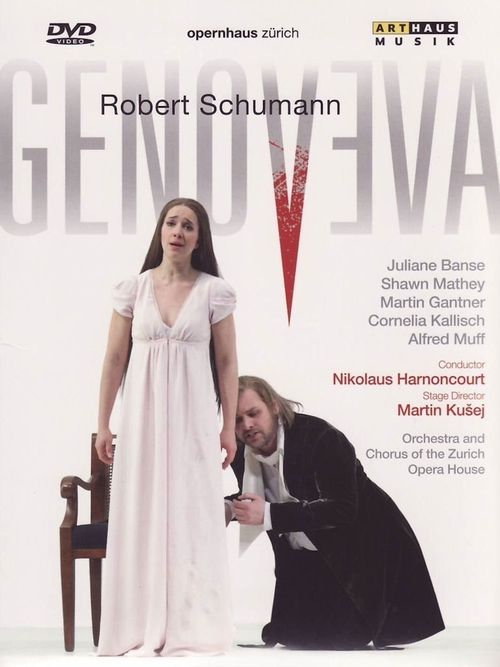
Juliane Banse, Cornelia Kallisch, Shawn Mathey, Martin Gantner, Ruben Drole and Alfred Muff star in this acclaimed adaptation of German composer Robert Schumann's opera "Genoveva," produced by Nikolaus Harnoncourt. Inspired by the works of Johann Ludwig Tieck and Christian Friedrich Hebbel, Schumann's tale centers on an ill-fated countess who finds her life turned upside down when she's falsely accused of adultery.
This Salzburg Festival production of Le nozze di Figaro (2020) offers a radical reinterpretation of Mozart's opera, directed by Martin Kušej, who continues his exploration of Mozart’s works following Don Giovanni (2002) and La clemenza di Tito (2003). The turbulent comedy, laden with erotic entanglements, exposes themes of patriarchal dependency, sexual exploitation, betrayal, and emotional emptiness. French conductor Raphaël Pichon, renowned for historically informed performances, conducts his first opera at Salzburg after his debut at the festival in 2018.
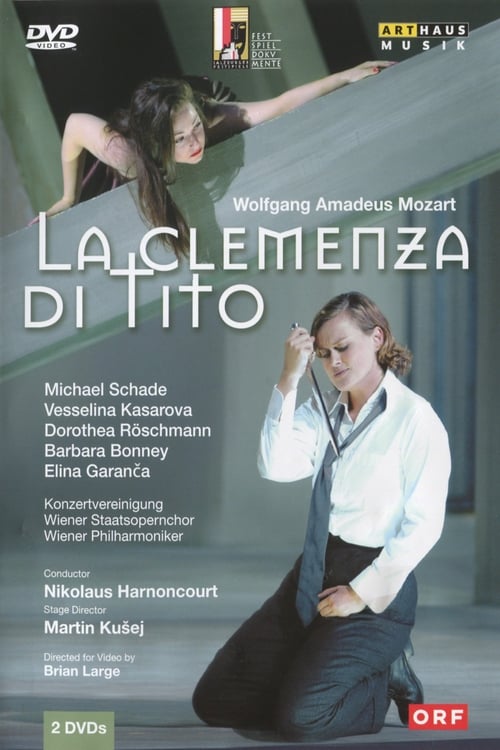
Arthaus presents a truly new way of looking at La clemenza di Tito with this famous and star-studded production from the Salzburg Festival 2003. Here Nikolaus Harnoncourt, renowned for his analytical approach to the search for the core of the music, interprets Mozart’s last opera. Martin Kušej, who is acclaimed for his theatre productions directs the production. Nikolaus Harnoncourt identifies with Mozart’s score as both an extremely knowledgeable musician and a conductor who invariably plays an active part in helping to shape the drama. Together with the Vienna Philharmonic, he savours the miracles of Mozart’s late work, bringing out its instrumental colours and effects and at the same time stimulating his singers while proving a solicitous accompanist.
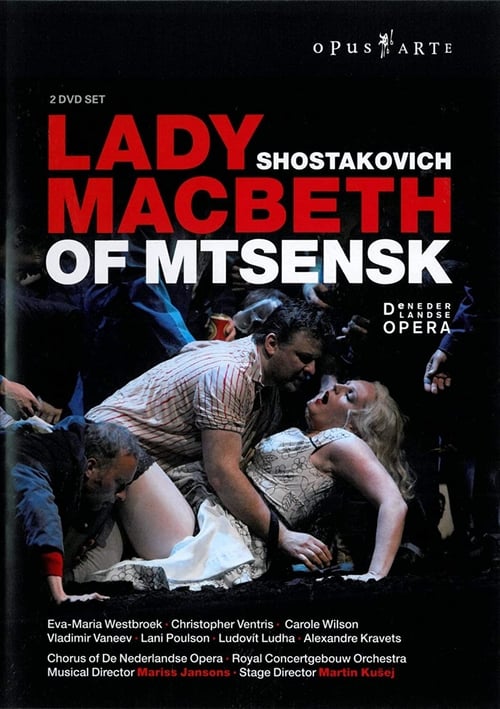
Shostakovich's Lady Macbeth of Mtsensk, a lurid tale of sex, murder, and corruption, premiered in 1934 and was a success until Stalin saw it two years later, resulting in a Pravda review that viciously condemned it. It was later replaced by an expurgated version, now called Katerina Ismailova after the work's principal character. The original version has now reclaimed its place on international stages. The heroine is the daughter-in-law of Boris, a greedy, lecherous merchant, and the frustrated wife of his impotent son. Katerina poisons Boris and when her husband returns she and her lover, Sergei, kill him too, burying him in the cellar. The body is discovered during their wedding party. Haunted by guilt, Katerina confesses and the newlyweds are consigned to Siberia. When Sergei takes up with another woman, Katerina pushes her into the river and then jumps in herself.
Martin Kušej's brilliant 2006 Carmen represents a landmark interpretation of a truly timeless opera. Led by Rolando Villazón as Don José and Marina Domashenko in the title role, the virtuoso cast joins forces with the celebrated Staatskapelle Berlin under the direction of the legendary maestro Daniel Barenboim.
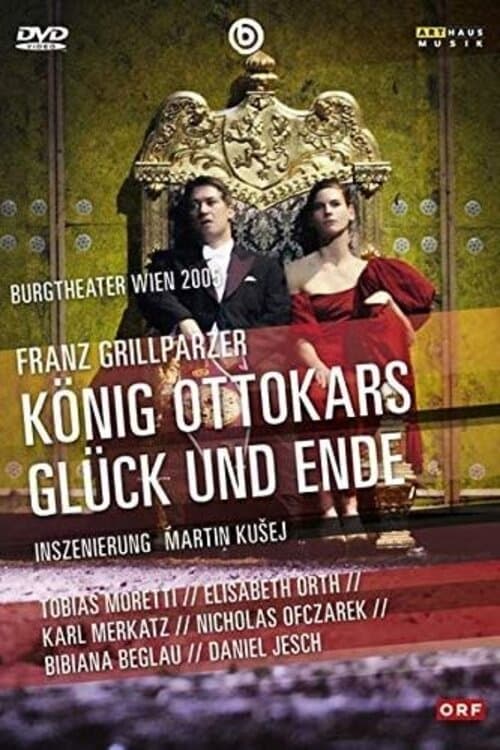
The cruel King Ottokar of Bohemia, spoiled by fortune and unpredictable, is dead. Now, with the modest Rudolf of Habsburg, peace has finally returned to Austria, for he replaces tyrannical arbitrariness with God-fearing clemency—and the way is clear for a story that lasted 700 years and bears the title: "The Habsburgs in Austria." With this view of Franz Grillparzer's play, many productions have been staged since the premiere of "King Ottokar's Fortune and End" – Rudolf of Habsburg as the gatekeeper to the dawn of a new, better era. It became clear what a great projection screen Grillparzer's play offered. It should really be called "The Habsburgs' rise to power as a development toward the good, the just, the orderly." But it is called "King Ottokar's Fortune and End," and that is what it is about—the fortune and end of a human being and how the one is sometimes directly connected to the other.
Don Giovanni's list of romantic conquests reaches into the hundreds. But his reputation as a lothario puts him in danger as the women he's betrayed -- and their suitors -- begin to seek revenge. A modern-day setting proves the timeless nature of Mozart's popular opera, performed with the Vienna Philharmonic as part of an epic presentation of all 22 of the composer's stage works at the 2006 Salzburg Festival, in honor of his 250th birthday.
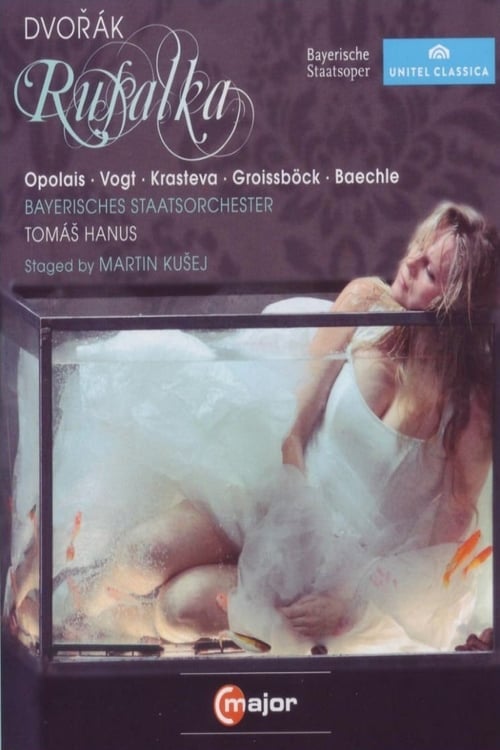
A legend of mermaids, mere mortals, and sylvan glades. Be transported to a mystical world of water sprites, witches, and wood nymphs. In exchange for love, Rusalka will relinquish not only her mermaid magic, but also her voice.
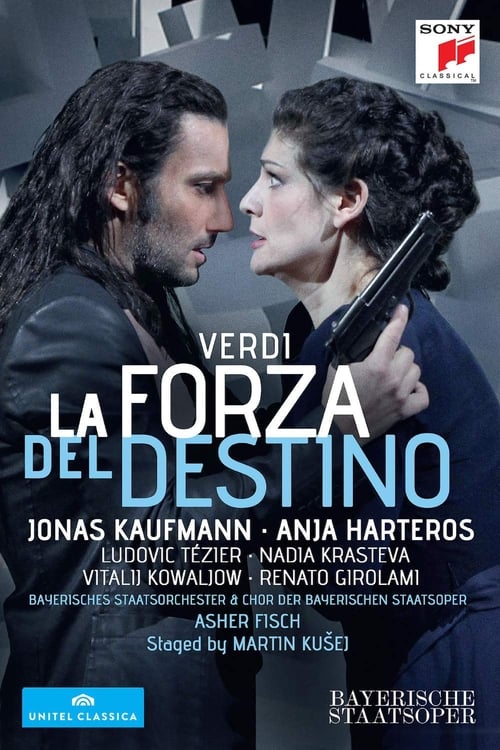
This performance of 2014 can be considered as a reference on account of the quality of the vocal material involved and because the daring staging of Austrian Martin Kušej is rich in meaning within the context of the global challenges of today. He proposes a reflection on war, on vengeance and also on the mark of guilt which ends with the joie de vivre and the expansion of passions. In the intimacy of Calatrava, his is a post-Bauhaus picture of a Fascist neatness which then contrasts with the chaos of battles, the abyss of misery and the sexual stampede after triumph or failure. In this context, religion, instead of being a consolation is both an escape and the tomb of humanity; the chapel wherein Leonora hides is made out of huge crosses and in one of them, just for a moment, Don Álvaro seems crucified by his fate.