Jane Russell
Acting
Biography
From Wikipedia, the free encyclopedia Jane Russell (June 21, 1921 – February 28, 2011) was an American film actress and was one of Hollywood's leading sex symbols in the 1940s and 1950s. Russell moved from the Midwest to California, where she had her first film role in 1943 with The Outlaw. In 1947, Russell delved into music before returning to films. After starring in multiple films in the 1950s, Russell again returned to music while completing several other films in the 1960s. She starred in over 20 films throughout her career. Russell married three times and adopted three children and, in 1955, founded the World Adoption International Fund. For her achievements in film, she received several accolades including having her hand and foot prints immortalized in the forecourt of Grauman's Chinese Theatre and a star on the Hollywood Walk of Fame. Description above from the Wikipedia article Jane Russell, licensed under CC-BY-SA, full list of contributors on Wikipedia.
Known For

The Mike Douglas Show is an American daytime television talk show hosted by Mike Douglas that originally aired only in the Cleveland area during much of its first two years on the air. It then went into syndication in 1963 and remained on television until 1982. It was distributed by Westinghouse Broadcasting and for much of its run, originated from studios of two of the company's TV stations in Cleveland and Philadelphia.
The Mike Douglas Show

Hunter is an American police drama television series created by Frank Lupo, and starring Fred Dryer as Sgt. Rick Hunter and Stepfanie Kramer as Sgt. Dee Dee McCall, which ran on NBC from 1984 to 1991. However, Kramer left after the sixth season to pursue other acting and musical opportunities. In the seventh season, Hunter partnered with two different women officers. The titular character, Sgt. Rick Hunter, was a wily, physically imposing, and often rule-breaking homicide detective with the Los Angeles Police Department. The show's main characters, Hunter and McCall, resolve many of their cases by shooting dead the perpetrators. The show's executive producer during the first season was Stephen J. Cannell, whose company produced the series.
Hunter

The Colgate Comedy Hour is an American comedy-musical variety series that aired live on the NBC network from 1950 to 1955. The show starred many notable comedians and entertainers of the era, including Eddie Cantor, Dean Martin and Jerry Lewis, Fred Allen, Donald O'Connor, Bud Abbott and Lou Costello, Bob Hope, Jimmy Durante, Ray Bolger, Gordon MacRae, Ben Blue, Robert Paige, Tony Curtis, Burt Lancaster, Broadway dancer Wayne Lamb and Spike Jones and His City Slickers.
The Colgate Comedy Hour

The Ed Sullivan Show is an American TV variety show that originally ran on CBS from Sunday June 20, 1948 to Sunday June 6, 1971, and was hosted by New York entertainment columnist Ed Sullivan. It was replaced in September 1971 by the CBS Sunday Night Movie, which ran only one season and was eventually replaced by other shows. In 2002, The Ed Sullivan Show was ranked #15 on TV Guide's 50 Greatest TV Shows of All Time.
The Ed Sullivan Show

No description available.
The Steve Allen Show

Four panelists must determine guests' occupations - and, in the case of famous guests, while blindfolded, their identity - by asking only "yes" or "no" questions.
What's My Line?
Tonight Starring Jack Paar is an American talk show hosted by Jack Paar under The Tonight Show franchise from 1957 to 1962. It originally aired during late-night. During most of its run it was broadcast from Studio 6B inside the RCA Building. The same studio would also host early episodes of The Tonight Show Starring Johnny Carson, and Late Night with Jimmy Fallon. Its theme song was an instrumental version of "Everything's Coming Up Roses", and the closing theme was "So Until I See You" by Al Lerner.
Tonight Starring Jack Paar

Westinghouse Desilu Playhouse is an American television anthology series produced by Desilu Productions. The show ran on CBS television between 1958 and 1960. Two of its 48 episodes served as pilots for the 1950s television series The Twilight Zone and The Untouchables.
Westinghouse Desilu Playhouse

Biography is a documentary television series. It was originally a half-hour filmed series produced for CBS by David Wolper from 1961 to 1964 and hosted by Mike Wallace. The A&E Network later re-ran it and has produced new episodes since 1987. The older version featured historical figures such as Helen Keller and Mark Twain, or long-dead entertainment figures such as Will Rogers or John Barrymore. The A&E series has placed the emphasis on such people as Marilyn Monroe, Elvis Presley, Plácido Domingo, Freddie Mercury, Jacqueline Kennedy Onassis, Eric Clapton, Pope John Paul II, Gene Tierney, Selena, Diego Rivera, Mao Zedong and Queen Elizabeth II, and fictional characters like The Phantom, Superman, Hamlet, Betty Boop, and Santa Claus. The program ended up profiling enough figures that in 1999, A&E spun it off into an entire network, The Biography Channel.
Biography
V.I.P.-Schaukel is a 45 minute documentary-family-news-talk show starring Margret Dünser as Host. The series premiered on Sun May 09, 1971 on ZDF and Folge 37 - Final Show last aired on Fri May 09, 1980.
V.I.P. Schaukel

Mark Cousins invites film actors and directors to watch major scenes in their career to date, and to talk us through them.
Scene by Scene

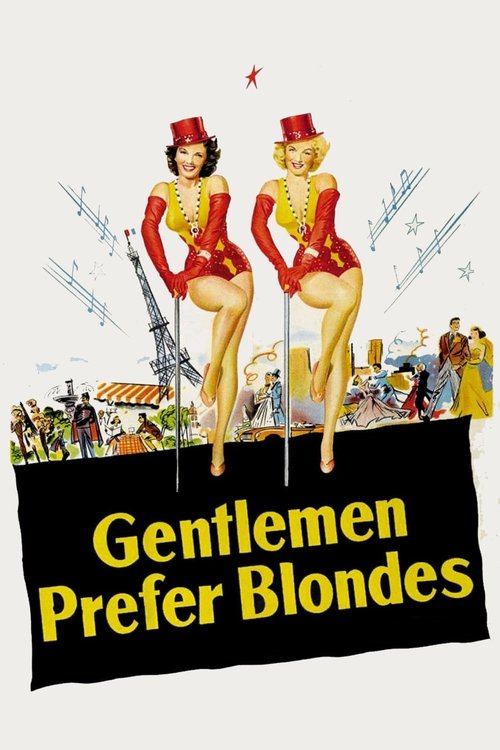
Lorelei Lee is a beautiful showgirl engaged to be married to the wealthy Gus Esmond, much to the disapproval of Gus' rich father, Esmond Sr., who thinks that Lorelei is just after his money. When Lorelei goes on a cruise accompanied only by her best friend, Dorothy Shaw, Esmond Sr. hires Ernie Malone, a private detective, to follow her and report any questionable behavior that would disqualify her from the marriage.
Gentlemen Prefer Blondes

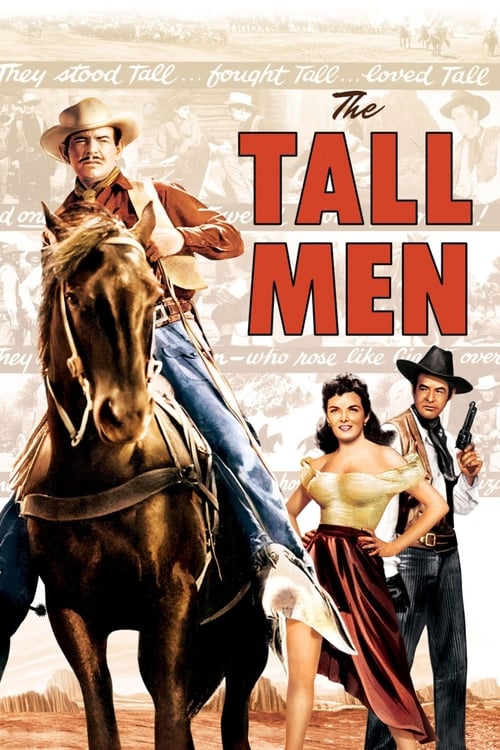
Two brothers discharged from the Confederate Army join a businessman for a cattle drive from Texas to Montana where they run into raiding Jayhawkers, angry Sioux, rough terrain and bad weather.
The Tall Men

Revisit the extraordinary story of a girl who sprang from nowhere to become the most famous woman in the world. Narrated by Golden Globe-winning actress Jessica Chastain and featuring a star-studded cast of female voices, this series re-examines Monroe’s story to uncover themes of feminism, sexuality and power that continue to drive the cultural conversation today.
Reframed: Marilyn Monroe

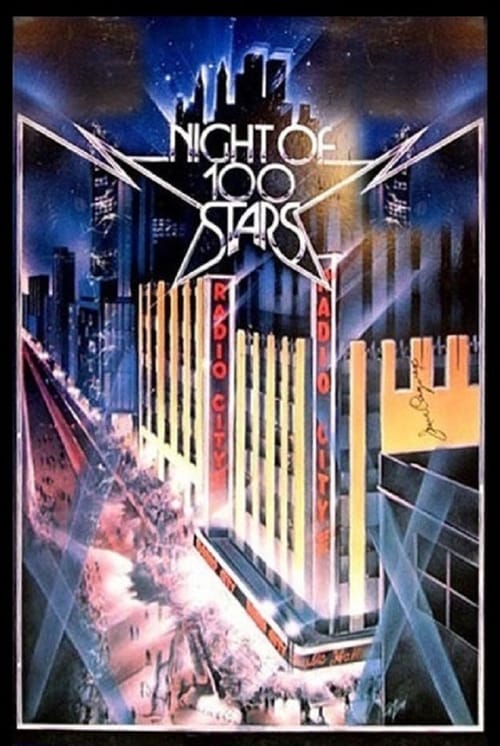
The most glittering, expensive, and exhausting videotaping session in television history took place Friday February 19, 1982 at New York's Radio City Music Hall. The event, for which ticket-buyers paid up to $1,000 a seat (tax-deductible as a contribution to the Actors' Fund) was billed as "The Night of 100 Stars" but, actually, around 230 stars took part. And most of the audience of 5,800 had no idea in advance that they were paying to see a TV taping, complete with long waits for set and costume changes, tape rewinding, and the like. Executive producer Alexander Cohen estimated that the 5,800 Radio City Music Hall seats sold out at prices ranging from $25 to $1,000. The show itself cost about $4 million to produce and was expected to yield around $2 million for the new addition to the Actors Fund retirement home in Englewood, N. J. ABC is reputed to have paid more than $5 million for the television rights.
Night of 100 Stars

Turner Classic Movies host Robert Osborne interviews noted personalities from the Golden Age of Hollywood.
Private Screenings

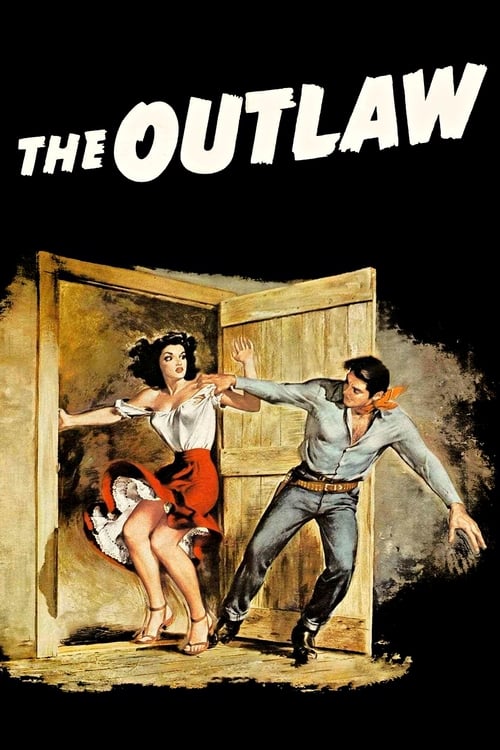
Newly appointed sheriff Pat Garrett is pleased when his old friend Doc Holliday arrives in Lincoln, New Mexico on the stage. Doc is trailing his stolen horse, and it is discovered in the possession of Billy the Kid. In a surprising turnaround, Billy and Doc become friends. This causes the friendship between Doc and Pat to cool. The odd relationship between Doc and Billy grows stranger when Doc hides Billy at his girl Rio's place after Billy is shot.
The Outlaw

Career gambler Dan Milner agrees to a $50,000 deal to leave the USA for Mexico, only to find himself entangled with fellow guests at a luxurious resort and suspecting that the man who hired him may be the deported crime boss Nick Ferraro aiming to re-enter to the USA.
His Kind of Woman

Nick Cochran, an American in exile in Macao, has a chance to restore his name by helping capture an international crime lord. Undercover, can he mislead the bad guys and still woo the attractive singer/petty crook, Julie Benson?
Macao

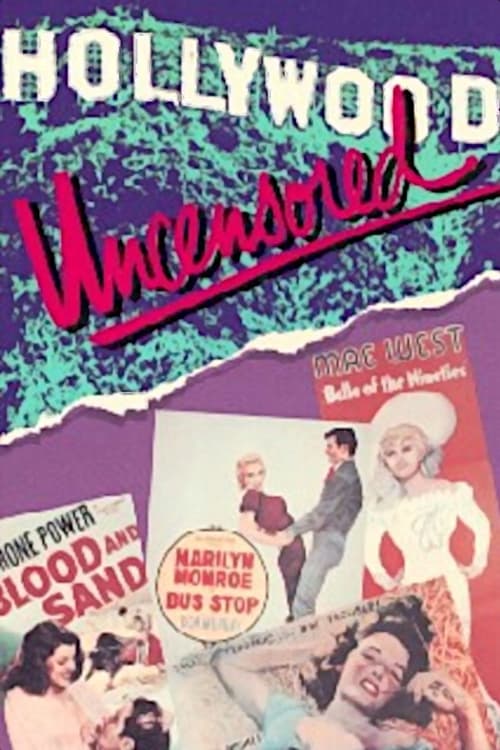
Out-takes (mostly from Warner Bros.), promotional shorts, movie premieres, public service pleas, wardrobe tests, documentary material, and archival footage make up this star-studded voyeuristic look at the Golden age of Hollywood during the 30s, 40, and 50.