
Janusz Michałowski
Acting
Known For

Two scientists are chosen as guinea pigs for a time experiment: they are placed in hibernation and should be brought back to life after three years. In the meantime, however, World War III breaks out and life has been wiped off the surface of Earth. When they wake up, it turns out that not only 50 years have passed but also that they are the only living specimens of the male sex in a new, underground society composed exclusively of women.
Sexmission

No description available.
Kuchnia polska

No description available.
Boża podszewka. Część druga
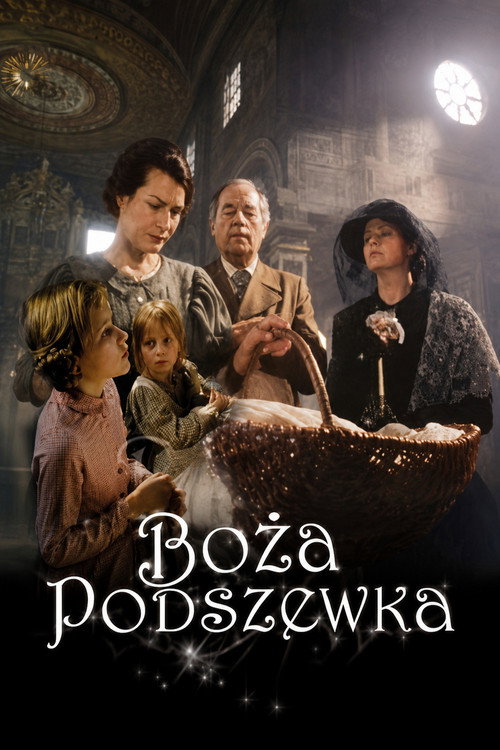
God's Lining presents the dramatic fate of Marianna Jurewiczówna, her family, and the inhabitants of the Vilnius region from 1900 to 1945. The series begins in 1900, when Marianna, the youngest child of Maria and Andrzej Jurewicz, is born. Through Maryśka's eyes, we meet a succession of characters passing through the manor: the order-takers (Bartłomiej), the slackers (e.g., Mickiewicz), the peasant farmhands (e.g., Antośka), the servants (e.g., Walunia), and various misfits, rejected and ridiculed (e.g., the foolish Maryla), just like the main character. Marianna Jurewiczówna is called "niedonosek" by her family because of her premature birth; she feels unloved and rejected, misunderstood, and different. The series concludes in 1945, during the so-called first repatriation.
Boża podszewka

District attorney Kazimierz Proch with policeman Witold Kielak tries to figure out what happened with his family.
Public Prosecutor

Set in 1944. A shepherd boy enters an abandoned palace he has seen only from the distance since he was a boy. Once he enters the palace, strange things begin to happen as though he was dreaming the events rather than living them.
The Palace

October 1934. Poland. Famous bank robber Kwinto decided to quit his dangerous criminal job, but after his friend's death, he changed his mind and organized a burglary of famous and well protected bank which belonged to his former partner in crime, backstabbing and double-crossing Kramer. Kwinto designs a clever plan not to only rob the Kramer's bank but to make it look like Kramer himself did it.
Vabank

No description available.
Królewskie sny

On the eve of the Day of the Dead, among mysterious old rituals of the Vilnius region, ghosts of the past and present start to appear.
Lava

A group of misfits from a carpet shop have a chance to change their lives with the help of two marketing experts - an ex-kebab shop worker and an ex-fortune teller from a wildlife magazine.
Kebab & Horoscope

The Borejko family has four daughters — Gabriela, Ida, Natalia and Patricia. Most concern causes the red-haired Ida, whose unusual ideas often end badly, though the girl has the best intentions. Her father, who works at the university as a classical philologist, gives her the idea to found a group called ESD. They want to try out the theory that you are more successful if you send out more positive signals to the environment. Soon this theory will be put to the test. Ida's mother has to go to the hospital and the entire burden of household chores falls on the children.
ESD
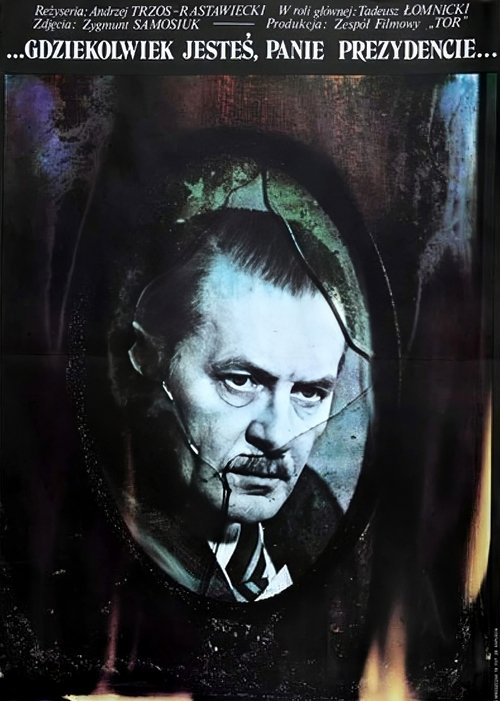
Stefan Starzyński, the mayor of Warsaw, organizes life in the capital in September 1939 and lift the inhabitants' spirits via radio announcements. After the surrender, he does not use his last chance to escape.
Wherever You Are, Mr. President
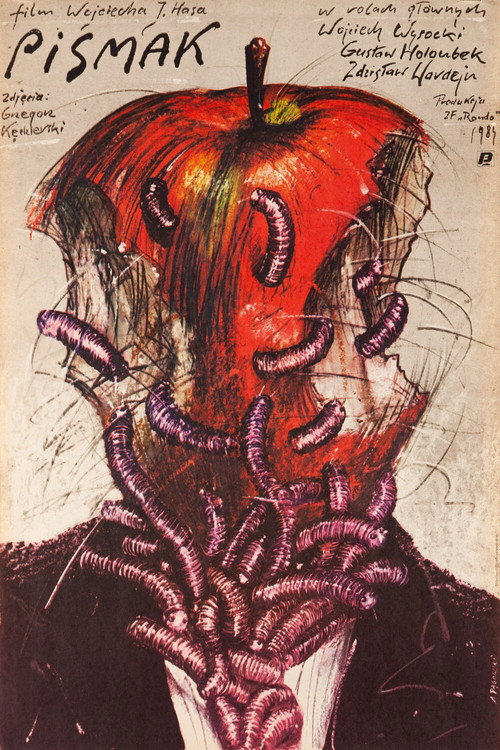
A young journalist is arrested for freethinking ideas and placed in a cell with a famous safe-breaker and a former cleric, who murdered his mistress' husband.
Write and Fight

No description available.
Mistrz i Małgorzata

During the "winter of the century," impatient passengers wait for the train to arrive at the station in Koluszki. Railway communications are disrupted. At the same time, a train is stuck in snowdrifts near Koluszki. The atmosphere in its carriages is cheerful. Some passengers, who are in a hurry to connect to other stations, get off and walk to the station in Koluszki. Among them is Andrzej Roszak, a young man rushing to Warsaw, and probably his peer Basia. Shortly after them, Mr. Walerek, a political activist who was on his way to a ball at the Central Committee, Mr. Rozbicki and his wife, who had just returned from a contract in Iraq, Matyjak, a television star, journalist Przoniak, and others arrive at the station in Koluszki. At the deserted station, the passengers efficiently organize a New Year's Eve party. During the revelry, the participants gradually reveal their hidden complexes, frustrations, and hopes.
Bal na dworcu w Koluszkach

The Master and Margarita (Mistrz i Małgorzata) is a four-part Polish television production based on the novel by Mikhail Bulgakov.
The Master and Margarita

The esteemed transplantologist is the victim of a conspiracy of his colleagues, as a result of which his brain is transplanted into a pig.
Piggate
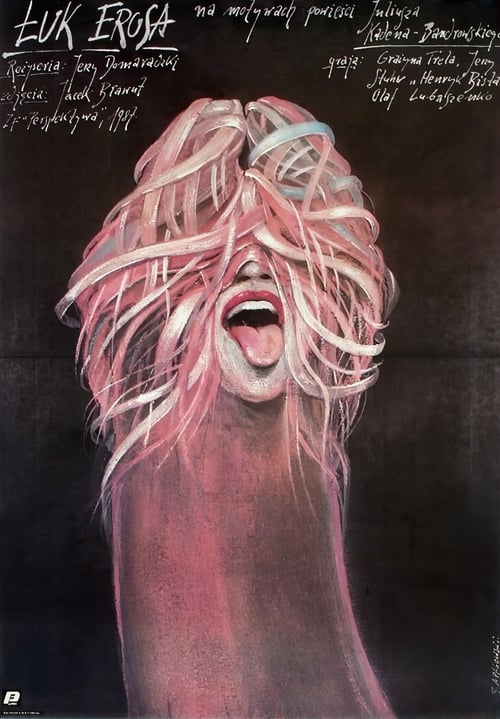
Lavish romantic melodrama, obsessively concerned with sex. Maryska's husband is off to war. He soon is reported missing, and she does not protest much when is seduced by the husband's friend, a seedy professor with sickly wife and other mistresses on the side. However, the love of Maryska's life turns out to be a shy 17-year old, son of friends with whom she goes to stay.
Cupid's Bow
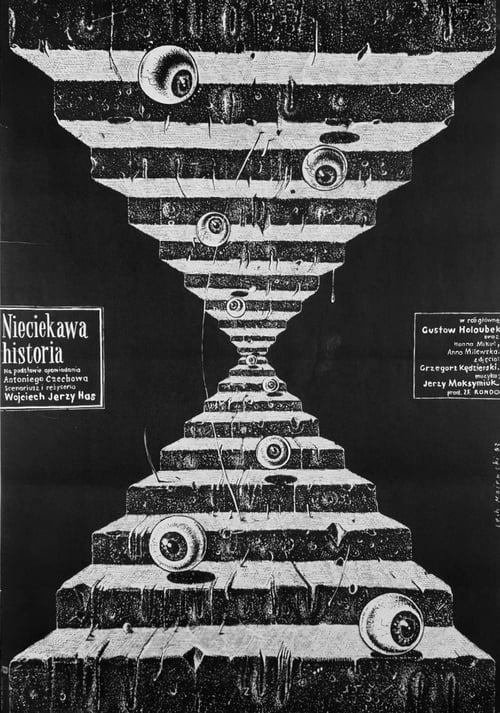
A well-known professor of medicine finding himself at the threshold of autumn of his life, takes stock of his achievements and experiences. "In the end it ends with what has been known for a long time: that conscious life without a fixed worldview is not life, but torment, horror. - wrote Anton Chekhov in one of his letters summarizing "An Uninteresting Story". The protagonist, Professor Nikolai Stepanovich, is a character characteristic of Chekhov's entire oeuvre - a Russian intellectual from the late nineteenth century, depressed by boredom and a sense of his own uselessness and the meaninglessness of his existence.
An Uneventful Story

It tells a story of a bird-monster from South America originally treated as god by Incas. Long believed to be extinct, due to genetical experiment gone awry its egg fossil hatches and the monster starts to search for females to impregnate.