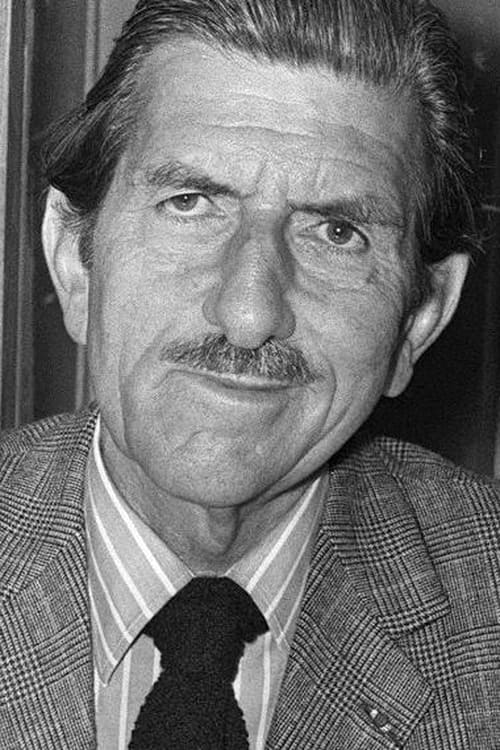
Jacques Massu
Acting
Biography
Jacques Émile Massu (5 May 1908 – 26 October 2002) was a French general who fought in World War II, the First Indochina War, the Algerian War and the Suez crisis. He led French troops in the Battle of Algiers, first supporting and later denouncing their use of torture. Jacques Massu was born in Châlons-sur-Marne to a family of military officers; his father was an artillery officer. He studied successively at Saint-Louis de Gonzague in Paris, the Free College of Gien (1919–1925) and Prytanée National Militaire (1926–1928). He then entered Saint-Cyr and graduated in 1930 as a second lieutenant in the promotion class "Marshal Foch" and chose the Colonial Infantry. Between October, 1930 and August, 1931, he served in the 16th Senegalese Tirailleur Regiment (16th RTS) in Cahors. He was sent to Morocco with the 5th RTS and took part in the fighting around Tafilalt where he earned his first citation. He was promoted to lieutenant in October 1932 and took part in the operations in High Atlas, earning a new citation. In 1934 Massu was transferred to 12th RTS at Saintes, Charente-Maritime. He served in Togo from January 1935 to February 1937 performing military and civilian duties in Komkombas. Then he was stationed in Lorraine with the 41st RMIC until June 1938, when he was sent to Chad to command the subdivision of Tibesti with headquarters in Zouar. He was serving in Africa when World War II broke out, and joined the Free French Forces. He took part in the battle of Fezzan with the armoured troops of General Leclerc. In 1941, he was in charge of the bataillon de marche du Tchad. He served as a lieutenant-colonel in the 2nd Armored Division (2e DB) serving with distinction at the Battle of Dompaire in September 1944 earning the US Silver star. He served with the division until the end of the war. In September 1945, he landed in Saigon and took part in the retaking of the city and of the South of Indochina. Massu took command of a mechanized infantry force of the 2e DB named Groupement Massu, comprising a reconnaissance squadron with M8 Greyhound armoured cars from 7e Escadron, 1er Régiment de Marche de Spahis Marocains; a squadron of M5A1 Stuart light tanks of 1e Compagnie, 501e Régiment de chars de combat; a provisional infantry force of the 4e Bataillon, Régiment de marche du Tchad and the French Navy’s Régiment Blindé de Fusiliers-Marins, with M3 Half-tracks; and engineer elements of the 71er Bataillon du Génie. This force was landed at Saigon between 10 and 15 October 1945, and was immediately deployed to recapture Mỹ Tho in the Mekong Delta from the Viet Minh. In 1956, the 10th Parachute Division was sent to Egypt to take back the Suez canal during the Suez crisis. The 10th Parachute Division landed at Raswa. Raswa imposed the problem of a small drop zone surrounded by water, but Massu assured Andre Beaufre that this was not an insolvable problem for his men. 500 heavily armed paratroopers of the French 2nd Colonial Parachute Regiment (2ème RPC), hastily redeployed from combat in Algeria, jumped over the al-Raswa bridges from Nord Noratlas 2501 transports of the Escadrille de Transport (ET) 1/61 and ET 3/61, together with some combat engineers of the Guards Independent Parachute Company. ... Source: Article "Jacques Massu" from Wikipedia in English, licensed under CC-BY-SA 3.0.
Known For
No description available.
Midi trente
No description available.
It Was the War of Algeria
On October 4, 2018, France celebrated the 60th anniversary of the Fifth Republic. It is a republic born in the throes of the Algerian War and one which—from the day it was founded by General de Gaulle until the presidency of a very Jupiterian Emmanuel Macron—has been assailed as a “Republican monarchy” by partisans of a more assertive parliamentarian state. By revisiting the struggle of those who dared oppose the new regime — only to suffer a crushing defeat on September 28, 1958, when they were barely able to garner 20% of the vote against the constitutional text — this film shines a powerful new light on the origins of the Fifth Republic and its consequences for the next 60 years. It is a constitutional debate that planted the seeds for a complete upheaval of the French political landscape, on the left in particular, and set the country in motion toward what would be called the Union of the Left.
1958: Those Who Said No
The exceptional portrait of a pacifist general, the only senior officer to have spoken out against torture. This precious testimony still remains censored in France, since no national channel has to date decided to program this documentary. Son and brother of a soldier, General Pâris de Bollardière was destined for a career in arms. He was, for many years, one of the most brilliant representatives of this adventurer career in France, from Narvik to the Algerian War. After fighting in the French maquis, he reached Indochina, where he suddenly found himself in the aggressor's camps. His beliefs are strongly shaken. But it is in Algeria, where the French army practices torture and summary executions, that he takes the big turn. He expresses his contempt to Massu, and is relieved of his command. Until his death in 1986, Jacques de Bollardière fought for world peace, from the Larzac plateaus to the Mururoa atolls.
Destins: Général De Bollardière
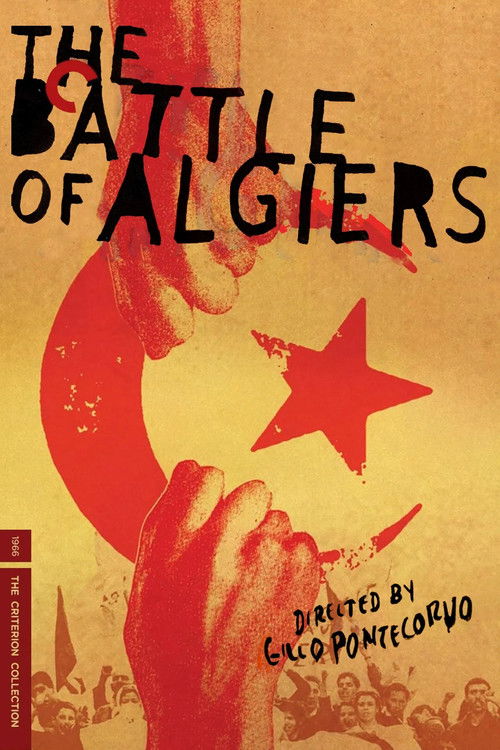
Made just three years after the end of the French-Algerian War (1954-1962), Gillo Pontecorvo's The Battle Of Algiers instantly ignited discussions of this complex historical period. Using the film as a point of reference, this 2004 documentary attempts to reconstruct the Algerian experience of the battle for independence.
Remembering History
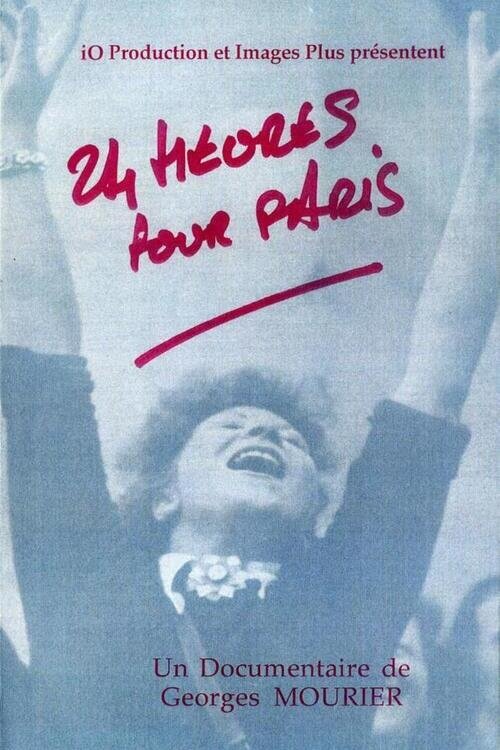
The twenty-four hours that liberated Paris. Far from history lessons, men, soldiers or resistance fighters of yesterday, testify of these days of August 1944 which they lived with their impulses, their modesty but also their humor.