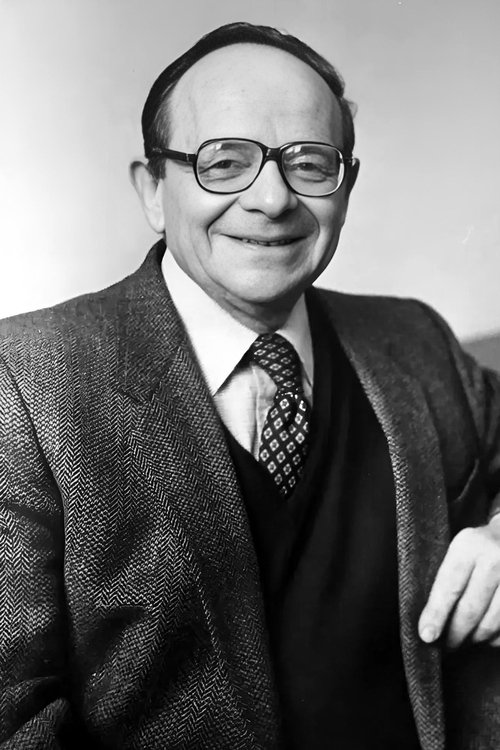
Henri Alleg
Acting
Biography
Harry Salem, known as Henri Alleg, born July 20, 1921 in London and died July 17, 2013 in the 19th arrondissement of Paris, was a French journalist, member of the French Communist Party (PCF), and former director of Alger Républicain. He is notably the author of "La Question," a book denouncing torture during the Algerian War. Born in London to Russo-Polish Jewish parents, Henri Alleg never fully embraced his Jewish identity due to his views on Israel as an agent of racist colonialism. Alleg spent part of his childhood in Paris where, during the Spanish Civil War, he encountered an increasingly politicized school environment with Italian refugees who opposed Mussolini's arrival in France along with German Jews. Alleg left for Algeria in 1939 and, at the age of 18, became closely associated with the Algerian Communist Party. In 1946, he married Gilberte Serfaty, who, like him, would become an ardent communist activist. In 1951, he became editor of the daily newspaper Alger Républicain. He went underground in 1955, when the newspaper Alger Républicain was banned. Boualem Khalfa, the first Muslim to head a major daily newspaper, had left the previous year to join the Algerian Communist Party press. Henri Alleg, however, continued to send articles to France, some of which were published by L'Humanité. He was arrested on June 12, 1957, by paratroopers of the 10th DP5, at the home of his friend Maurice Audin, a young mathematics assistant and fellow Algerian Communist Party activist, who had been arrested the day before and tortured to death. He was held captive for a month in El-Biar, where he was tortured in several sessions. He reportedly stood his ground against his torturers, primarily Lieutenants André Charbonnier and Philippe Erulin under the command of Captain Marcel Devis, declaring: "I'm waiting for you: I'm not afraid of you." He was then transferred to the Lodi camp (Médéa Province), then to Barberousse, the harsh civilian prison in Algiers. Transferred to France, he was imprisoned in Rennes prison. Taking advantage of a stay in a hospital, he escaped. With the help of communist activists, he reached Czechoslovakia, thanks in particular to Alfred Locussol. He returned to France after the Evian Accords, then to Algeria, where he participated in the revival of the newspaper Alger Républicain. "Persona non grata" in Algeria following Houari Boumédiène's coup d'état, he returned to France in 1965. He resumed his writing between 1966 and 1980 for the daily newspaper L'Humanité, where he became secretary-general. He settled in Palaiseau, where he remained until the end of his life. In 2005, he co-signed a letter to the President of the Republic, asking the French government to recognize the abandonment of the Harkis in 1962. Henri Alleg died on July 17, 2013. During his funeral at Père Lachaise Cemetery on July 29, 2013, in the presence of representatives of the French and Algerian governments, the Algerian President recalled in a message read on his behalf that the book "The Question" is "one of the major texts which, through their universal impact and the awareness they have raised throughout the world, have undeniably contributed to serving the noble cause of human rights in general." Henri Alleg is buried in the Palaiseau Cemetery.
Known For
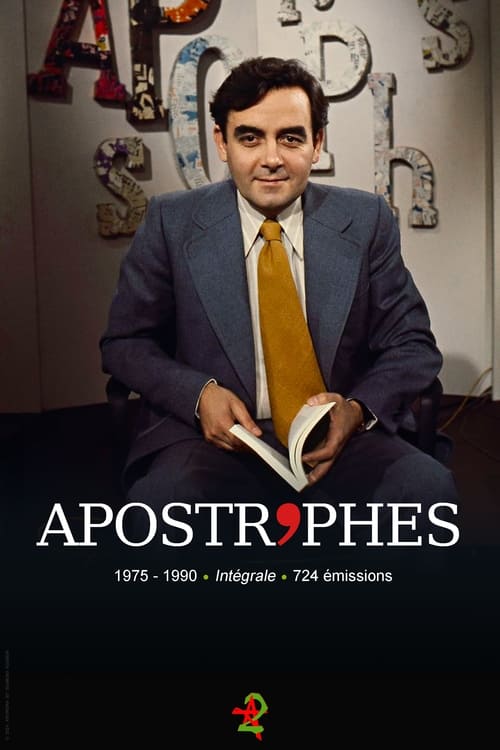
Apostrophes was a live, weekly, literary, prime-time, talk show on French television created and hosted by Bernard Pivot. It ran for fifteen years (724 episodes) from January 10, 1975, to June 22, 1990, and was one of the most watched shows on French television (around 6 million regular viewers). It was broadcast on Friday nights on the channel France 2 (which was called "Antenne 2" from 1975 to 1992). The hourlong show was devoted to books, authors and literature. The format varied between one-on-one interviews with a single author and open discussions between four or five authors.
Apostrophes

1957. For several months, Henri Charlègue, the ex-director of the newspaper "Alger democratic", banned, has been living in hiding. Suspected of belonging to the FLN, he is actively sought by paratroopers.
The Question
No description available.
It Was the War of Algeria
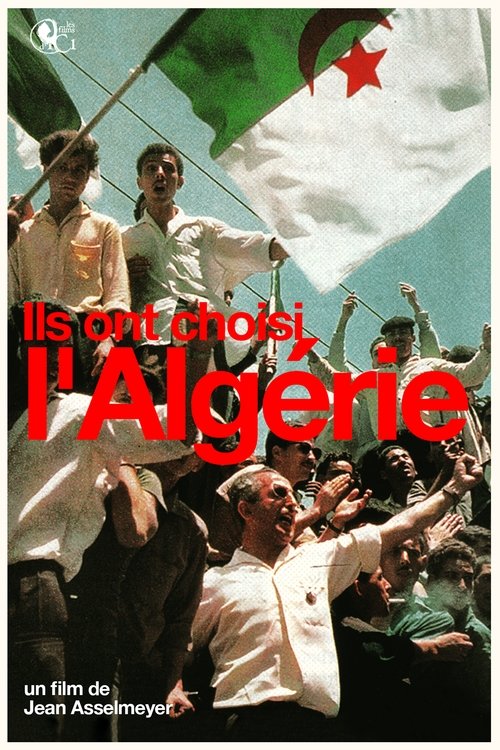
Many of them participated in the struggle for Algerian independence. There are "those who believed in heaven", priests, Christians committed against torture, friends of the "natives", there are "those who did not believe in it", communist activists, students, progressive intellectuals, others remained in this country because they could not imagine living anywhere other than in this land of all passions. They are European and chose to stay in Algeria after independence, most of them opted for Algerian nationality. The film is another vision of the history of Algeria from the end of the fifties to the present day, told by these Europeans filmed at home, or in the context of their activities, illustrated by unpublished archive documents.
They Chose Algeria
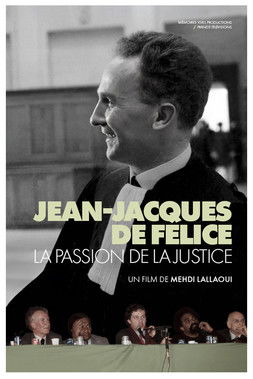
From the rights of minors before the juvenile court, young offenders from the neighborhoods of eastern Paris, or children of Algerian origin from the shantytowns of Nanterre, to the defense of colonized Kanaks and Polynesians; from the fight for conscientious objector status to the denunciation of torture and the death penalty, lawyer Jean-Jacques de Félice has been involved in every struggle. His pacifism knows no bounds: with organizations like Cimade, LDH, and the Louis-Lecoin Committee, he assists draft dodgers in numerous countries. These include Portuguese conscientious objectors refusing to fight in the wars in Angola and Mozambique, American deserters opposed to the Vietnam War, and Israeli objectors refusing to serve in the Occupied Territories. It is no surprise that, as early as 1971, he was one of the very first lawyers representing the farmers of the Larzac plateau.
Jean-Jacques de Félice, The Passion For Justice
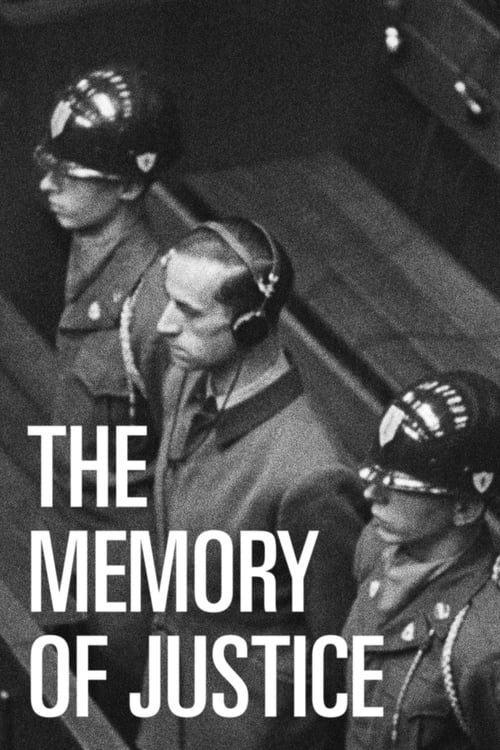
This exceptional, disturbing, and thought-provoking two-part documentary compares the atrocities committed by the Nazis as revealed during the Nuremberg trials to those committed by the French in Algeria and those done by the Americans in Vietnam. The four-hour epic questions the right of any country to pass self-righteous moral judgements upon the actions of another country.
The Memory of Justice
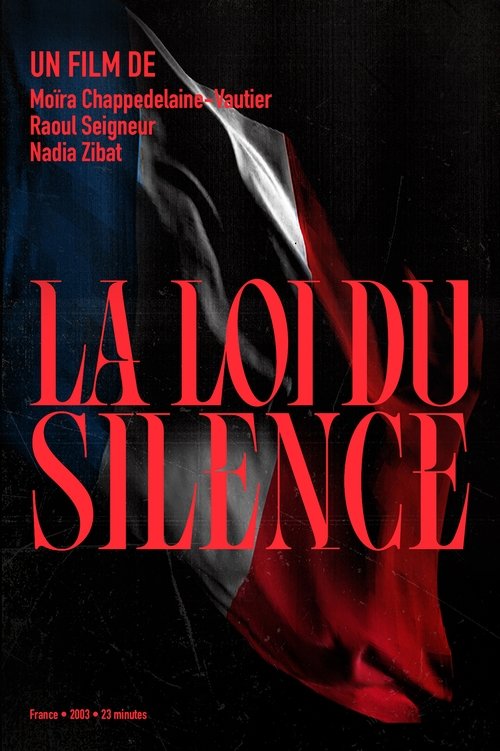
The Law of Silence, a final-year documentary by Moïra Chappedelaine-Vautier at Femis, examines the 1963 Amnesty Law and the consequences it had on studies of the Algerian War. It brings together interviews conducted in 2002 with Henri Alleg, editor of the daily newspaper Alger Républicain from 1951 to 1955, and Pierre Vidal-Naquet, historian and essayist. It also features incredible statements from General Massu and lawyers unraveling the various legal defenses of people like Jean-Marie Le Pen. Not only does Moïra have her father, René Vautier, speak, but she also includes footage he himself filmed forty years earlier. A very interesting report, which notably reminds us that the Amnesty is not a pardon but the erasure of the sentence and also of the crime itself.
The Law of Silence

No description available.
Un Combat Singulier
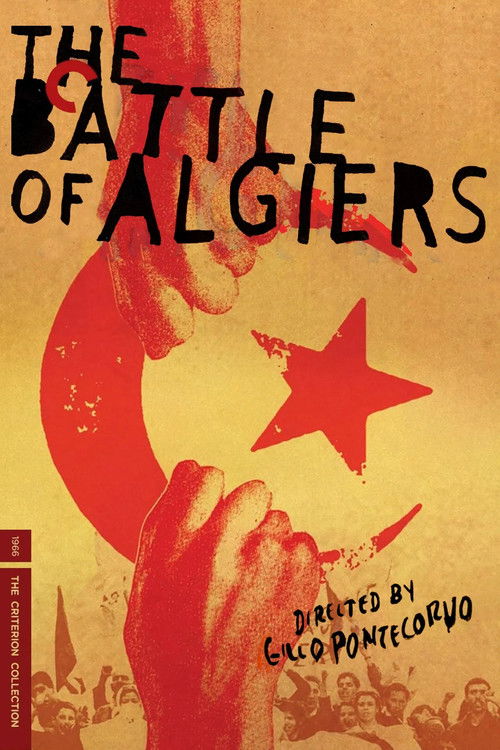
Made just three years after the end of the French-Algerian War (1954-1962), Gillo Pontecorvo's The Battle Of Algiers instantly ignited discussions of this complex historical period. Using the film as a point of reference, this 2004 documentary attempts to reconstruct the Algerian experience of the battle for independence.