François Villiers
Directing
Biography
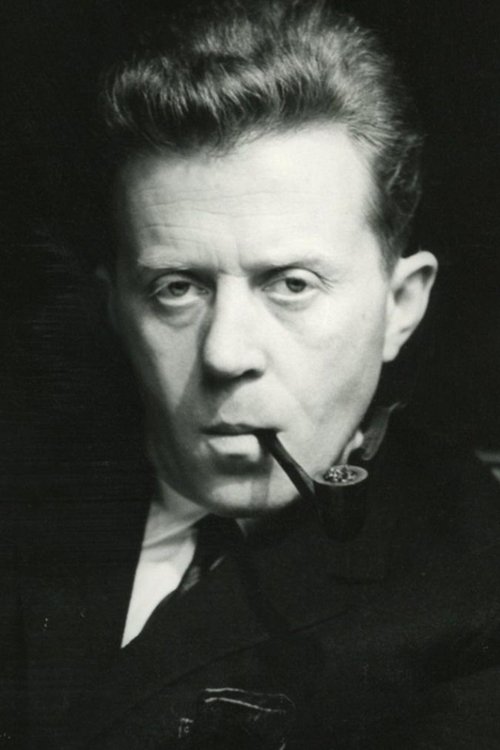
François Villiers (2 March 1920 – 29 January 2009) Chevalier of the Legion of Honor was a French film director. He was responsible for several films, from Hans le marin in 1949, to Manika, une vie plus tard, in 1989, which won the Prix du Public at Cannes. He was the younger brother of actor Jean-Pierre Aumont and therefore uncle of Tina Aumont. His mother's uncle was well-known stage actor Georges Berr (died 1942). Source: Article "François Villiers" from Wikipedia in English, licensed under CC-BY-SA 3.0.

Known For

A talk show presented by Michel Drucker
Les Rendez-vous du dimanche

No description available.
Cinépanorama

No description available.
Reflets de Cannes

Adapted from Jules Roy's historical novel of the French presence in North Africa, the TV series follows the destiny of two families, the Bouychous and the Parises, from the conquest of Algiers in 1830 to the Independence in 1962.
Les Chevaux du soleil

No description available.
Loulou de Montmartre

A doumentary of the life and career of French actor, Jean-Pierre Aumont.
Jean-Pierre Aumont, charme et fou-rires

No description available.
Le soleil se lève à l'est

Laurent is an artist and sometimes con-man. He wanders into the life of Renee one day in her antique shop and tries to seduce her. Before they can leave town on a weekend getaway together, Renee's teenage daughter Daniele quits school and unexpectedly shows up. Laurent and Daniele fall for each other immediately and end up getting married. The film follows the disastrous situation created by the jealous mother and her daughter's immature husband.
Three Faces of Sin

What father doesn't care for his daughter unconditionally? It's a real question for Roland de Mailly, a divorced father who, in spite of himself, is subjected to the extravagances of his beloved daughter. By turns religious, hippy, extra-lucid, circus performer, will she overcome her father's love?
La Pomme de son œil

No description available.
Les Sesterain ou le miroir 2000

In this unusual feature, Manika is a girl born in a Catholic family in a south Indian fishing village is convinced that she has recently had a former life as a Brahman wife in Nepal. Her parish priest, Father Daniel is under orders to convince her otherwise, as reincarnation does not accord with official Catholic doctrine. Instead, he agrees to journey with her to the site of her dreams of a previous life. Once there, they discover that all is just as she had dreamed it, and her former husband has remarried despite promising not to. Her arrival on the scene does not disturb the man, but it really upsets his new wife, who departs with her baby. Manika decides that it helps no one for her to remain there in Nepal, and returns to her home in the south. However, all this has caused a genuine crisis of faith for the priest who, witnessing all this, has had to grapple with some irreconcilable issues.
Manika, the Girl Who Lived Twice

The troubling attraction of a young decorator, Agnès, on a small Spanish island, for a man everyone distrusts, whose wife has mysteriously disappeared.
The Other Woman

A Canadian sailor becomes a fugitive for love after a night with a woman in Marseille.
Wicked City

Rear Window meets Estate violenta. The middle-aged Constance watches a young couple that lives across the courtyard; the girl plays loud pop music and goes out of her way to be unpleasant to the classically educated and piano-playing Constance. Then one day Constance sees the boyfriend strangle the little tart in a fit of jealousy. He sees her, too, and has nobody else to turn to for help. Constance keeps silent about the murder and offers the young Hugo a place in her bed. Then the blackmail notes start to arrive...
Constance aux enfers

In 1943, a group of high school students decide to take action against the Nazi occupying forces. Showing courage and imagination, they manage to blow up the Kommandantur and to release hostages. But after the killing of a German soldier the Nazi police apparatus strikes back. The young resisters are arrested and two of them are condemned to death.
Green Harvest

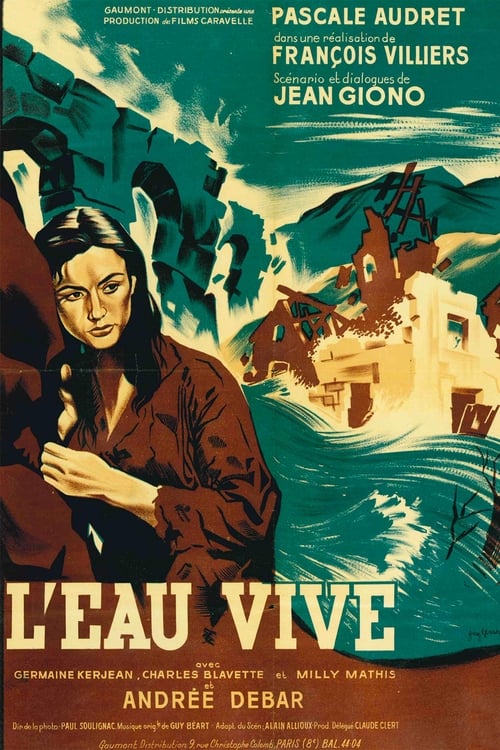
The heroine in L'Eau Vive is the unwilling heir to a fortune. Young Hortense (Pascale Audret) has always known that her family was greedy, but until she inherits her father's hidden millions she has no idea how loathsome her relatives could be. Surrounded on all sides by grubby, outstretched hands, Hortense takes some comfort in the fact that her legacy is still missing. When the money is finally recovered, our heroine does the "right thing" with her windfall, leaving her mercenary family empty-handed. Throughout the film, Hortense's dilemma is likened to a government dam project not far from her home; as the bridge grows in size, so too does Hortense's resolve to rise above the nastiness all around her.
Girl and the River

In this crime drama, Michel Simon is cast as Pierrot, an elderly gangster who does not fit the stereotype -- he is soft-hearted. After a petty criminal betrays his cohorts by taking off with the loot from a big robbery, he is caught and sent to jail. Now he has served his time, and Pierrot is given the task of retrieving the stolen cash. The tyro criminal tries to use a pretty young woman who has fallen in love with him as a red herring for Pierrot's investigation. Everything backfires though, and Pierrot is left considering what to do with the loot, and with the criminal who does not yet realize he loves his attractive accomplice and could have a good life with her if he opts for walking the straight and narrow.
Pete the Tender

This brave, lonely man who arrives in Corsica, in a poor village, has no idea that he will have to take in this 9-year-old child whose mother has just died and of whom he is undoubtedly the father. His only hope is to find a place for the child, a place where he can get rid of his mother, a place where the child can stay, grow up, eat his fill and become a man. In this long race on foot through the mountains or by hitchhiking, they successively reject all the solutions that are offered, for the taste of freedom, which is more deeply rooted in them than that of security. This common feeling gradually brings them closer together, and after many incidents, they decide to face life and its uncertain future together.
Till the End of the World
No description available.
Fumée, histoire et fantaisie
Produced and conceived by French filmmakers Jean Cocteau and François Villiers, with a screenplay by Langston Hughes, Rhythm of Africa takes a look at the special ceremonial dance of atonement in Chad. The heartbeat of the jungle, the day-to-day life in the modernizing village, and the bustling marketplace take on a hypnotizing rhythm of their own. A changing Africa asserts itself in a changing world.