Yuri Gagarin
Acting
Biography
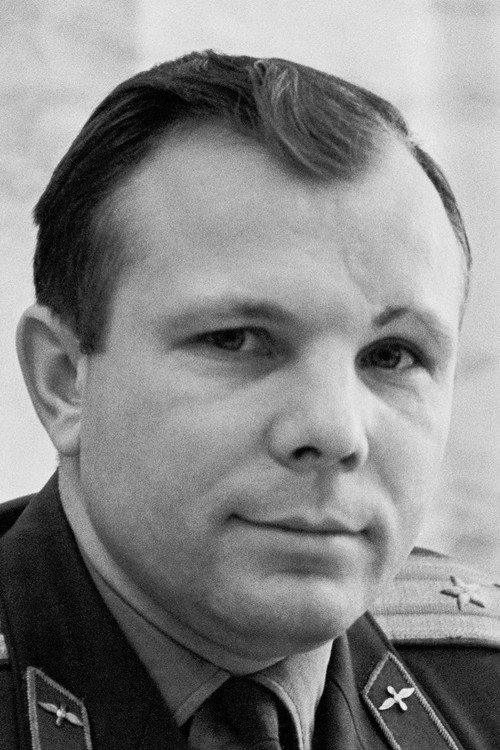
Yuri Alekseyevich Gagarin was a Soviet Air Forces pilot and cosmonaut who became the first human travel into outer space: his capsule, Vostok 1, completed one orbit of Earth on 12 April 1961.
Known For

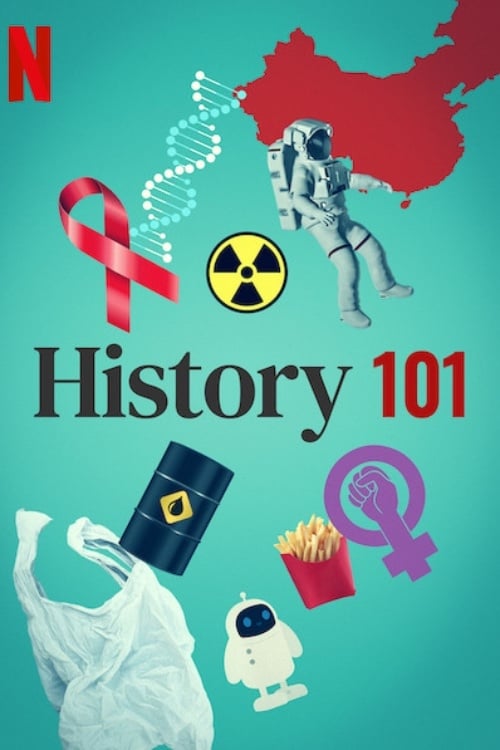
Infographics and archival footage deliver bite-size history lessons on scientific breakthroughs, social movements and world-changing discoveries.
History 101

No description available.
The Century of Icons

Communism spread to all of the continents of the word, lasting through four generations and over seven decades. Hundreds of millions of men and women were affected by this political system, one of the most unjust and bloodiest in history. Using newly discovered propaganda films and archival photos, these four episodes explore the mysteries of this totalitarian political machine that lured its share of important followers into the fold. Known as the red church, communism seduced its ardent followers like some earthly religion.
Faith of the Century: A History of Communism

An unprecedented look at the decade-long odyssey to land a man on the moon. This documentary pulls back the curtain on the familiar narrative of the moonshot, revealing a fascinating stew of scientific innovation, political calculation, media spectacle, visionary impulses and personal drama.
Chasing the Moon

No description available.
Загадки века с Сергеем Медведевым

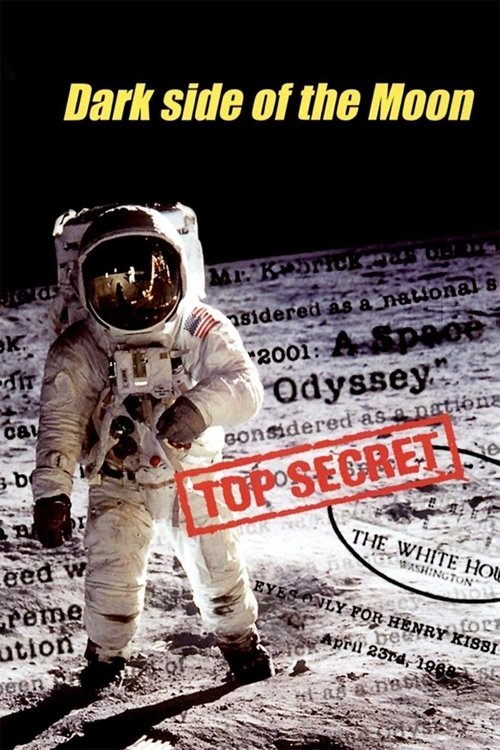
A French documentary or, one might say more accurately, a mockumentary, by director William Karel which originally aired on Arte in 2002 with the title Opération Lune. The basic premise for the film is the theory that the television footage from the Apollo 11 Moon landing was faked and actually recorded in a studio by the CIA with help from director Stanley Kubrick.
Dark Side of the Moon

Documentary footage (from the 1950s) and accompanying commentary to attempt to answer the existential question, Why are our lives characterized by discontent, anguish, and fear? The film is in two completely separate parts, and the directors of these respective sections, left-wing Pier Paolo Pasolini and conservative Giovanni Guareschi, offer the viewer contrasting analyses of and prescriptions for modern society. Part I, by Pasolini, is a denunciation of the offenses of Western culture, particularly those against colonized Africa. It is at the same time a chronicle of the liberation and independence of the former African colonies, portraying these peoples as the new protagonists of the world stage, holding up Marxism as their "salvation", and suggesting that their "innocent ferocity" will be the new religion of the era. Guareschi's part, by contrast, constitutes a defense of Western civilization and a word of hope, couched in traditional Christian terms, for man's future.
La Rabbia

July 20, 1969. Apollo 11 lands on the surface of the Moon. Such a feat was apparently performed to the greater glory of all mankind, but actually it marked the end of the space race disputed by the two great superpowers of the time in their eagerness to arrive before and the beginning of the spread of the Cold War into space. Nowadays, the struggle continues, but the main competitors and their purposes are others.
Moon: The Battles of Space

Drama based on life and stories of one of the most popular Soviet/Russian writers - Sergei Dovlatov.
The End of a Beautiful Epoch

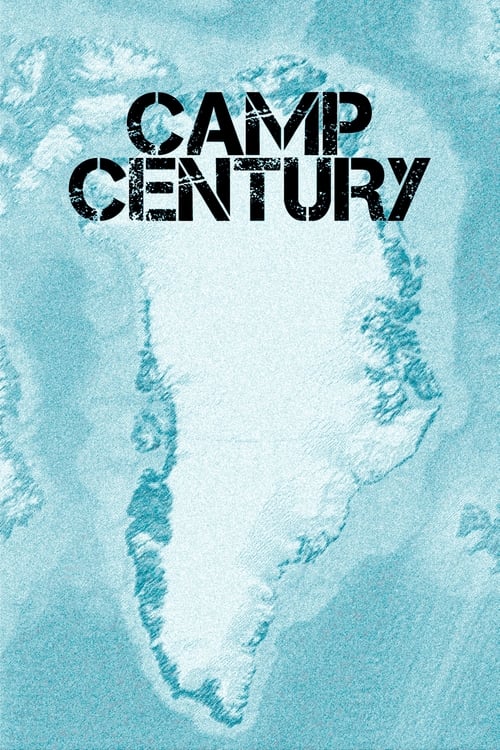
How in 1959, during the heat of the Cold War, the government of the United States decided to create a secret military base located in the far north of Greenland: Camp Century, almost a real town with roads and houses, a nuclear plant to provide power and silos to house missiles aimed at the Soviet Union.
Camp Century: The Hidden City Beneath the Ice

Spain, 1519. Ferdinand Magellan, Portuguese navigator in the service of King Charles I, undertakes, at the command of five ships, a commercial expedition to the Moluccas. The story of the first circumnavigation of the world, completed by Juan Sebastián Elcano in 1522.
The Longest Voyage

Historic Russian battles to repel invaders serve as prelude to the story of events that redrew the map of Eastern Europe and parts of Asia in the 20th century. Following the turmoil of the Bolshevik Revolution, Communist Russia faces the venom of Nazi aggression. 1940's film footage reveals the harsh reality of total war, as the Red Army and Soviet civilians alike confront a brutal and tenacious enemy. The following decades are darkened by tensions between the USSR and foreign powers, and violent measures taken to silence voices of dissent. Finally, the Soviet people's yearning for a freer society leads to accelerating reforms and the ultimate dissolution of the USSR.
Soviet Union: The Rise and Fall - Part 2

In the first hour of the new year 1965, a holiday program with the participation of Pavel Rudakov and Sergei Lavrov, Larisa Mondrus, Tatiana Shmyga, Leonid Engibarov, Arkady Raikin, brothers Sazonov, Iosif Kobzon, Maya Kristalinskaya, Muslim Magomaev, vocal octet "Line" and pop orchestra conducted by Eddie Rosner, Yulia Pashkovskaya, Vladimir Shubarin, Eduard Khil, quartet "Accord" was broadcast. Among the guests are cosmonauts Gagarin, Belyaev and Leonov.
Голубой огонек - в первый час
No description available.
Георгий Бурков. "Не будем полагаться на случай"

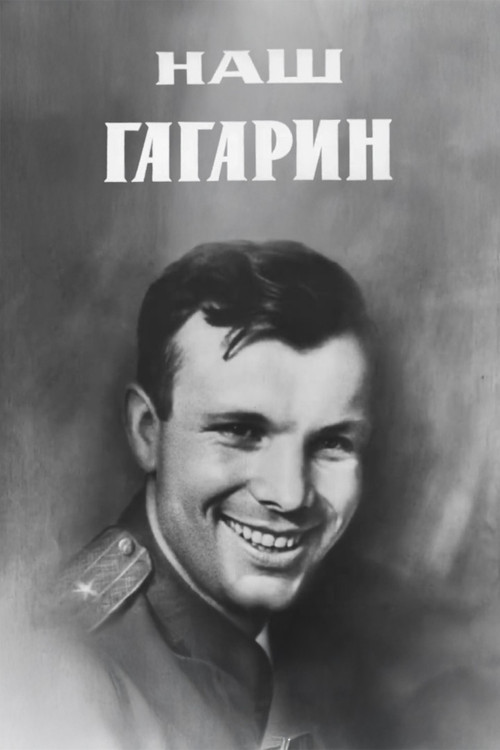
A documentary portrait of Yuri Gagarin, the first human in space, revisiting his flight and public life ten years later through training footage, international visits, and mass celebrations.
Our Gagarin

1961 - the year when Swedish UN soldiers are in the crisis-ridden Congo and Secretary General Dag Hammarskjöld dies in a plane crash. Swedish film's biggest hit, "Are there angels?", has its premiere with Christina Schollin in one of the roles. Yuri Gagarin becomes the first man in space and the Volvo P 1800 appears on the roads. Ewy Rosqvist is a rally ace and in April the regal ship Vasa is lifted up after 333 years at the bottom of Stockholm's stream. In August, the Berlin Wall is built and outside the Stockholm archipelago, Radio Nord broadcasts music and news.
Året var 1961
No description available.
Галина Уланова. Земная жизнь богини

No description available.
Conquering Space: The Moon and Beyond

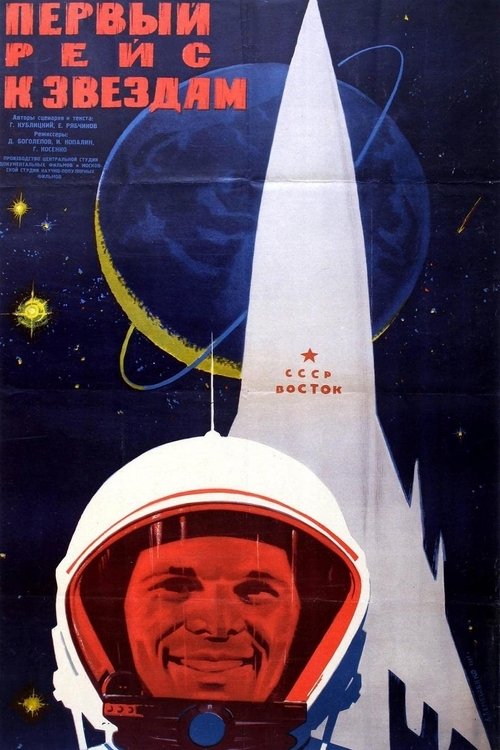
The history of the Soviet space program and the flight of the world's first manned spacecraft "Vostok" piloted by Yuri Gagarin.
First Flight to the Stars

In Ivry sur Seine, in the Parisian suburbs, the Gagarin housing estate was a symbol. Destroyed in 2020, this film brings it back to life, through the eyes of Adnane Tragha, who grew up across the street, and through the words of its former inhabitants. Back in the deserted city, they evoke their memories of the place. Daniel, Loïc, Karima, Yvette, Foued, Samira and Mehdy tell us about their lives, their experiences and their feelings. The difficulties as well as the solidarity, the stigmatization as well as the mutual aid, the good memories as well as the bad. Crossing temporalities and experiences, "We grew up together" paints, through small subjective touches, the story of a city like so many others. This film is a "counter-history", the rehabilitation of a word that is too rare, a hymn to working-class neighborhoods. "At the same time documentary, fiction, archival work, We grew up together is multifaceted, like the city.