FEEL IT.STREAM
Henry Hills

Henry Hills

Directing

Biography

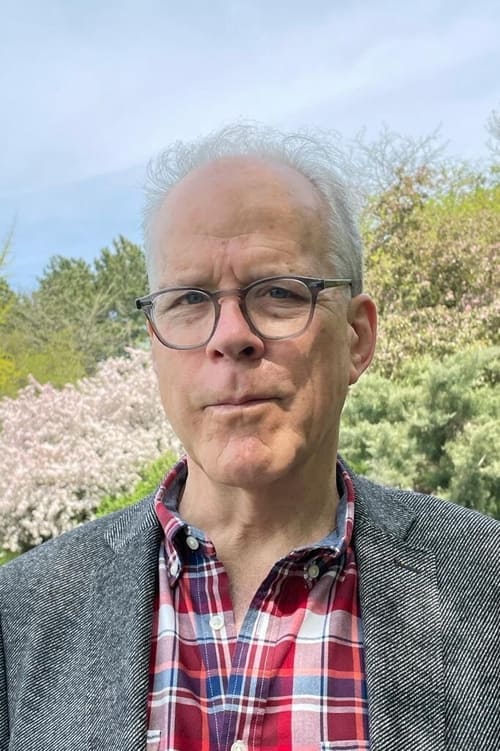
Henry Hills has made more than 30 experimental films and videos since 1975. He divides his time between New York, Vienna, & Porter Springs, GA. He is Visiting Professor at FAMU, the film academy in Prague; was a 2009 Guggenheim Fellow; and his work is in the permanent collection of the Museum of Modern Art. SELECTED FILMS 1977-2008 is available on DVD from Tzadik.
Known For

In the Mirror of Maya Deren
7.5

Documentary about the life of avant-garde filmmaker Maya Deren, who led the independent film movement of the 1940s.

In the Mirror of Maya Deren

2002
Jack Smith and the Destruction of Atlantis
6.6

In this entrancing documentary on performance artist, photographer and underground filmmaker Jack Smith, photographs and rare clips of Smith's performances and films punctuate interviews with artists, critics, friends and foes to create an engaging portrait of the artist. Widely known for his banned queer erotica film Flaming Creatures, Smith was an innovator and firebrand who influenced artists such as Andy Warhol and John Waters.

Jack Smith and the Destruction of Atlantis

2007
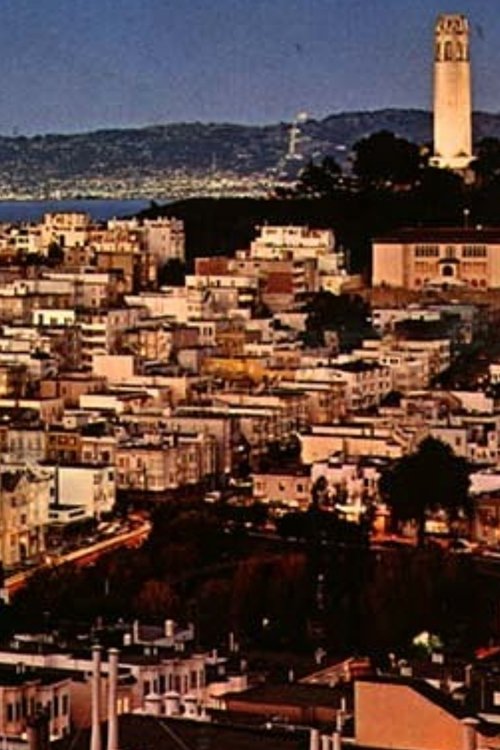
North Beach 2
N/A

A re-edited version of NORTH BEACH; more frenetic, more out there, more '80s. "It is interesting to note that this tendency toward design, so prominent in '70s filmmakers like Hills, currently have connotations of hard-mindedness, rigorousness and even asceticism, whereas in other times such a preoccupation with pattern would more often than not be associated with mere decoration, hedonism, frivolousness and irrationalism." – Noel Carroll, The Soho Weekly News

North Beach 2

1979
The Falls
N/A

A vision of the tortured torrential psyche, made out of two scenes from the film noir NIAGARA — the movie that made MM a goddess and the embodiment of projection (the iconic image used by Warhol is a still from the souvenir shop scene here). The single-frame juxtaposition simultaneity and fugal repetition makes it seem almost real. We share her longings and her suffering. Hollywood, the pretty face of late monopoly Capitalism, exploits us all. It doesn’t have a happy ending.

The Falls

2019
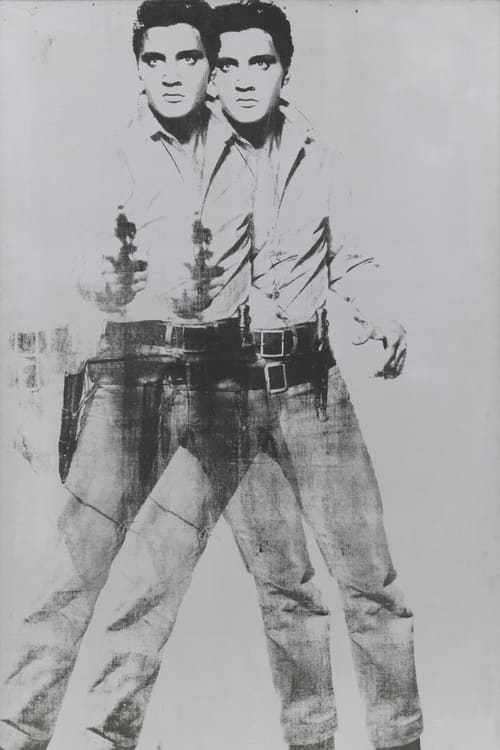
Double Elvis
N/A

A flickering structural examination of Elvis.

Double Elvis

2020
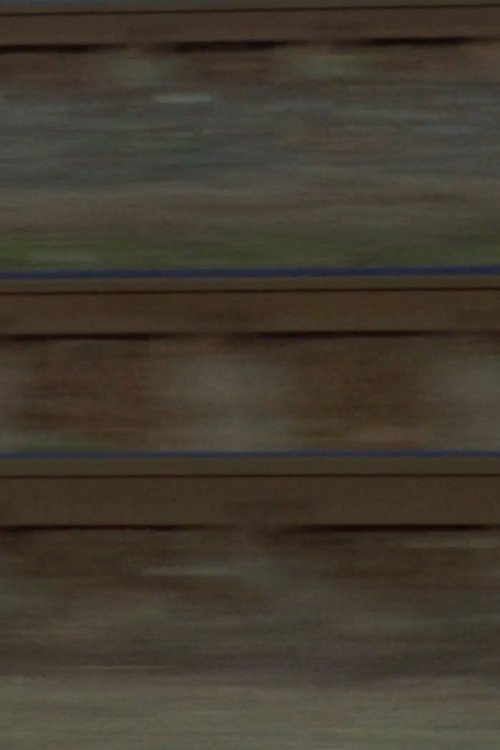
Commute
N/A

Henry Hills’ most recent film consists of footage recorded from a moving train during his trips from his home in Vienna to his work as a professor at FAMU in Prague. Over ten years of commutes are condensed in dozens of shots of railway tracks, each set to diferent pieces of music ranging from Eduard Artemyev to Kraftwerk. In line with Hills’ decades-spanning investigations of rhythm in film, the mundane Vienna-Prague line is transformed through rapid montage into a musical reverie of geometries in motion; a joyous, personal rif on that cinematic motif par excellence: the train.

Commute

2025
Failed States
N/A

Boys love to spin until they collapse. Is the world then spinning out of control? Preparations for renegotiating the Nonproliferation Treaty.

Failed States

2008
The Genius
7.0

A ramshackle underground SF satire set and shot in the self-absorbed art world of lower Manhattan, written, produced, and directed by Joe Gibbons, who also plays one of the lead parts. Gibbons plays a mad scientist who's developed a technique for transferring personalities from one person's body to another; he becomes obsessed with an outlaw artist (played by performance artist Karen Finley) who destroys paintings in various galleries as a form of anarchist, anticapitalist protest.

The Genius

1993
Rudy Burckhardt: Man in the Woods
N/A

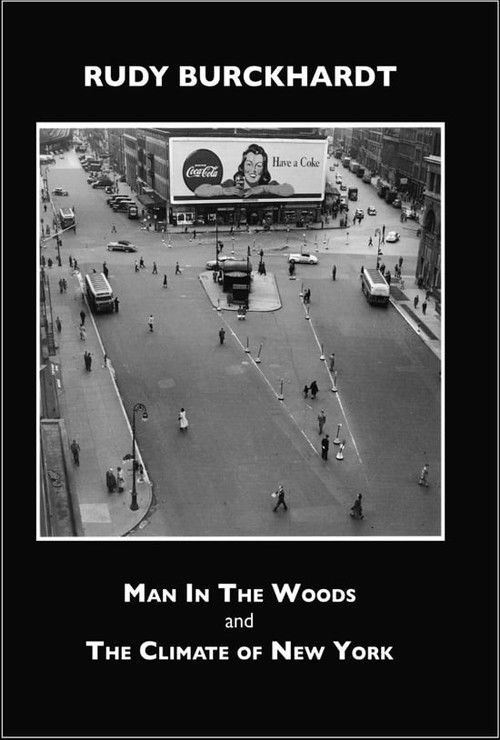
A detailed look at a remarkable artist who died in 1999 at age 85. Aspects of Burckhardt's work in photography, film, and painting are examined in interviews with Rudy Burckhardt, painter Yvonne Jacquette, and curators Robert Storr (former Senior Curator of Painting and Sculpture, Museum of Modern Art, New York) and Brian Wallis (Chief Curator, International Center of Photography, New York). In his studio in New York, Burckhardt discusses his photography and its significance within its historical framework. In the woods near his summer home in Maine, the viewer sees Burckhardt's easel and painting in front of the scene he is depicting. Whether in city or country, Burckhardt appreciated and transformed the chaos he discovered.

Rudy Burckhardt: Man in the Woods

2003
Little Lieutenant
9.0

Little Lieutenant is a look back at the late Weimar era with its struggles and celebrations leading up to world war, a period piece. Scored to John Zorn's arrangement of the Kurt Weill song, "Little Lieutenant of the Loving God", and drawing its imagery both from the original song and its somewhat idiosyncratic rearrangement, the film presents an internal reading of Silvers' solo scored to the same musical piece, "Along the Skid Mark of Recorded History".

Little Lieutenant

1994
Kino Da!
N/A

Kino Da! (1981) is a portrait of North Beach Communist cafe poet & gentle comrade, Jack Hirschman, editor of the “Artaud Anthology” (City Lights). Shot in sync with wind-up Bolex.

Kino Da!

1981
Nervous Ken
N/A

In NERVOUS KEN, experimental film legend Ken Jacobs is "interviewed" by my urbane 12-year old M.C., Emma Bernstein. Envisioning an exploration of the nature of listening (of apprehending or not, remembering or not, and creating meaning) and of the repetitions & variations of verbal expression and its accompanying often-emphatic physical gesturing as a basis for making visual music, I, as filmmaker turned "media artist", employ the full range of temporal manipulation available within my concurrent digital set-up, exploiting unique corners which differentiate DV from 16mm, though including frequent references to themes & techniques from Jacobs' own work within the arcanum of film. The "musical score" is derived through permutations of the sync track. This was the first released section from the ongoing series, premiering March 2004 at the Museum of Modern Art.

Nervous Ken

2003
Goa Lawah
N/A

Goa Lawah is a sacred bat cave on the east coast of Bali. Actual footage.

Goa Lawah

1991
Gotham
8.0

A film set to "Batman" by Naked City. Taking the band’s name and first album cover as a clue, Henry Hills drew heavily on themes in WeeGee’s photographs, recreating many of his pictures in their actual Lower East Side/Little Italy locations.

Gotham

1990
Emma's Dilemma
1.0

Henry Hills’s Emma’s Dilemma reinvents the portrait for the age of digital reproduction. In a set of tour-de-force probes into the images and essences of such downtown luminaries as Richard Foreman, Ken Jacobs, and Carolee Schneemann, Hills’s cinematic inventions literally turn the screen upside down and inside out. In this epic journey into the picaresque, we follow Emma Bee Bernstein, our intrepid protagonist, from her pre-teen innocence to her late teen-attitude, as she learns about the downtown art scene firsthand. In the process, Hills reimagines the art of video in a style that achieves the density, complexity, and visual richness of his greatest films.

Emma's Dilemma

2012
No image
N/A

Heretic is composed from the outtakes of Joe Gibbons's no-budget feature The Genius, set to John Zorn's Naked City "soundtrack" album Heretic, and recomposed as a satire on Psychotherapy. Features original narration performed by Frank Snider. A study of editing and its relation to the mechanics of the brain, HERETIC initially poses as a preview to the Gibbons film which it then deconstructs and reforms into a satire on psychotherapy.

Heretic

Porter Springs 4
N/A

A “remake” of my first film, Porter Springs 4 (1999) is composed from footage shot over 20 years (reversal, negative, 8 mm, super-8, 8mm video, mini-DV, & old photos), with an audio track composed from the video sync, ambient recordings, and a tape I made in highschool of my uncle telling stories and playing piano & of selections from his record collection that we listened to on family vacation in my childhood. My father growing old & feeble, my only footage of my dead sister and grandmother (Gonga) and of my log cabin (the Bug House) which was struck by lightning and burned to the ground in 1990, memories of my two ex’s, eternal nature, endless walks in the woods, building my new cabin and dream time there, the rotting boathouse, and various typical family scenes, assembled and presented in the rhythms of my mind and body. (Henry Hills)

Porter Springs 4

1999
SSS
9.2

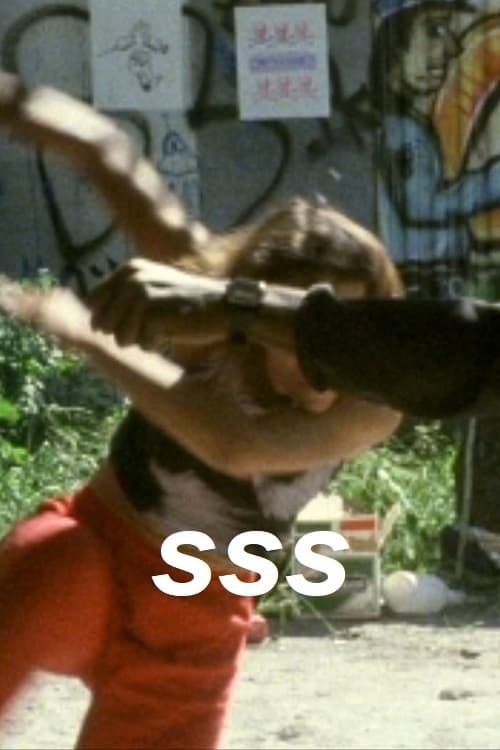
SSS is composed from footage of movement improvised on the streets of pre-gentrified East Village by Sally Silvers, Pooh Kaye, Harry Shepperd, Lee Katz, Kumiko Kimoto, David Zambrano, Ginger Gillespie, Mark Dendy, and others, painstaking synched to music previously improvised for the project at Noise New York by Tom Cora (cello), Christian Marclay (turntables), and Zeena Parkins (harp). Beauty emerging from rubble. (Henry Hills)

SSS

1988
No image
N/A

Money (1985) is an historical document of the early days of "language poetry" and the downtown improvised music scene. A manic collage film from the mid-80s when it still seemed that Reaganism of the soul could be defeated. Filmed primarily on the streets of Manhattan for the ambient sounds and movements and occasional pedestrian interaction to create a rich tapestry of swirling colors and juxtaposed architectural spaces in deep focus and present the intense urban overflowing energy that is experience living here. Money is thematically centered around a discussion of economic problems facing avant-garde artists. Discussion, however, is fragmented into words and phrases and reassembled into writing. Musical and movement phrases are woven through this conversation to create an almost operatic composition. Give me money!

Money

1985
Arcana
5.5

A globally composed, musically arranged montage-round: so Henry Hills’s arcana appears to be, a fulminant 30-minute cut-up epic that takes footage – both found and shot by the filmmaker – and crosses it in an almost arithmetic manner with a pre-arranged soundtrack. The basis is a written film treatment of the musician John Zorn, in which 254 scenes, bundled into 15 sequences, are captured in short, sometimes cryptic descriptions. Hills, very much in the style of a Harry Smith or Bruce Conner, has collected takes of radically differing origin for each of the 254 script directions and funneled them into a complexly ramified stream of associations. The sequence of scenes is underscored, or rather, interlocked, with pieces from the John Zorn composition The Bribe (1986), a musical tribute to crime fiction writer Mickey Spillane.

Arcana

2010