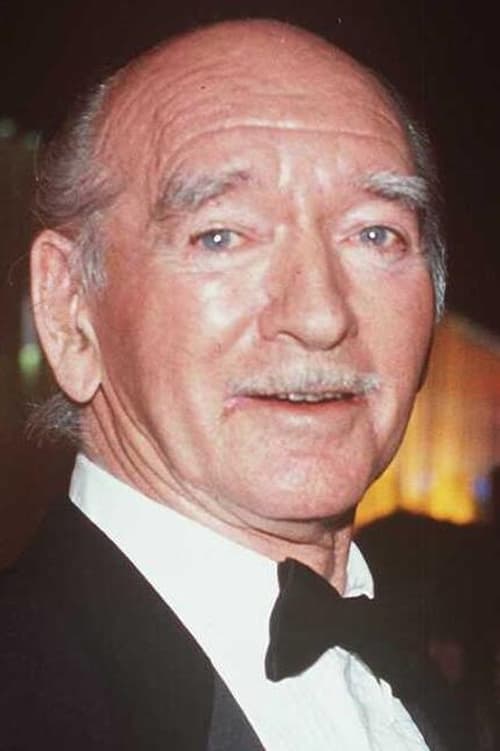
Eddie Barclay
Acting
Biography
Édouard Ruault (26 January 1921 – 13 May 2005), better known as Eddie Barclay, was a French music producer whose singers included Jacques Brel, Dalida and Charles Aznavour. He founded record label Barclay. Ruault, the son of a café waiter and a post office worker, was born in Paris on January 26, 1921. He spent much of his early childhood with his grandmother in Taverny (in today's Val-d'Oise). His parents bought the Café de la Poste bar in the middle of Paris while he was a child and at the age of 15 he left school to work in the café. He had not enjoyed his studies but he taught himself music and piano. He particularly liked American jazz and embraced the music of Fats Waller. He often visited the Hot Club de France to hear the quintet of Stéphane Grappelli and Django Reinhardt. He became a pianist at "L'Étape" club in rue Godot-de-Mauroy, Paris, where his half-hour sets alternated with the young Louis de Funès, also at the start of his career. When the German occupiers of France banned jazz, he held regular social gatherings with other zazous at his home to listen to jazz records and illegal radio stations. Pierre-Louis Guérin employed him as a pianist at Guérin's first nightclub, "Le Club". After the war, Eduard Ruault changed his name to Eddie Barclay and opened "Eddie's Club" in Paris. In 1947 he started a band which featured his wife, Nicole, on vocals under the name Eve Williams. Barclay and his wife started "Blue Star Records", using their apartment to store 78 rpm discs, with Barclay delivering them himself. Musicians on the label included Don Byas and Eddie Constantine. Barclay wrote songs with Charles Aznavour and Boris Vian, and with Vian he edited Jazz magazine. In 1952 Alan Morrison, a visitor to Barclay's club, had invited him to visit the US to see the new recording technology that enabled the production of 45s and LPs. In 1955 Barclay agreed to manufacture and distribute Mercury Records in Europe. He took 60 masters to Pathé-Marconi's Paris factory and began promoting the new microgroove format to the French market. As well as releasing US records by the likes of Ray Charles, Dizzy Gillespie, Sammy Davis, Jr. and Duke Ellington, Barclay engaged Gerhard Lehner, a German sound engineer, to make original recordings in Avenue Hoche, Paris. After selling 1.5 million copies of the Platters' "Only You", Barclay Records rose to become the top music production company in France. His success led to his nickname as "empereur du microsillon" (king of microgroove). His francophone discoveries included the singers Hugues Aufray, Michel Delpech, Dalida (whom he launched in 1956), Mireille Mathieu, Claude Nougaro, and Eddy Mitchell. His artistes delighted in the artistic freedom that he afforded them, and in the trust that he placed in their judgement. ... Source: Article "Eddie Barclay" from Wikipedia in English, licensed under CC-BY-SA 3.0.
Known For
No description available.
Vivement dimanche

Midi Première is a French variety show presented by Danièle Gilbert, directed by Jacques Pierre and broadcast from January 6, 1975 until January 1, 1982 on TF1. The program was generally broadcast between 12:15 p.m. and 12:55 p.m., then giving way to the 1:00 p.m. TV news. However, the broadcast schedule could change, depending on the guests, and the setting where the recording of the program was shot. Certain performances by artists who have become cult like the one where Ringo jostles with a demonstrator in interpretation (1977), that of Dalida with the title There is always a song with the soundtrack that does not start, twice, at the right speed (1978), Claude François and his Clodettes, who, in the provinces, are unable to join "the set" in order to interpret his song, the latter being taken by the crowd of delirious fans (summer 1977) . The group Supertramp performed there with the title "Dreamer" on March 8, 1975.
Midi Première
No description available.
Sacrée soirée
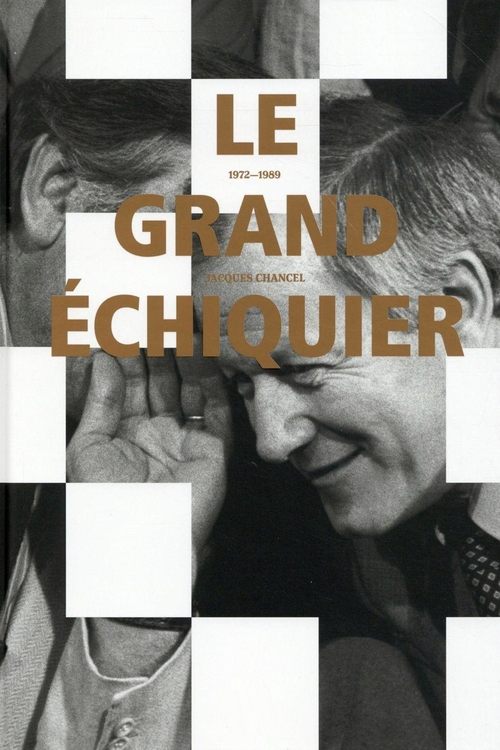
Le Grand Échiquier is a French variety television program created and presented by Jacques Chancel. It aired at 8:30 pm on the first channel of the ORTF from January 12, 1972 to July 12, 1972, then on the second color channel of the ORTF from September 1972 to December 1974, and finally on Antenne 2 from January 1975 to December 21, 1989. The program returned to France 2 on December 20, 2018 and is hosted by Anne-Sophie Lapix.
Le Grand Échiquier

For thirty years, Zone Interdite has been the magazine that documents and analyzes the upheavals in French society. Conducted over time, the investigations broadcast in the program reveal the taboos, passions, and struggles of the French people at the heart of current events.
Zone interdite
No description available.
Samedi soir

No description available.
Cadet Rousselle
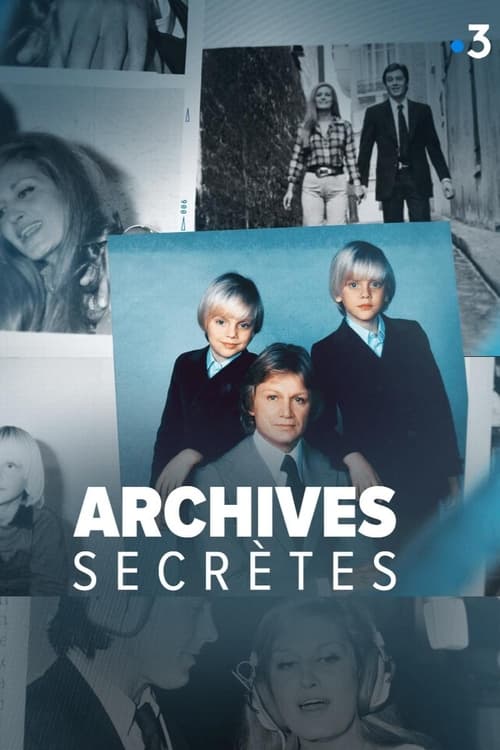
No description available.
Archives secrètes
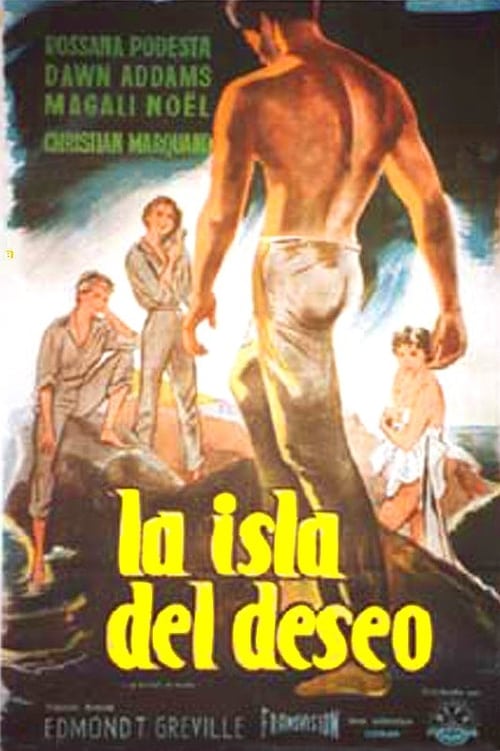
When a ship bringing a contingent of international wounded from Korea is torpedoed, three women (two nurses and a secretary) and a male journalist survive and reach a lonely island in a boat. Soon desire erupts among them, but jealousy, lust and madness lead the events to tragedy.
Temptation

In Paris, Bob Montagne is practically synonymous with gambling -- and winning. He is kind, classy and well-liked by virtually everyone in town, including police inspector Ledru. However, when Bob's luck turns sour, he begins to lose friends and makes the most desperate gamble of his life: to rob the Deauville casino during Grand Prix weekend, when the vaults are full. Unfortunately, Bob soon learns that the game is rigged and the cops are on to him.
Bob le Flambeur
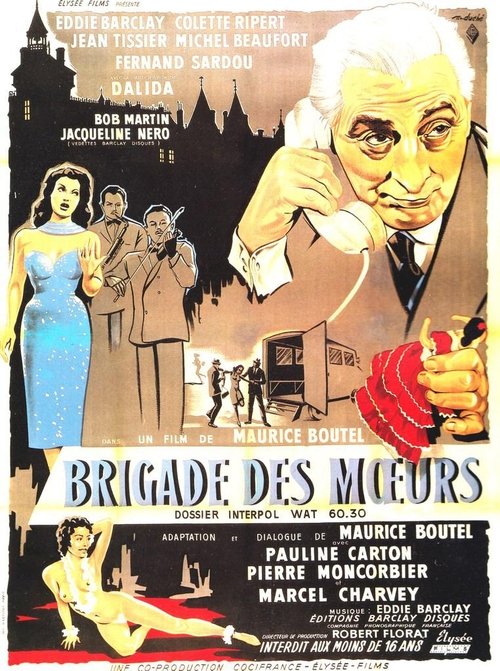
A journalist and a police commissioner join forces to smash a white slavery network operating in the Middle East. The cabaret run by Clovis where Dalida sings is quickly spotted, as is a marriage agency run by Madame Irma, offering semblance of guarantees. Clues without proof. The journalist's fiancée agrees to play the game set up by the superintendent. The network is dismantled.
Vice Squad
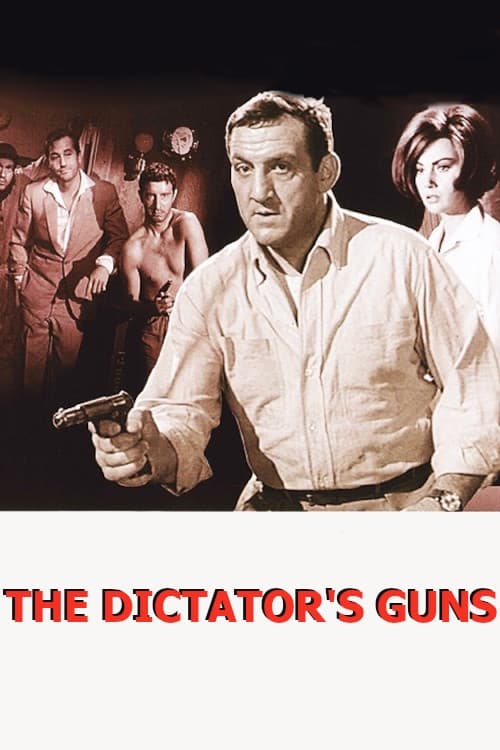
An experienced skipper is hired to buy a boat from an American heiress in the Caribbean, but when the boat vanishes and bodies surface, he realizes he’s been framed for arms trafficking.
The Dictator's Guns
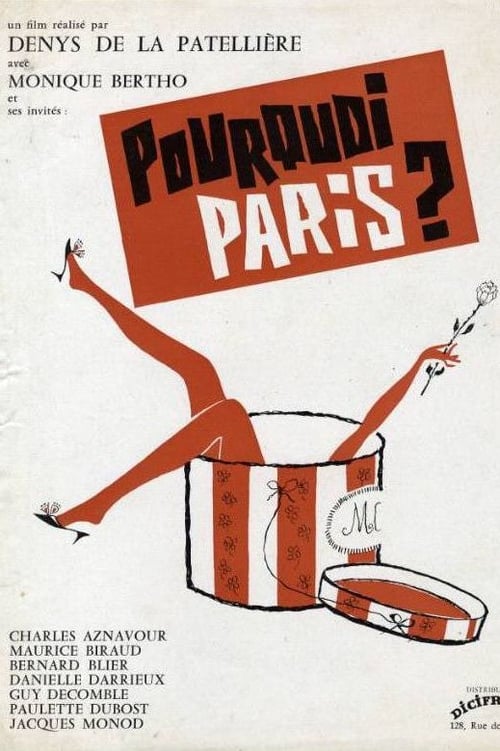
Monique, a Belgian girl, comes to Paris to learn painting and become an artist. She took courses at the Academy and found a studio in Montmartre.