Acting
Kan’ichi Hazama and Omiya Shigisawa are engaged to be married, but Omiya breaks the engagement to marry a wealthy banker’s son. Heartbroken, Kan’ichi becomes a moneylender, and years later their paths cross again under changed circumstances. Adapted from a popular serialized novel of the same name.
Japanese silent film from 1929.
The three-hour Ai yo jinrui to tomo ni are / Love, Be with Humanity (1931) starts as a satire of alienation in the world of money, develops into a lumberland epic with a forest fire on Sakhalin Island, turns into a tragedy of King Lear dimensions, and manages to amaze the blasé audience with a happy end in the Wild West.
A modern girl suddenly intrudes into a widower's family home.
Three couples connected to rival business and theatrical families navigate complicated romances, workplace disputes, and family opposition.
Michiko gets pregnant after a rape. She marries a boring business partner of her father to avoid the shame. Later she meets the rapist again who is now a union leader in opposition of her husband.
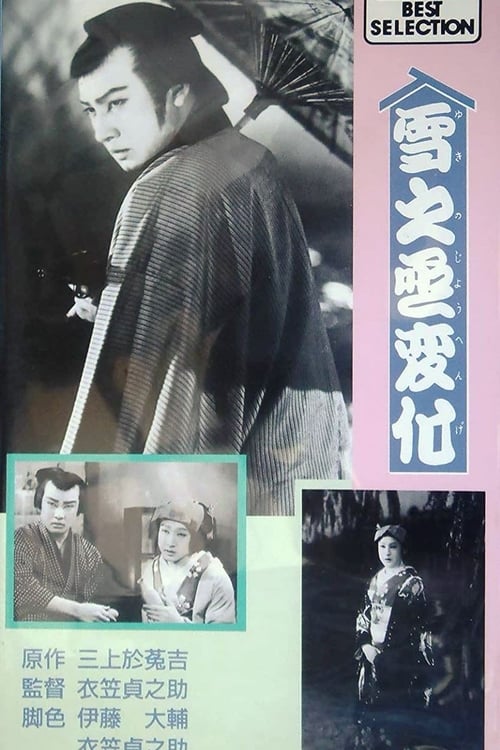
An onnagata (female impersonator) of a Kabuki troupe avenges his parents' deaths. Remade in 1963 as Yukinojô Henge.
No description available.
Japanese silent jidaigeki from 1927.
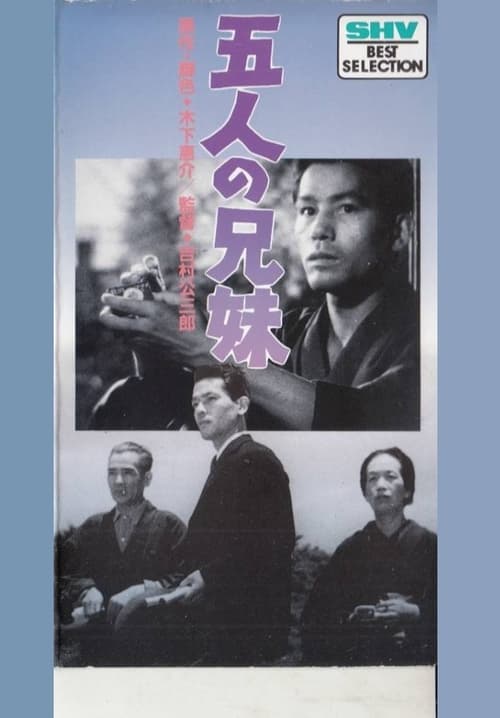
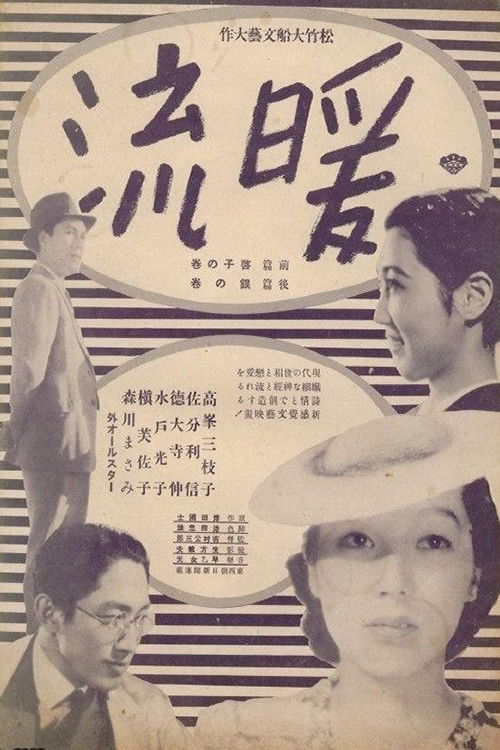
A businessman runs afoul of the law and commits suicide, leaving behind a wife and five children. The eldest son takes the family to Tokyo and labors to restore its name and fortune
A businessman’s daughter falls in love with one of her father’s employees.
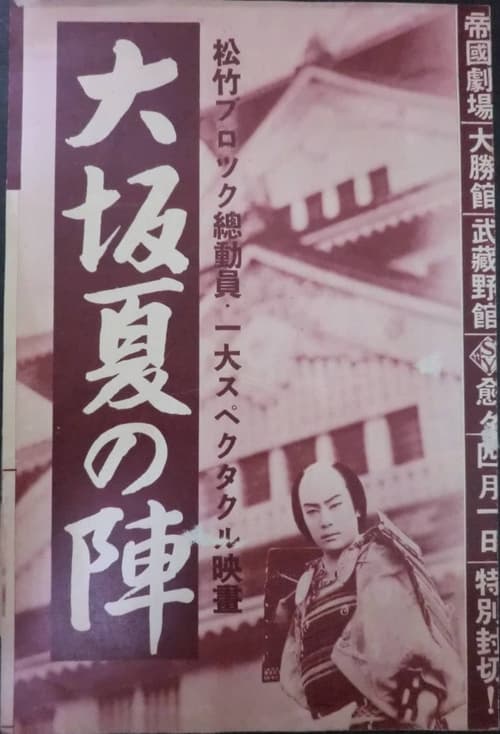
The Siege of Osaka
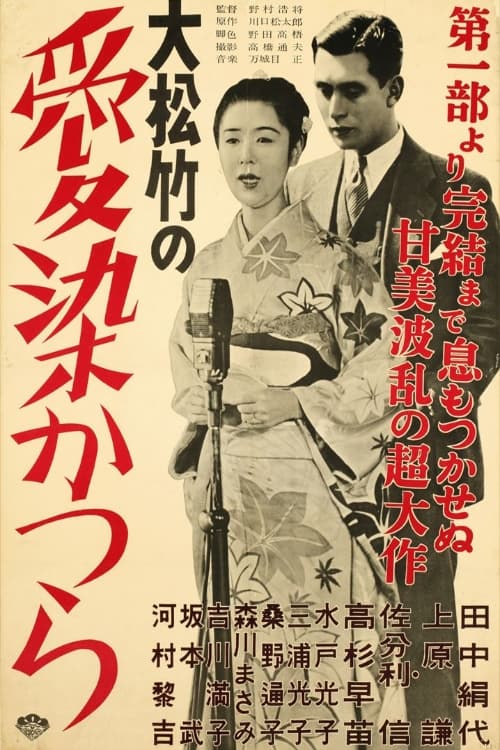
A young doctor, Kozo Tsumura, falls for young nurse Katsue Takaishi. But she's got a secret: she's a widow with a son. Kozo and Katsue decide to run away to Kyoto, but her child suddenly became sick and she just missed the train and Kozo. She makes it to Kyoto finally, but is unable to meet him. Plus she isn't accepted into Kyoto society. She goes back to her hometown and tries to forget him. She quits the hospital to concentrate on her singing. She makes her professional debut with the hit "Aizen Katsura". Kozo is in the audience.
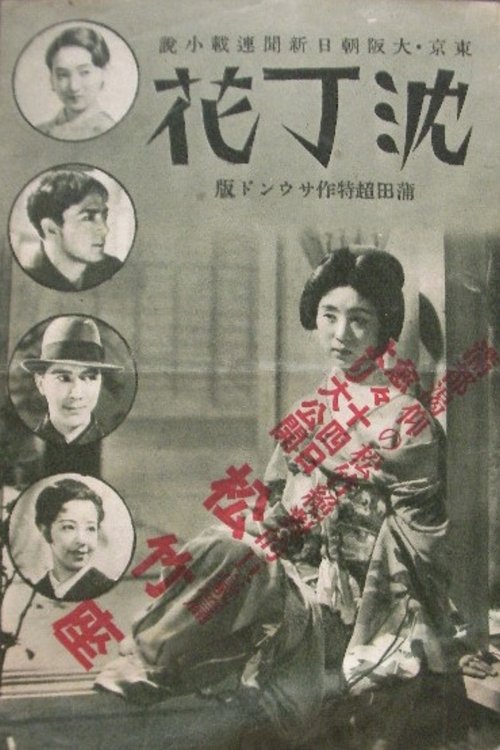
A feature-length work based on Kan Kikuchi’s newspaper novel, adapted for the screen by Kōgo Noda. With performances by stars such as Shizue Ryūda, Kinuyo Tanaka, and Yukiko Tsukuba, alongside handsome leading men like Shin’ichirō Komura, Hikaru Yamauchi, and Ichirō Yūki, the film outshone its contemporaries. The collaboration between director Heinosuke Gosho and cinematographer Mitsuo Miura, recently returned from America, gave rise to a work of first-class quality in the Japanese film world, distinguished by its brilliance and delicacy.
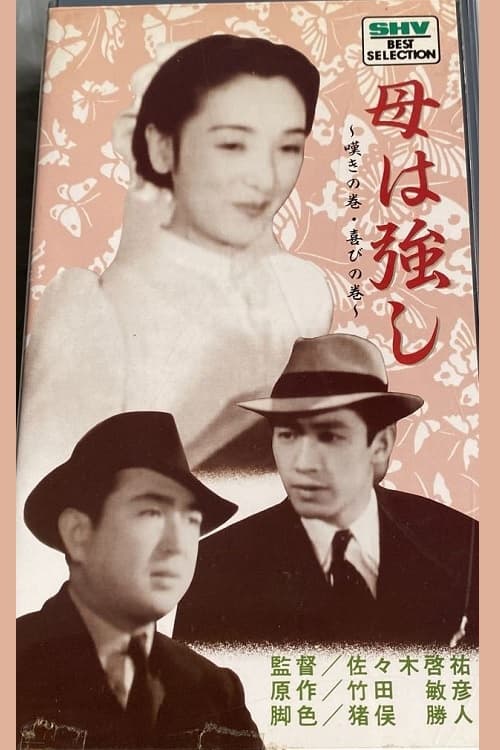
After the death of her husband, an elderly woman and her youngest, unmarried daughter are forced to sell their house to cover his debts and decide to move in with one of the former's children, each of whom is scarcely happy to accommodate.
Adaptation of Kishida Kunio's novel. Set against the backdrop of a power struggle within a hospital, depicts the love lives of the director's daughter, the administrative director, a doctor, and a nurse.
Japanese film from 1933, adapted from Masao Kume's serialized newspaper novel.
Based on the Sakatayama double suicide