Directing
Die Pfefferkörner is a German television series produced by Der Kinderkanal. The peppercorns are five friends from Hamburg: Jana Holstein Coutre, Natasha "Tascha" Jaonzäns, Philip "Fiete" Overbeck, Cem Gülec and Vivien "Vivi" Overbeck, Fiete's eight year old sister. After school, the young detectives meet at a high level of a spice warehouse of the company Overbeck & Associates, which belongs to Fiete and Vivi's parents in the first part, but is later given to Fiete and Vivi to look after. Here, in the historic warehouse district, the five friends have their headquarters. With smarts, combined delivery and support of the Internet, they find their cases here. The detectives convict polluters, animal dealers and drug smugglers. They also help each other with personal problems they encounter. Cem has lost his parents in a car accident and sometimes feels sad and lonely. Jana lives with her divorcee mother, a lawyer who is rarely at home. Natasha comes from Latvia. Her parents initially have very strict rules in terms of her education, that make Natasha unhappy. Fiete has problems showing his feelings and hides them behind grumpiness and hostility towards girls, until he falls in love with Natasha. Vivi is suffering from her role of the youngest member of the group. She believes that she must constantly struggle for recognition.
A show about two Bavarian police officers, Franz Hubert and Johannes Staller, who sometimes work a bit differently. Where Franz wants to follow regulations, Johannes likes to do things his own way.
No description available.
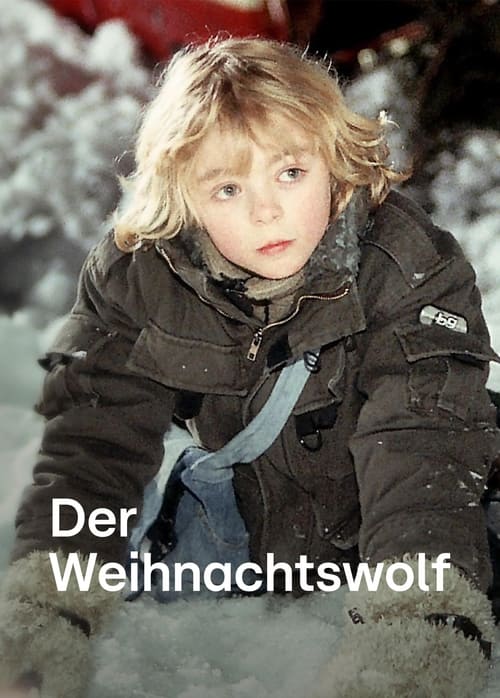
After years of waiting for her big break, singer Amanda has finally achieved her goal: she is allowed to host a big TV show. Unfortunately, it's Christmas of all times, so she has no time for her ten-year-old son Joshua, whom she wants to send by courier to his father Bernhard, who lives somewhere remote in the mountains. On the way, the courier driver Maurice learns what a valuable cargo Joshua is and, together with the waitress Lizzi, plans to kidnap the little boy and collect a ransom. However, when the kidnapping is supposed to take place at night, the two are drunk, so an accident occurs on the way to their hideout, a lonely mountain hut, and Joshua manages to escape. Left to his own devices, he now tries to get back to the valley, where the greatest adventure of his life begins.
Two worlds collide when the thoroughbred Swabian Roland Reuter is transferred to Duisburg by his employer, the bakery Weckle. There he is supposed to bring the downsized company branch back into the black. For the solid employee an immense challenge - not least because his wife Sybille and pubescent daughter at home in the country has remained. Thus, Roland works hard from Monday to Friday to implement Swabian work ethic for his staff, who are endowed with typical Ruhr-pot-serenity.
For Neele and her life partner Steff, the dream of having one's own child finally seems to come true: Steff is pregnant. However, there was a confusion in the artificial insemination - instead of their carefully selected sperm donor, they caught a sperm donation from a gay couple: Kalle and Jens also want a baby and consider the confusion as a kind of coincidence. While the two men look forward to their time as active fathers, Neele and Steff see their harmonious trinity at risk.
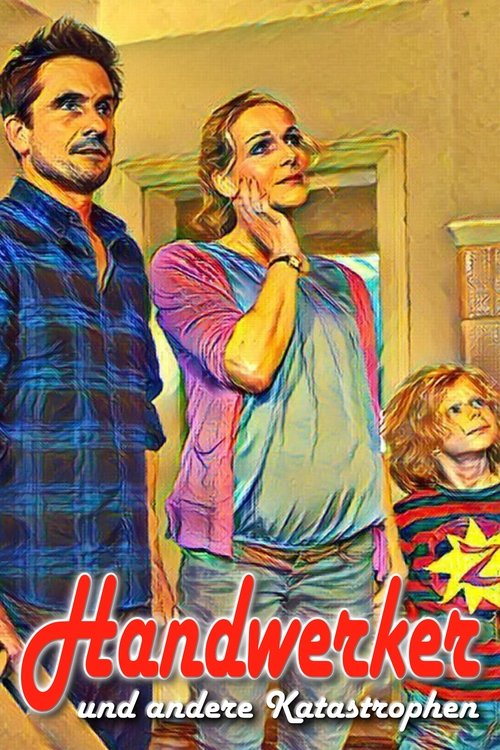
One could almost believe, two fresh lovers would kiss here tenderly. In fact, Jan and Katja come straight from the divorce judge who finished what had started promisingly - a harmonious, fulfilled marriage and family life. The common house building was too much for their relationship. While a dream came true for Katja, the building was a pure torture for Jan. He escaped more and more and started an affair. When Katja comes after the infidelity, there is only one consequence for her: Divorce.
Summer 1969: The Americans fly to the moon and Johanna's life gets into turmoil. While her family spends some days in Hamburg, the hostess stays alone on the secluded Hallig to accommodate a guest. The hydraulic engineer Anton Brunner will carry out the necessary investigations so that the Halligs can be supplied with fresh water from the mainland. In these summer days, Anton and Johanna fall in love with each other passionately. When her family comes back, she has to make a decision.
Author Steffen Teuffel moved from Berlin to sleepy, 'dying' Brandenburg (ex-GDR) small-town Krummenwalde with his wife Beate, who runs the local beverage firm, and their kids: smart son Kai opted out of college and happily works in the only pub; his shallow sister Lisa lets a classmate obsess over losing her virginity to farm boys; kid sister Sophie attracts kids' attention by waving a gold coin she found diving into the town lake, until Lutheran vicar Juchem, who needs to pay for a new church roof, snaps it up and enlists Steffen's research skills plus knowledge of French to help him and bossy mayor Gerd Jänicke, who wants to revitalize the town, research the local archives concerning a legend about a Napoleonic regimental treasure being lost in that very lake the golden Napoléon came from and split it three ways.
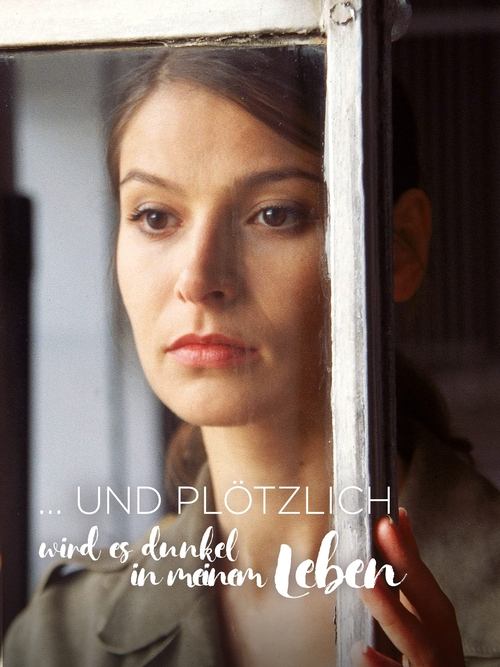
Melanie loves her work, but often forgets about her boyfriend. He feels neglected. Later, she takes some time for him, but her work gets in the way again. This leads to a big argument that ends in a break-up. To relax, Melanie goes to a massage studio. There she tells the Thai masseuse about her problems. After the massage, Melanie lies down in her bed. When she wakes up the next morning, she has aged decades. She tries to find out what happened. But she has to come to terms with the fact that she is now 70 years old.
German ship captain Gottfried Hinrichs reluctantly retires to his Bavarian home, hoping to find comfort when his daughter Barbara moves back home, convenient now she has become a commercial pilot. So he dishes out the usual objections when she tells to have found her mate, while ma Lisbeth tries to shush. When the lovers turn up for Christmas Eve, a culture shock follows, for her dream prince is Palestinian unemployed would be-pilot Kamal Abu Khalil, and neither 'liberal' parent extends effective tolerance to Islamic in-potential laws. Ultimately Gottfried is worn down, but then the incompatible religious marriage norms seem to break up the couple itself. It gets even worse when his parents found out and fly in, while she feels neglected as Kemal starts an electronic muezzin Internet firm with a friend.
Architect Sophie has finally found a beautiful apartment where she wants to move in with her boyfriend Martin. But although his marriage has long since ended, he is reluctant to leave his wife and daughter.
The diagnosis is a shock. Katharina refuses to accept that her 17-year-old son Basti will be in a wheelchair after a traffic accident. She tirelessly takes him from one doctor to the next, not realizing how Basti feels increasingly suffocated by her care. This changes when Katharina finally meets Janik, a man who understands Basti. In "Sprung ins Leben", Simone Thomalla as a mother has to learn to let go of her son and accept that he wants to live his own life.
As a housewife, wife and manager of a family business, Anne Stadler has everything under control. So the wedding of her only daughter Lisette should be a fantastic event, as she herself was not allowed to experience it. With Elan Anne organizes in the contemplative Black Forest village a social event of the first order, with church blessing, many guests and a big stag party. But in the middle of the preparations, she caught her godfather Gerd in the family-owned sawmill at the fling. When finally Arno Freywald appears, father of the groom Daniel and impostor, the cards are shuffled.
Mid-forties Franziska is pregnant. Instead of looking forward to it, her husband Andreas opens up that he separates from her because he can no longer endure her neurotic control rage. As much as Franziska always wanted a child, as a single parent she sees no perspective. But then she meets the pregnant, 19-year-old Lilli. The funky woman whirls Franziska strictly regulated everyday life together and shows her how wonderful life can be, if you allow it