
José Luis García Agraz
Directing
Biography
José Luis García Agraz (born 16 November 1952) is a Mexican film director. He was born in Mexico City in 1952. He studied at the Centro de Estudios Cinematográficos (or CUEC) at UNAM. His script Los supersabios was turned into an animated feature in 1975. He was assistant director to José Estrada in Maten al león (1975) and Los indolentes; to Julián Pastor in El esperado amor desesperado (1975) and La casta divina (1976); to Gonzalo Martínez in Del otro lado del puente (1977), and to Arturo Ripstein in La viuda negra (1977) and Cadena perpetua (1978). His first short film Háblame de Rita (1979), which he also wrote, was shown at the International Documentary and Short Film Festival in Bilbao. His second short Patricio (1982) received an Ariel award. It was also selected for the Festival Internacional de Nuevo Cine in Havana and once again the Bilbao short film festival. His other shorts include Saxofón (1987), Solamente una vez (1988), Ladrón de sábado (1990) and El último tren (1996). Along with Fernando Cámara, Toño Betancourt, Nerio Barbieris and Marcelo Llacarino, Agraz founded the film cooperative Kinam to realize his debut feature Nocaut, which he also wrote. Nocaut won the Ariel for best debut film. It also won the Heraldo and the Diosa de Plata awards. The film was shown at film festivals in Amiens, Madrid and New York City among others. Agraz followed up with a number of features, notable among which are Sueños de oro / Dreams of gold (a co-production between México and the USA, 1984); La paloma azul (a Japanese-Mexican co-production, 1989); and Desiertos mares (1993), which won him the best director prize at the Ariel awards in 1994. He repeated the feat in 2004 with El Misterio del Trinidad.
Known For

A fatalistic car crash in Mexico city sets off a chain of events in the lives of three people: a supermodel, a young man wanting to run off with his sister-in-law, and a homeless man.
Amores Perros

Fortuna is a Mexican Spanish language telenovela produced by Argos Television for Cadena Tres. It stars Andrés Palacios and Lisette Morelos.
Fortuna

No description available.
El Octavo Mandamiento

Rodrigo Zaracho, once a promising boxer, is in decline. While fleeing from a gang that is chasing him, he remembers his past.
Knock Out

Susana, a beautiful young girl living in 1990, is happily looking forward to her forthcoming marriage - and has bought an antique mirror to grace her future home. Three weeks before the wedding, the mirror is delivered to her Grandmother's home and taken to Susana's room. Later that day, when looking into the glass, Susana is startled to see the image of a handsome soldier, Nicolas (from 1863), instead of her own reflection. It soon becomes obvious that he can see Susana as clearly as she can see him - and life, for them both, is never quite the same again. Contains three shorts as a trilogy: The Two Way Mirror (El espejo de dos lunas) 1990, 0:29:23 With You from a Distance (Contigo en la distancia) 1991, 0:27:38 Saturday Night Thief (Ladrón de sábado) 1996, 0:24:57
Con el amor no se juega

It is said that Nobel Prize winner Gabriel Garcia Marquez never allowed for a film adaptation of his singular masterpiece 'One Hundred Years of Solitude', arguably the most influential novel in any language of the second half of the twentieth century, to be produced. However, the prolific Colombian writer had strong ties to the movies.
Gabo & Cinema

In this remake of the 40's classic, two lovers murder each other, leading to an investigation and the closing of the Saln Mxico, a famous place where people used to go to dance before WWII. The police investigation leads to several flashbacks about the life and death of a low-life dancer named Mercedes (Maria Rojo) and her lover.
Salón México
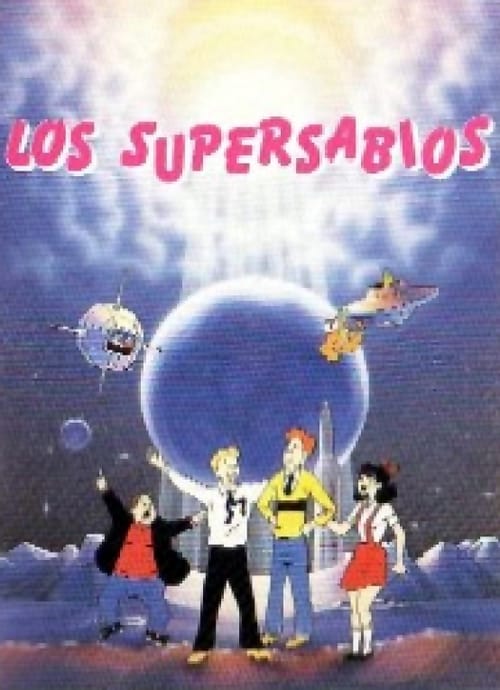
Paco, Pepe and Panza are three friends that want to travel to Saturn, so Pepe and Panza build a space rocket in order to travel to the planet.
Los supersabios
No description available.
Noche de Calífas
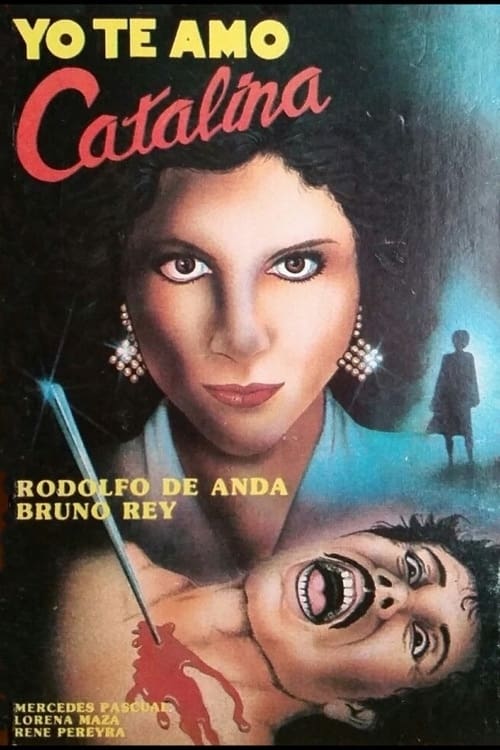
An unseen person enters a taxi late at night. Suddenly the taxi driver is stabbed with a large metal knitting needle. From there we meet our female killer. Catalina is a very plain Jane looking young lady. She wears some geeky glasses and usually dresses very conservatively. She lives with her grandmother and they both seem to loathe men. Catalina’s grandmother mentions that her late daughter/Catalina’s mother was troubled by men and that cost her her life. Catalina and her mother resemble each other. At night, Catalina awakens by the vengeful spirit of her mother to advise her to go out and kill men. The kind that only want to take advantage.
I Love You Catalina
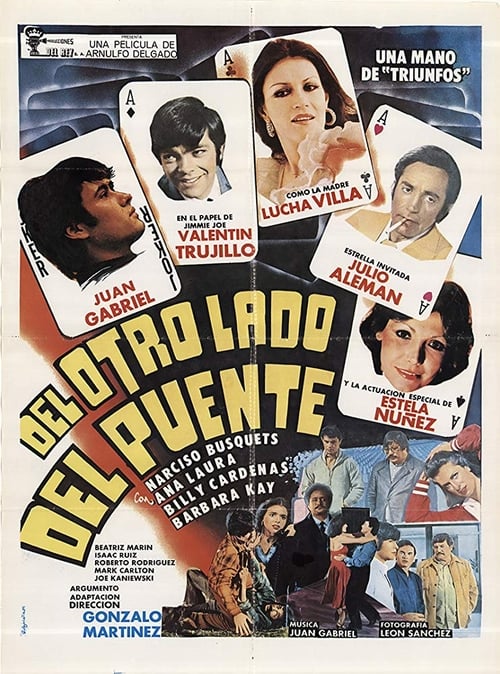
Among Chicanos in Los Angeles, young Alberto lives with the family of Dany, his older brother. Alberto studies at UCLA with the support of Professor Bob. Another young man, Jimy Joe, who lives with his sister Estela, is encouraged to quit drugs at a youth rehabilitation center coordinated by Many. Estela sees Jimy Joe being beaten up by gang members. Disillusioned with a gringa, Alberto meets Estela at a nightclub and becomes her boyfriend. Jimy Joe and his friends are surprised by a gang, and he is the only one left alive after a fierce fight, but with a fractured skull. The operation is very expensive, so Alberto and Many decide to raise funds with a show at the Convention Center. Alberto triumphs there as a composer and singer. Now saved, Jimy Joe dances in the street to one of Alberto's songs with Alberto, Estela, and others.
Del otro lado del puente

Pop singer Lu, who's touring Central America, her sleazy manager Harold, a rugged boat captain and their guide, Sam, and Sam's girl Brandy, are targeted by a gang and a local tribe over Lu's resemblance to the natives' moon goddess.
Treasure of the Moon Goddess
A high-strung love triangle of mystery and suspense arises between Julia, a beautiful and ambitious woman who, helped by Raúl, her lover, kill her husband.
Sonata de luna
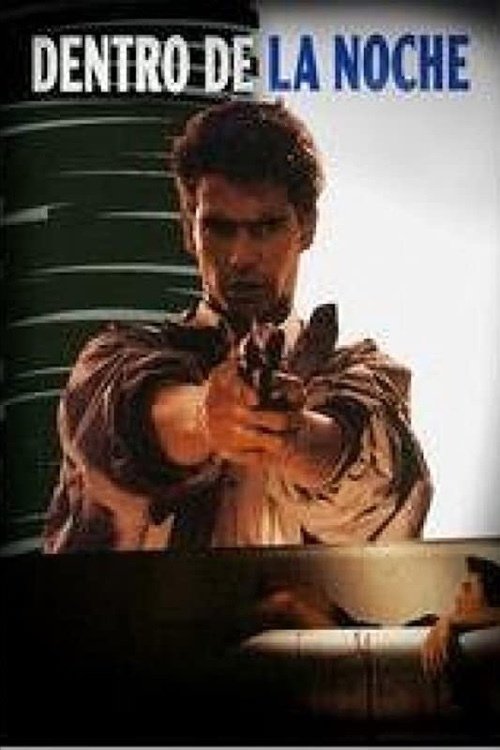
No description available.
Dentro de la noche
Tomás is known as the best poulterer. His clients admire the skill and precision with which he makes his cuts and he performs his work as if it were a sacred ritual. But when a new poulterer comes to work at the chicken shop, Tomás suddenly sees his fame and reputation threatened.
Such A Cock
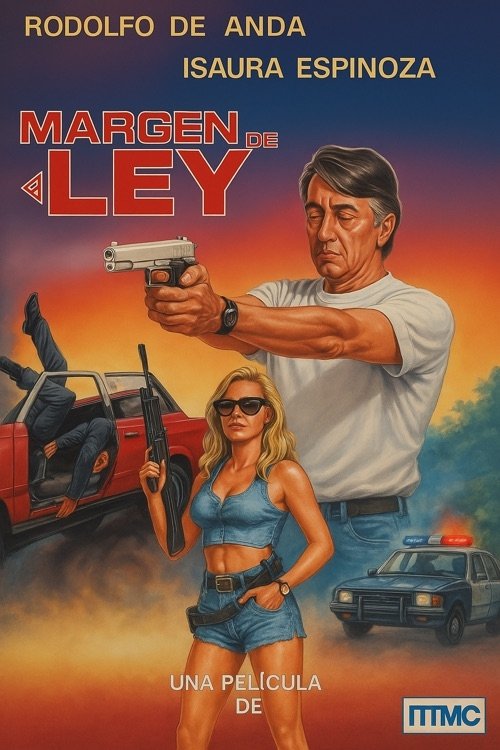
No description available.
Al oltro lado de la ley
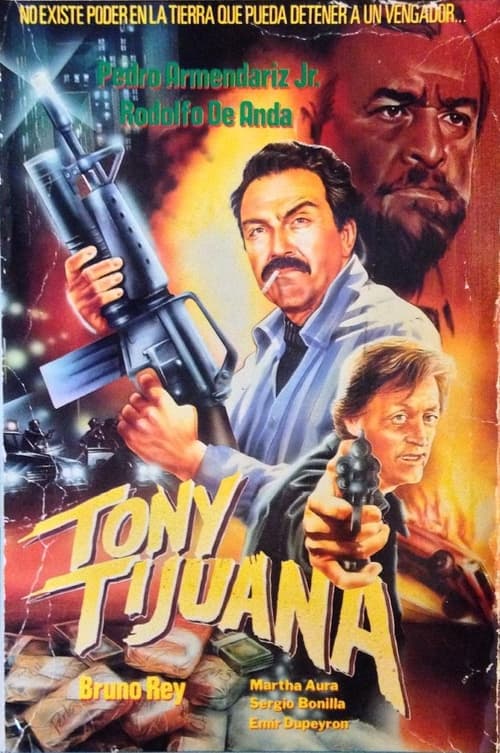
No description available.
Tony Tijuana
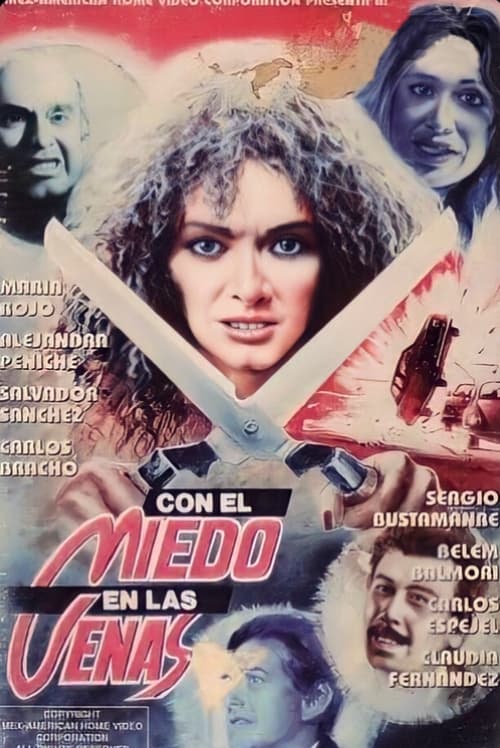
Compilation tape of Hora Marcada episodes.
With Fear in the Veins
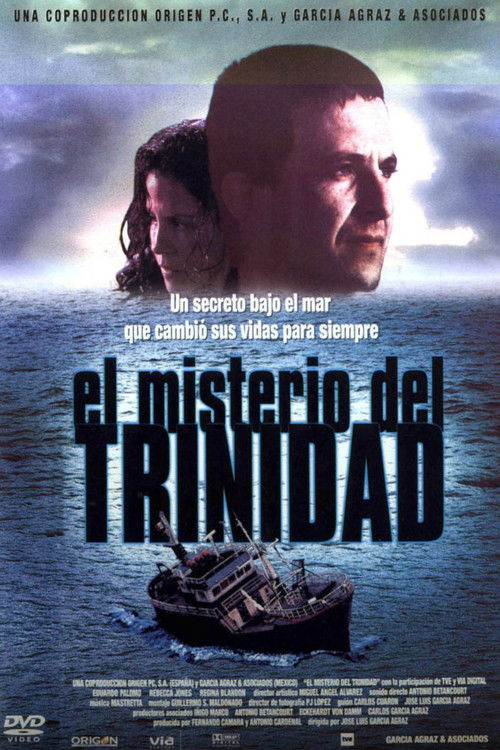
The strange relation between two brothers.
El misterio del Trinidad

No description available.