FEEL IT.STREAM
?

Richard Foreman

Directing

Biography

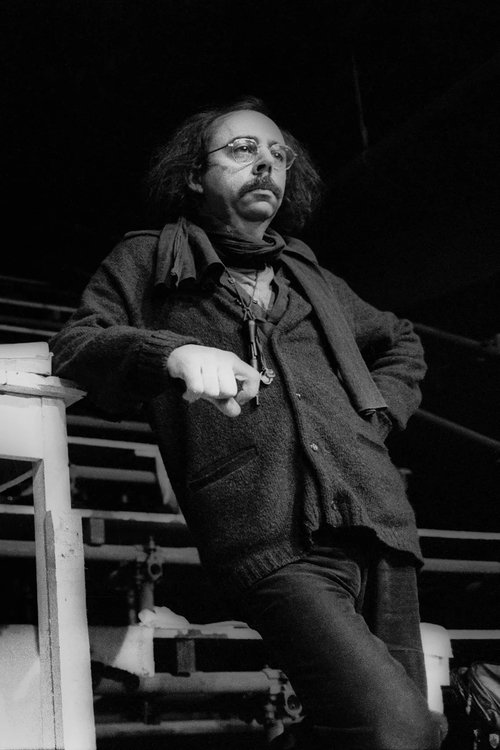
Richard Foreman is an American playwright and avant-garde theater pioneer, founder of the Ontological-Hysteric Theater.
Known For

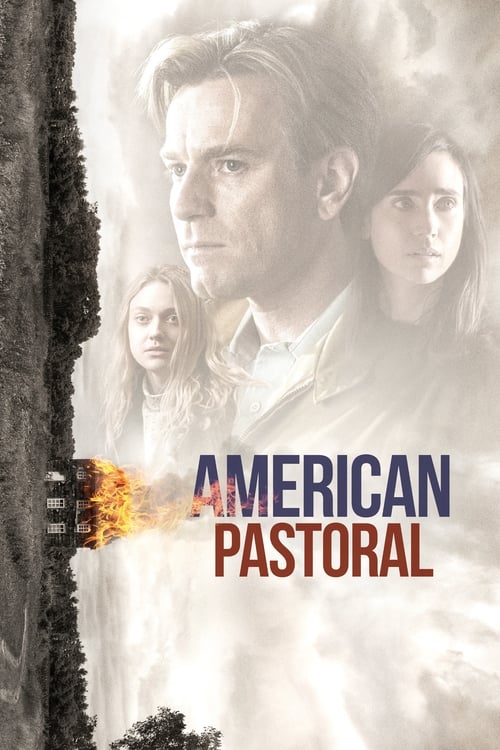
American Pastoral
6.2

Set in postwar America, a man watches his seemingly perfect life fall apart as his daughter's new political affiliation threatens to destroy their family.

American Pastoral

2016
Dark Tower
3.9

An architect, a security chief, a parapsychologist and an exorcist face evil in a Barcelona skyscraper.

Dark Tower

1987
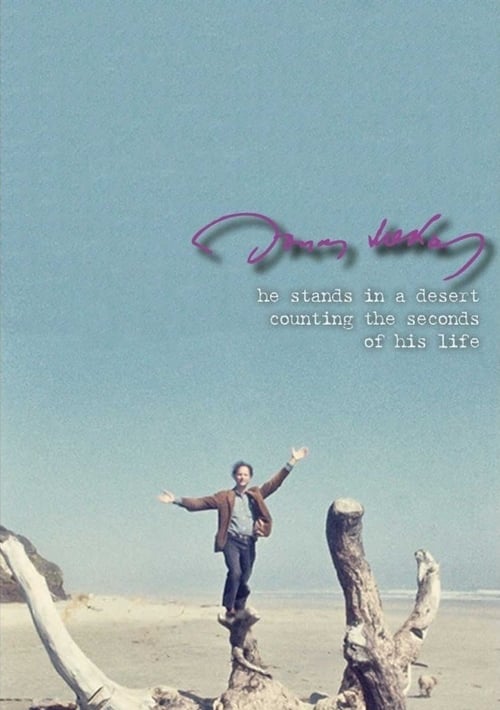
He Stands in a Desert Counting the Seconds of His Life
8.4

A film collage tracing the story of the lives, loves, and deaths within the artistic community surrounding Jonas Mekas.

He Stands in a Desert Counting the Seconds of His Life

1986
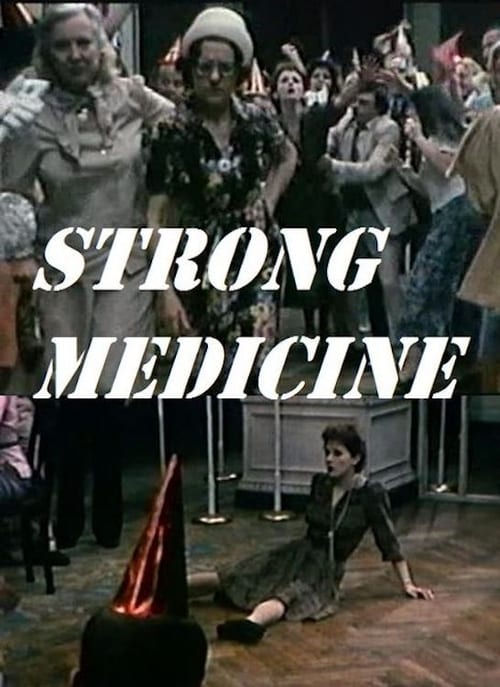
Strong Medicine
6.3

Adaptation of an avant-garde play about Rhoda, a hysterical heroine who feels oppressed by the people around her. She suffers through her birthday party, goes to see a doctor, plans a vacation, argues a lot and even breaks the fourth wall.

Strong Medicine

1981
Diaries, Notes, and Sketches
7.2

Also known as Walden, Jonas Mekas’s first diary film is a six-reel chronicle of his life in 1960s New York, interweaving moments with family, friends, lovers, and artistic idols. Blending everyday encounters with portraits of the avant-garde art scene, it forms an epic, personal meditation on community, creativity, and the passage of time.

Diaries, Notes, and Sketches

1968
Jack Smith and the Destruction of Atlantis
6.6

In this entrancing documentary on performance artist, photographer and underground filmmaker Jack Smith, photographs and rare clips of Smith's performances and films punctuate interviews with artists, critics, friends and foes to create an engaging portrait of the artist. Widely known for his banned queer erotica film Flaming Creatures, Smith was an innovator and firebrand who influenced artists such as Andy Warhol and John Waters.

Jack Smith and the Destruction of Atlantis

2007
Bill's Hat
N/A

"The whole film are non-art portraits of people in which they do what they want with this hat – and therefore, act or stand in front of my camera. It’s only love: therefore it can’t harm you". Joyce Wieland.

Bill's Hat

1967
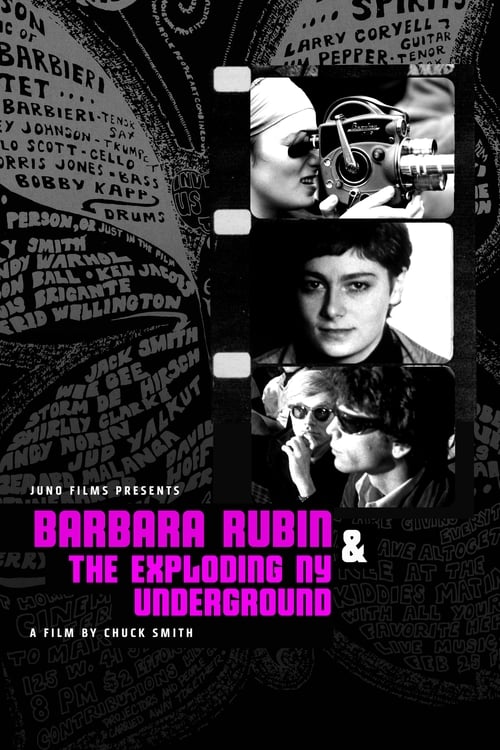
Barbara Rubin and the Exploding NY Underground
N/A

The 29-minute experimental film Christmas on Earth caused a sensation when it first screened in New York City in 1964. Its orgy scenes, double projections and overlapping images shattered artistic conventions and announced a powerful new voice in the city's underground film scene. All the more remarkable, that vision belonged to a teenager, 18-year-old Barbara Rubin. A Zelig of the '60s, she introduced Andy Warhol to the Velvet Underground, Bob Dylan to Kabbalah and bewitched Allen Ginsberg. The same unbridled creativity that inspired her to make films when women simply didn't, saw her breach yet another male domain, Orthodox Judaism, before her mysterious death at 35. Lifelong friend Jonas Mekas saved all her letters, creating a rich archive that filmmaker Chuck Smith carefully sculpts into this fascinating portrait of a nearly forgotten artist. An avante-garde maverick, a rebel in a man's world, Barbara Rubin regains her rightful place in film history.

Barbara Rubin and the Exploding NY Underground

2018
Cyclopean 3D: Life with a Beautiful Woman
N/A

A young woman stands by a car while scenes from metropolitan life flash by.

Cyclopean 3D: Life with a Beautiful Woman

2011
Lava
N/A

A filmed play by Richard Foreman.

Lava

1989
Astronome: A Night at the Opera (A Disturbing Initiation)
N/A

An opera by John Zorn and Richard Foreman

Astronome: A Night at the Opera (A Disturbing Initiation)

2009
Pavane For A Missing Play
N/A

Foreman spent the early months of 1979 rehearsing a play called Madness and Tranquility (My Head Was a Sledgehammer), which he abruptly cancelled very shortly before its scheduled opening. Film critic and longtime CalArts professor Berenice Reynaud documented those rehearsals and used the footage in this rarely screened essay film, which had long been considered lost. Miraculously, Anthology has recently rediscovered the original 16mm elements and has digitally restored the film for this occasion. A truly exciting find that presents the only known footage of an important, albeit lost, Foreman work.

Pavane For A Missing Play

1979
No image
N/A

"The theater is about sex." At least according to Richard Foreman, the father of the Ontological Hysterical Theater. THE ONTOLOGICAL COWBOY documents Foreman’s invocation of the "manifest destiny" of the avant-garde theater, King Cowboy Rufus strolling down off San Juan Hill with a sigh, waving his handkerchief. Foreman plays himself, and the cast pantomimes his preoccupations. If "the cast and crew suffer alike," it’s all for a good cause: the violent rebirth of the American theater, with Foreman as its midwife.

The Ontological Cowboy

2005
No image
8.0

Written by legendary theater artist, Richard Foreman, Planet Earth: Dreams revolves around the desire to escape -- not to a Dream world -- but to a mode of consciousness in which one is able to function in real life with the same mental freedom the dream mind has available in the realm of sleep.

Planet Earth: Dreams

2004
Out of the Body Travel
N/A

A "young woman who finds herself surrounded by the relics of Western culture" is the subject of Richard Foreman's formal tableaux. The narration centers on a young woman's struggle to find a relation between her body and her self as mediated by language. The text is a poetry of formal relations that carries personal and historical implications, including the desires of the woman paradoxically voiced by a male narrator. The title suggests the vivid virtuality of dreaming; scenes repeatedly refer to both reading and sleeping.

Out of the Body Travel

1976
Book of Splendors, Part Two, Book of Levers: Action at a Distance
N/A

Foreman’s longtime friend Ken Jacobs situated himself in the audience of the legendary Ontological-Hysteric theater space at 491 Broadway to shoot this whiplash-inducing single-frame study of a dynamic play filled with frantic action, full frontal nudity, and so much more. Newly digitized from the camera roll discovered in Foreman’s archives.

Book of Splendors, Part Two, Book of Levers: Action at a Distance

1977
Now You See It Now You Don't
N/A

Quite possibly Foreman’s strongest digital video, NOW YOU SEE IT NOW YOU DON’T brings together a variety of different elements, including excerpts from Foreman’s own public talks about his work, a 1984 sound recording of his French-language theatrical adaptation of Kathy Acker’s "My Life My Death by Pier Paolo Pasolini," text from Leo Charney’s book “Empty Moments: Cinema, Modernity, and Drift”, and music from John Zorn and John Cage. These materials are integrated into a typically dense and confounding aural, linguistic, and visual web, one that’s in many ways like a filmic analogue of his theater work. But NOW YOU SEE IT NOW YOU DON’T is distinguished by the addition of various kinds of image processing, a liberal and eccentric use of onscreen text, and an uncharacteristically personal, reflective tone

Now You See It Now You Don't

Mad Love
N/A

Experimental documentary in which Foreman presents his way of looking at different issues.

Mad Love

2018
What to Wear
N/A

What to Wear is a raucous, bitingly funny post-rock opera from avant-garde theater icon Richard Foreman and celebrated composer Michael Gordon. In Foreman’s signature style, What to Wear is a surreal extravaganza of operatic tableaux come to disturbing, hallucinatory life. A pageant of seductiveness gone wrong — as everyone on stage turns less and less beautiful, something more ecstatic that beauty slowly reveals its awesome 21st-century face.

What to Wear

2006
Once Every Day
5.3

Since the late 1960s, the almost annual productions of Richard Foreman’s Ontological-Hysteric Theater have been among New York’s artistic highlights. A legend of the avant-garde theater, Foreman is also a passionate film fan, whose taste ranges from American avant-garde to Manoel de Oliveira. ONCE EVERY DAY marks his first foray into feature filmmaking in 35 years. Highly visual, complexly edited and without a traditional narrative, the film zeroes in on a group of 25 people acting out a series of semi-ritualistic behavior patterns. But their eccentric impulses are aborted in unpredictable ways with each attempt at action or development. According to the director, “The film slowly evolves a time-mosaic of reformatted consciousness.” Longtime admirers of Foreman’s work will see an intriguing adaptation of his unique theatrical style to the cinema. And for everyone else: Welcome to the extraordinary world of Richard Foreman.

Once Every Day

2012