FEEL IT.STREAM
Stephen Dwoskin

Stephen Dwoskin

Directing

Biography

Stephen Dwoskin was born in New York in 1939 and began making independent shorts there in 1961. In 1964 he followed his research work to London where he settled and participated in the founding of the London Filmmaker’s Co-op. His experimental films, for which he himself does the camera work, play with ideas of desire, sexual and mental solitude and the passage of time. In his films he also explores representation in cinema, performances, personal impressions and his own physical handicap which has been a source of inspiration for him throughout his career. Dwoskin died on 28th June 2012 in London. His sensitive and emancipating works have been the subject of various international presentations.
Known For

Cinématon
4.9

Cinématon is a 156-hour long experimental film by French director Gérard Courant. It was the longest film ever released until 2011. Composed over 36 years from 1978 until 2006, it consists of a series of over 2,821 silent vignettes (cinématons), each 3 minutes and 25 seconds long, of various celebrities, artists, journalists and friends of the director, each doing whatever they want for the allotted time. Subjects of the film include directors Barbet Schroeder, Nagisa Oshima, Volker Schlöndorff, Ken Loach, Benjamin Cuq, Youssef Chahine, Wim Wenders, Joseph Losey, Jean-Luc Godard, Samuel Fuller and Terry Gilliam, chess grandmaster Joël Lautier, and actors Roberto Benigni, Stéphane Audran, Julie Delpy and Lesley Chatterley. Gilliam is featured eating a 100-franc note, while Fuller smokes a cigar. Courant's favourite subject was a 7-month-old baby. The film was screened in its then-entirety in Avignon in November 2009 and was screened in Redondo Beach, CA on April 9, 2010.

Cinématon

1978
Phoelix
8.0

An aged art connoisseur (Beaumont) and his young female neighbour (Coles), who has a job posing naked in a club, meet and exist in fantasy and reality. Although this raises certain much-discussed questions about the nature of representation, and about the construction of narrative and daydreams in films, 'Phoelix' tends to treat these as just pretty and pertinent issues, opting instead for a mannered concentration on detail.

Phoelix

1979
C-Film
7.0

Two women in a living room: smoking, playing cards, listening to the radio. As often in Dwoskin’s films, the use of masks, make-up and costumes allows the characters to playfully transform themselves. Shot in colour film, C-film exuberates swinging London energy. In the second part of the film, the women appear to be watching the rushes of the film on an editing table. ”We are making a movie” we hear them say. As Dwoskin points out, “C-film asks how much is acting acted”, an ongoing question in Dwoskin’s cinema. Produced by Alan Power, with Esther Anderson & Sally Geeson.

C-Film

1970
No image
N/A

No description available.

Live

1990
Dyn Amo
6.0

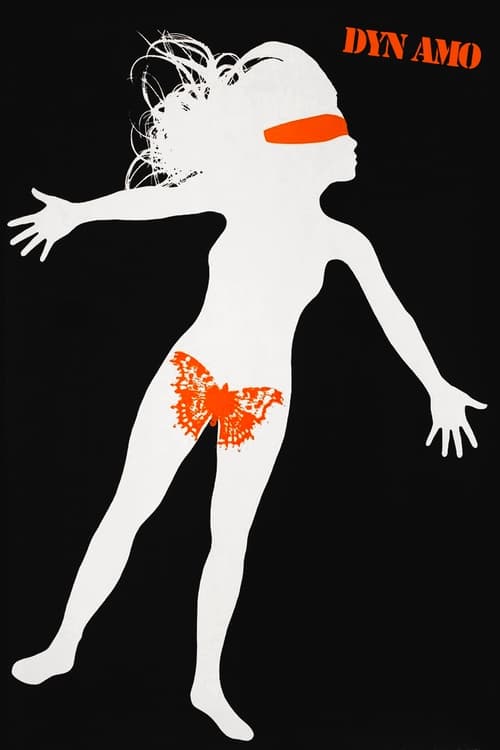
'Dyn Amo' is a 'drama' exploring the distinction between a person's self and his projection of that self to others; and it's a 'horror movie' tragically suggesting how a projection can become more substantial than the self behind it. Its subjects are role-playing (especially sexual role-playing), and the masochism of playing a role that conforms to others' exploitative interests.

Dyn Amo

1972
No image
N/A

Includes 'portraits' of Marianne Faithfull, Thelonious Monk and 28 others, some known, some less so.

Heads

1969
Moment
8.5

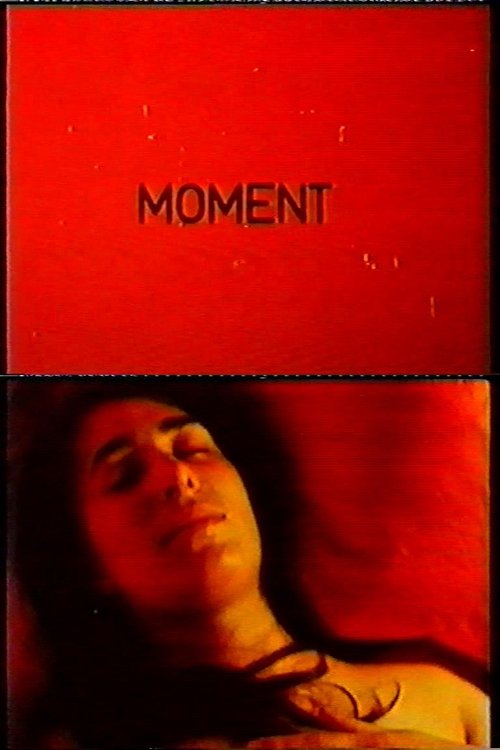
A static camera records, in one single continuous shot, a woman's face before, during and after orgasm. The act of looking and the limits of the film frame are highlighted in this intimate sexual episode with Tina Fraser. Artist Stephen Dwoskin presents a powerful, personal moment while maintaining a distance and resisting the viewer being subsumed into the action on screen.

Moment

1968
My Conversations on Film
3.2

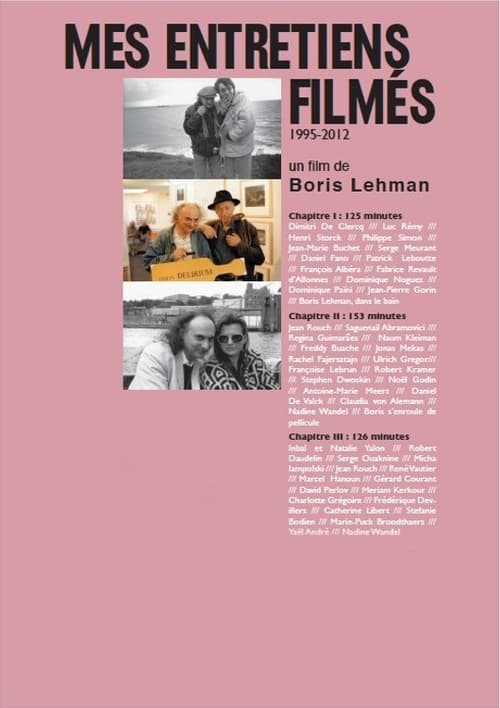
This distinctly personal journey into the artistic possibilities of independent film is not to be missed. Jonas Mekas, Jean-Pierre Gorin, Robert Kramer and many other visionaries and mavericks of the silver screen – as well as a book seller, a critic and a psychoanalyst – discuss what cinema has meant to them, what it is and what it could be and, implicitly, how it has changed over the 18 years in which this film was shot. Director Boris Lehman leads the charge, drawing in moments of absurdist humour and inventive camera work; he keeps things raw and spontaneous. His encounters with the now much-missed Jean Rouch and Stephen Dwoskin are particularly touching and stand testament to their personal playfulness and candour. An engaging, absorbing, epic odyssey of a movie.

My Conversations on Film

2013
Central Bazaar
7.7

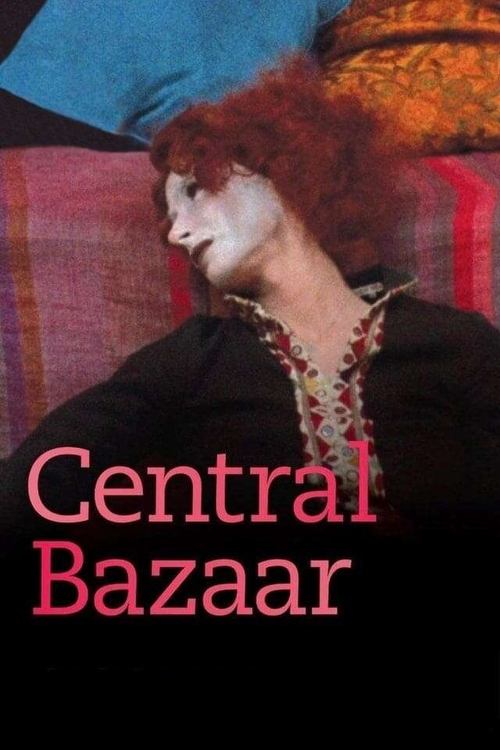
A group of strangers explore their fantasies over a period of five days.

Central Bazaar

1976
Birth of a Nation
7.0

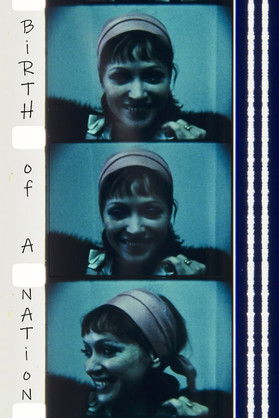
Jonas Mekas assembles 160 portraits, appearances, and fleeting sketches of underground and independent filmmakers captured between 1955 and 1996. Fast-paced and archival in spirit, the film celebrates the avant-garde as its own “nation of cinema,” a vital community existing outside the dominance of commercial film.

Birth of a Nation

1997
Take Me
5.4

Short experimental film focusing on body paint and the female form.

Take Me

1969
No image
7.1

The film is just this kind wandering through the personal ways and whys of different kinds of pain in different kinds of people. The film searches through the many levels of pain and finds it in its unique position between disaster and pleasure. Pain is..thus plunges us instantly into the midst of controversy and the unknown.

Pain Is...

1997
Trixi
9.0

Trixi is Dwoskin’s most convulsive version of his recurrent theme: the confrontation of a solitary girl with the camera. Shot in one continuous 8-hour session. Trixi records Beatrice Cordua’s responses to the situation, from initial shyness, fear and withdrawal through teasing and posturing to naked surrender and final exhaustion …. The camera is highly mobile; often confronting the girl in extreme close-ups, sometimes swooping down from overhead, sometimes searching to “recapture” her …. The camera itself is the object of erotic desire, [in] the sense of giving a performance shifting imperceptibly in a helpless self-exposure in response to its constant stare. Clearly, the form of the film was dictated by the response of the performer. Beatrice Cordua proves Dwoskin’s most expressive subject to date, and the film is correspondingly “open,” the camera having been willing to choose its tactics as direct responses.

Trixi

1969
To Tea
7.0

To Tea, made in Holland (at the house of the Dutch avant-garde filmmaker Franz Zwartjes), is a slowed ‘Alice in Roomland’.A guide to sensual contact between two women. Their contact is arrived at through an arrangement of slow tactics. As the light of day goes the bodies come closer, and the piano melody floats in a distant hall. Once my Hungarian art teacher said: “If you exaggerate the objective lines you reach a stronger subjective expression.” So here the strange tea party gives over to touch. – S.D.

To Tea

1970
The Silent Cry
4.6

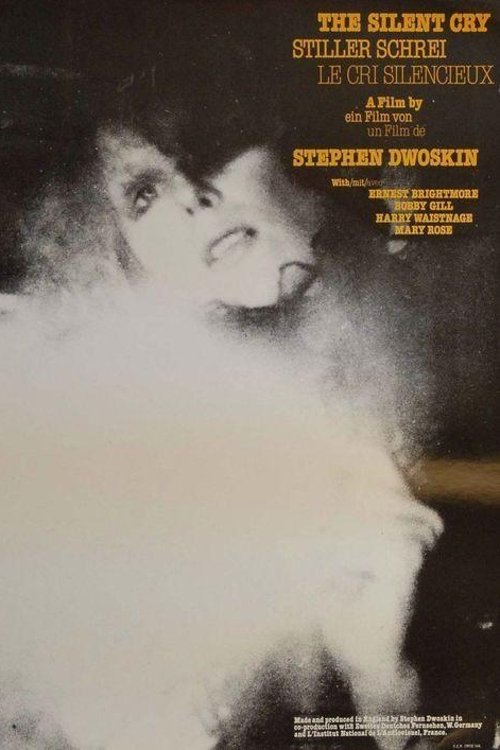
'The Silent Cry is a fictionalised narrative film, based on documentary facts and extracts of one English girl's memories and thoughts, all surrounded, and directed towards her particular dilemma. This dilemma can be summarized as her basic inability to have relationships, especially sustained relationships, and particularly with men. This is the total of her statement and the film. The construction and flow of the film follows the way she thinks - it is her point of view that is followed in the film. So all things are the way she remembers and dwells on them, and which are important to her.' - S.D.

The Silent Cry

1977
Dirty
6.4

DIRTY is the reincarnation of two girls, a bottle and one bed. Their bodies, hands and face expressions reach out in a refilm look.

Dirty

1971
No image
N/A

A exploration of the origin, theory, philosophy and themes of Stephen Dwoskin's films from 1963 to 1984.

The Cinema of Stephen Dwoskin

1984
Soliloquy
6.0

Featuring Joan Adler (who also appears in Chinese Checkers), Soliloquy is one of the four early Stephen Dwoskin films that were awarded the Solvey prize at the EXPRMNTL festival in Knokke, Belgium in 1967. “In Soliloquy a girl broods uncertainly over a failed love affair, while the camera roves over her fingers, her cigarette, her knuckles, her lips and the hand mirror in which she peers. In its dark reflection one isolated eye seems a dead thing, twitching; the split between her body and her spoken thoughts becomes a strange bilocation of consciousness; towards the end, an aeroplane drones overhead” (Raymond Durgnat)

Soliloquy

1967
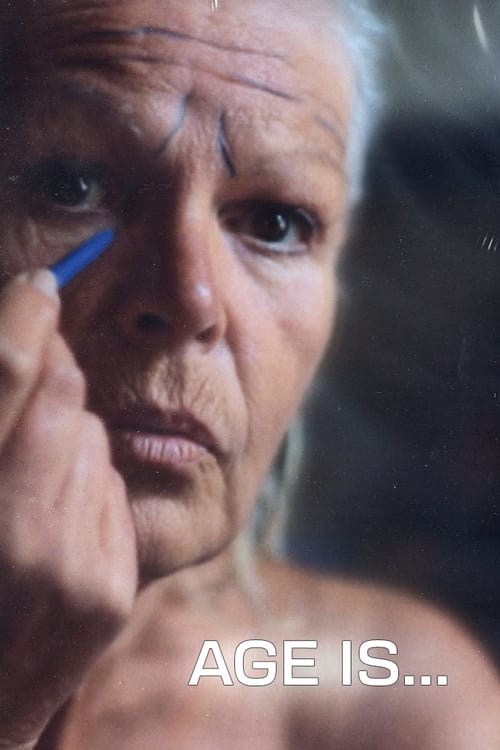
Age Is...
7.6

Stephen Dwoskin’s final film is a meditation on the subjective experience and cultural concepts of ageing. The film is an ode to the texture, the beauty, the singularity of aging faces and silhouettes, a hypnotic poem in the Dwoskin meaning of the term which is long observations of very tiny details. A gesture, a pause, a look, a moment. Throughout his films intimacy has always played a leading role and this is also true for Age is..., all the faces being close friends, or close friends relatives and sometimes even Stephen himself.

Age Is...

2012
Before the Beginning
N/A

"Two independent filmmakers, who willingly practise self-fiction, are filming each other in order to communicate better. In spite of their differences in language and style, the film is mainly an attempt to imitate, or even to become, the other, which is doomed to failure. But the film is in fact the story of this collision" - Boris Lehman

Before the Beginning

2015