Peter Mikulík
Directing
Known For
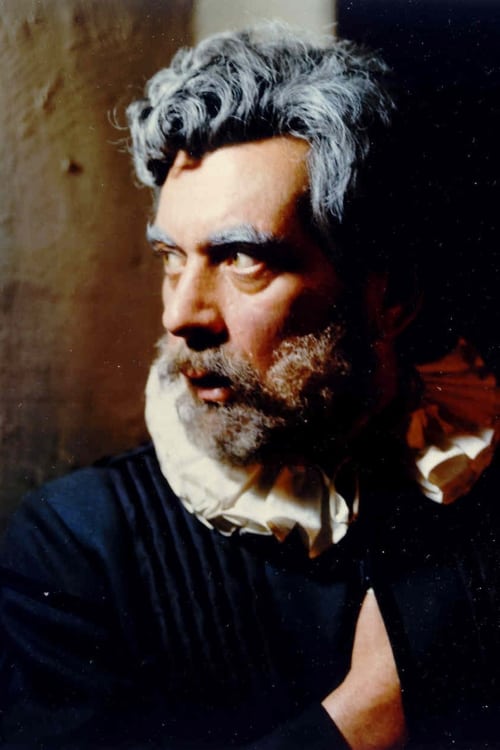
Series about the life of Renaissance anatomist, scholar and politic Johannes Jessenius. Already legendary series today, was produced by Czechoslovak Television Bratislava, directed by Slovak director Miroslav Luther in the first half of 80's in Barrandov Studios in Prague. The story and screenplay of the series wrote Czech writer Vladimír Körner. Five-episodes epic historical narration is a biographical story of distinguished Renaissance scholar, anatomist and politic of Slovak origin, Johannes Jessenius (Ján Jesenský, 1566–1621). It displays his life from the first studies and successes. In 1594 he became professor of surgery and anatomy on Wittenberg University, which he had attended years before. From that moment, his life went through social and personal wins and losses, to the sad end on the Prague Old Town Square gallows, among 27 noblemen, knights and burgenses, after lose Bohemian Revolt in 1621. His destiny was coupled with key events of Czech history in the break of 16th and 17th century, when Renaissance and European humanism slowly fade out.
The Physician of a Dying Time
No description available.
Tajný agent
No description available.
Štúrovci
No description available.
Ťaví zadok
No description available.
Ideálny manžel
The detective case of Captain Jakubec and his colleague Lieutenant Michalek takes place in a small town where the auditor Burian dies after drinking a health syrup. The doctor concludes that it was a heart attack. However, the exhumation of the corpse confirms the suspicion that Burian was poisoned. The auditor's young wife and her lover are the primary suspects. Other candidates for the role of the perpetrator include the manager of the café Orlovský, who asked Burian to destroy the falsified statements in exchange for a bribe, and the managers of two stores where the shortage was discovered. However, the network of suspects continues to expand...
Murderer from Beyond the Grave
No description available.
Kean
Based on the paradoxical life story of a small-time Viennese postman, a former classmate of the "great" Hermann Göring, this television drama depicts the difficult position of the so-called "little man," first under the Nazi regime and later in the postwar years, when fascist tendencies continued to survive.
Spolužiak
No description available.
Elektra
No description available.
„Omladnutie“
No description available.
Ako klamal jej mužovi
No description available.
Sobota, nedeľa, pondelok
Slovak movie is based on the novel by the prominent representative of Slovak prose František Hečka, who was in 1952 awarded the State Prize. The novel and the movie successfully capture the development of Slovak village after the liberation in 1945. The narrative is centred around the characters of the old Púplava, who after the liberation begins to organise a new village life, and his struggle for the construction of settlements Mrzáčky, burnt by the fascists. It is centred around the conflict, greatly reflecting the situation of the countryside at this time: the conflict between the rural poor and the rural rich. In the movie, a rich personal and emotional life of other heroes pulsate besides the main storyline. The movie ends with the final defeat of the reactionary forces by Communists in February 1948, taking over all power in the state of workers and peasants. - "The Wooden Village" is released in celebration of the 7th anniversary of the Communist February Victory.
The Wooden Village
No description available.
Služobná cesta
No description available.
Mali ste mi to povedať
No description available.
Radosť žiť
No description available.
Stratený list
No description available.
Jedna žena navyše
No description available.
Ľudové rybárstvo na Slovensku
Television production, dramatisation of the science fiction short story by George Langelaan. The story of atomic scientist Bernard Marsden, who sees mysterious figures on the television screen one day. After the figures repeatedly appear, he learns that they are people who were directly at the epicentre of the atomic bomb explosion in Nagasaki and whose chain reaction transported them to the antiworld. Among them is Mary Seymour, with whom he falls in love. He decides to transport himself to the antiworld using the explosion of a small atomic bomb. However, his attempt might end tragically.