Acting
Three couples connected to rival business and theatrical families navigate complicated romances, workplace disputes, and family opposition.
No description available.
Japanese silent film directed by Yasujirô Shimazu, originally released as a two-part movie on December 11, 1931.
The three-hour Ai yo jinrui to tomo ni are / Love, Be with Humanity (1931) starts as a satire of alienation in the world of money, develops into a lumberland epic with a forest fire on Sakhalin Island, turns into a tragedy of King Lear dimensions, and manages to amaze the blasé audience with a happy end in the Wild West.
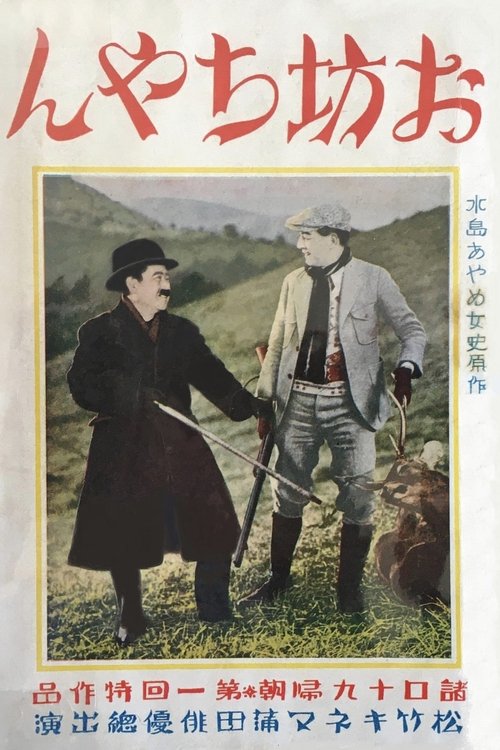
Japanese silent film from 1926. (Obo-chan meaning "Young Master.") Written by Ayame Mizushima, the first female screenwriter in Japan.
Japanese silent film from 1928.
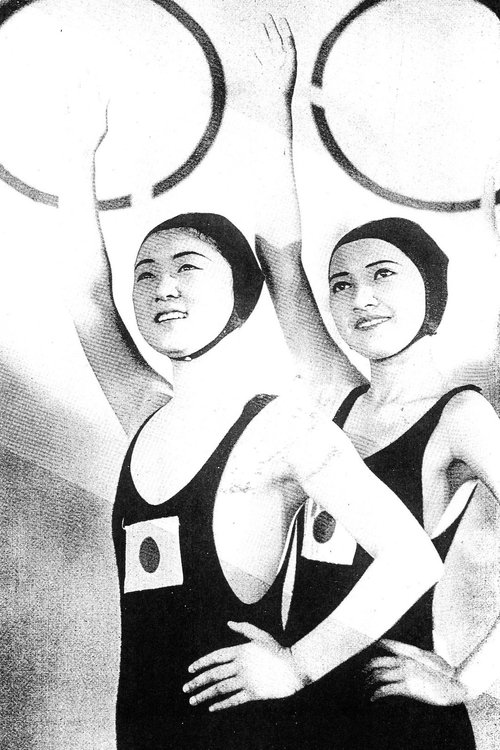
Shigeko and Midori, star swimmers at the renowned Kirishima Girls’ School, are training relentlessly with their sights set on the Los Angeles Olympics. But for the past week, Shigeko has been absent from practice. Her father has fallen ill, and to support her family’s struggling finances, she has secretly taken a job at a trading company. When Masao discovers this, he asks Midori to convince her to return, but soon the school learns of her secret. The students rally to raise funds, though the principal refuses their help, promising instead to handle the situation himself. Shigeko resumes training and travels to Tokyo for the qualifying meet. She touches the wall first in the 100-meter freestyle—only to receive news of her father’s passing. Overcome with grief, she collapses, cared for by Midori, whose own exhaustion leaves her finishing fourth. Despite these hardships, their prior accomplishments earn them a place on Japan’s Olympic team.
Japanese drama from 1934. A major production of Shochiku Studio, directed by Hiroshi Shimizu.
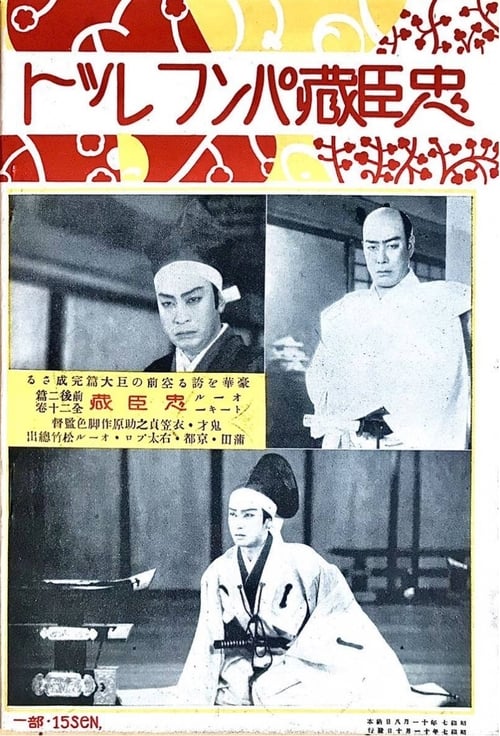
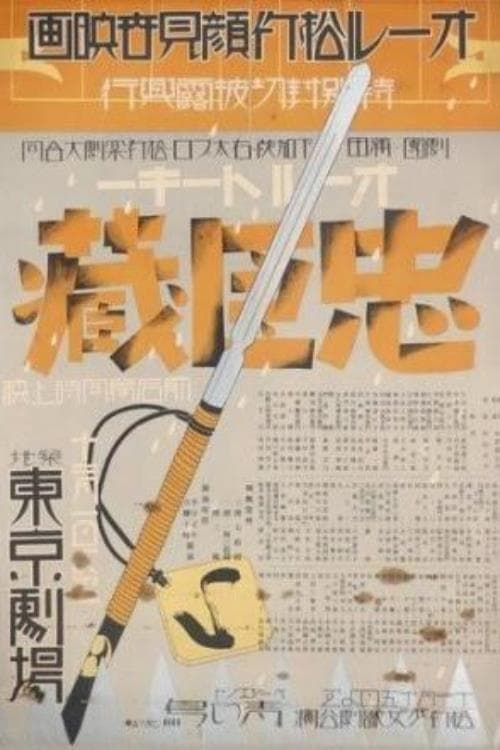
This 1932 adaptation is the earliest sound version of the ever-popular and much-filmed Chushingura story of the loyal 47 retainers who avenged their feudal lord after he was obliged to commit hara-kiri due to the machinations of a villainous courtier. As the first sound version of the classic narrative, the film was something of an event, and employed a stellar cast, who give a roster of memorable performances. Director Teinosuke Kinugasa was primarily a specialist in jidai-geki (period films), such as the internationally celebrated Gate of Hell (Jigokumon, 1953), and although he is now most famous as the maker of the avant-garde silent films A Page of Madness (Kurutta ichipeji, 1926) and Crossroads (Jujiro, 1928), Chushingura is in fact more typical of his output than those experimental works. The film ranked third in that year’s Kinema Junpo critics’ poll, and Joseph Anderson and Donald Richie noted that 'not only the sound but the quick cutting was admired by many critics.
It is considered to be a lost film.
Kan’ichi Hazama and Omiya Shigisawa are engaged to be married, but Omiya breaks the engagement to marry a wealthy banker’s son. Heartbroken, Kan’ichi becomes a moneylender, and years later their paths cross again under changed circumstances. Adapted from a popular serialized novel of the same name.
Japanese film from 1932, adapted from the novel by Kan Kikuchi. The first sound film from director Yasujiro Shimazu.
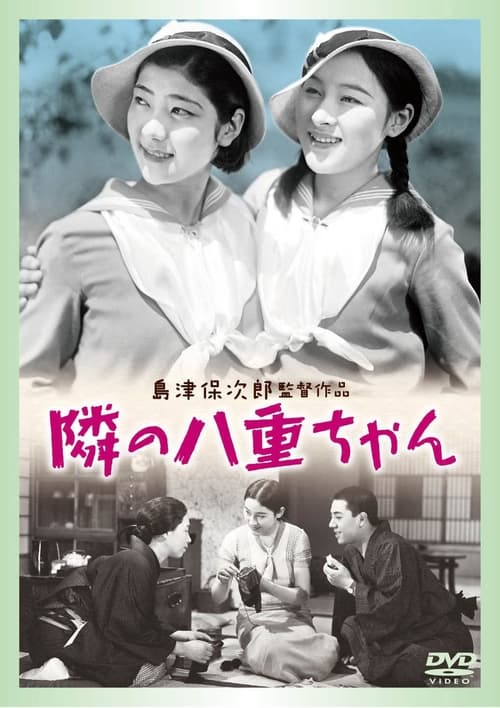
Keitaro is a law student and Yaeko is a high school girl. They are neighbors, and their friendship is starting to develop into something more romantic. Then, Yaeko's sister Kyouko has a breakup with her husband and returns home. Kyouko is clearly interested in Keitaro and Yae becomes anxious.
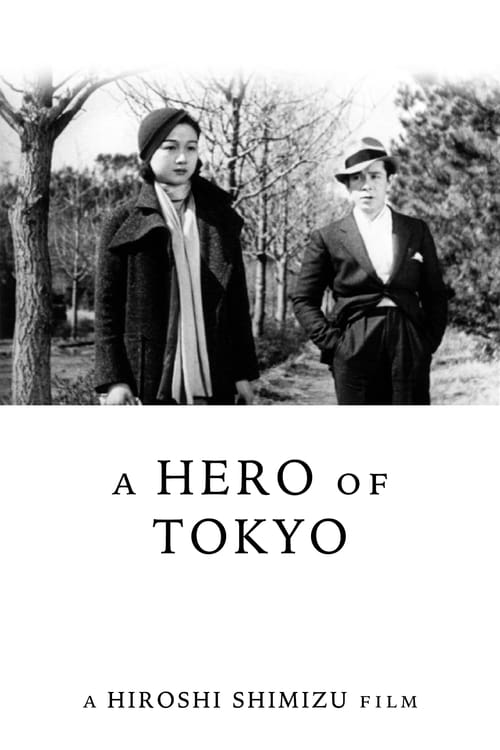
The story focuses on the widower Nemoto, ostensibly a businessman, who has one son, Kanichi, the hero of the title. Nemoto remarries; his new wife is a widow with a son and daughter of her own. However, Nemoto’s business turns out to be out a shady scam, and he disappears, leaving his wife to raise the three children alone. In order to support the family, she is obliged to become a bar hostess. She conceals this shameful employment from the children, but the truth comes out years later, after her daughter is rejected by her husband’s family when they investigate her background.
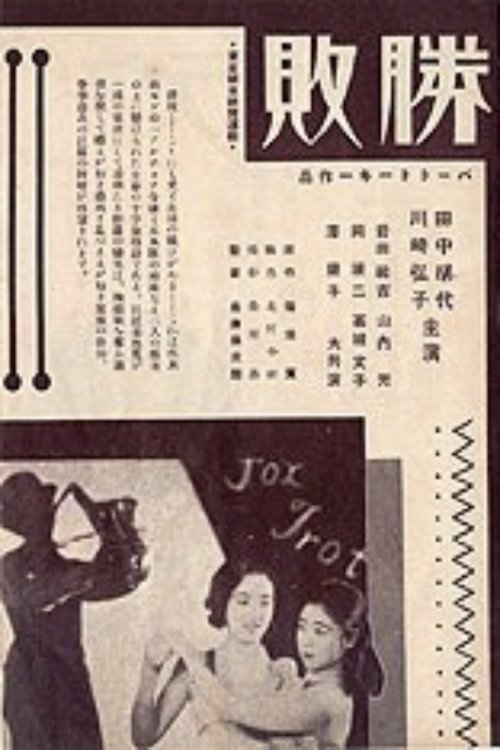
Jie attended a women's university with the financial support of her geisha sister Oha and became a lawyer. The aim. Michiko, one of the seven best friends from the same women's college, is getting married. The man she's marrying is her sister's lover.
Japanese silent film from 1929.