Norbert Bunge
Camera
Known For

A film about the noted American linguist/political dissident and his warning about corporate media's role in modern propaganda.
Manufacturing Consent: Noam Chomsky and the Media
Beginning with Noam Chomsky's response to a college student who role-plays "Jane U.S.A."--someone who naively believes she lives in a democratic society in which she can create her own destiny--the viewer is presented with a cross-section of typically lively Chomsky encounters. Central to a functioning democracy is the necessity of free access to information, ideas and opinions. But what should be our democratic right turns out to be limited and shaped by the biases of insitutions and ideologies within the mass media. Chomsky shows how governments, corporations and other elites manufacture the consent of the public to serve their interests.
A Propaganda Model of the Media Plus Exploring Alternative Media
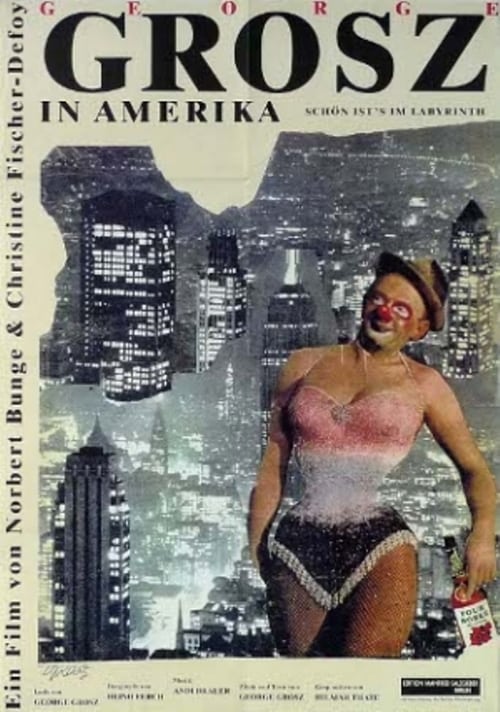
George Grosz, born on July 26th in Berlin, vicious draftsman and painter of the face of the ruling class, enfant terrible of the 1920s, accused of pornography and blasphemy, was one of the most popular visual artists of the Weimar Republic. Little is known, however, that Grosz spent half of his artistically productive life in the USA before returning to Berlin in 1959.
Schön ist’s im Labyrinth – George Grosz in Amerika
This video focuses primarily on the implications of the structure and format of television, especially the consequences of concision, and how these factors can shape the messages of the medium. In addition, other issues, such as how democracies handle dissenters, and how the mainstream media have treated the challenges of Noam Chomsky's media critiques are explored. The media construct reality, and in the conclusion we see the author participating in that very process.
Concision: No Time for New Ideas
Documentary about the everyday life of a bicycle courier in Berlin in 1995.
Ernesto, presto!
No description available.
A Case Study: Cambodia and East Timor
About the German artist Käthe Kollwitz (1867-1945) who worked with painting, printmaking (including etching, lithography and woodcuts) and sculpture. She died at Moritzburg, near Dresden, in April 1945, shortly before the end of WWII. As the film begins she is an old woman in the last months of her life, contemplating death. Using words taken from her diaries and letters, she looks back over her life and work.
Käthe Kollwitz
No description available.