Writing
It tells the story of Hermann Steputat, who was born on August 2, 1934 in Jokehnen , a fictitious East Prussian village between Rastenburg and Insterburg - on the very day that Reich President Paul von Hindenburg died and Adolf Hitler finally became an unrestricted dictator in the German Reich rises.
Toward the end of World War II, Kurt Marenke, a farm boy, is separated from his family while fleeing East Prussia. It is not until two years later that he is reunited with his mother and his sister Ella in the small village of Kudenow in Schleswig-Holstein. Their father is dead, and their brother Bruno is missing in Russia. The Marenkes live in the chicken coop of the large-scale farmer Fiete Kock. Other refugees live crammed together in the barn.
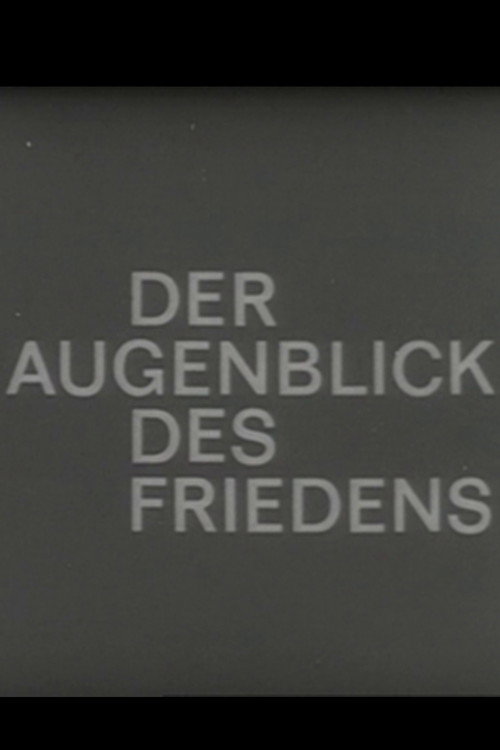
The movie "L'instant de la paix" consists of three segments: 1. "Les rideaux blancs" (France) 2. "Berlin N 65" (West Germany) 3. "Matura" (Poland)
The story of the Battle of Stalingrad from the perspective of a Panzer commander and an officer in a penal battalion.
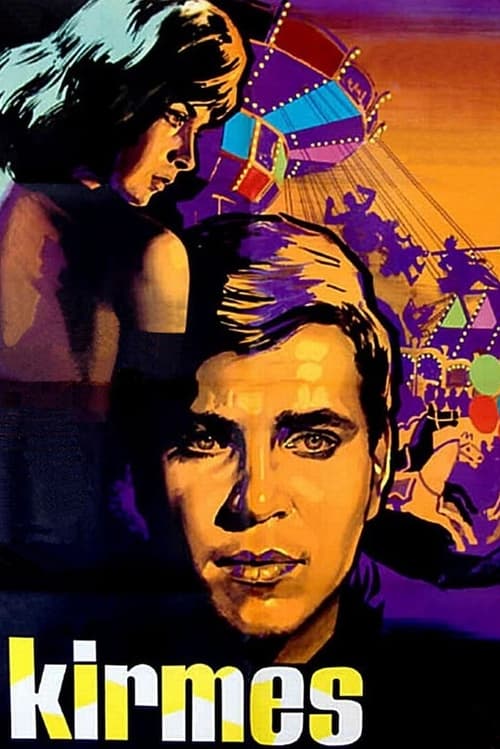
In 1959, in a small German village, the annual fair is set up. When a carousel is fixed firmly in the ground, a fair worker discovers a skeleton, a steel helmet, and a machine gun. The skeleton belongs to Robert Mertens, a plain soldier, who deserted in 1944 und flew to his home village. But when he arrived, no one wanted to help him, neither his former friends nor the minister, or even his own parents.
In the fall of 1956, 21-year-old Herbert Broschat boards an immigrant ship in Bremerhaven bound for Toronto. He wants to leave Germany—this devastated and torn-apart country—and head for an unspoiled land where “freedom is still to be found.” He befriends Erich Domski, a coal miner from Wattenscheid in the Ruhr region. But even in the Canadian wilderness, the two friends are haunted by their German past.
No description available.
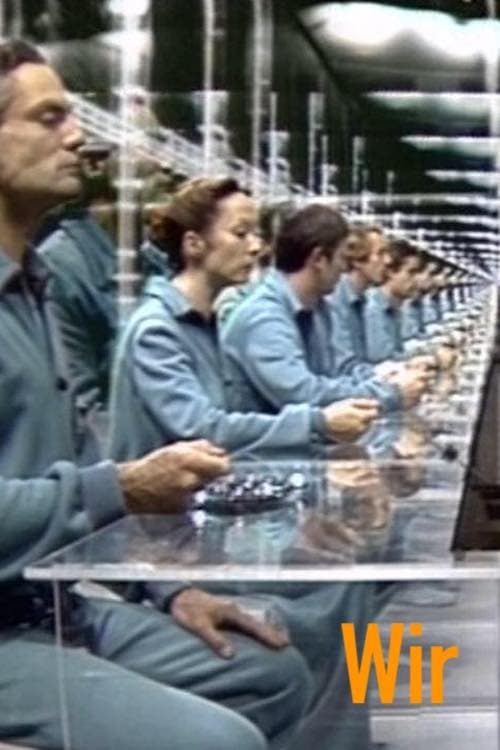
In the 26th century the inhabitants of Utopia have so lost their individuality, which varies in number. They live in glass houses (this was written before the invention of television), which allows the political police, called “Keepers” can easily supervise them. They all wear the same uniform and usually turn to each other or as a ”cipher-so” or "UNIFEM" (uniform). They feed on artificial food and rest hour marching in fours in a row the anthem of the One State, pouring out of the loudspeakers. As they are allowed to put a break on the hour (known as the ”sexy time“), draw the curtains of their glass houses. At the head of the One State is one called The Benefactor, which are replaced every year the whole population, usually unanimously. The guiding principle of the State is that happiness and freedom are incompatible.
Germany, January 1939: a day in a concentration camp. Subjected to harsh military discipline the hungry prisoners are digging a huge hole and filling it up again. Several are tortured, die of exhaustion, in the electric fence, or are shot.