T. R. Rajakumari
Acting
Biography
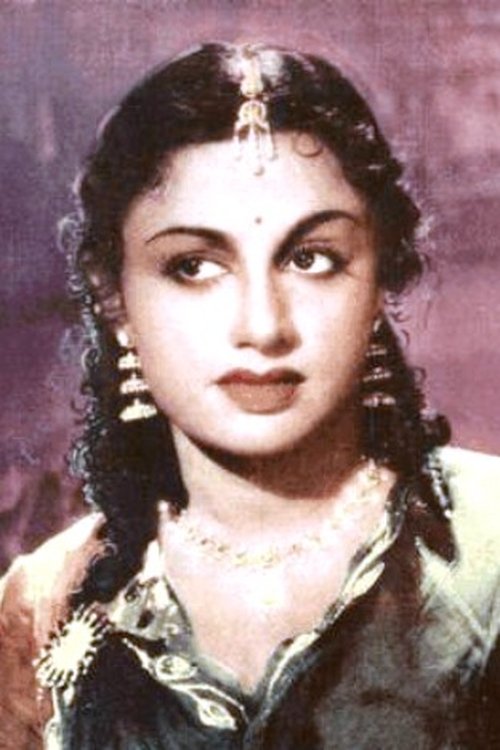
Thanjavur Ranganayaki Rajayee popularly known by her screen name T. R. Rajakumari, was an Indian film actress, Carnatic singer and dancer. She has been called the first "dream girl" of Tamil cinema Rajayee was born in 1922 in a family of carnatic musicians. Both her mother and her grandmother wanted Rajayee to become a singer and trained her in Carnatic music. Rajayee made her film debut as "T. R. Rajakumari" in the 1939 Tamil film Kumara Kulothungan which was an average grosser. Her second film Kacha Devayani (1941) was a hit and helped launch her career in movies. Rajakumari died on September 20, 1999 after a prolonged illness
Known For

Adithan, the emperor of Azhagapuri, marries Kumutha, who is the maid of Princess Nandini. Enraged by the same, the princess vows to destroy Kumutha's life and capture the kingdom.
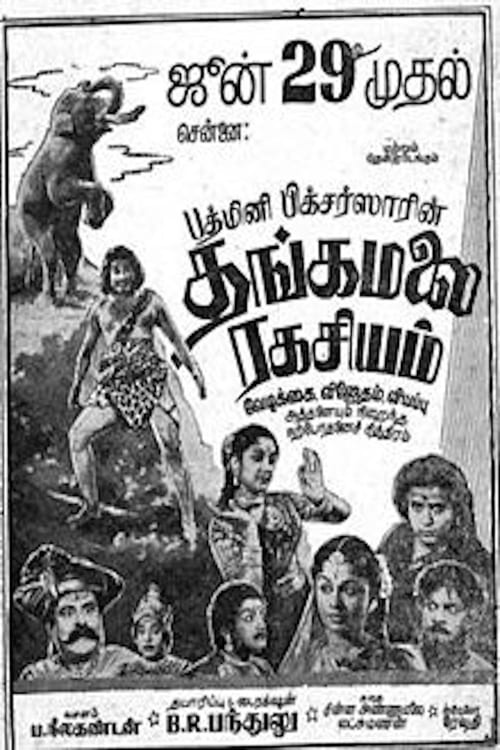
Thangamalai Ragasiyam
An illiterate rich landlord Aboobacker Haji married three times and divorced all the three wives. His next aim is to get married again which according to traditions will be his last marriage.
Umma

Thanigachalam manages to save Meena from committing suicide. Meena reminds him of his late daughter Uma. Later, Meena tries her best to console Saker who is mourning Uma's death.
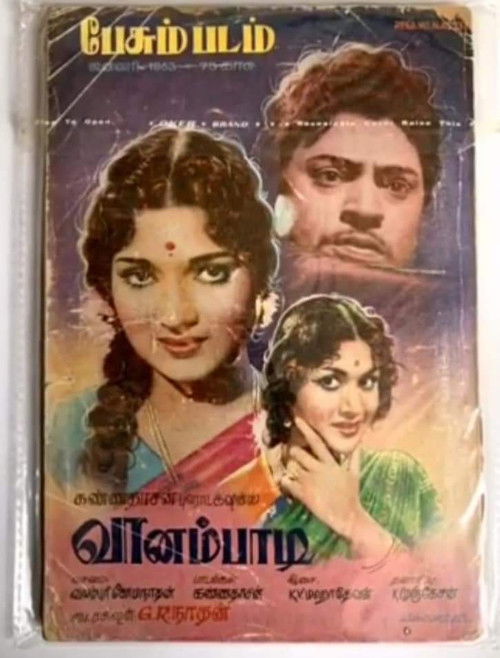
Vanambadi

Manohara produced by M. Somasundaram. The Sivaji Ganesan-L. V. Prasad production was distinct, becoming a cult classic. Karunanidhi virtually rewrote Mudaliar’s play, introducing interesting changes like the climactic sequence for which he drew inspiration from “Samson and Delilah”, especially the part where the blind Samson pushes the pillars down. Mu. Karunanidhi’s writing was superb with a contemporary touch. His dialogue had punch, satire, wit and humour. Sivaji Ganesan was excellent in his dialogue delivery and P. Kannamba who played the queen mother was equally brilliant. Her line, ‘Poruthathu podhum, pongi ezhu, maganey’, became quite famous.
Manohara

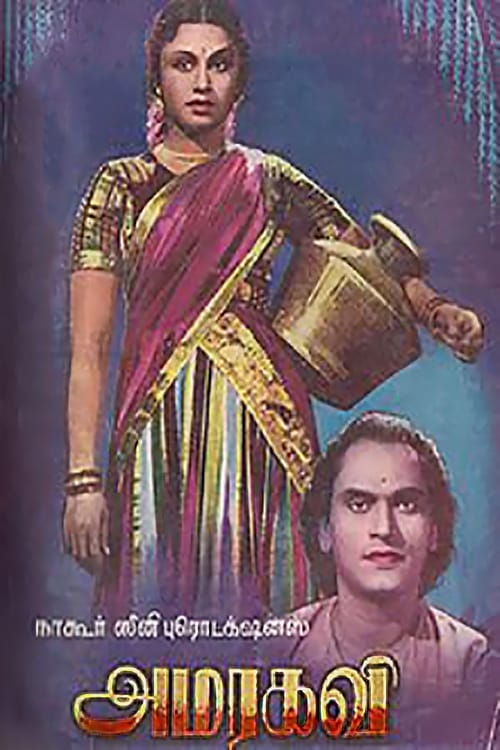
Amarakavi (English: Immortal Poet) is a 1952 Indian Tamil language film produced and directed by F. Nagoor. The film featured M. K. Thyagaraja Bhagavathar and T. R. Rajakumari in the lead roles.
Amarakavi
Sivaji Ganesan plays the younger physician to the king (R. Balasubramaniam) and his wife (Padmini) was modelled on Kannagi as the personification of female virtues. The physician is commanded to the palace to treat the king where the princess (M. N. Rajam) falls for him and virtually enslaves him, preventing him from going back to his wife.
Thangapadumai
No description available.
Panakkaari
A king has two wives. He banishes his first wife as an astrologer told him that he would lose his vision because of her son. The mother and son live in the woods and when he meets his father without knowing his identity, the king loses his sight. When the son gets to know about the sad tale from his mother, he sets out to bring a rare flower from Bakavali, which would restore the king's sight. To achieve it, he undergoes many adventures — enters into a debate with a queen and wins the battle of wits, challenges a woman held captive by a crook in a fake dice contest, and rescues a slave dancer of a tribal chief. The hero wins them all and succeeds in getting the flower along with the three women who turn out to be princesses and siblings! Meanwhile, his stepbrothers try to steal the flower, but are exposed.
Gulebagavali

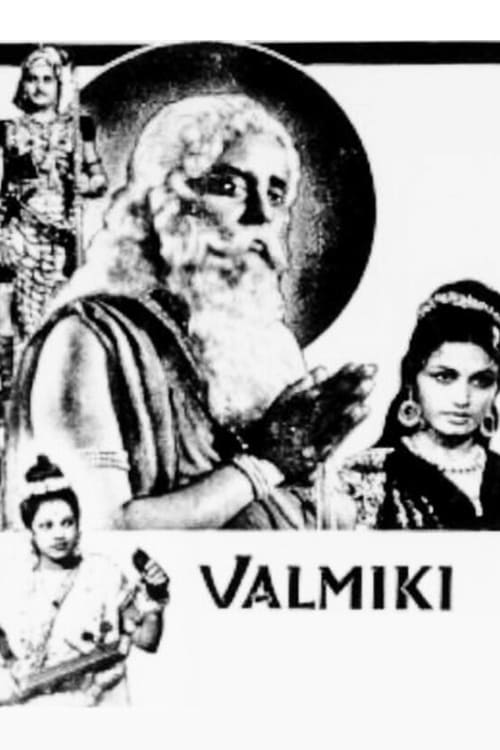
Based on the story of the Hindu sage Valmiki who starts as a bandit and eventually undergoes spiritual transformation into a religious mendicant. Valmiki falls in love with a princess,who is kidnapped by the villain
Valmiki

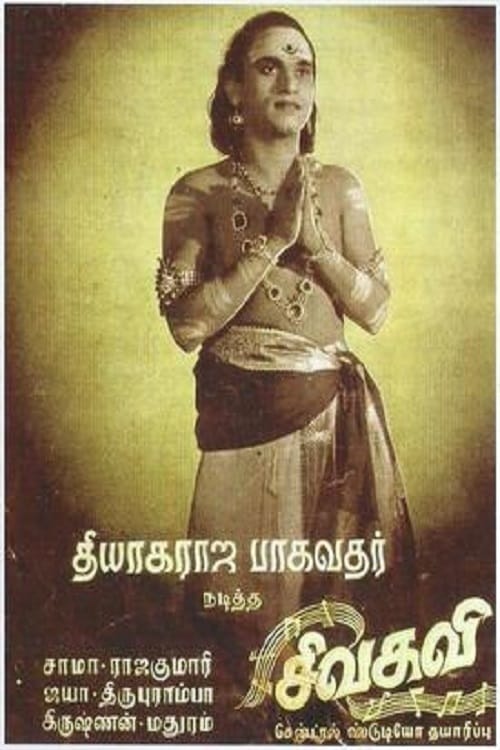
Sivakavi was a 1943 Indian Tamil-language film directed, initially, by P. K. Raja Sandow and later, S. M. Sriramulu Naidu. It starred M. K. Thyagaraja Bhagavathar, S. Jayalakshmi, Serukulathur Sama, Thripuramba, T. R. Rajakumari, N. S. Krishnan and T. A. Madhuram. The film's screenplay was written by Thiru Muruga Kirubanandha Variyar. The film was shot at Central Studios and released by Pakshiraja Films in Coimbatore.
Sivakavi

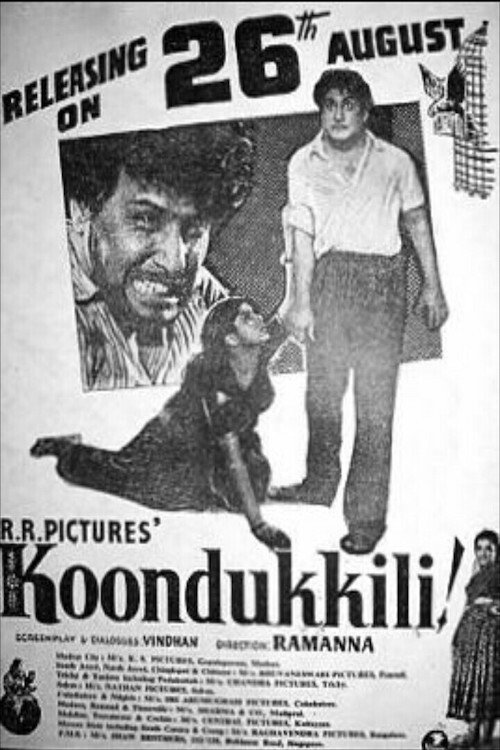
After Mangala's husband is sent to prison on a false charge, she, being poor, is targeted by Jeeva who approaches her under the pretext of helping her, but wants sexual favours from her.
Koondukkili
A wealthy and careless man takes his family for granted and loses his fortune to a courtesan, leading him to realise the true values of life.
Haridas

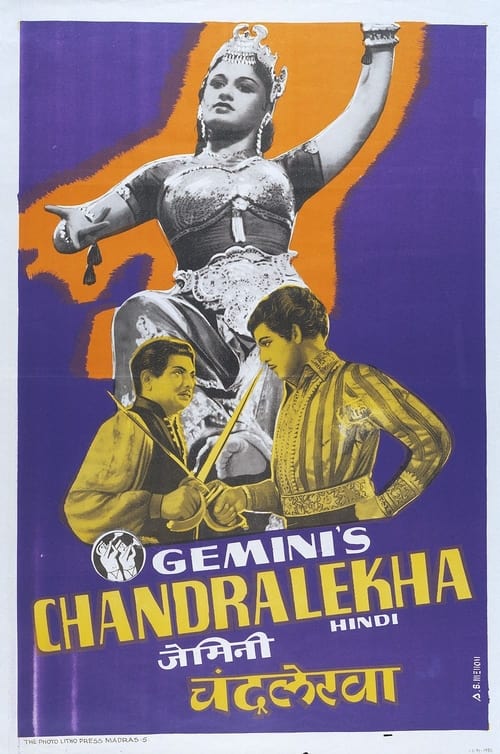
Brothers Veer and Shashank fall in love with Chandralekha. Shashank kidnaps her and forces her to marry him. She requests a special drum dance prior to the wedding. The drums, however, hold a secret.
Chandralekha
No description available.
Anbu
No description available.
Pudhumai Pithan
A fake Godman lusts after a pious courtesan. How her devotion to God transforms both of them forms the rest of the story
Krishna Bhakthi
1942 Indian Tamil-language film