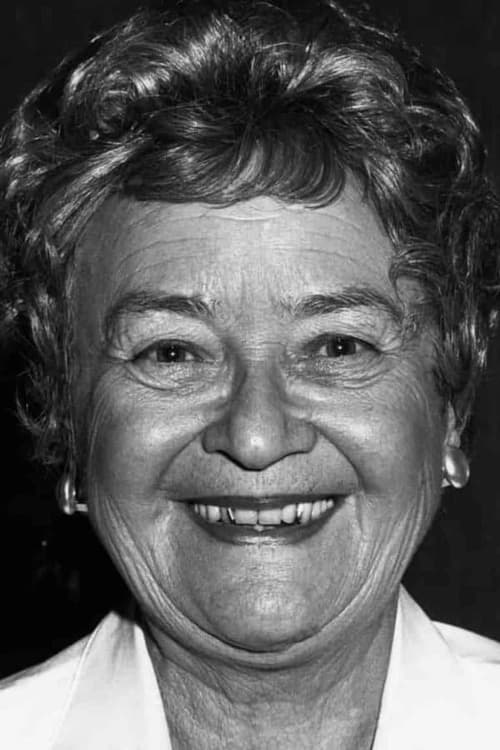
Else-Marie Juul Hansen
Acting
Known For
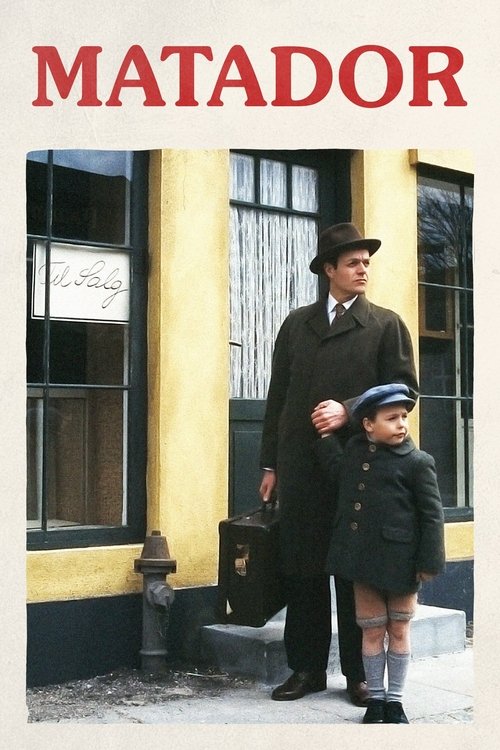
Matador is a Danish TV series produced and shown between 1978 and 1982. It is set in the fictional Danish town of Korsbæk between 1929 and 1947. It follows the lives of a range of characters from across the social spectrum, focusing specifically on the rivalry between the families of two businessmen: The banker Hans Christian Varnæs, an established local worthy, and social climber Mads Skjern, who arrives in town as the series opens. The name Matador was taken from the localised edition of the boardgame Monopoly, also the series' tentative English title. In addition, in contemporary Danish a "matador" is often used to describe a business tycoon, in the series referring to the character of Mads Skjern and his craftiness as a self-made entrepreneur. Directed by famed Danish film maker Erik Balling, Matador was the idea of author Lise Nørgaard who wrote the bulk of the episodes alongside Karen Smith, Jens Louis Petersen and Paul Hammerich. The series is one of the most well-known and popular examples of Danish television and represents the peak of longtime development of Danish TV drama by the public service channel Danmarks Radio. The series has become part of the modern self-understanding of Danes, partly because of its successful mix of melodrama and a distinct warm Danish humour in the depiction of characters, which were portrayed by a wide range of the most popular Danish actors at the time; but also not least because of its accurate portrayal of a turbulent Denmark from around the start of the Great Depression and through Nazi Germany's occupation of Denmark in World War II.
Matador
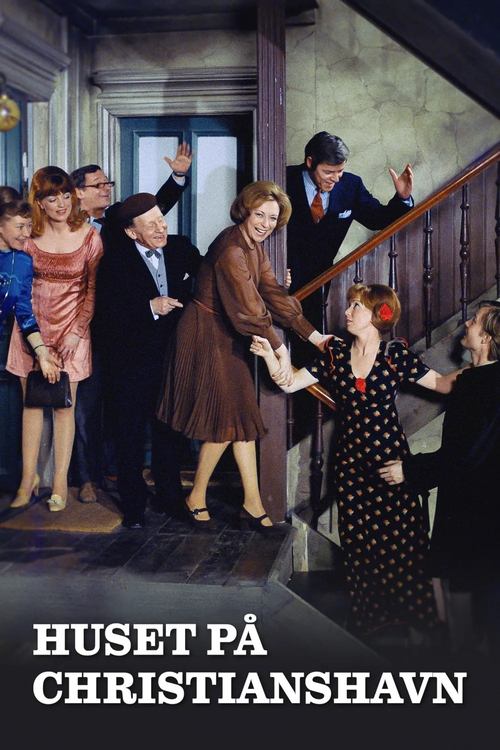
The series follows the residents of an apartment building on Copenhagen's Christianshavn, as they go about their daily lives and challenges. There is Olsen, a mover with an old fashion view of the world, Clausen who runs the local pet shop, Egon the career focused assistant, their wives who work hard to keep their spouses lives together, the young couple Tue and Rikke who recently moved in, the hard working caretaker Meyer, who never puts in to much effort, and of course Emma, the innkeeper of Rottehullet, where all the important decisions are made while running up the bar tab. The series was produced by Nordisk Film for Danmarks Radio TV station between the years 1970-77. The series' first director was Ebbe Langberg, then Erik Balling and Tom Hedegaard respectively. The series was conceived by an author team of well-known Danish authors such Leif Panduro, Benny Andersen, and Lise Nørgaard.
The House at Christianshavn
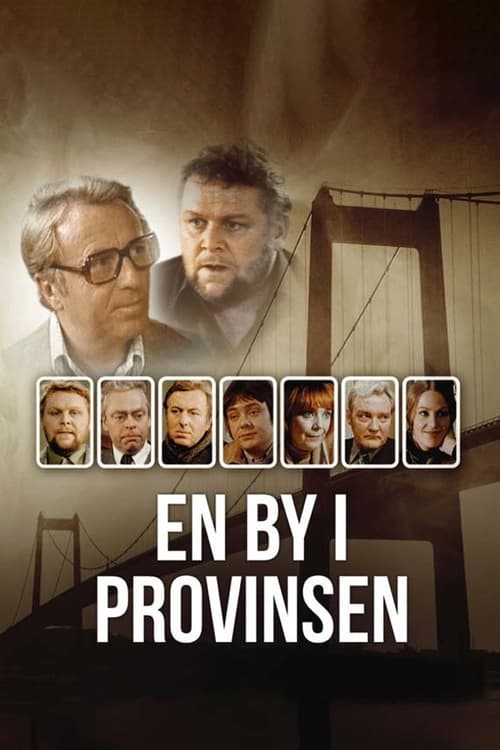
In 1970s Denmark, the criminal police in a provincial town solve different criminal cases, when the police was dominated by men and DNA was not yet a tool in investigation.
A Town in the Province

Here is the film that all travel-loving Danes should see—and nod in recognition at all the funny episodes that arise when very different Danes go on vacation to Munich, Tyrol, Rome, and Venice with the dream of the adventure trip of a lifetime. The group is a festive mix: some perpetually dissatisfied, the always happy, young and old, single and a couple of womanisers, etc.
Eventyrrejsen

One dark night, a ravishing young girl flees from a convent boarding school in Switzerland. She is Lisa Hoffmann, daughter of a wealthy Danish-American oil magnate from Brazil, and she is running away with her sweetheart, the calypso singer Jacque. There is a huge uproar in newspapers around the world, and even more so when it turns out that the two young people are performing in cabarets around Europe's capital cities.
Verdens rigeste pige

No description available.
Vinterbyøster
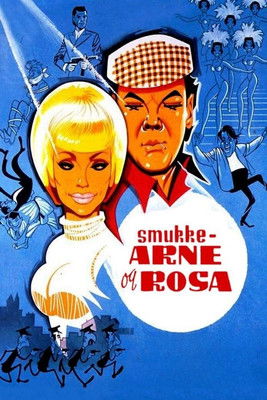
Denmark, 1967. In the midst of a cultural renaissance, all cultured people want to support Danish cinema, especially when it receives funding from the film fund to shoot scenes on location in a bank. The respectable bankers naturally agree to play extras in their own bank and be a little cultured for just one evening. No one suspects that the film's script is the work of "Grosserer Nielsen" from Vesterport, alias "Smukke Arne." No one suspects why "Karate Smutti" is having a field day teaching physical exercises. No one suspects why little Mrs. Jensen in the attic across from Aktiebanken has two nice lodgers. No one knows why Rosa—Dad's own pet—is fussing over her window boxes in the porch. WHO relieved Aktiebanken of 2 million stray dollars is a mystery—except to Judge Vinter. But Handsome Arne and Rose are enjoying an expensive and wonderful vacation—far, far, far away from Denmark.
Pretty-Arne and Rosa
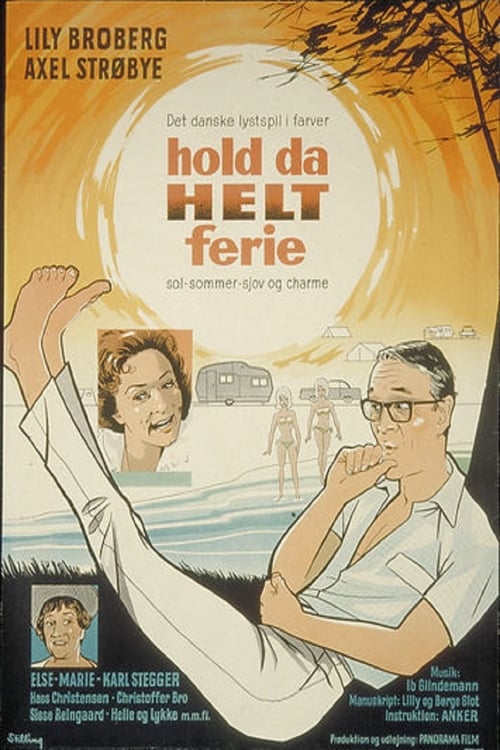
Søren is looking forward to a relaxing camping holiday with his wife, Marianne. But nothing goes as planned, when his two daughters and mother-in-law join them.
Hold da helt ferie
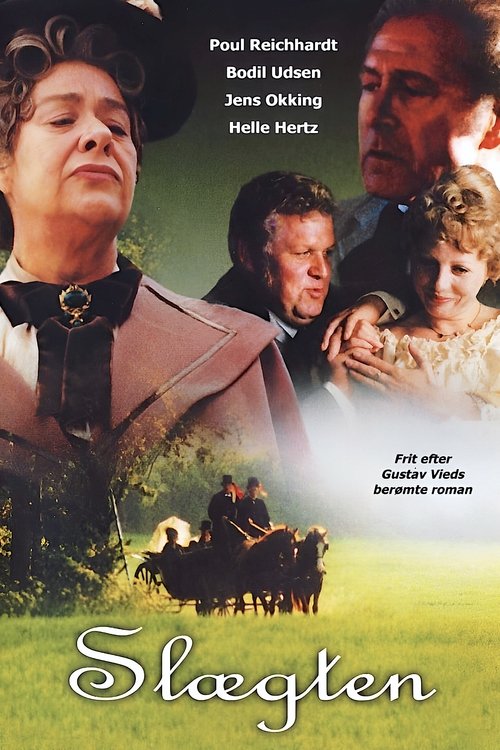
Anders Refn's film adaptation of Gustav Wied's novel stars Jens Okking and Helle Hertz in the leading roles as Baron Helmuth and his wife Alvilda. The baron is deeply enamored with his wife, but she is repelled by his blunt and coarse nature and is drawn to her cousin, who fulfills her desire for passionate romance.
The Heritage
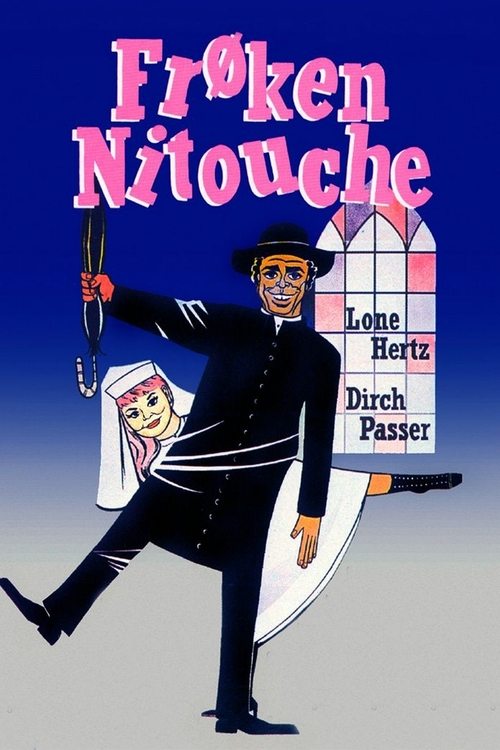
At a convent school for young girls, no one must know that the organist Celestin is the same person as the operetta composer Floridor. But in the long run, it cannot be hidden. His bright student Charlotte has been chosen as the bride of a man she has never met – but during a trip to Copenhagen, where Celestin is supposed to protect Charlotte from the temptations of the city, he takes her to the theatre where his operetta is to premiere. And that is where Celestin's problems really begin.
Frøken Nitouche
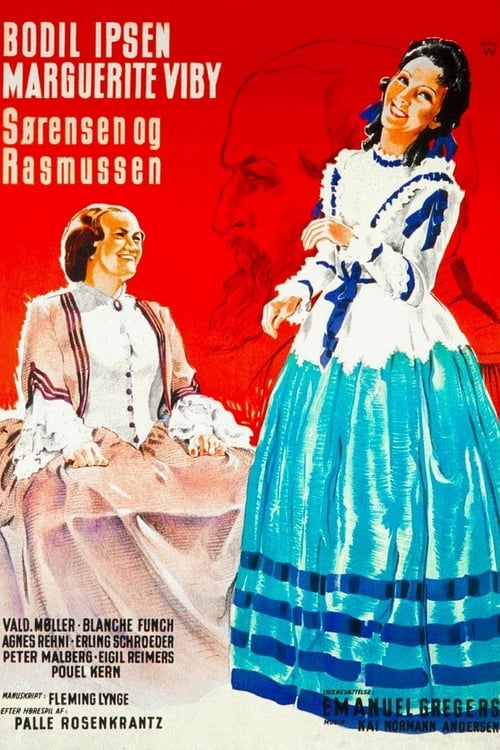
Hilleborg always speaks negatively about her king's marriage to his left hand, Countess Danner. When it is rumored that King Frederik VII and Countess Danner are on their way to Hilleborg and her husband, Niels Parsberg's estate, Hilleborg refuses to be in the living room with the Countess. She switches roles with the housemaid, Lise Sørensen. Lise and Countess Danner quickly become good friends, while Hilleborg's situation worsens when the king decides to spend the night at the estate.
Sørensen og Rasmussen
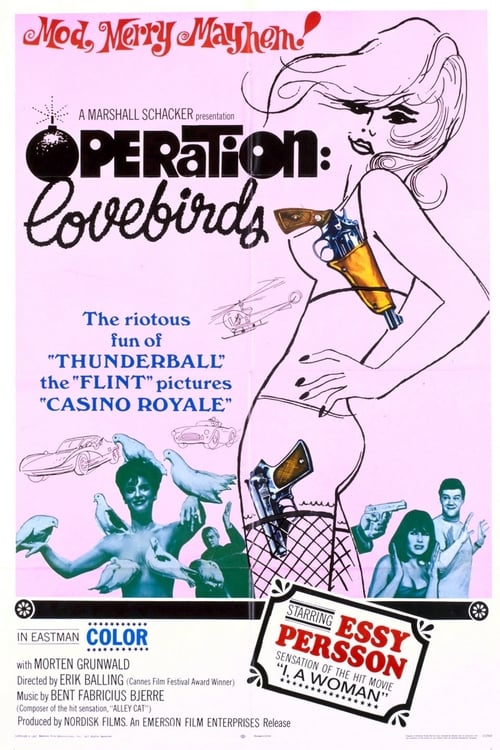
Frede Hansen, a game salesman, is mistaken for a secret service agent on a ferry and kidnapped by enemy agents. He escapes and now the secret service want to use him as bait to track the enemy. They assign their best agent, Smith to be his partner and supervisor. Their main task is to eliminate the head of the enemy conspiracy, the mysterious 'Dr. Pax' who's real identity is unknown. Freddy accompanies Smith to Stockholm where they are to meet Sonja, an agent for Dr. Pax, who is also on Smith's liquidation list. Thanks to his bag of game tricks, Freddy manages to avoid being done in by Kolick, a killer for Dr. Pax. Freddy falls for Sonja, and he, she and Smith are taken as prisoners to Dr. Pax's hideout, a remote island fortress from which a major power is to be attacked by missiles guided by trained pigeons. Freddy manages to teach Dr. Pax a lasting lesson in the difference between trained pigeons and homing pigeons.
Strike First Freddy

Egon and the gang are hired to stage a robbery of an antique Chinese vase for an economically challenged baron. Naturally they fooled, which infuriates Egon. The gang tries to get back at the baron by switching the vase with a cheap Hong Kong copy. One attempt is made during the barons hunting party, where Egon ends up being bricked up in the catacombs. In another attempt, the gang has to coordinate breaking through several walls at The Royal Theater in Copenhagen with the "Elverhøj" overture.
The Olsen Gang Sees Red
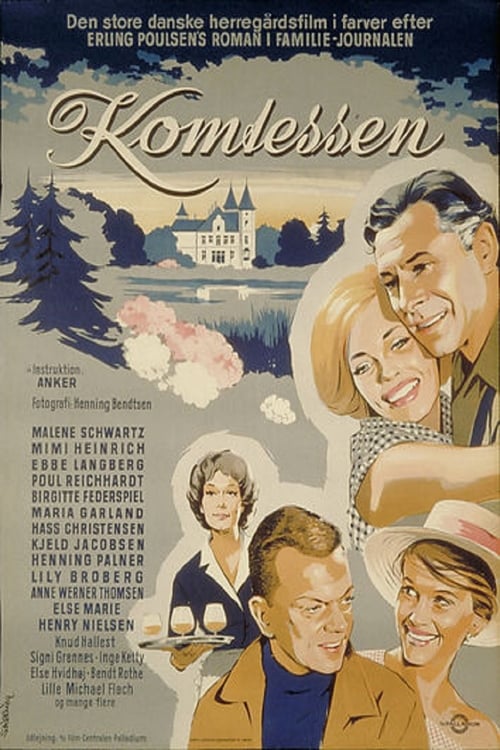
In the village Karrild, the Countess Sonia Hardenborg and a young unmarried woman, Marta, give birth to a daughter on the same day. Marta dies after birth, so Marta's daughter, Betina, come under the care of the countess. 17 years later, Betina and Countess Sonia's daughter, Maria, meet, as Betina is living in a home for orphaned girls, which is adjacent to the Hardenborg estate. The two girls become friends, and Maria invites Betina to visit her at Hardenborg, to greet her parents Sonia and Otto Hardenborg and her brother Count Flemming. Meanwhile, Betina's father, Frank Jensen, starts working in the estate's woods, and when the two girls come to visit him, he is shocked by the resemblance between the young countess and Betina's mother Marta.
Komtessen
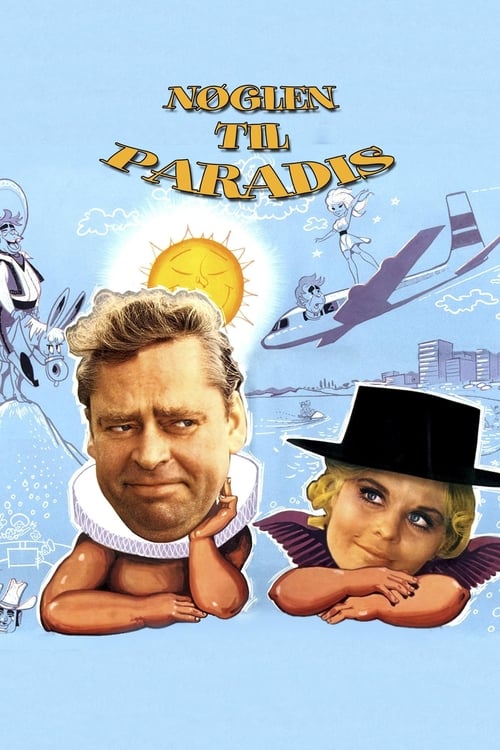
An unconventional parish priest runs a highly successful travel agency. The chairman of the parish council plots against him, and his problems are compounded when, during a trip to the Costa del Sol, he meets Gaby, a girl he has been in love with in several previous lives.
The Key to Paradise
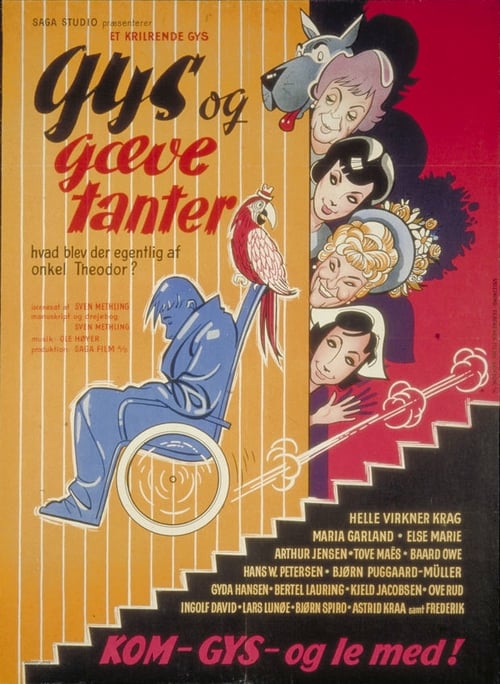
Bettina Eriksen, manager of her Uncle Teodor's nursing home, is being framed for murder. With the help of 2 older ladies, Bettina sets out to find out the murderer's identity and motive.
Old Maids

A romantic comedy about Ingrid, the innkeeper's daughter, and Karsten, the landowner, who are in love. Ingrid's father is strongly opposed to the relationship because of an event that took place 40 years ago – and the estate's financial problems don't exactly help matters. Then three very different people arrive at the inn. The poet Ole, the Supreme Court lawyer Aagesen, and the record producer Blanquet. With their help, the landowner solves his financial problems and wins Ingrid's heart.
Tre finder en kro

The children Julian, Dick and Anne spends a summer holiday at the Kirrin Farm, where there cousin Georgina lives with her dog Tim, and her parents. The tomboyish Georgina is punished for her poor school performance, and her father hires a private teacher.
Five and the Spies
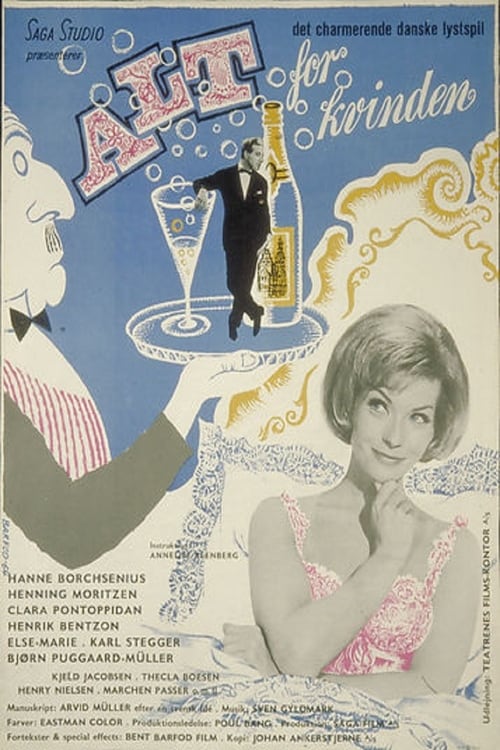
No description available.
Alt for kvinden
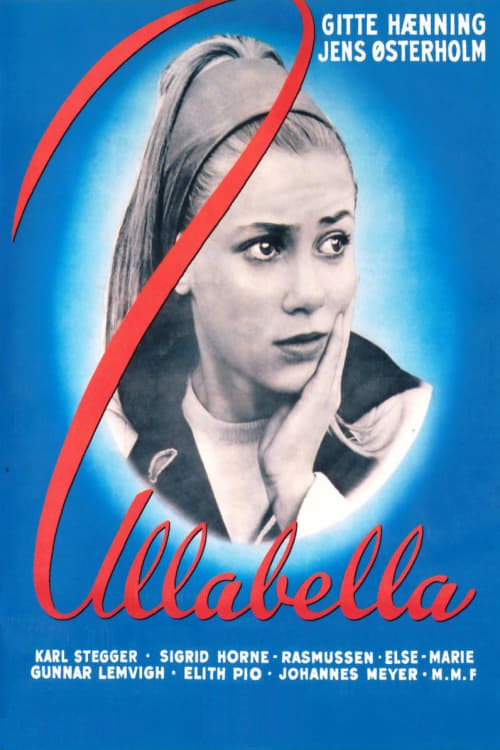
Ullabella is a dreamy teenager who is in love with her teacher. But one day, when she refuses to do as he says, he slaps her. Ullabella tells her family about it, and then the case begins. Ullabella's mother and uncle, who is a politician, take the case all the way to the political level and demand at least an apology from the teacher. He refuses to give one, but a solution to the case is found nonetheless.