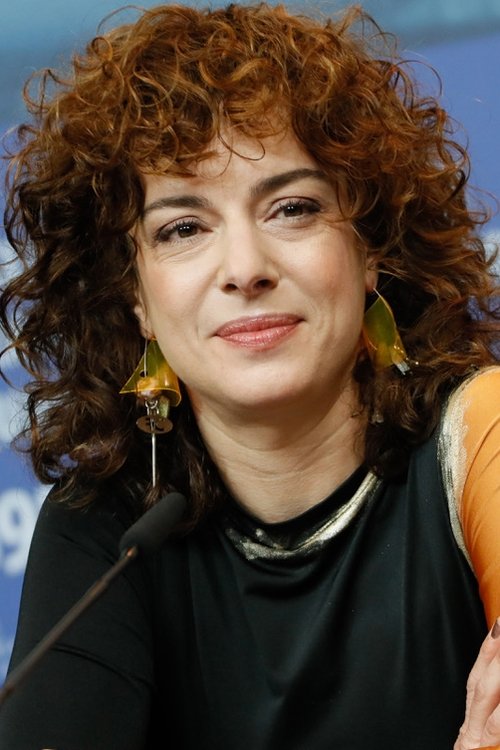
Youla Boudali
Writing
Known For
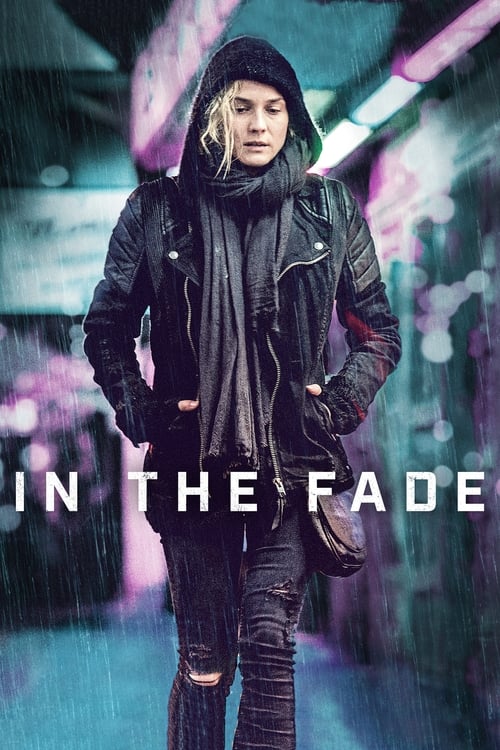
Katja's life collapses after the deaths of her husband and son in a bomb attack. After a time of mourning and injustice, Katja seeks revenge.
In the Fade
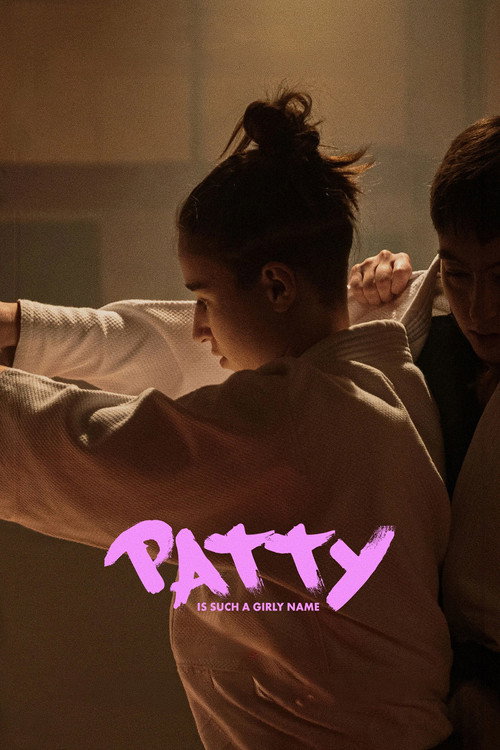
Daphne, a teenage judo athlete from a remote Greek island, is ready to spread her wings and follow Sensei Yuri to the big city and ultimately to the next Olympic Games. Yuri, for unknown reasons, has been absent from the world of Judo for the last few years and he is looking for a new beginning, while Daphne transitions from the carefreeness of adolescence into the hard world of adults.
Patty Is Such a Girly Name

The Bastards have left the city behind. Their house in the countryside smells of nothing but summer. Five girls and five boys living in the moment, for the moment. No outsider comes around here, and all the insiders take turns standing guard, kissing each other, playing dead. They are still kids. They are your kids. They are our Bastards.
BASTARDS

Elias dreams of building a boat from scrap metal, chasing the shadow of his sailor father’s legacy. But as his creation crumbles, so does the myth he’s built around himself—forcing him to confront the fragile truth of who he really is.
Beachcomber

Running away on the highway, Maria is alone in her roaring SUV. Behind her, fire and a case full of money. In front of her, the hopeless vastness of the motorway. Only a day before she was a caring mother, a loving wife, a responsible daughter. Today she has gone rogue.
A Blast
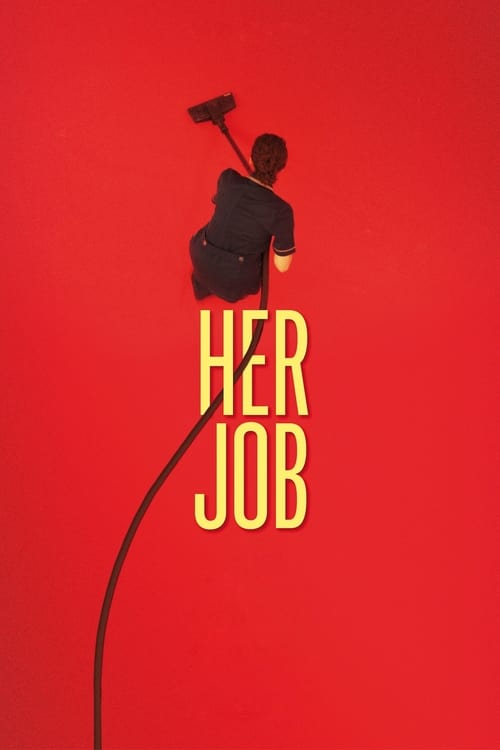
A devoted but underappreciated housewife's brief taste of autonomy as a mall cleaner (where she is a popular, model employee) is threatened by pending layoffs.
Her Job
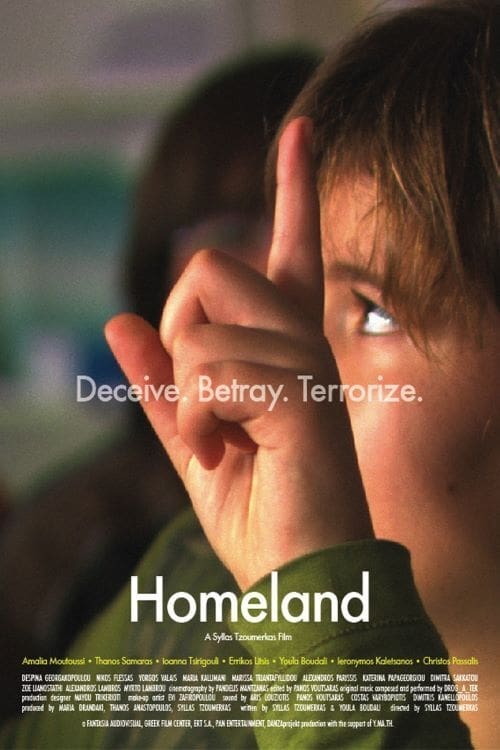
In a country shaken by major political events, three generations of a Greek family clash over an inside-the-family adoption.
Homeland

Elizabeth, a sexually yielding policewoman, is miserable in the narrow-minded town in which she's living. While Rita, a lonely eel-hatchery worker, is trying to escape from the sticky situations of her life.
The Miracle of the Sargasso Sea
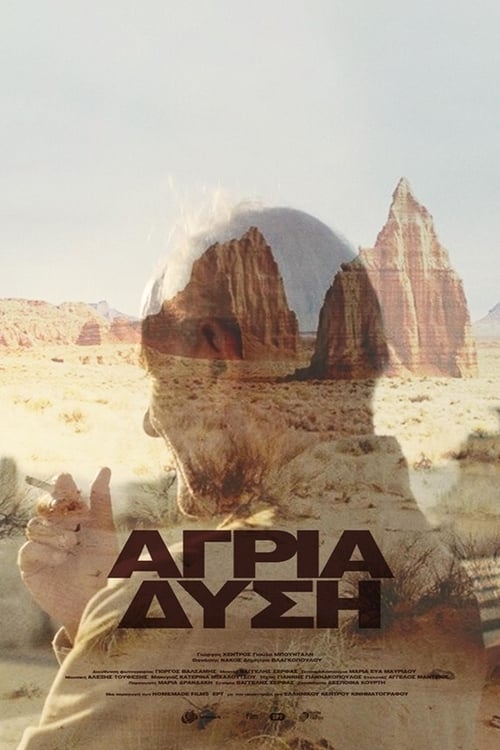
Argyris is an elderly man in the first stage of dementia. When his symptoms worsen, he decides with his daughter, Sophie, to enter a nursing home. The last days of his freedom, Argyris wanders around the city, meeting old friends while having a secret plan. He wants to get a revolver.
Old West
A documentary, a video-diary and a propaganda piece for the “lawless, those without hearth, nor clan” (The Iliad, ΙX,63).
A Manifesto for the Un-communal

In the winter of Berlin, two former lovers meet for the first time since the breakup.
Another Empty Space
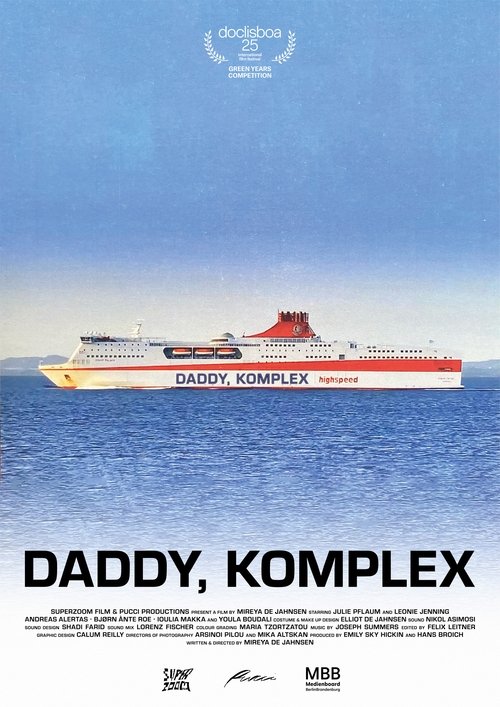
On a ferry in Greece, the co-dependent German-Greek sisters PINA (24) and OLA (28) set sail on a sisterly holiday, destined for adventure. When their inseparable bond is truly tested by their “father complex”, all is to play for.
Daddy, Komplex

Maria is caught between childhood and adolescence. After the sudden death of her classmate, she is once again confronted with loss. As she attempts to cope with this absence, Maria tries to find her own way to bid her loved one farewell.
numb
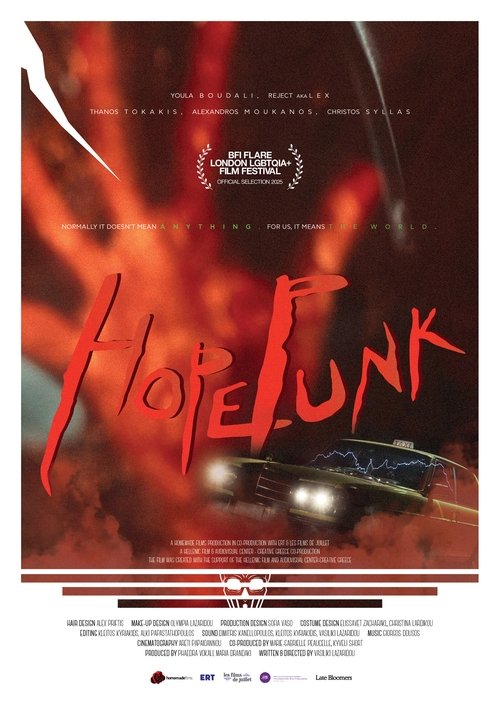
Rebellious driver Andi and a restless zombie named Pina are driving through the city with a dark secret in the trunk. Their destination is HOPEPUNK, a queer zombie squat at the edge of town where they set a trap for a gang of nationalist taxi drivers that has spread its filthy tentacles across the dead-zone metropolitan highways, controlling the streets of Athens.
Hopepunk
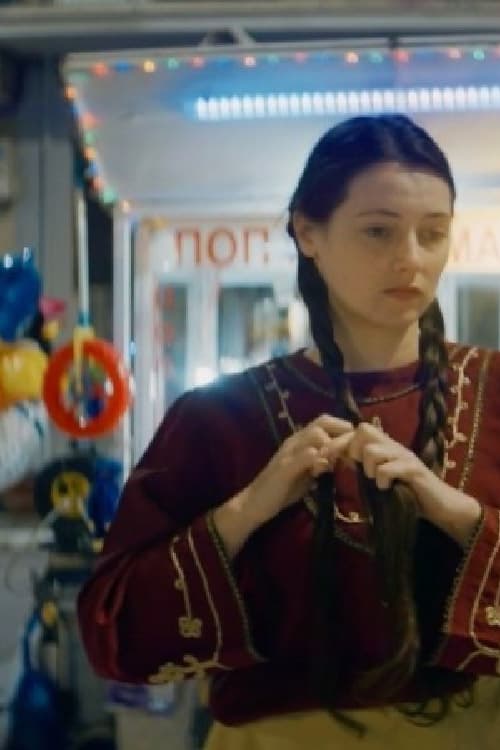
A mother loses her daughter to femicide. Instead of reacting with rage against the world, she mourns in her own different way: by going out, speaking publicly, and fighting to trade love for patriarchy for the sake of our society. By interweaving every-day moments with the story of our protagonist, the film tries to describe the banality of this evil. Mothers of Daughters pushes the boundaries of documentary filmmaking by poetically and sensitively trying to find imagery for this unbelievable story, that could happen to any of us.