FEEL IT.STREAM
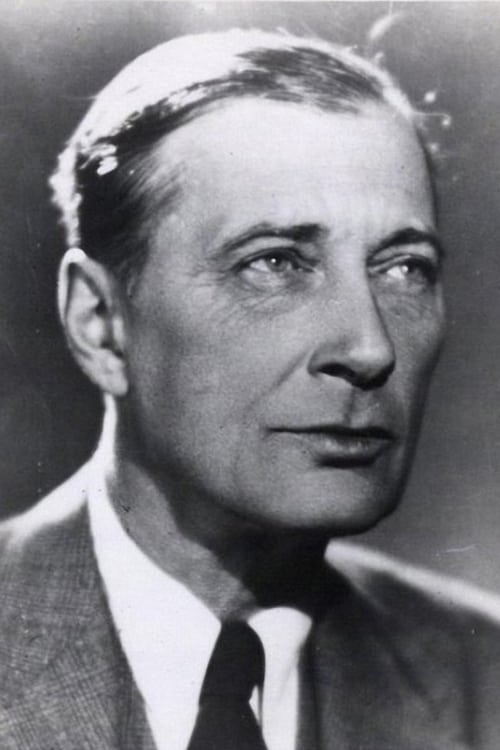
Jacques Feyder

Jacques Feyder

Directing

Biography

Jacques Feyder , was a Belgian actor, screenwriter and film director who worked principally in France, but also in the USA, Britain and Germany. He was a leading director of silent films during the 1920s, and in the 1930s he became associated with the style of poetic realism in French cinema. He adopted French nationality in 1928. Born Jacques Léon Louis Frédérix in Ixelles, Belgium, at age twenty-five however he moved to Paris where he pursued an interest in acting, first on stage and then in film, adopting the name Jacques Feyder. He joined the Gaumont Film Company and in 1914 he became an assistant director with Gaston Ravel. He started directing films for Gaumont in 1916, but his career was interrupted by service with the Belgian army during 1917-1919. After the end of the war, he returned to filmmaking and quickly built a reputation as one of the most innovative directors in French cinema. L'Atlantide (1921) (based on the novel by Pierre Benoit), and Crainquebille (1922) (from the novel by Anatole France) were his first major films to achieve public and critical attention. He also contributed screenplays of films for other directors. His last silent film in France was Les Nouveaux Messieurs, a topical political satire which provoked calls for it to be banned in France for "insulting the dignity of parliament and its ministers". By this time Feyder had accepted an offer from MGM to work in Hollywood, where in 1929 his first project was directing Greta Garbo in The Kiss, her last silent film. It was in Hollywood that he made the transition to sound films; even before he had worked with sound films, Feyder declared himself to be a firm believer in their future, in contrast with some of his French contemporaries. Disillusioned with the Hollywood system, Feyder returned to France in 1933. During the next three years he made three of his most successful films, all of them in collaboration with screenwriter Charles Spaak and featuring Françoise Rosay in a leading role. Le Grand Jeu (1934) and Pension Mimosas (1935) were both significant creations in the style of poetic realism; La Kermesse héroïque (1935) (also known as Carnival in Flanders) was a meticulously staged period film with contemporary political resonances, which earned Feyder several international awards. Feyder went on to direct films in England and Germany prior to the outbreak of World War II. Following the Nazi occupation in 1940, which led to the banning of La Kermesse héroïque, he left France for the safety of Switzerland, and directed a last film there, Une femme disparaît (1942). In 1917, Feyder had married Parisian-born actress Françoise Rosay (1891–1974) with whom he had three sons; she acted in many of his films and collaborated with him as writer and assistant director on Visages d'enfants. Jacques Feyder died in 1948 at Prangins, Switzerland. A school (lycée) in Épinay-sur-Seine in the north of Paris was named in his honour in 1977; Épinay was the location of the Tobis film studios where Feyder made Le Grand Jeu and Pension Mimosas.

Known For

No image
9.0

Produced for television by Claude-Jean Philippe, the « Encyclopédie audiovisuelle du cinéma », recounts the history of French cinema from its birth to the beginning of the 1960s. With commentary read by Jean Rochefort.

Encyclopédie audiovisuelle du cinéma

1978
The Kiss
6.4

An unhappily married woman is caught up in scandal and murder when her affection toward a young man is misinterpreted.

The Kiss

1929
Carmen
6.2

Feyder's scenario very closely follows Don José's own account of his story and his fatal relation with the gypsy Carmen in the third chapter of Mérimée's short novel.

Carmen

1926
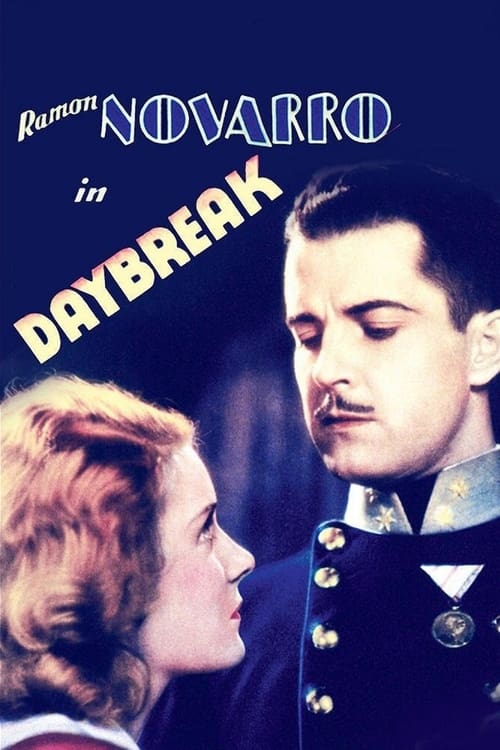
Daybreak
4.3

An Austrian soldier must choose between a wealthy fiancee and a new girl who takes his fancy.

Daybreak

1931
Thérèse Raquin
5.2

Thérèse Raquin, an unhappily married woman, aided by her lover Laurent, drowns her husband Michaud, only to find the guilt of her actions intolerable.

Thérèse Raquin

1928
Knight Without Armour
5.8

British agent working in Russia is forced to remain longer than planned once the revolution begins. After being released from prison in Siberia he poses as a Russian Commissar. Because of his position among the revolutionaries, he is able to rescue a Russian countess from the Bolsheviks.

Knight Without Armour

1937
Law of the North
6.3

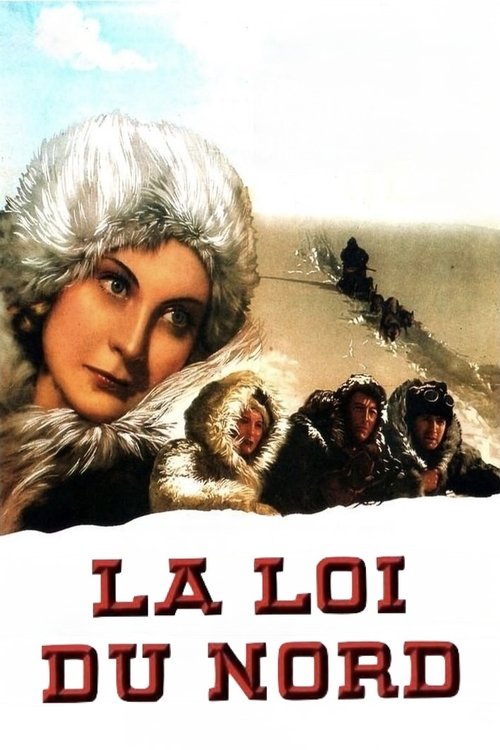
Robert Shaw slaughters his wife's lover and runs away with his secretary Jacqueline. Helped by a French trapper who takes them for film-makers, they hide in Northern Canada.

Law of the North

1939
Carrot Top
6.8

The suffering and rebellion of 12-year-old François Lepic, nicknamed "Carrot Top" by his mother, who hates him. Occupied with the council elections, his father appears unaware that the young boy is increasingly tempted by suicide.

Carrot Top

1925
L'Atlantide
6.0

Two men, lost in the desert, meet Queen Antinea, ruler of Atlantis.

L'Atlantide

1921
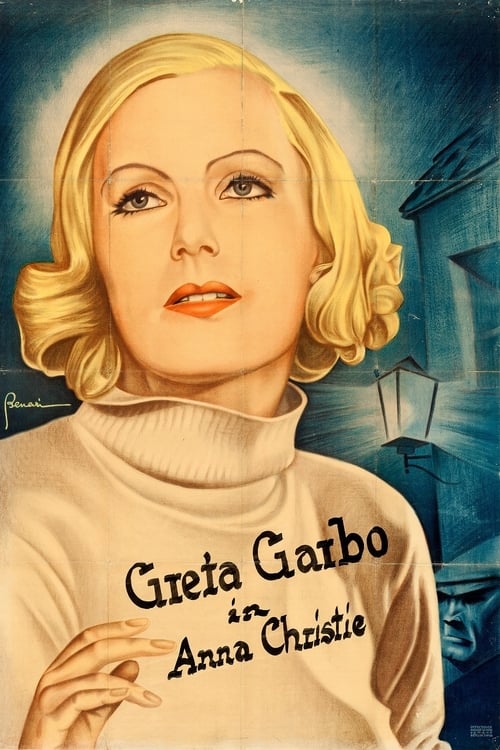
Anna Christie
7.8

A young woman reunites with the father she's not seen since early childhood, also falls in love with a sailor who wishes to marry her, and eventually is forced to reveal to each man about her dark past. (NOTE: This is the German language version.)

Anna Christie

1930
Si l'empereur savait ça
10.0

A princess in the old Austro-Hungarian empire rejects her arranged marriage and falls, instead, for a dashing cavalry captain.

Si l'empereur savait ça

1930
Faces of Children
7.7

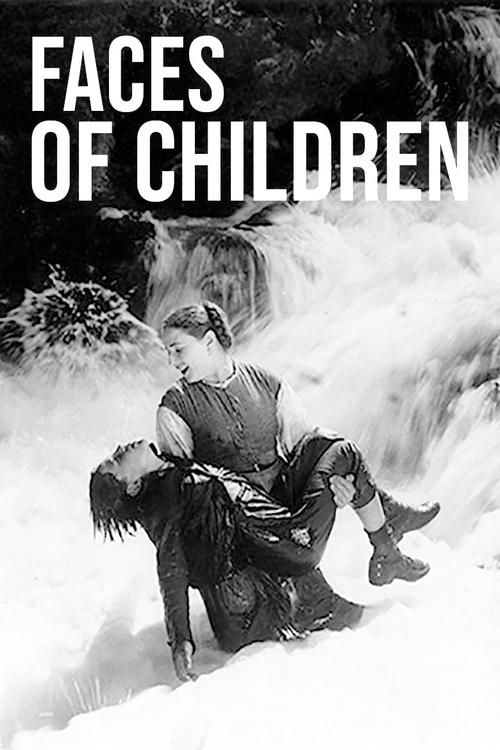
A young boy living in the Swiss Alps struggles to come to terms with his mother's death and his father's remarriage which brings a new mother and step-sister into his family.

Faces of Children

1925
The Great Game
7.1

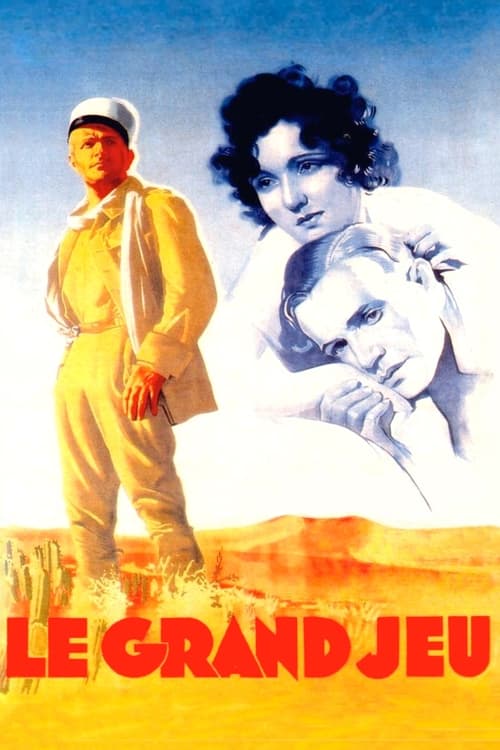
Pierre , a young lawyer, has enormous debts due to his mistress Florence and her whims of luxury life. Pierre has gone too far and put the family firm in jeopardy. They ask him to expatriate. To avoid scandal, Pierre joins the Foreign Legion. In Morocco, near the desert, Pierre goes with his comrades of the Legion to a bar-restaurant-brothel, owned by a shady character, Mr. Clement . Clement lives more or less with Ms.Blanche who is a fortune teller with cards, as a hobby. But Clement is also after his girls now and then. Pierre is still obsessed with Florence but he meets Irma , one of Clement's girls, who is the double of Florence except for hair color. Irma has had an accident and has lost part of her memory at a certain point of her recent past, and Pierre slowly persuades himself she is Florence, but cannot remember it. Advised by Ms.Blanche, Irma finally accepts to act as if she was Florence because she is falling in love with Pierre.

The Great Game

1934
Flesh and the Woman
4.2

In this romance, a jilted lawyer joins the French Foreign Legion to help him forget his faithless love. While in the desert he espies a village beauty who is the exact double of his true-love.

Flesh and the Woman

1954
Olympia
9.0

Theodor Shall is cast as handsome Lieutenant Kovacs, the sweetheart of the lovely Princess Olympia. When the princess' snooty mother breaks up the romance, the embittered Kovacs threatens to tell the world that he has "ruined" the girl (not true!), making her unfit for marriage. To ensure his silence, the Lieutenant is promised a night alone with Olympia, just before the wedding. It is at this point that Kovacs proves he's a gentleman after all by marrying the Princess, which is what he intended to do all along.

Olympia

1930
Son of India
5.7

An Indian jewel merchant goes from penniless to wealthy in this story about gratitude.

Son of India

1931
Back Streets of Paris
6.2

Madame Rose runs a seedy hotel in a suburb of Paris. Strong-minded but without the least moral scruple, she once killed her husband whose honesty was a hindrance to her business. Under a suspended sentence, she now indulges in smuggling. One day, Victor, one of her former accomplices hounded by the police, finds sanctuary with her. During a drinking spree, he has the bad idea to entrust to her a suitcase filled with bank notes, a loot with which Victor hopes to rebuild his life in South America. But Rose, lured by temptation, betrays Victor, who is arrested by the police. However, he manages to escape with only one thing in mind, to take revenge on Rose...

Back Streets of Paris

1946
Pension Mimosas
6.8

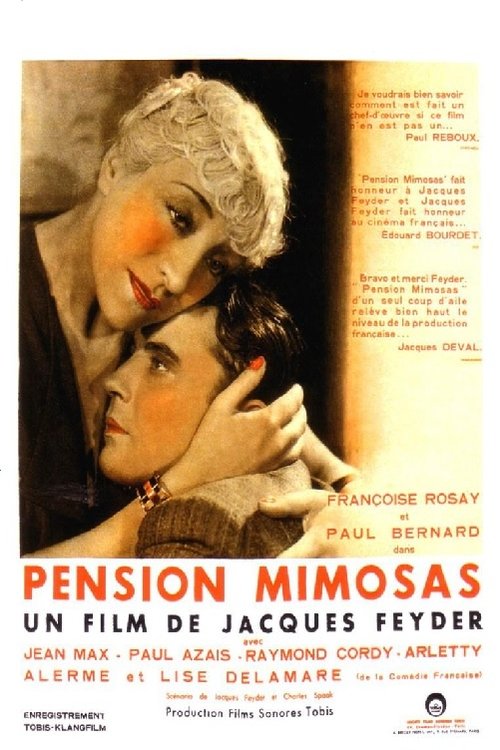
Mr. and Mrs. Noblet run a boarding house on the French Riviera. One day, they are led by circumstances to welcome a little boy Pierre, whose father is in jail, into their home. Which makes Louise Noblet all the happier as she can't have children herself. But, after a while, Pierre's father is released from prison and reclaims his son... Time passes and Pierre, now a young adult, lives in Paris more or less on the wrong side of the law. He has a mistress, Nelly, who does not say no to other men's money... Louise, who still loves Pierre as her own son, wants only one thing - to help him get by.

Pension Mimosas

1935
The New Gentlemen
6.5

The plot focuses on Gaillac (Albert Prejean), an electrician employed by the Paris Opera. In love with gorgeous ballerina Suzanne (Gaby Morlay), Gaillac must play second fiddle to Suzanne's wealthy "protector," powerful politician Count Montoire (Henry Roussell). When the Opera personnel go on strike, Gaillac is appointed leader of the strikers, doing his job so well that he is ultimately elected Secretary of Labor in the French cabinet. Now on equal footing with Montoire, Gaillac is at last a "worthy" suitor for Suzanne -- who can't make up her mind between her two well-connected admirers, leading to a political rivalry the likes of which Paris has never seen. This harmless political satire ended up being banned by the French government for undermining "the dignity of Parliament and its ministers". (moviefone.com)

The New Gentlemen

1929
Cinderella or The Glass Slipper
5.8

Georges Méliès's first attempt at Cinderella was in 1899. That film was extraordinary then for having multiple scenes and a semblance of a narrative; additionally, the use of dissolves as transitions in it influenced other filmmakers for years to do the same. Méliès was the cinema world's preeminent leader then. By 1912, however, that was no longer the case; frankly, as evidenced by this feature, his style had become dated. Moreover, Méliès had begun to adopt techniques from other filmmakers, such as direct cuts instead of dissolves, and there's even a match on action shot during the slipper trying-on scene.

Cinderella or The Glass Slipper

1912