FEEL IT.STREAM
?

Arrigo Boito

Writing

Biography

From Wikipedia, the free encyclopedia - https://en.wikipedia.org/wiki/Arrigo_Boito. Arrigo Boito (24 February 1842 – 10 June 1918) (whose original name was Enrico Giuseppe Giovanni Boito and who wrote essays under the anagrammatic pseudonym of Tobia Gorrio), was an Italian poet, journalist, novelist, librettist and composer, best known today for his libretti, especially those for Giuseppe Verdi's operas Otello and Falstaff, and his own opera Mefistofele. Along with Emilio Praga, and his own brother Camillo Boito he is regarded as one of the prominent representatives of the Scapigliatura artistic movement.

Known For

Mefistofele
10.0

1989 recording of the San Francisco Opera production of Mefistofele: Boito's retelling of Goethe's Faust

Mefistofele

1989
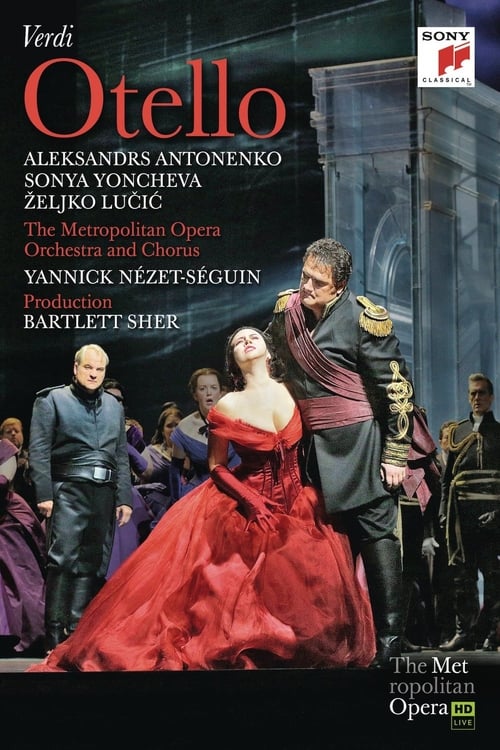
Verdi: Otello
7.0

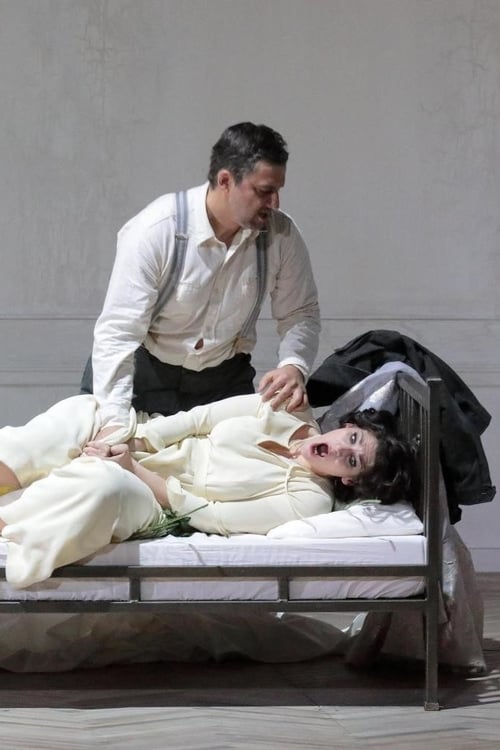
Tony Award winner Bartlett Sher’s bold new production probes the psychological underpinnings of Verdi’s dynamic setting of Shakespeare’s great tragedy. At the helm of this performance is riveting conductor Yannick Nézet-Séguin, who brings out all the cascading emotions in Verdi’s turbulent score. Aleksandrs Antonenko is the Moor Otello, the triumphant general of the Venetian army who is ultimately brought down by the sly insinuations of his friend Iago (Željko Lučić). Sonya Yoncheva continues to win fans as Desdemona, Otello’s faithful and long-suffering wife. With Günther Groissböck as Lodovico and Dimitri Pittas as Cassio.

Verdi: Otello

2015
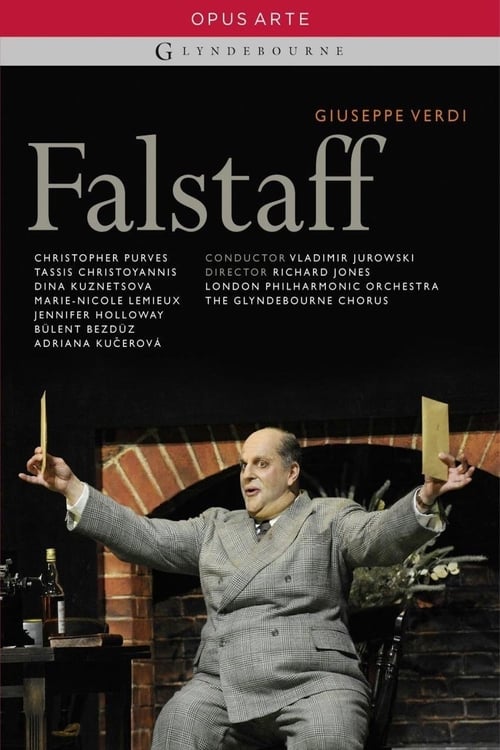
Verdi: Falstaff
8.0

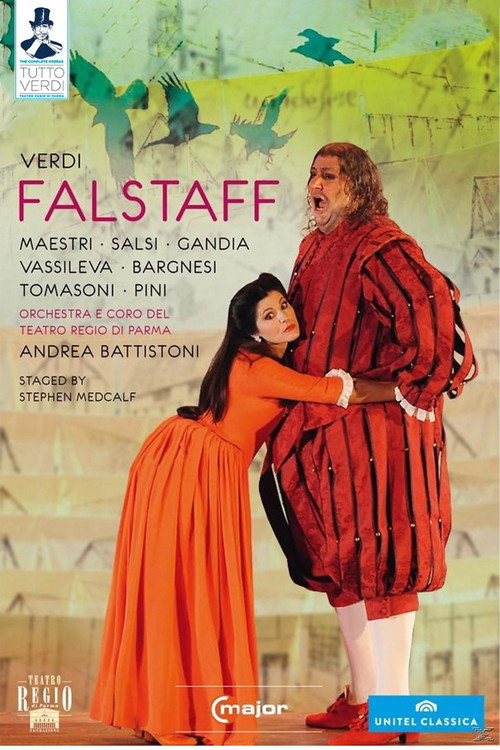
In England, at Windsor during the reign of Henry IV of England (1399–1413). Sir John Falstaff, also known as ‘Il Pancione’ (the Potbelly), has two identical love letters sent out, one to Meg Page and the other to Alice Ford, then delivers a sarcastic lecture on honour to his servants Bardolfo and Pistola. In Ford’s garden, his wife Alice and her friend Meg notice the similarity between Falstaff’s letters and decide to take revenge on him by pretending that Alice is receiving him at home whilst Ford is away. ‘Falstaff’ is a three-act opera buffa by Giuseppe Verdi, with a libretto by Arrigo Boito, based on Shakespeare’s ‘The Merry Wives of Windsor’ and ‘Henry IV’, Parts I and II. It premiered on 9 February 1893 at La Scala in Milan and on 18 April 1894 at the Opéra-Comique in Paris. It was the last opera composed by the composer, then aged 80. Taken from the 27-opera Verdi box set “Tutto Verdi”. Recorded live at the Teatro Regio in Parma on 10, 12, 15, 22 and 25 October 2011.

Verdi: Falstaff

2011
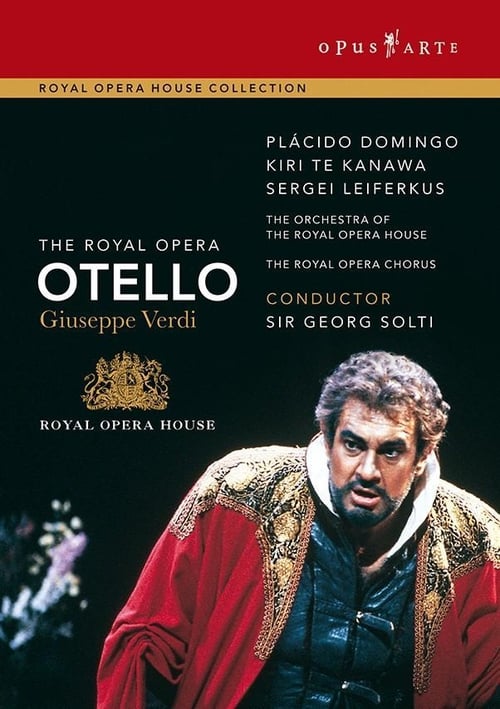
Otello
6.2

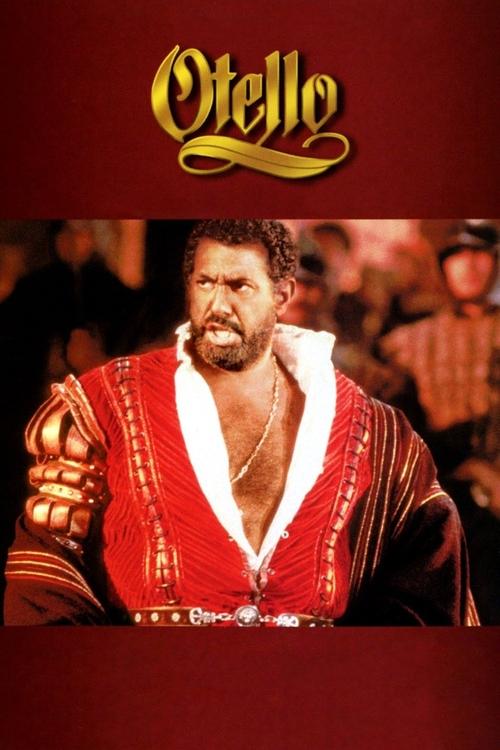
Based on Shakespeare's play, Verdi's opera depicts the devastating effects of jealousy, "...the green-eyed monster which doth mock the meat it feeds upon". Believing Otello has promoted the fast-rising Cassio over himself, Iago plots to destroy both Cassio and Otello. Iago convinces the jealous Otello that his beautiful wife Desdemona is unfaithful, and that Cassio is her lover. Jealousy is followed by tragedy, then retribution, "Has Heaven no more thunderbolts?"

Otello

1986
No image
8.0

The Graham Vicks production of FALSTAFF opened the new Covent Garden Royal Opera House, and was not to everybody's taste; the garish primary colours of the costumes. The staging is effective--the complicated counterpoint of the ensembles is reflected in unobtrusive blocking that keeps the vocal lines clear and separate, especially in the final fugue. Bryn Terfel's Falstaff is a memorable creation, self-mocking and self-aggrandising at the same time--so much so, in fact, that he almost does not need the vast prosthetic body he has to wear for the part. Desiree Rancatore is an admirably sweet-toned Nanetta; Bernadette Manca di Nissa an appropriately sardonic Mistress Quickly; Roberto Frontali as Ford, in his Act 2 scena, perfectly distils and parodies every jealousy aria ever written, including Verdi's own. Haitink's conducting is exemplary in the lyrical passages, gets almost everything out of the fast and furious comic sections.

Falstaff

2000
Falstaff
7.5

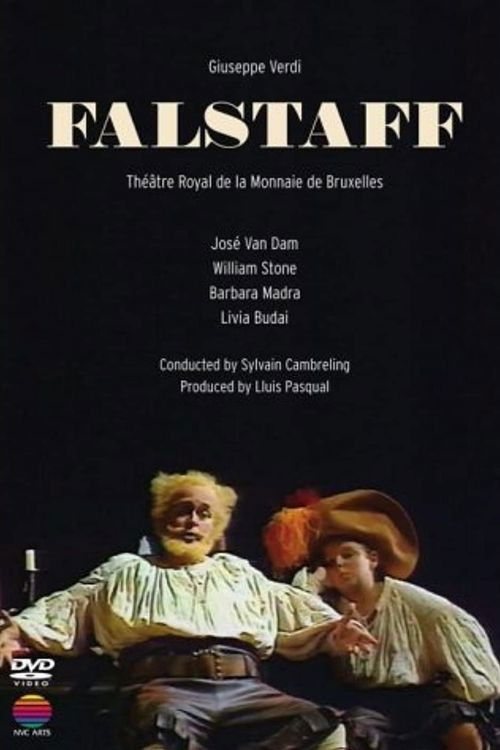
It is to composer and librettist Arrigo Boito and his constant pestering of the octogenarian Verdi that there remained within him one last great comedy fighting to get out that we owe this absolute miracle of an opera. Produced in 1893 as Verdi turned 80 there is much in this masterpiece that can be identified as a modernist neoclassical work. The use of short motifs instead of long arioso melodic lines, the spry and reduced orchestral textures and the lack of a single 'stand and deliver' dramatic declamatory aria all serve to make this more of a 20th century work than an example of 19th century late-Romanticism.

Falstaff

1993
Simon Boccanegra [The Metropolitan Opera]
N/A

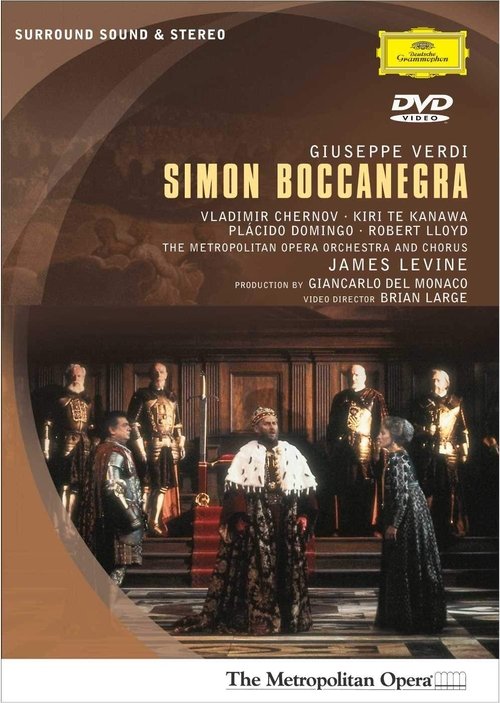
When this sumptuous production by Giancarlo del Monaco opened in 1995, legendary tenor Plácido Domingo gave a riveting performance as the fiery revolutionary Gabriele Adorno, a tenor part. In the 2010 revival, he made history by taking on the baritone title role, one of Verdi’s most fascinating characters, and thrilling audiences with his multifaceted and gripping portrayal. Boccanegra is beset on all sides, juggling political adversaries bent on murder with his love for his long-lost daughter Amelia (Adrianne Pieczonka). James Levine’s conducting brings out all the color and surging emotion of Verdi’s magnificent score.

Simon Boccanegra [The Metropolitan Opera]

2010
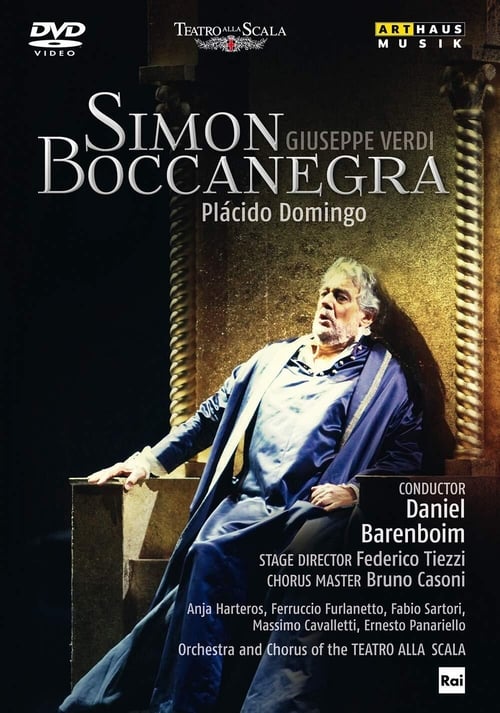
Verdi: Simon Boccanegra
N/A

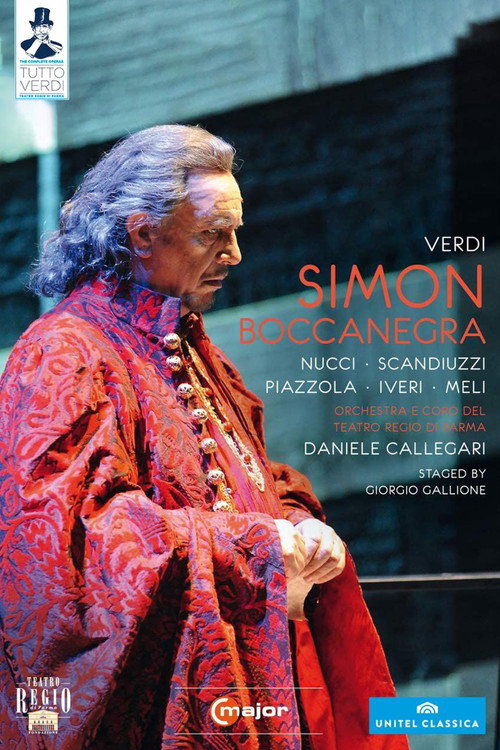
In the 14th century, Genoa was torn apart by strife between the patricians and the plebeians. The sailor Simon Boccanegra and his lover Maria Fiesco bore the brunt of these internal conflicts: Maria’s father was none other than the city’s doge, the patrician Jacopo Fiesco. When he learnt that Maria had borne Simon a child, he placed his daughter under house arrest. The two lovers had entrusted their daughter to an elderly servant, but she died, and the child mysteriously disappeared. ‘Simon Boccanegra’ is an opera in a prologue and three acts by Giuseppe Verdi, with a libretto by Francesco Maria Piave based on a play by Antonio García Gutiérrez. The first version premiered on 12 March 1857 at La Fenice in Venice. A second version, with a libretto revised by Arrigo Boito, premiered 24 years later, on 24 March 1881, at La Scala in Milan. From the box set of 27 Verdi operas, “Tutto Verdi”. Recorded live at the Teatro Regio in Parma on 23, 25 and 28 March 2010.

Verdi: Simon Boccanegra

2010
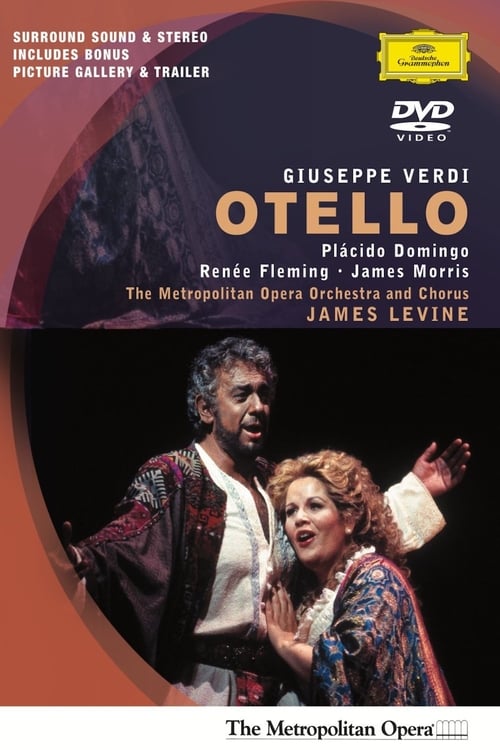
Otello
4.5

Verdi’s monumental score is fully the equal of Shakespeare’s famous tragedy—and both demand great actors. This is one performance where both playwright and composer are well served. Plácido Domingo’s Otello is one of the glories of the operatic world, beautifully sung and so commandingly acted that audiences are devastated by the end. Renée Fleming’s ravishingly beautiful Desdemona is deeply moving, and as Iago, James Morris is as beguiling as he is menacing. Under James Levine’s conducting the Met orchestra and chorus are vital characters in the drama.

Otello

1995
Giuseppe Verdi: Simon Boccanegra
8.0

This evocative production by Giancarlo Del Monaco sumptuously captures the look and feel of 14th century Genoa and is a perfect compliment to Verdi’s setting of this story of searing conflict between public duty and private grief. Plácido Domingo is Gabriele Adorno, sworn enemy of the doge of Genoa, Simon Boccanegra (Vladimir Chernov). Gabriele is in love with the beautiful Amelia (Kiri Te Kanawa at her most affecting) who turns out to be none other than the long-lost daughter the doge. James Levine’s authoritative conducting of the Met orchestra and chorus reveals the dark power of Verdi’s score. Performed January 26th, 1995.

Giuseppe Verdi: Simon Boccanegra

1995
Falstaff
N/A

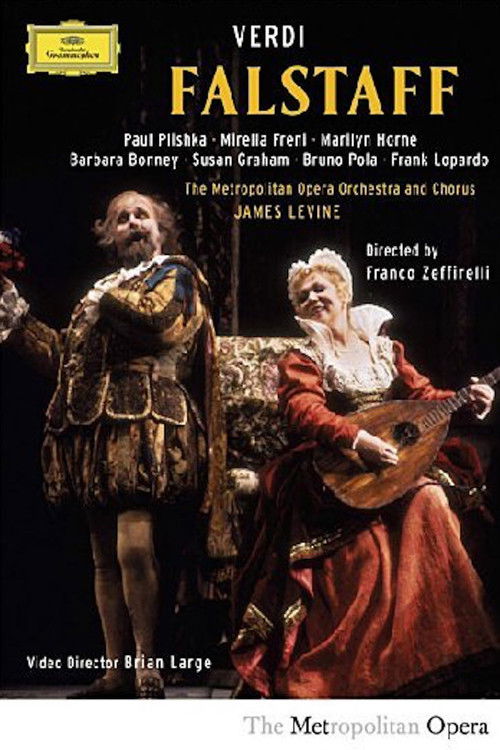
Based, in part, on Shakespeare's The Merry Wives of Windsor, Falstaff is Verdi's last work for the stage - and only his second comic opera. And yet the humour in this multilayered masterpiece is distinctly wry, for all the main characters exhibit an array of human weaknesses that are implacably exposed by Verdi and his librettist Arrigo Boito.

Falstaff

1987
Falstaff
6.0

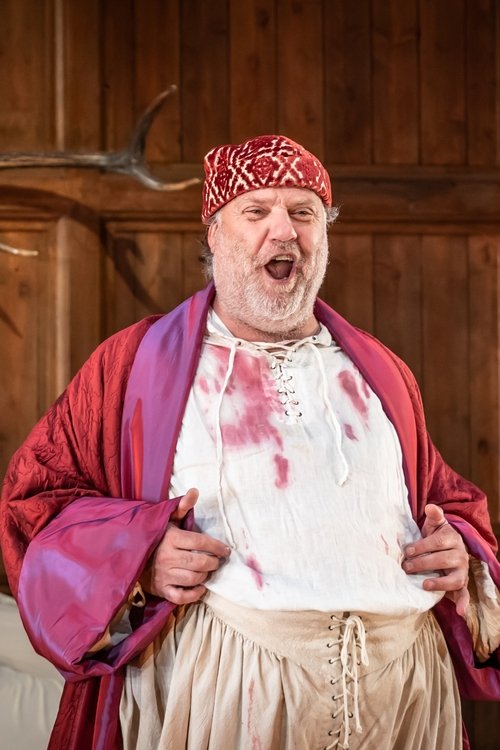
Live from Glyndebourne 2009

Falstaff

2009
Verdi Otello
N/A

Desdemona in Verdi's Otello was a career role for soprano Renata Tebaldi, from her first operatic performance outside of Italy to her final appearance on the opera stage. Between those landmarks she performed the role nearly 100 times all over the world and made studio audio recordings that became reference recordings for the role. This 1962 production with the Deutsche Oper Berlin and Giuseppe Patane was planned as a media event from the outset and blessedly captures a consummate artist in a signature role at the peak of her gifts.

Verdi Otello

1962
La Gioconda
8.0

Recorded live at the Vienna State Opera, Placido Domingo and Eva Marton star in a sumptuous recording of Ponchielli's famed four-act melodrama, a story of tyranny and intrigue set in semi-historical and ever-romantic Venice. The action is projected by strong characters whose fundamentally sound instincts become distorted by raw passion. The performance draws upon both human and technical resources including a large ballet and varies in mood from the happy carnival to scenes of the darkest gloom and horror.

La Gioconda

1986
Otello
8.0

Herbert von Karajan directed this film of Verdi’s Shakespearan masterpiece as well as conducting the Berlin Philharmonic. As the tragic Moor of Venice, arguably his greatest role, John Vickers (in the words of critic David Cairns) "commands both the notes and the moral grandeur of the part. … And he has the aura of greatness – greatness of heart, of bearing, of musical and dramatic conception". Mirella Freni is a heartbreakingly lovely and fragile Desdemona, while the fine English baritone Peter Glossop plays the villainous Jago.

Otello

1973
Otello
10.0

This 1958 filmed version of Verdi's masterful Otello stars Mario Del Monaco, perhaps the greatest Otello of the 21st century, as the tragic moor who is consumed by jealousy thanks to the machinations of the villainous Jago.

Otello

1958
Kaufmann's Otello at the Royal Opera House
7.0

On a June night in 2017, opera lovers thronged to the Royal Opera House in London to hear tenor Jonas Kaufmann, recently acclaimed by The Daily Telegraph as the world s greatest tenor, make his eagerly anticipated debut in the title role of Otello Verdi s greatest and most demanding role for tenor voice. As the New York Times wrote Mr. Kaufmann made his debut in the part, and he calmly, confidently sang it for the ages.

Kaufmann's Otello at the Royal Opera House

2017
Il Mefistofele
6.0

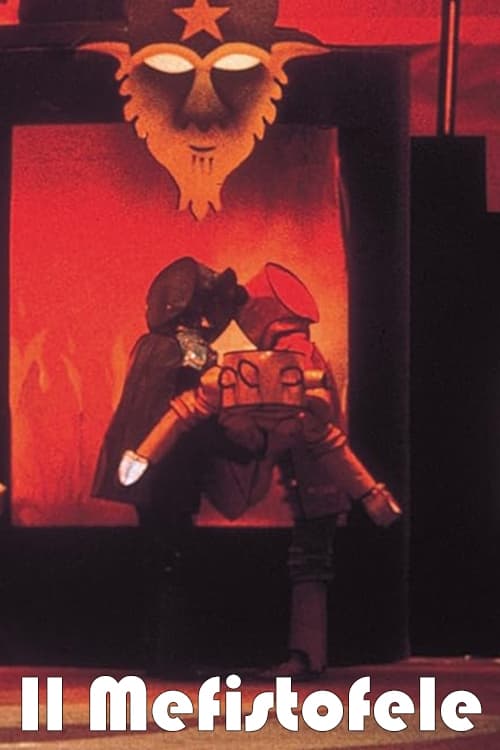
Arrigo Boito's Il Mefestefele was first performed in 1868 and his most known work. In Ken Russell's modern interpretation presented by the Genoese Opera, it has Faust as an ageing hippy. He smokes marijuana and is tormented by his lost youth. Mephisto makes a bet with God that he can turn anyone to pagan life, even someone as innocent as Faust. From then on it is a battle of good against evil in a flamboyant, surreal display of primary colours, PVC costumes, nurses with swastikas, rocket trips, love and even characters dressed as Donald Duck and Mickey Mouse. Ken Russell said because the devil is always with us is his reason for the contemporary setting.

Il Mefistofele

1989
Verdi: Simon Boccanegra
N/A

The ambiguities of Verdi’s theatre are particularly clear in his baritone roles, among which is that of Boccanegra, corsair turned doge of Genoa and the troubled observer of the conflicts that tore apart 14th century landowners and peasants. An eminently political opera in which power struggles are interwoven with family conflicts, Simon Boccanegra echoes the life of its composer – the man who championed the cause of Italian unification and overcame the loss of his wife and children.

Verdi: Simon Boccanegra

1985
Mefistofele
N/A

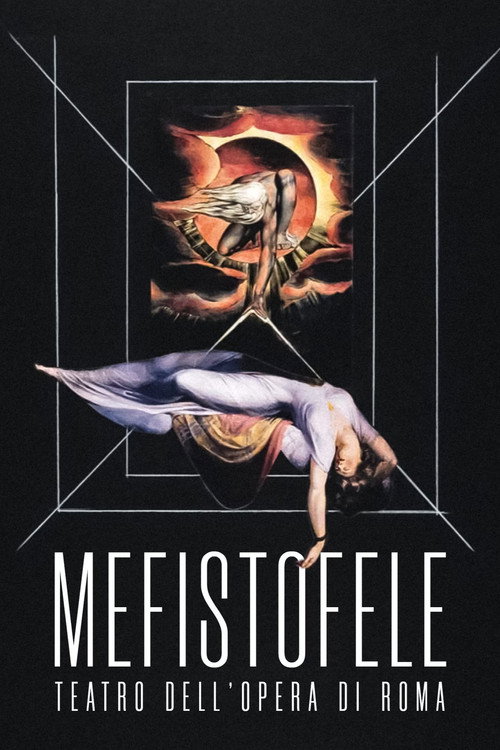
The season kicks off with Boitos resplendent retelling of Goethes Faust, a monumental work of 'choral grandeur and melodic richness' (The New York Times) in one of the most impressive productions ever seen at the War Memorial Opera House. The cast includes Ramón Vargas, a tenor 'in ravishing voice' (Financial Times), as the philosopher who sells his soul to the Devil; the 'luminous, compelling' Patricia Racette (Washington Post) as the woman he desires; and, in the vividly menacing title role, the 'seductively malevolent' bass-baritone Ildar Abdrazakov, a 'fullbodied bass-baritone' renowned for his 'wonderfully evil portrayals' (The New York Times).

Mefistofele

2013