
Zoe Moore
Acting
Known For

Tatort is a long-running German/Austrian/Swiss, crime television series set in various parts of these countries. The show is broadcast on the channels of ARD in Germany, ORF in Austria and SF1 in Switzerland.
Scene of the Crime
Polizeiruf 110 is a long-running German language detective television series. The first episode was broadcast 27 June 1971 in the German Democratic Republic, and after the dissolution of Fernsehen der DDR the series was picked up by ARD. It was originally created as a counterpart to the West German series Tatort, and quickly became a public favorite.
Polizeiruf 110

A long-running German television series about a two-man team of highway police, originally set in Berlin and later in North Rhine-Westphalia.
Alarm for Cobra 11: The Motorway Police
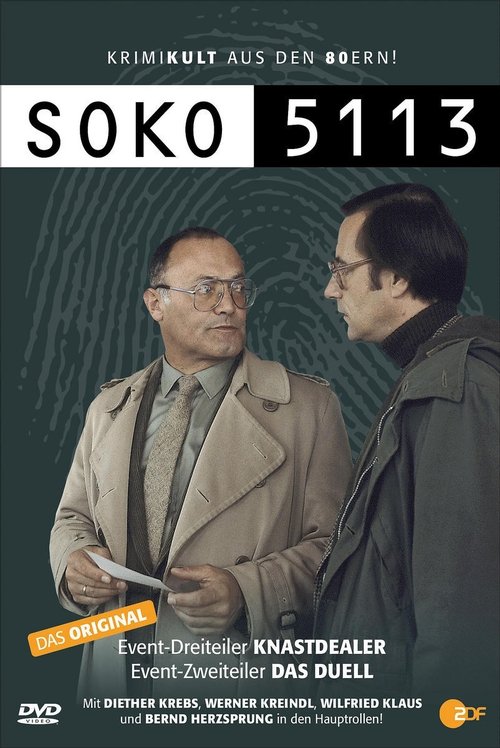
SOKO 5113 is a long-running German police procedural television series. It was first aired in 1978 on 2 January. SOKO is an abbreviation of the term "Sonderkommission" in German.
SOKO München

The spin-off to the original series 'In aller Freundschaft' focuses on the young doctors in a fictional clinic in Erfurt. In this emotional drama series, hospital staffers and patients navigate life's challenges.
In aller Freundschaft - Die jungen Ärzte

Series written by Christiane Sadlo about writer and journalist under the pseudonym "Inga Lindström" and her family. Characterized by impressive landscapes, all of which are shot on location in Sweden. Series has no continuous storyline, and each episode is filled with new characters.
Inga Lindström

No description available.
Never Too Late for Justice

No description available.
Der Lehrer

No description available.
WaPo Berlin

No description available.
Käthe und ich
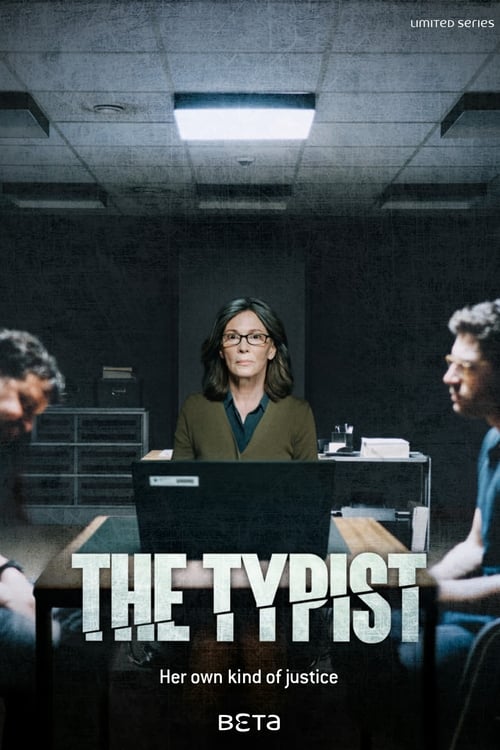
Freya Becker is a typist with the homicide division of the Berlin police. Freya’s daughter, Marie, disappeared 11 years ago without a trace, and Freya is determined to uncover the truth, whatever the cost.
The Typist
West Germany, 1983. Seventeen-year-old Ursula wants it all and is thus too much, although all she's looking for is love. Enter Siegfried Grimm, the charismatic new teacher who finally recognizes Ursula's true potential. She falls for him, head over heels. A pity that Grimm sexually liberates the entire village - except Ursula. While the Grimm acolytes fight for the favor of their idol, Ursula resorts to more radical measures. Whatever it takes, she'll get back at Grimm.
Good Girl Gone Bad

Vormärz in Germany: Gisela and Walther, a maid and a servant - a predestined path of life, which Gisela rebels against. Her free-thinking spirit puts her in great danger. Is Walther going to join her on this dangerous path?
Das goldene Ufer

When Bertha dies, her granddaughter Iris inherits her house and finds herself back in the home where she and her cousin used to play dressing-up in the summer holidays. While she wanders from room to room, she gropes her way through memories and things she had forgotten: What did her grandfather really do before he went to war? Which men were Bertha’s daughters in love with? Who ate his apple with the seeds?
The Taste of Apple Seeds

Nerdy Jewish Nelly Sue Edelmeister, daughter of a New York mother and Berlin musician in Berlin gets straight A's, except for gym. When she hears her dream prince, actual royal Edouard, a fellow astronomy buff who studies in Luxemburg, patronizes the basketball tournament hosted there by a European school she wants to join her school's girls team.
Max Minsky and Me

Undine rescues a prince from drowning, and leaves him unconscious on shore, where he can be found, but she has already fallen in love with him. Unable to enjoy life below the waves, the mermaid makes a deal with the Sea Witch to become human. The mermaid must also give her voice as payment. And her humanity is only conditional: if she can make the prince fall in love with her and marry her, she can gain a share in his soul and be truly human, but if he marries another, she will die at the next sunrise. It turns out that the witch only made her believe she would die if the prince married another as a Secret Test of Character: by refusing to kill the prince even to save her own life, she proves that she already has a soul. So she remains human, gets her voice back, and sets out to explore the world.
Die kleine Meerjungfrau

Timo is in his late 20s, a former Bundesliga soccer player and has fallen from grace. He has been known as the "disgrace of Altona" ever since he botched a penalty kick in a cup match. After countless escapades, his professional career is over. He now earns his living as a bouncer in a bar. But his family situation is much worse than his professional downfall: his ex-wife Nicki is now living with Robert, his ex-manager. He only sees their three children Tom, Luis and baby Lilly three days a week.
Väter allein zu Haus: Timo

Is. This. My. Son? No matter how often Tobias Wilke poses this question, there's always only one answer: Yes! Tobias, can't believe his eyes when he comes to the airport to pick up his 17-year-old son Finn – and learns that Finn is now calling herself Helen and wearing girls' clothes. Finn/Helen reveals that she's always was a girl, and that she used her year abroad in San Francisco to pass the "everyday life" test. This is required by law for everyone preparing for the sex reassignment surgery they will undergo upon reaching majority. Reactions from Helen's friends, acquaintances and schoolmates cover the entire gamut from derision to solidarity. Especially Helen's father, a well-known chef, finds it difficult to accept a situation he cannot understand. But Helen nearly always finds the right words - and humor - to counterbalance the ignorance and jeers of those around her. It is the beginning of a long, winding road towards the sexual identity she is convinced is hers.
Call Me Helen

A man struggles with memories of his violent childhood.
Pigs Will Fly

No description available.