FEEL IT.STREAM
Ignacio Agüero

Ignacio Agüero

Directing

Biography

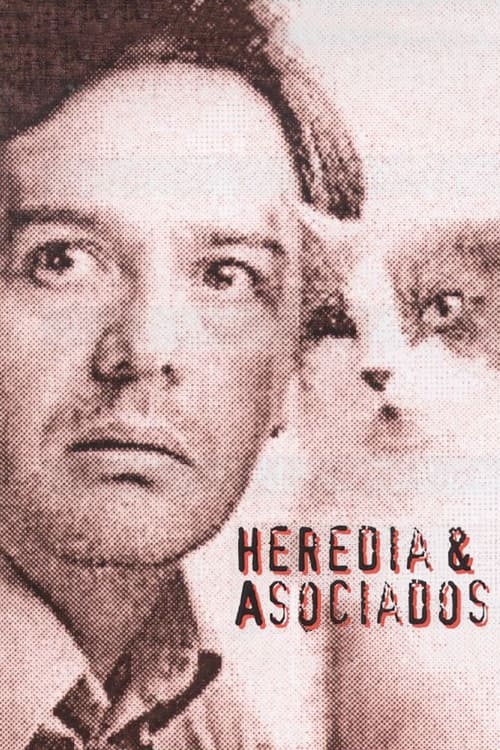
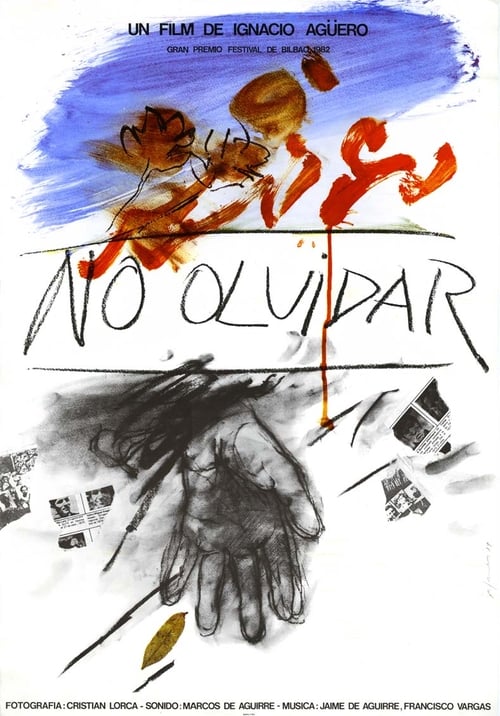
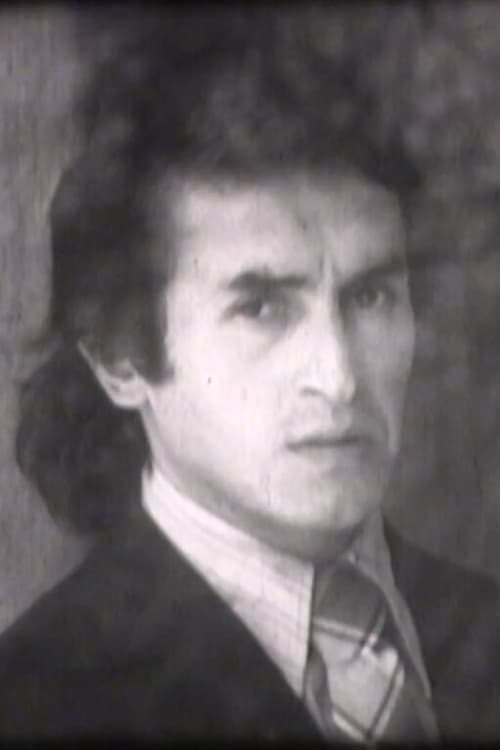
Ignacio Agüero is one of the most renowned documentary filmmakers in Chile. He studied Architecture and Cinema, and graduated from the School of Communication Arts of the Universidad Católica de Chile, with the title of Artistic Director with a mention in cinema in 1979. He is a founding member of the Association of Documentary Filmmakers of Chile, of which he was its first president. Although he has stood out for making independent documentaries, he has also worked as a producer, editor, cameraman, actor, and has been a judge in national and international competitions. In 1988 he participated as co-director and editor of "La Franja del NO", a television message in the campaign for the plebiscite that overthrew the dictatorship of Augusto Pinochet. Parallel to his work as a filmmaker, he has produced numerous works commissioned by television, both national and foreign. Among them, the most important ones: Neruda, all the love (1998), with script by Antonio Skármeta, filmed for Canal + Spain, and several chapters of the series Heredia & asociados, based on the stories of novelist Ramon Diaz Eterovic. From his production company Ignacio Agüero & Asociado, he produced the series Maldito corazón, about historical crimes in Chile, winner of the National Television Council contest and produced for Chilevisión in 2011. No olvidar (1982), his initial film, touches on the theme of the so-called "Lonquén Ovens Massacre", committed in 1978 and discovered a few years later. In 1988, Agüero made a documentary that made history, One Hundred Children Waiting for a Train. From misery and marginality, the film tells the innocent story of a group of children who travel from their town to the center of the city to attend a film session for the first time. It was awarded the First Prize for a Documentary at the 1988 Havana Film Festival, the year of its premiere. In 1993 she premiered the documentary Dreams of Ice, which won the Grand Prize for Documentary at the Mannhein-Heidelberg Festival in 1994, and in 2000 her documentary Aquí se construye, first prize at the Docupolis Festival in Barcelona, and best national documentary at FIDOCS (Santiago de Chile) in 2001. In 2004 he made the documentary La mamá de mi abuela le contó a mi abuela. Later he made the outstanding documentary El diario de Agustín (2008), about the active participation of the newspaper El Mercurio in the military coup and later in the consolidation of the military dictatorship. In 2011, he made a documentary about the building that currently houses the Gabriela Mistral Cultural Center, GAM (2001) and in 2012 he premiered his personal documentary El otro día, a film with Al that won the Altazor 2014 Award for documentary direction. This is the fourth Altazor obtained by Ignacio Agüero after the triumphs of 2005 with La mamá de mi abuela le contó a mi abuela, 2006 with Heredia y Asociados and 2009 with El diario de Agustín. He has conducted numerous training workshops in Chile, Mexico, Barcelona, Bolivia, and has developed project tutorials in Mexico, Costa Rica, Buenos Aires, Nicaragua and Chile. Ignacio Agüero is an associate professor at the Institute of Communication and Image (ICEI) of the Universidad de Chile and Coordinator of the Master's Degree in Documentary Film.

Known For

Mentiras verdaderas
5.5

Daily interviews discussing the guest's personal lives and national contingency.

Mentiras verdaderas

2011
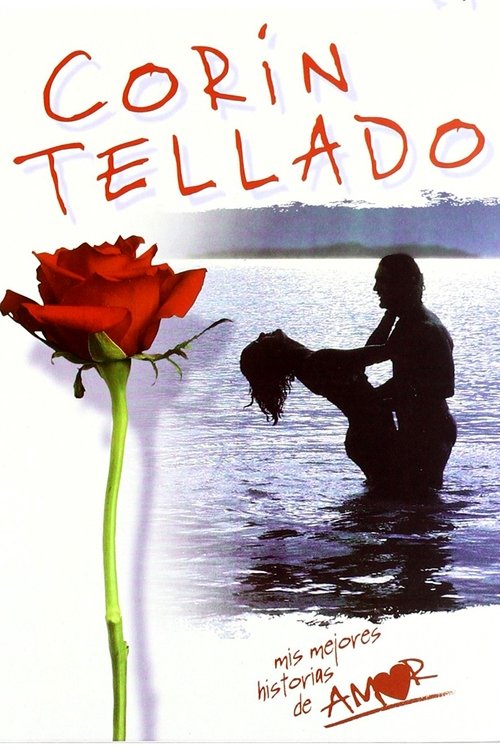
Corín Tellado: Mis mejores historias de amor
N/A

Series based on Corín Tellado's "pink" novels. Romantic stories that take place in Modern times, portraying the prejudices and social pressures that both men and women have to endure.

Corín Tellado: Mis mejores historias de amor

1990
Litoral
6.0

An ode to Chilean maritime myth and storytelling. Sailors onboard the Lucerna tell stories, but before long their stories intersect.

Litoral

2008
Heredia & asociados
N/A

The adventures of an irreverent private detective, while he is dealing with economic problems.

Heredia & asociados

2005
Maldito corazón
N/A

Miniseries based on crimes that occurred at different periods of time in the history of Chile.

Maldito corazón

2013
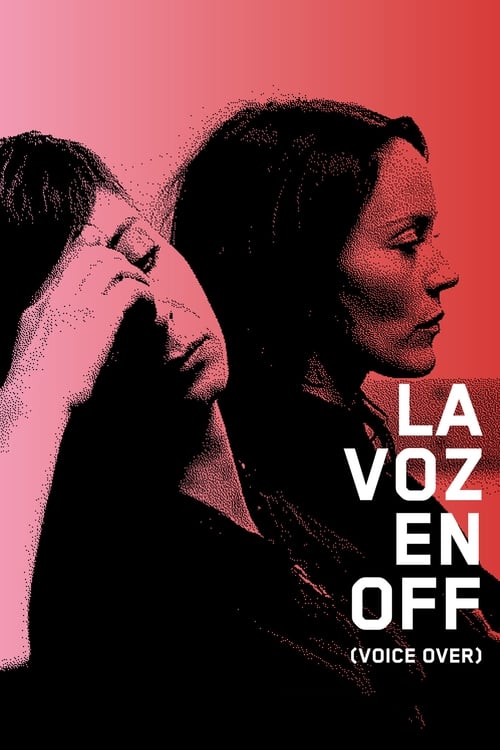
Voice Over
4.6

A married woman — seeking to purify herself through a "disconnection vow" — leaves her husband and returns to her parents’ home, but finds a situation far from the peace and quiet she had imagined.

Voice Over

2014
Tendida mirando las estrellas
4.0

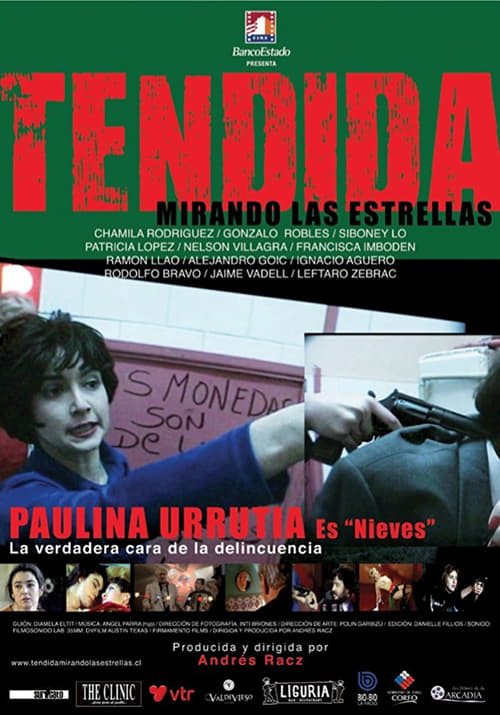
Nieves has murdered the man who was tried to rape his younger brother. Sentenced to five years in prison, she is immersed in a hard and marginal world, she does yearns to one day being released and fulfill her lifelong dream: to know the flowery desert in northern Chile. When an oversight of her captors allows her to flee, her dreams will have to wait still. She dedicates herself to managing a nightclub where her former jailmates prostitute themselves.

Tendida mirando las estrellas

2004
Teresa
5.2

Teresa Wilms Montt is a writer, a rebellious woman, tormented and beautiful. He marries at age 17 challenging family opposition. She falls in love with someone she should not and the family court condemns her to confinement in a convent. Separated from her two daughters, she escapes to Buenos Aires with Vicente Huidobro. From that flight her life becomes an exciting and tragic itinerary.

Teresa

2009
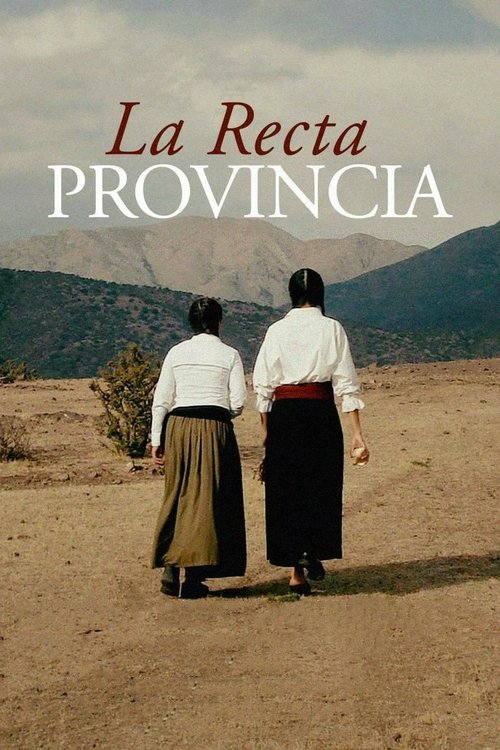
La Recta Provincia
N/A

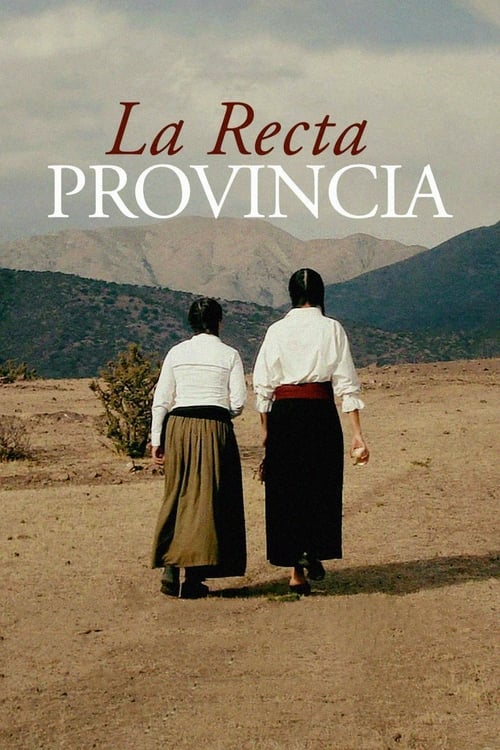
This was a man. He lived with his mother. He cared a manor house in the countryside of Chile. One day the man found a bone in the garden. The bone was bored. That was a bone flute. The man with the flute music play. And music song became. The voice of the song begging to seek the other bones of his scattered body. The man and his mother were in those ways of God and hell, looking for the bones that make up the skeleton of that Christian. And give him a Christian burial. And they saw what they saw, they lived what they lived. Many stories lived. And although they did not tell anyone, others told them.

La Recta Provincia

2007
Cofralandes, Chilean Rhapsody
7.0

An experimental four-part 2002 Franco-Chilean digital video series written and directed by Raúl Ruiz. The first part won a FIPRESCI Award at the Montreal World Film Festival in 2002 "for the director's personal exploration into his homeland, using DV in a rigorous yet playful manner".

Cofralandes, Chilean Rhapsody

2002
The Painting Lesson
5.7

In Chile, during the 60´s, the son of a poor single teenage girl turns out to be a gifted painter. The man to discover his talent is the owner of the drugstore that lies in the outskirts of the small rural town, next to the railroad. He himself is an amateur painter who will try to make the boy into a great artist, like all the ones in his art books. From the pharmacists point of view in his old age, unfolds the story of this young boy who could have become a great art genius, had he not disappeared at the age of 13, along with all his works, on September 11th 1973, the day of the coupe d´état.

The Painting Lesson

2012
Latent Image
6.2

In the late 1980s, a politically neutral photographer in Pinochet's Chile is still struggling to come to terms with the "disappearance" of his activist brother in the Villa Grimaldi torture centre back in 1975.

Latent Image

1990
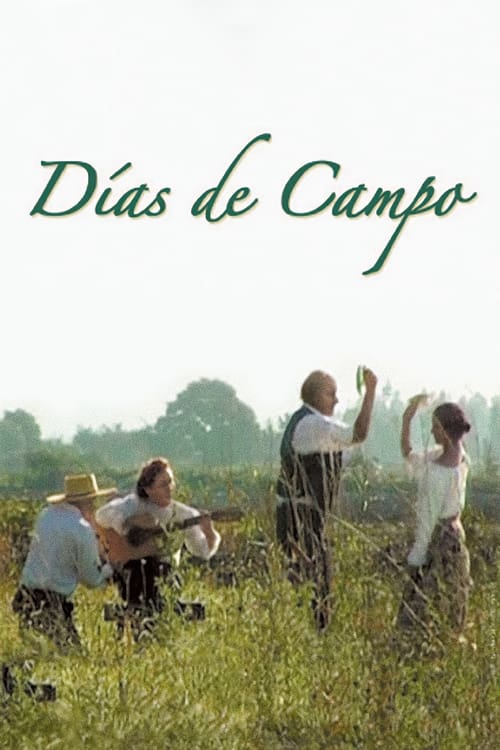
Days in the Country
7.6

In a bar in Santiago, two old men talk over their past. This is a strange discussion. In fact, they talk of themselves as if they were dead. We don't know what is true or false, what is dream or reality.

Days in the Country

2004
Como me da la gana II
7.8

Just like in 1985, today Ignacio Agüero is back interrupting filmmakers during shooting, but not to ask what he did thirty years ago, but to find out what is purely cinematographic in what they film. These conversations are related to images in the director's personal archive, as if what is truly cinematographic was found among bits that were never made for the screen.

Como me da la gana II

2016
Death Will Come and Shall Have Your Eyes
6.0

Two women who have spent their whole lives together must deal with the illness affecting one of them. The sick woman decides not to have treatment and they move into a cabin in the woods to wait for the day that death will come into their lives. The situation sees the resurfacing of the love that time had buried under the routine. Gradually their relationship will strengthen as death bides its time outside the cabin.

Death Will Come and Shall Have Your Eyes

2019
City of Photographers
7.8

A film about the fearless photographers and photojournalists who documented strikes, demonstrations, protests etc during the Chilean military regime of Augusto Pinochet, sometimes risking their very lives.

City of Photographers

2006
The Winds Know That I'm Coming Back Home
7.0

Looking for extras and locations, a filmmaker settles on Chiloé, the second largest island off the coast of Chile. He does auditions, but mainly listens patiently to the stories of young and old people. As an outsider, he cautiously searches for the soul of the community and its underlying tensions.

The Winds Know That I'm Coming Back Home

2016
La Recta Provincia
6.7

This was a man. He lived with his mother. He cared a manor house in the countryside of Chile. One day the man found a bone in the garden. The bone was bored. That was a bone flute. The man with the flute music play. And music song became. The voice of the song begging to seek the other bones of his scattered body. The man and his mother were in those ways of God and hell, looking for the bones that make up the skeleton of that Christian. And give him a Christian burial. And they saw what they saw, they lived what they lived. Many stories lived. And although they did not tell anyone, others told them.

La Recta Provincia

2007
Hoy es jueves cinematográfico
6.0

It's Thursday, the day to go to the movies in Chile. Families see in the newspapers and advertisements the films that will be shown. Everything is prepared. A man attends a function and sitting in the audience, he gets excited when he sees his favorite images and actors on the big screen. The movie ends and the screen turns off. It is time to return to reality.

Hoy es jueves cinematográfico

1978
The Sky, the Earth and the Rain
5.2

Ana, Verónica, Marta, and Toro are four lonely people who live an unadventurous and quiet existence in southern Chile. They are with each other without the need of using words, trying to save themselves in a stealthy and extreme way. In order not only of getting away of the loneliness that constitutes their innermost core, but also of finding themselves, they reach for each other to get brotherly and sexual love, affection, and a space and time of their own.

The Sky, the Earth and the Rain

2008