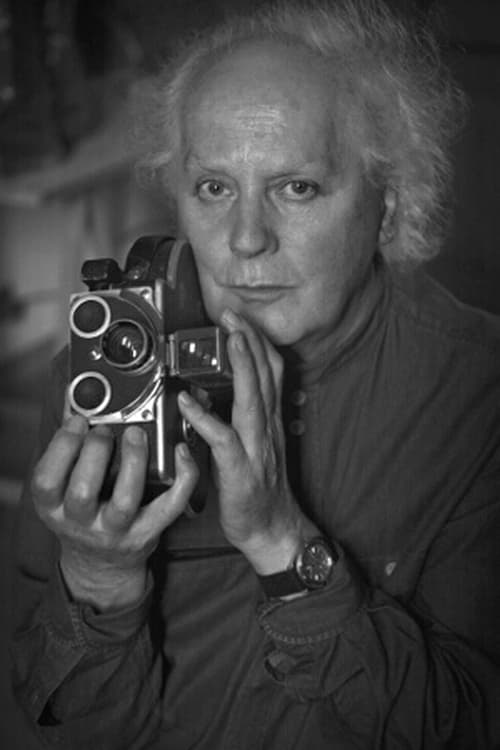
Paolo Gioli
Directing
Biography
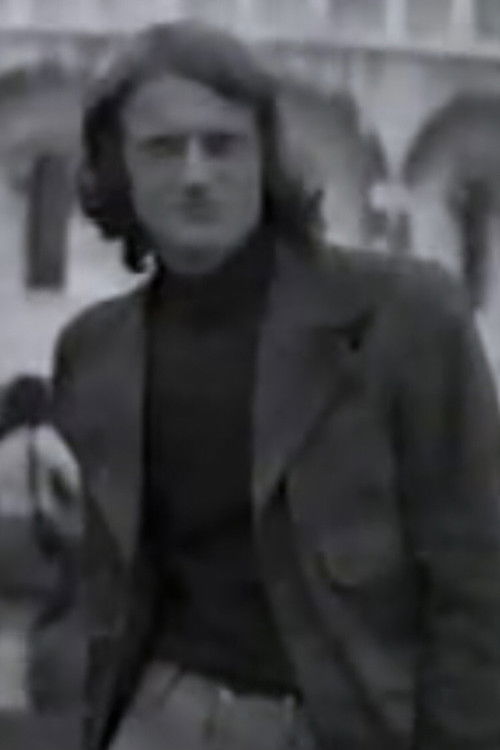
Paolo Gioli was born in Sarzano di Rovigo in 1942; he studied at the Fine Arts Academy in Venice and then in New York, where he came into contact with the New American Cinema, the New York School, and where he met Leo Castelli and Martha Jackson. In 1970 he settled in Rome where he frequented the authors of the Cooperativa Cinema Indipendente and the Filmstudio, and started to produce his own films. He moved to Milan in 1976 and focused his attention on photography: in this period he started using polaroid photos as a powerful means to broaden his research on instant photography, printing his work on different materials such as paper and canvas. Gioli is considered one of the most important photographers and film makers of his generation, and has held numerous solo exhibits in some of the most important museums such as the Centre Pompidou in Paris, the MoMA in New York and the Palazzo delle Esposizioni in Rome.
Known For

Directed by a group of avant-garde filmmakers, the film is an investigation of the less edifying aspects of film industry.
The Cinema Machine
Self-shot: a film shot without a camera operator. Sole witness: the movie camera. Fixed, directed at a single expanse, obedient to the orders of wires that I manipulate: characters splitting in two through the asymmetrical filtration of the comings and goings of self-irony. Composed of various extracts of historical films, such as the Eisensteinian battleship, intercut with stairways of various sorts; the unceasing use of negatives persecuted by positives and vice versa; a cinematic-theatrical dialogue between philosophical doubling and filmic doubling.
Hilarisdoppio

Strains of Wagner's Das Rheingold and African tribal ululations collide with bi-/tri-sected television footage while negative-positive visuals smash heedlessly into their mirror images, an unbounded series of “meaningful” artistic fender-benders that amount to little of resonant substance.
Images Disturbed by an Intense Parasite
It is well known that the disposition of the images drawn by Escher are neither for animation nor for pre-animation; actually, quite the opposite. His images appear to be the carrying out of metamorphic dissolves. A bird gives way to the recognition of a house, which turns into fish, which turns into birds, and so on. Not a single flapping of wings takes place; everything is reiterated and fixed, becoming immersed in and re-emerging from a static continuum. All of Escher is an homage to one of the major animating forces of the cinema: the cross-dissolve. Precisely there, I found cinematic attitudes: in the house which turns into fish and in everything that transforms into something else. I gradually managed to figure out various types of non-existent sequences and then finally found myself dissolved, crossing over metamorphically. —P.G.
Metamorphic
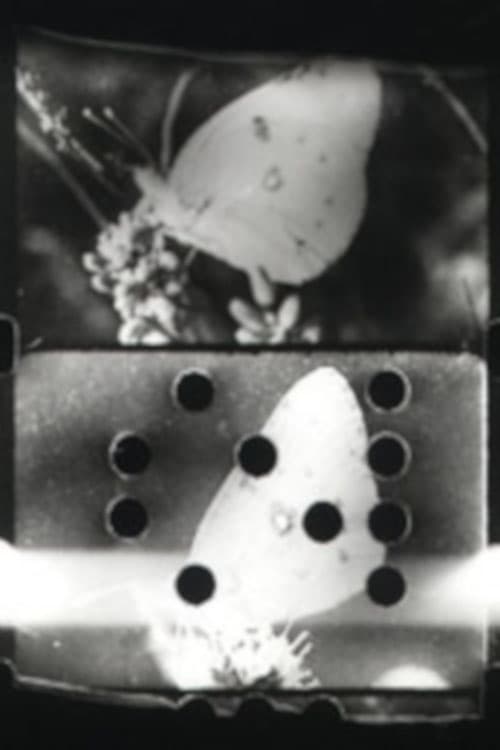
A film made a single batch of 45 pin holes in a 50 cm hollow tube.
Natura Obscura

To split the visual realm in two: one is permeated with a schizo-imaginific detour, the second vibrates in a collateral contrast. When the split screen goes off, it's hard to tell the difference.
According to My Glass Eye

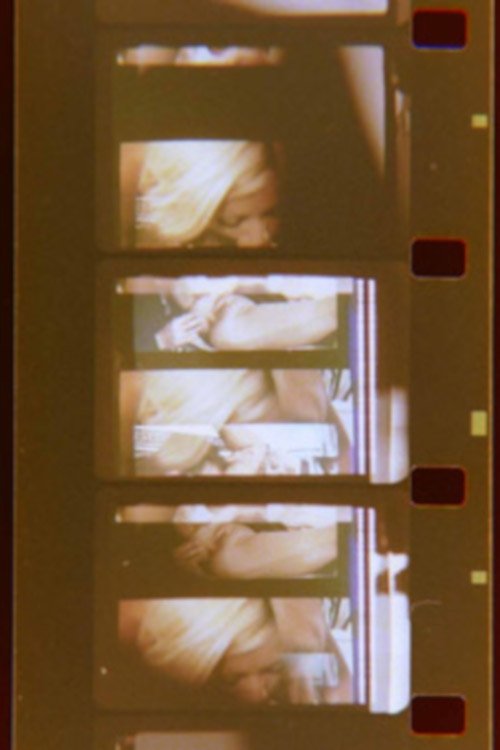
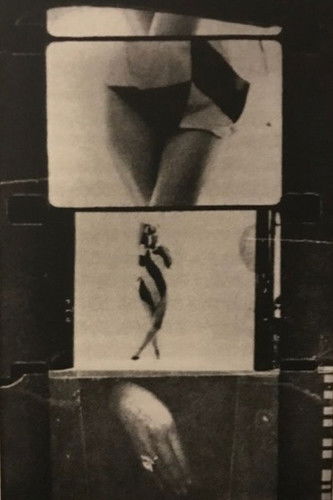
Made from fragments of a found porno film, where the frameline, which divides the images, becomes a mysterious plastic form, struggling in the center of the screen, vertically and horizontally. The blade of the shutter sections the bodies of eros, according to the desires of the film image and its frame.
Frameline

From Paolo Brunatto's series "Scheggie Di Utopia".
Ritratto di Piero Bargellini

A film that has chosen as its protagonist its own negative and will remain committed to that choice until the very end. More precisely, nearly positive, or rather, not all negative, it detains two characters in constant solitude afflicting them with visions and apparitions of the epoch of man and the epoch of the cinema.
Real Image / Virtual Image

This film is an accumulation of semi-stroboscopic figures with features invisible to the eye, that remain in the human cerebral cortex located at the top of the brain. Nature and people are compressed and disturbed by geometric forms that struggle among themselves stroboscopically, appearing flat but transparent, penetrating the other images, causing them to contract in movements joined at the center of the screen, but more fluid at the edges. This pulsing together awakens the figures to a twofold life: mirrored and not mirrored, a result of their being filmed one frame at a time, directly, non-stop.
Unstable Figures Amidst Vegetation
No description available.
A come Alice

A reflection on the material, on the filmic support. Strips of figures wander, fluxuate in the whirling kinetic rhythms imposed on them. These faces, these dispersed shattered bodies result from contacts (this is where they "touch") made by old photographic plates and anonymous fragments of film; everything is set onto and into a spiral.
When Bodies Touch
Composed using three different formats, that have been made to co-exist: super-8, 16mm, and 35mm on a single 16mm support, clear leader. The variations in size caused the original frame lines to overlap, subjecting them - and with them their images - to a singular diabolical rhythm. The above-mentioned formats were glued together, one at a time, fragment on top of fragment, using transparent adhesive tape.
Commutations with Mutations

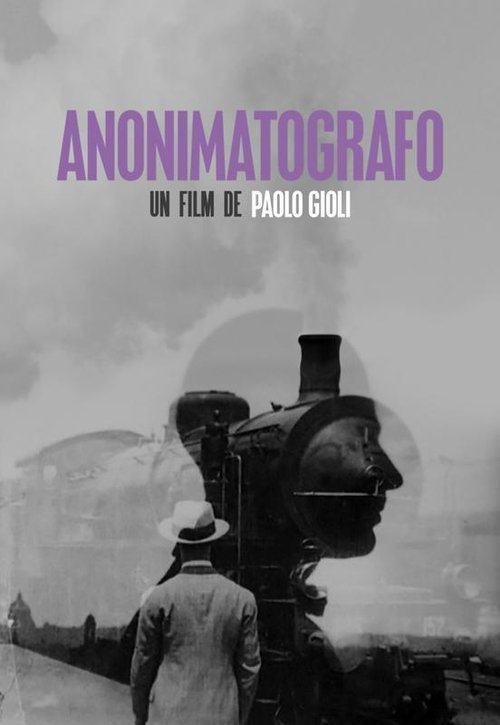
This film was shot a frame at the time using laborious extreme optical close-ups. Anonimatograph: the reanimated image of an unknown amateur at the beginning of the century who becomes middle class as he focuses on friends, movie camera in hand, indoors and outdoors surrounded by war and by his sisters. I have tried to reconstruct an extravagant film diary from which I have painstakingly torn out little pages of frames. These frames were exposed and abandoned on negative on a number of photographic reels, cut together at random in two sixty-meter reels in 35mm and acquired by me for 500 Lire from a flea-market vendor. Many frames were shot vertically, others only partially exposed, sometimes properly developed, sometimes not. I tried to animate these little reels using a flicker technique with light stroboscopic touches; in short, a film that could not be recommended to anyone.
Anonimatografo

A film eroticized by prolonged baths in silver salts. Complete exposure of reclining bodies and their lascivious perambulations. Licentious characters in incestuous copulations of carnal metamorphoses and abnormal couplings. The transformations of their bodies in totemic visualizations of a uniquely local rite. Made up of fantastical phallic doublings and entanglements of purely fantastic flesh in dissolution. The entropy of a gymnastic grotesque. A film of smiles and happiness.
When the Film Gets Hot
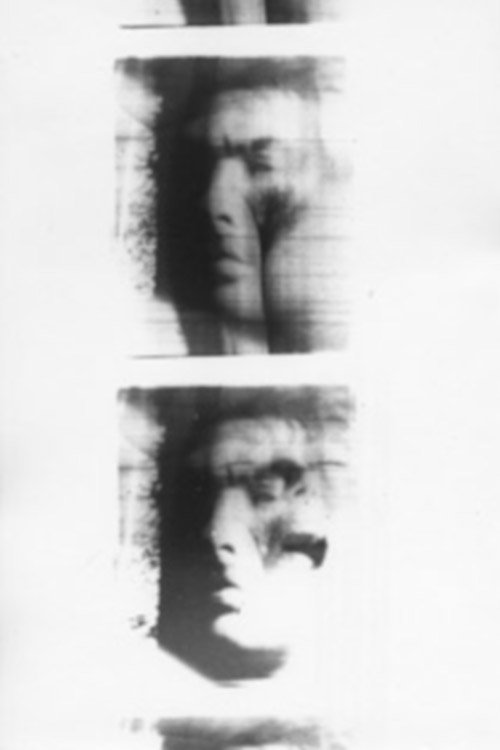
"Faces and figures found on reels of film by an unknown artist from the first few years of the 20th century. I fed the images through what was probably his own movie camera that I had purchased in Rome in 1972. The frames appeared vertically and horizontally, individually and in short sequences and so I allowed them to become superimposed [by rephotographing them in several passes] and dissolves were created naturally by the shutter of the old movie camera due to the speed of manual rephotography, by improvised slowing down or stopping of the camera. To summarize, a movie camera reshoots a movie camera and its viscera through its own gate, creating the animation of an unknown experimental artist." Paolo Gioli
I volti dell’Anonimo

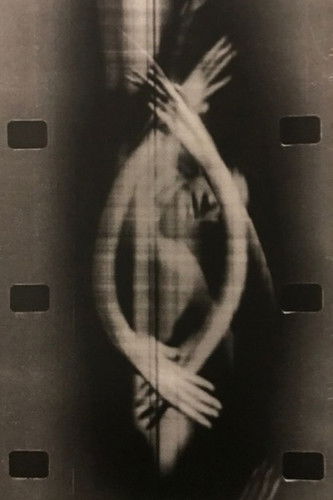
A film completely excavated by rephotographing rolls of 35mm negative containing images made with the photo-finish (slit scan) technique, the so-called foto-lunga which has no frame line and therefore no individual frames. This sort of proto-film was born not as a film, but as a photograph; I caused it to transmigrate—using a horizontal scanning motion of the filmstrip typical of photo-finish—into a film, thus betraying its natural verticality. I rephotographed the photofinish negative through the gate of an old 35mm moviecamera causing it to advance using the crank handle at a velocity interpolated between the crank handle [of the old 35mm moviecamera] and that of my own [16mm] movie camera. I was interested in seeing figures transformed which had been destined to remain motionless and to see them reanimated.
Extremotions
It all started with the notorious Buñuelian sliced eyeball, that surprises us every time. The eye of an ox, but still it's the eye of a woman! The anxiety of the incision is transformed into a saccadic, uncontrolled anxiety precisely of the eye and of its pupil. When subjected to the stroboscopic rhythms of single frame animation—as in some archaic pre-animation—one's gaze at it is thrown off, going in search of a little dramatic action here and there in the face, through the quick cinematic nonsense of saucers and sclera. The eye of an ox, which degenerates in Buñuel's incision, is my own quaking ox eye.
When the Eye Quakes

Three persons wander on bridges and roads.
Rectoinverso
Feature-length retrospective interview with Italian avant-garde filmmaker Paolo Gioli.