Writing
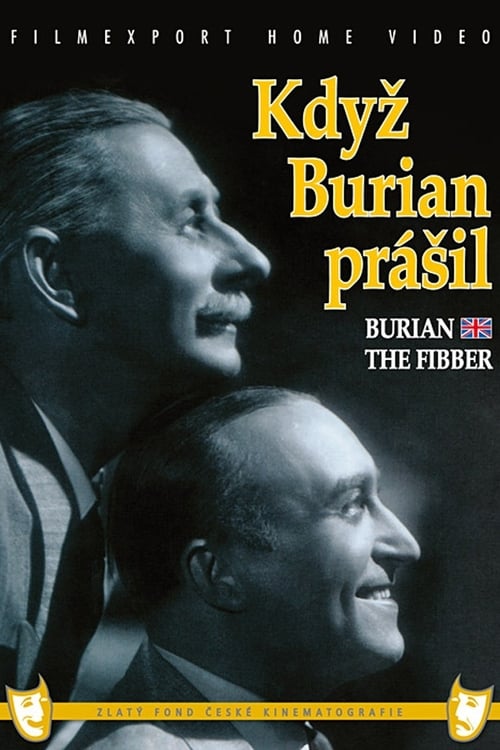
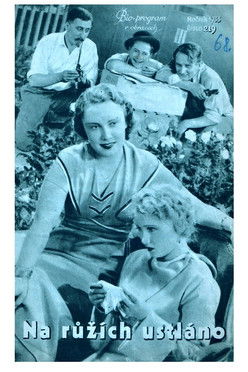
A Carl Lamac directed movie based on a novel by Karel Václav Rais.
Fifty years old Baron von Fibberg lives at The Fibberg Castle with his wife Olga and daughter Charley. Besides the delight in hunting, Baron is very enthusiastic about truth. Although he can't withstand any falsehood of others, he keeps his own intimate secrets from his wife. Charley seems to be an innocent girl at first glance, but she has a little secret too. She fell in love with a young fop Ernest Benda and married him in secret. Her only concern is the way, how to let her strict father know about the marriage. Together with her husband they prepare a plan how to do it, but it turns out to be a catastrophe for the whole family.
No description available.
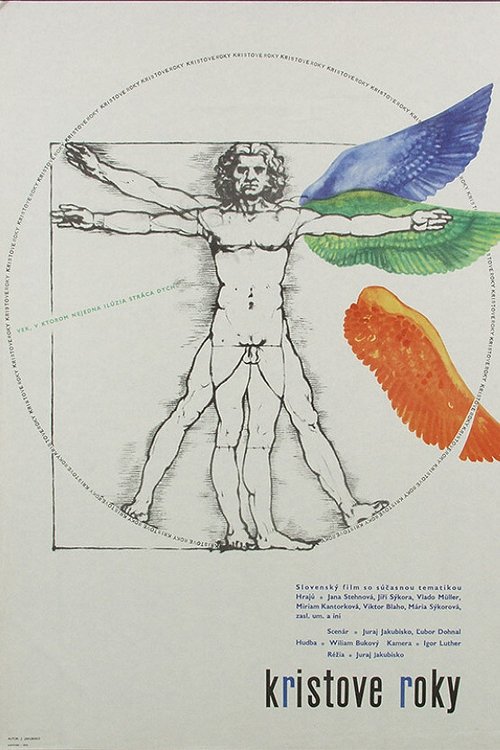
Juraj, a Slovak artist living in Prague, takes stock in his life, realizing that his days pass without purpose. He lives a carefree life. But now he has to choose between two women, between the city and the country, and between creative work and craftsmanship. He has a passion for art but he also has to make a living. Through his relationships with close people, he grows aware of his position and this knowledge helps him to live a more fulfilling and better life.
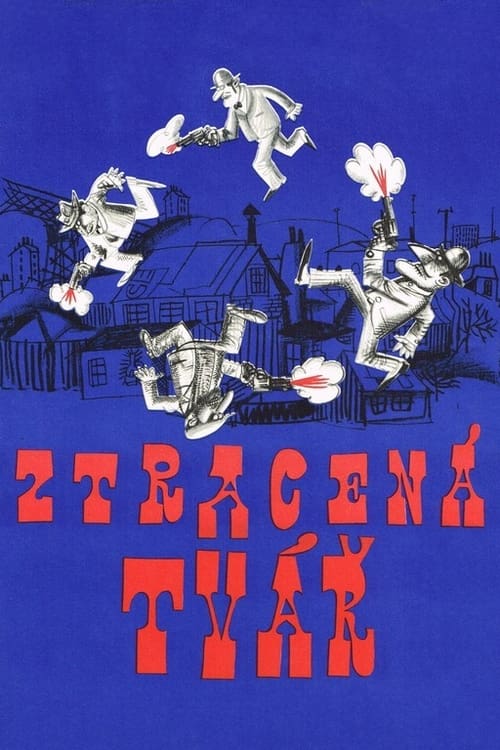
It is the 1930s. Physician Bartos devotedly attends poor patients in the city suburbs, at the same time researching the possibilities of regeneration of human tissues after transplantation. His former colleague Rosen, now working as an assistant at the private clinic of surgeon Kirchenbruch, considers the research a mere utopia. The disappointed Bartos, trying to verify his theories, therefore accepts the outrageous proposal of Marion, owner of a brothel - to surgically replace the face of her lover, the wanted thief Cutter, with the face of murdered Father Hopsasa. Bartos is well paid but his successful operation remains a secret.
A military base. An awkward soldier. A statue of Bach. And suddenly all guns in the area change into music instruments. Great mystery is immediately found by TV station. And soon the military base becomes a stage for huge TV show.
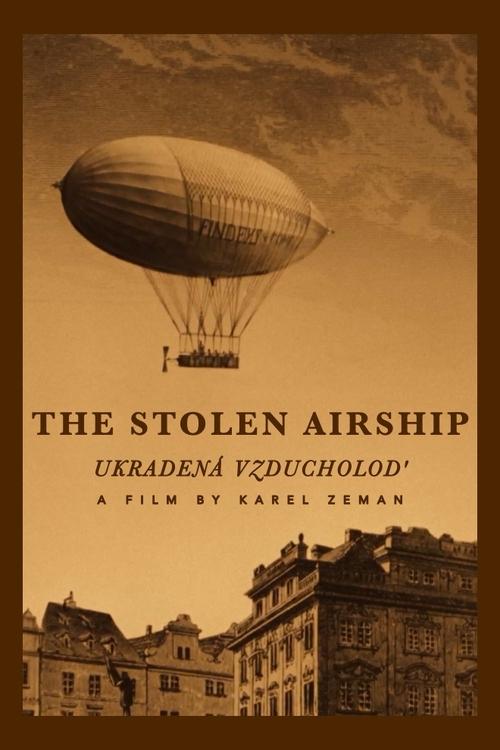
Five young people take off in a lighter-than-air machine at the Prague Centennial Exhibition. In an Art Nouveau style, the film consists of live action generally shot in black and white, as well as hand-drawn, stop-motion, and cutout animation. Various live-action and animated elements are often composited into the same scene.
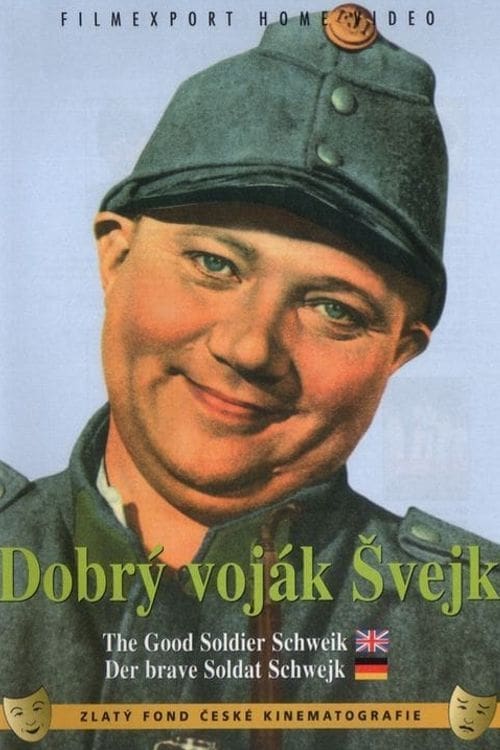
Good-natured and garrulous, Schweik becomes the Austrian army's most loyal Czech soldier when he is called up on the outbreak of World War I -- although his bumbling attempts to get to the front serve only to prevent him from reaching it. Playing cards and getting drunk, he uses all his cunning and genial subterfuge to deal with the police, clergy, and officers who chivy him toward battle.
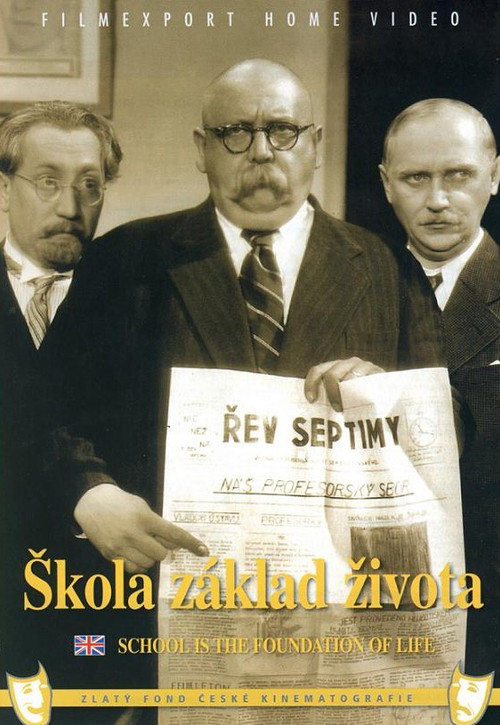
Seventh form pupils at a grammar school in Přívlaky are preparing for a secondary school sports competition. Class creep Krhounek gives the class teacher Lejsal a copy of the seventh form’s magazine Roar. Most of the teachers insist on severe punishing the culprit. The author does not own up and consequently the whole class is punished by being banned from taking part in the schools competition. The most gifted pupil, Benetka, rather sharply criticises the school in a homework essay on a subject of his choice. The strict Czech language teacher is convinced Benetka is the author of the school magazine. Benetka denies the charge but his expulsion from school is proposed anyway on account the views he expounded in his essay. Eventually, Boukal, the author of the school magazine comes forward and admits to writing it. The pupils are allowed to take part in the contest and thanks to Benetka they win. In the meantime however the teachers vote to expell him.
A lyrical tale of the pure, vernal romance between a diffident, somewhat naive girl from a rural backwater and a fairly dissolute, but kind-hearted law student from Prague.
An old peasant from Chodský, Záhor, claims to the young Podestát that he returned three hundred gold pieces to his father before the old Podestát died. Out of greed, Záhor even decides to perjure himself in court. The indignant creditor warns him of God's wrath. Záhor's sons, Matěj and Vondra, are vying for the same girl - the daughter of a blacksmith, Nana.
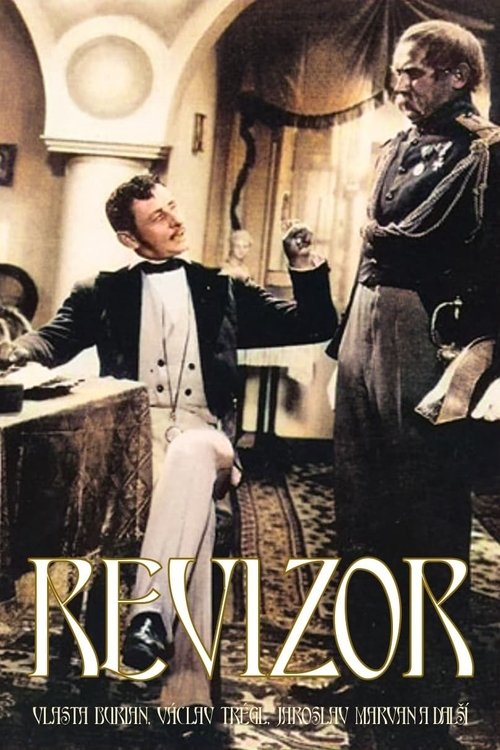
Vlasta Burian appears in a town of Czarist Russia impersonating an Inspector General, and he is entertained lavishly by the local political-hacks and peasants seeking his favor for whatever they are advocating or need fixed. Burain is involved in a series of comical situations as he takes everything he can gets his hands on while the peasants, who must plead for the betterment of their conditions, are left on the outside-looking-in. He makes his escape just as the real Inspector General is set to appear, but those-in-need will be no better off when the real McCoy shows up then they were with Burian.
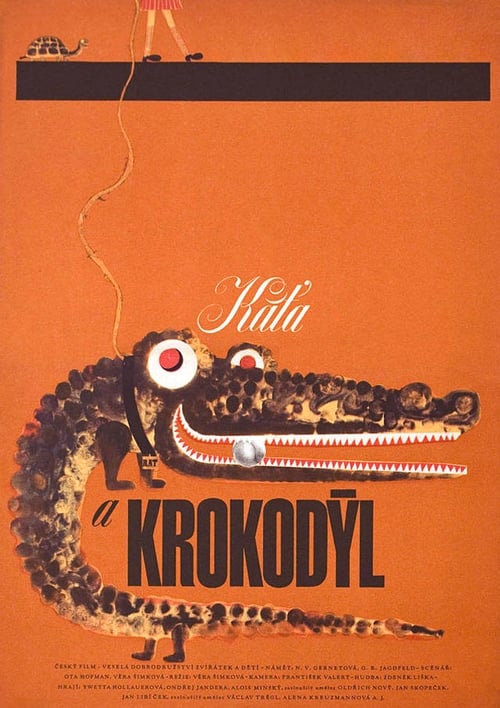
It is the summer holiday and little Mísa Horák has taken a few animals from the school's so-called "Corner of Living Nature" home to care for. But when he brings home two Angora rabbits, a starling, a little monkey, a tortoise and a small crocodile, his parents order him to take them away. He is helped by Káta, who offers to place the animals in the child's room of her family's apartment. Mísa leaves for her friend where the animals will hopefully be able to stay. Káta goes shopping. In the meantime, Káta's younger sister Minka wakes up and begins to play with the animals, who gradually run off in disarray.