Acting
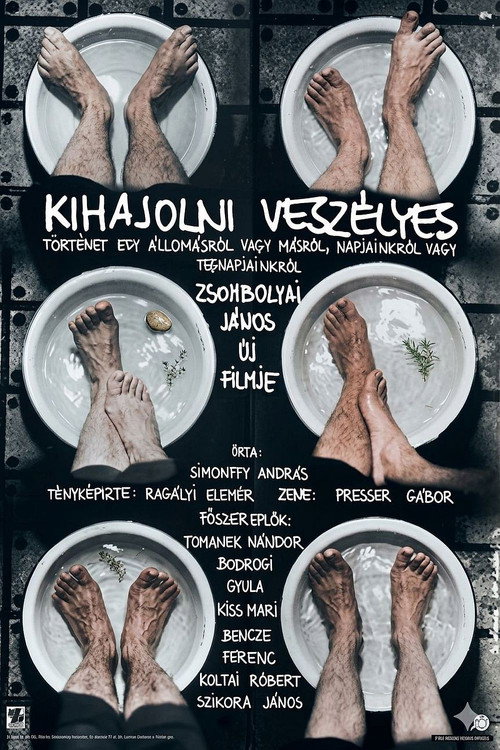
At the station of Almamellék the semaphore turns red unexpectedly and the conductor shows a stowaway - with no money nor ticket - off the train. The stowaway has to undergo a serious and long investigation that tries to uncover the reasons for his "deed". In the meantime he can watch, like a spectator in a movie-theatre, how Kerek József, the strutting stationmaster rules his ridiculous empire through office bureaucracy, indifference, servility and negligence.
From Bonaparte to Casanova, history is cast in the light of famous escapes from various European countries.
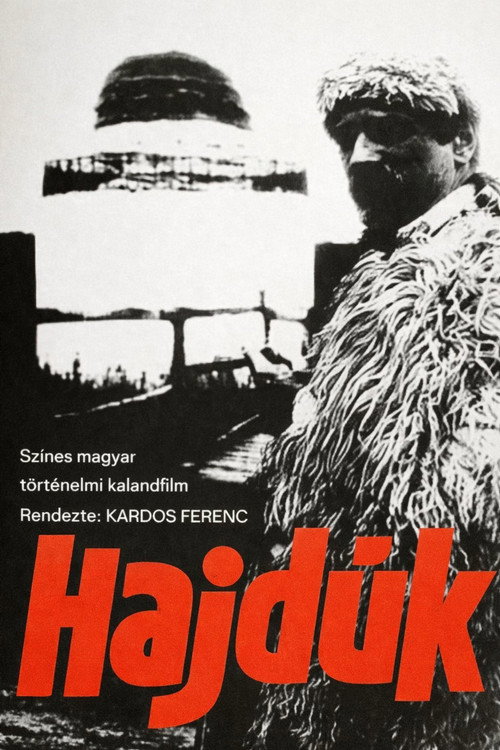
This film, set at the beginning of the 17th century, is the first East-European "Eastern". Bocskai István orders the free Heyducks to shepherd a huge herd of cattle through the country torn to three parts, to the Dalmatian coast, where he can get weapons in exchange, for fighting the Austrians.
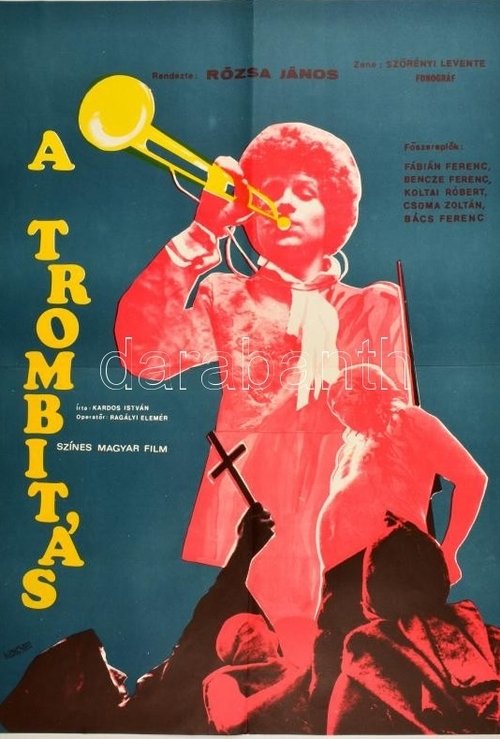
In the late 17th century, Hungary moved from Turkish to Austrian domination, becoming a key part of the Austro-Hungarian Empire. In this story, which takes place shortly after that time, three outlaws murder a group of people on their way to a wedding. One young man was a slave travelling with the group to entertain them with his skills as a trumpeter. The outlaws spare him for the same reason. He allows himself to believe that they are really an unattached group of independence-fighters, but after seeing their brutal and callous ways, he cannot believe that they are good men, and he turns them in to the authorities. At that point, he is unnerved to discover how nobly they bear the rigors of captivity. ~
Consistent of only two long shots, three witches predict that Macbeth will ascend to the throne of Scotland. To fulfill this prophecy, Lady Macbeth convinces her husband to murder King Duncan, who has come to spend the night at their home. This crime plunges the new ruler into a macabre spiral that will lead him to sink into guilt and madness.
A mysterious radio message is beamed around the world, and among the engineers who receive it are Los, the hero, and his colleague Spiridonov. Los is an individualist dreamer. Aelita is the daughter of Tuskub, the ruler of a totalitarian state on Mars in which the working class are put into cold storage when they are not needed. With a telescope, Aelita is able to watch Los. As if by telepathy, Los obsesses about being watched by her.
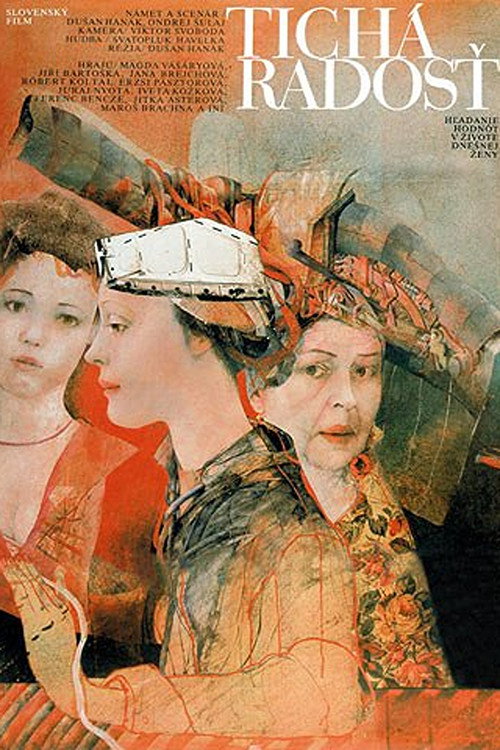
This film is a psychological study of a woman who chooses solitude as an escape from the duplicity and emotional barrenness of the men around her.
No description available.
In 1916 as an officer in the Habsburg Army ethnic Romanian Apostol Bologa is torn between remaining loyal to the Habsburgs or deserting to the Romanian Army across enemy lines.
In 1944 Budapest, a watchmaker, a book seller and a carpenter are drinking in a bar with the owner, when they are joined by a stranger. The watchmaker poses a hypothetical that will change their lives forever.
A Roma laborer living in a shantytown strives to organize a traditional, dignified funeral for his wife following her sudden death. He travels to the city to secure the necessary funds and arrangements, navigating various bureaucratic and social obstacles along the way.
On the road between Enyed and Felvinc, on the bank of a stream, stand two huge willow trees. They are a historical memory. This memory is recalled in the story, from the time of the Kuruc-Laban war. It shows how the students of the college saved the town.
During the years following World War II, a new boy arrives to class 7/c, and the audience learns to know the lives of the drunkard teacher, his husband-cheating wife, the lonely music teacher hiding behind her paper flowers, the wise count deprived of all his properties, the jovial parish priest and especially the buffalo owner of tragic fate who lost his four daughters, alongside with the young protagonist.
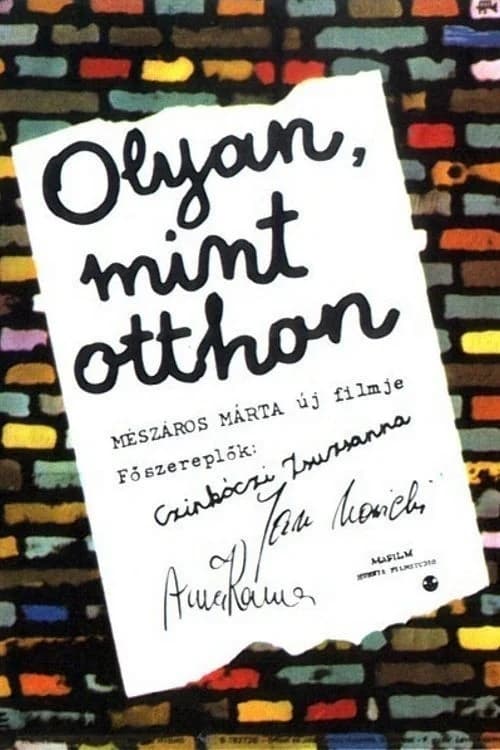
On his return from America, András simply cannot find his place: he has lost his wife, friends and job, and he cannot even find his way back to his former great love. Eventually, as a surrogate father, he takes in a wild young girl (Zsuzsa Czinkóczi) and a particularly strong bond is formed between these two rootless people. Márta Mészáros’s remarkable movie starring Jan Nowicki and Anna Karina is about displacement, loneliness and attachment.
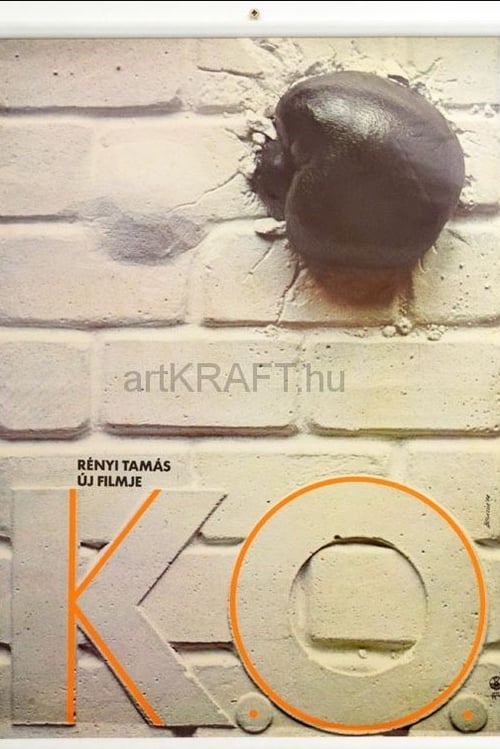
Chungi, the boxer eternal second in the domestic field. The only one ahead of him is his good friend Red, the Olympic champion. Csungi is in good form now and has a chance to beat the champion and qualify for the world championships. Red, who has sacrificed everything for success, would be hard to beat in a points race, and a knockout would be Chungi's only chance. But his coach suggests a different tactic...
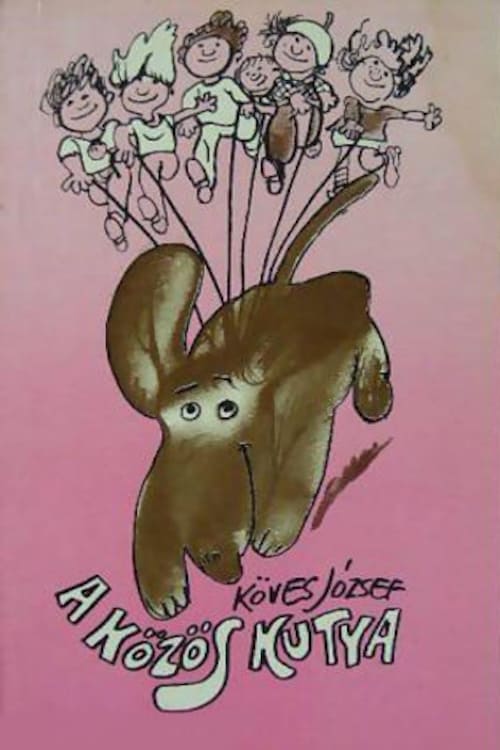
“I need a dog!" says Gabi, the main character in the film, to her parents. Every child has either a dog or a brother or sister! Well, if not a brother or sister, then a dog. I mean, a stray dog. "Who" can be rescued, taken into "shared care", looked after, fed, played with. But what happens when it turns out that the "common dog" - which a group of children have banded together to feed and care for - has a legal owner? And she is an old lady, whose only companion in her loneliness is this dog.
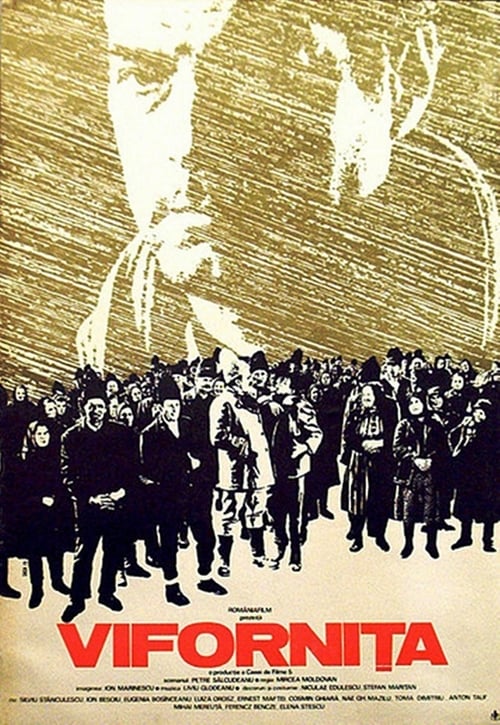
The struggle to convince the peasants to join the collective farm in Romania 60s.
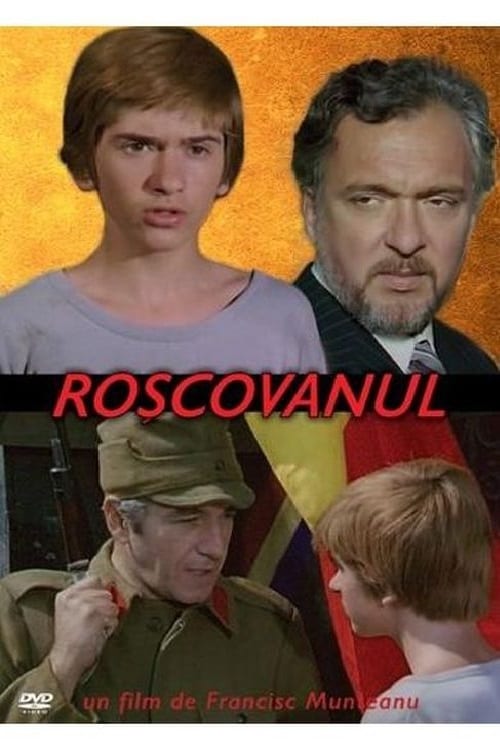
During the summer of 1944, while Romanians turn weapons against Nazis, Mihai, an orphan teenager whose parents died in a bombing, tries to enlist in order to fight in the front line but he discovers that former police commissioner Potra tortured and beaten prisoners, including his father, who was political detained. Mihai will fight to bring Potra in front of the justice.
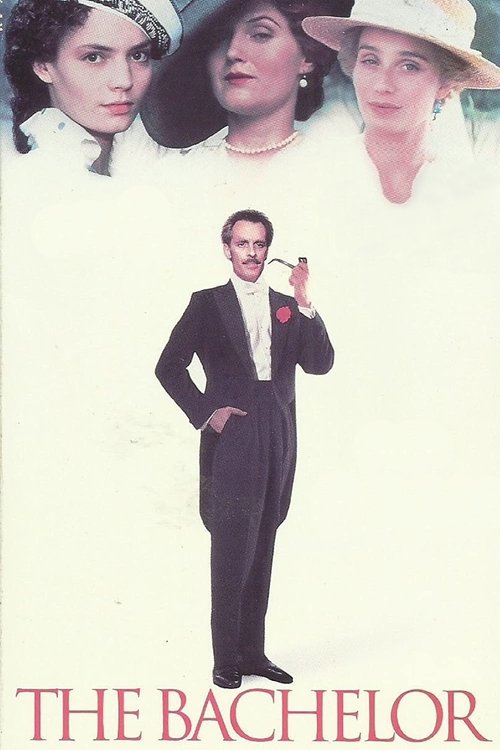
In pre-WWI Austria-Hungary, a physician struggles with his decision about which woman will he marry.