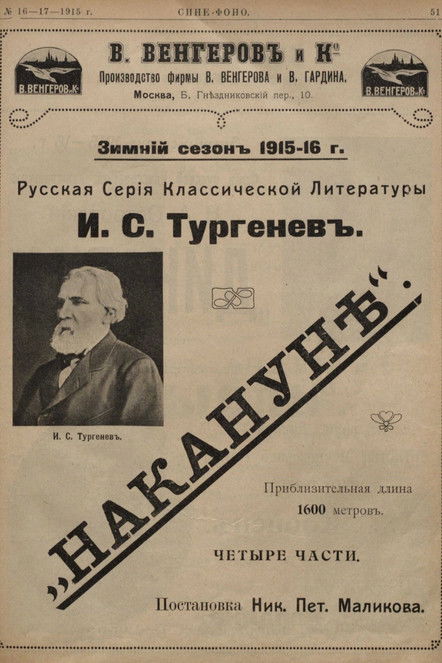
Directing
Russian Empire, 19th century. Poor Nykanor leaves his village and becomes a miner in the Donbas. His son Ostap also becomes a miner and works in the mine for thirty years, but after his father's sudden dismissal, he realizes that the state system needs radical changes.
The eve of the 1905 Russian revolution was unquiet at the Skrobotova and Bardin factory. In response to the fair demand of the workers to dismiss the cruel and rude master, the masters close the factory and call in the troops. They shoot of one of the workers, who failed to restrain a rush of hatred towards the owners, ending Skrobotov's life. Gendarmes arrive at the factory. They succeed in uncovering the social democratic organization in the factory. The arrested workers oppose hysterical cruelty of gendarmes with calm, confident courage.
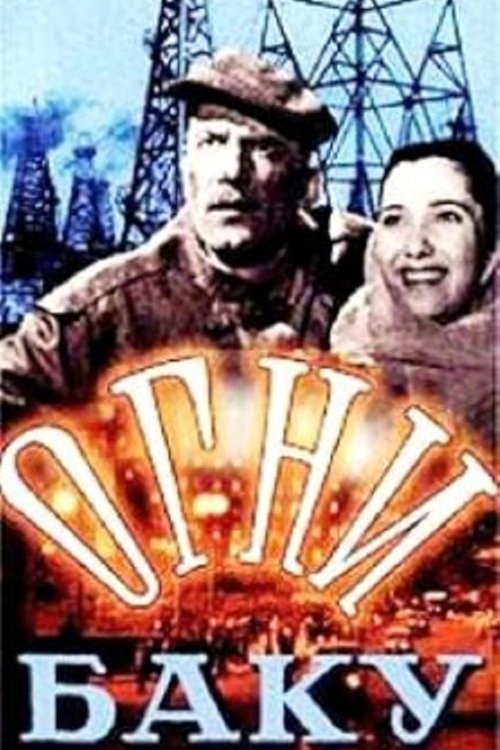
Dedicated to the development of the oil industry of Soviet Azerbaijan in the background of the first half of the twentieth century, including their selfless work in strengthening the economic and military might of the USSR.
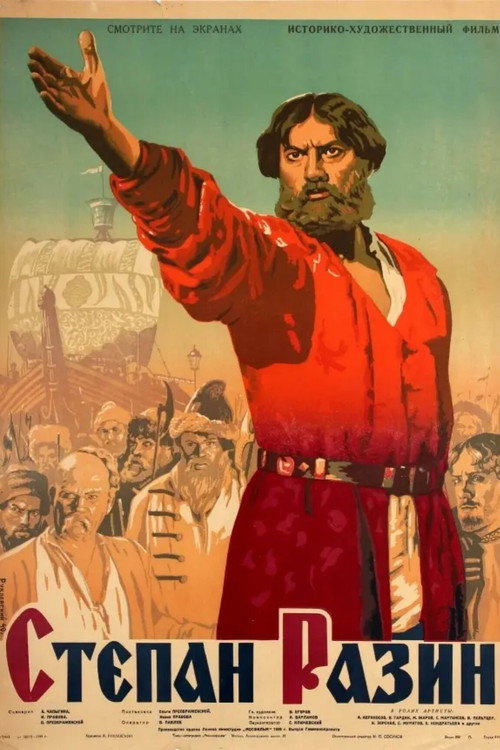
Don Cossack Stepan Razin vowed to take revenge on the boyars for his tortured friends. Having led the rebellious peasants, he becomes the leader of an entire army. Humiliated and insulted people flock to him from all over the Russian land.
During World War 1 a Russian soldier serves in Russian Expeditionary Force in France where he is chosen for his marksmanship and trained as a skilled sniper. After the Russian revolution the soldier returns home while his commander fights against the Soviet Russia. In 1930 the former soldier works on a factory and also he is the instructor in shooting club. Once the town that is near the Soviet border is attacked by foreign troops (the hostile state isn't named but the uniform of the soldiers resembles Finnish). The character meets againt with his former commander who serves in invading forces.
Five-episode adaptation of the eponymous Russian novel, directed by Pyotr Chardynin et al.
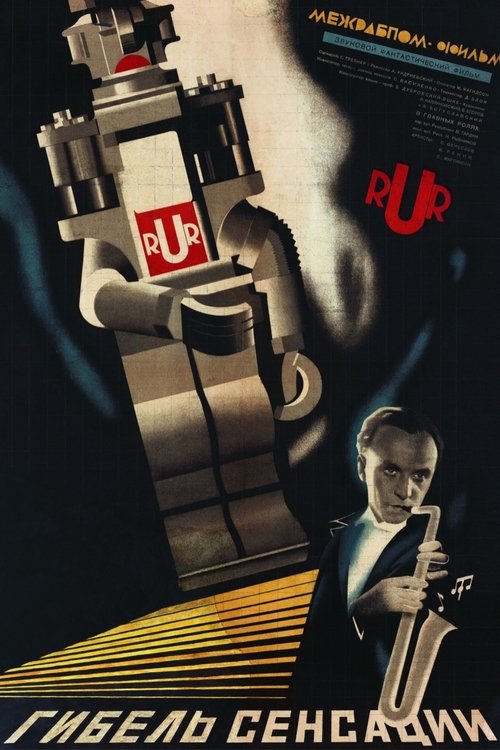
In an unnamed English-speaking capitalist land, a young engineer invents inexhaustible giant robots to replace the fragile human workers on high-volume assembly-lines, and soon finds his invention co-opted by the military-industrial complex.
Docu-drama about political and military conflict during the Russian Civil War in 1918, from an orthodox pro-Communist viewpoint.
The Government of the fictional country Norland has unleashed a war with the neighboring Galikania and is suffering one defeat after another. A group of conspirators who were dissatisfied with this state of affairs, led by the Social Democrat Frank Frey arrange a coup to overthrew the emperor of Norland. But the working class does not like the new order either. Workers expose Frank Frey's policy of continuing the war and a revolution breaks out in the country. The leader of the socialist revolution becomes a mechanic of the name Franz Stark.
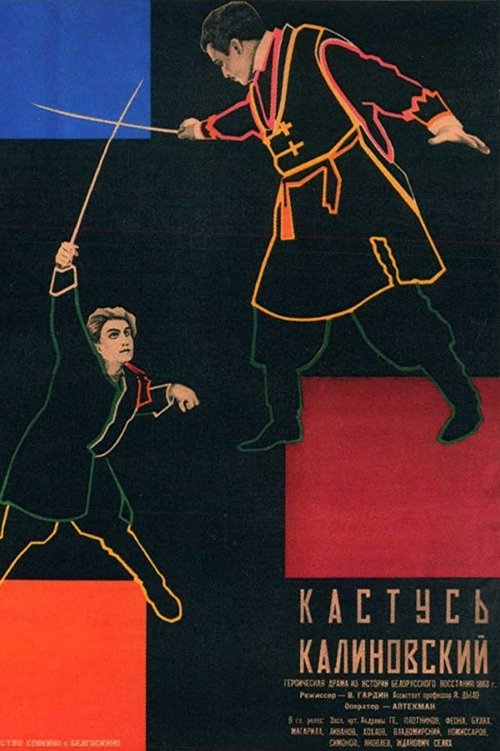
The film shows one of the heroes of the uprising of the Belarusian, Lithuanian and Polish people against forced Russification and the restoration of Poland's independence in 1863.
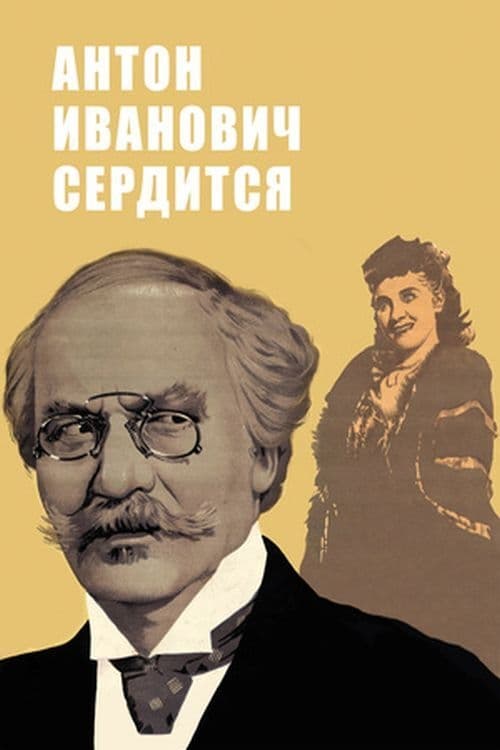
Anton Ivanovich Voronov is a highly respected professor at the Moscow Conservatoire, who places the music of Bach above everything else and regards it as the ultimate yardstick by which other musical accomplishments must be measured. His daughter, Serafima, is an aspiring singer with great potential, and her father’s anger is aroused when she begins singing in the operetta composed by Aleksei Mukhin, thus abandoning what he considers the higher calling of opera. Mukhin’s work, however, demands a high level of ability from his soloist, and Anton Ivanovich is persuaded of the legitimacy of operetta as a musical genre when, in a dream, he is visited by Johann Sebastian Bach himself, who tells him that ‘people need all kinds of music’.
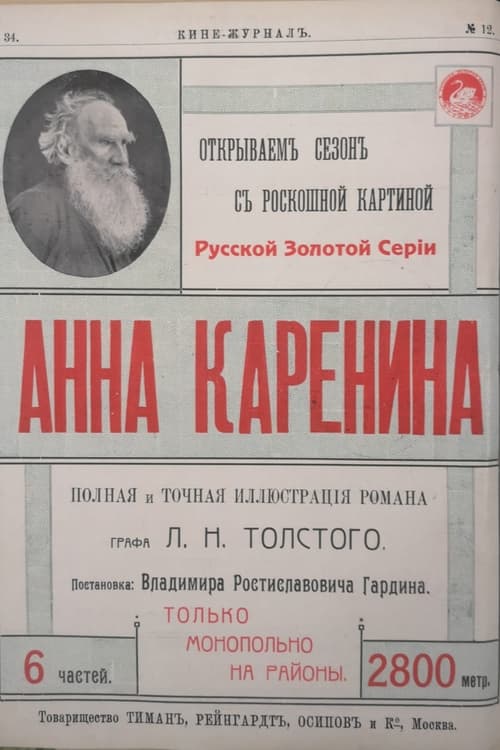
In Imperial Russia, Anna, wife of the officer Karenin, goes to Moscow to visit her brother. On the way, she meets charming cavalry officer Vronsky, to whom she's immediately attracted. But in St. Petersburg’s high society, a relationship like this could destroy a woman’s reputation.
Depicts Russian Tsar Peter the First's conquest over the Swedes and his son Aleksey's plot to overthrow him.
A down on his luck peasant goes to fight in World War I and returns home a hero. Partially lost.
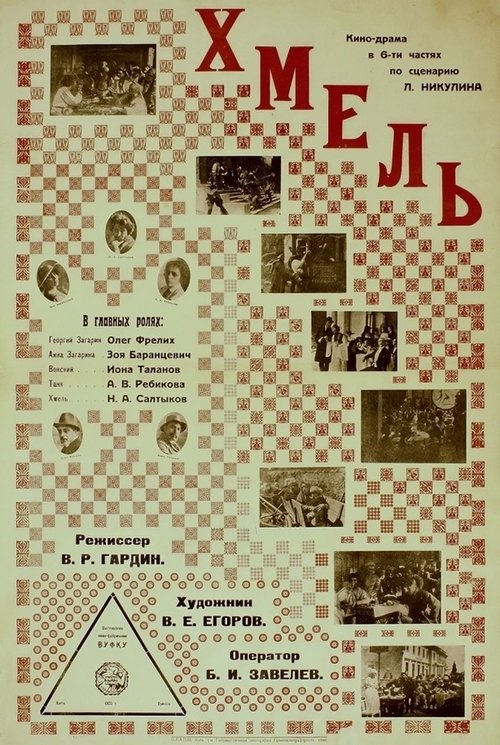
Revolutionary melodrama based on Lev Nikulin's story "Хміль". 1917. The main character of the film - a "bourgeois intellectual" - does not sympathize with any side and avoids revolutionary events. However, as a result of a series of adventurous adventures, love intrigues and communication with the people, he goes over to the side of the proletariat.
About how the antifascists of a Western European country in the 1930s disrupted the loading of weapons intended for the war with the Soviet Union. The film is considered lost.
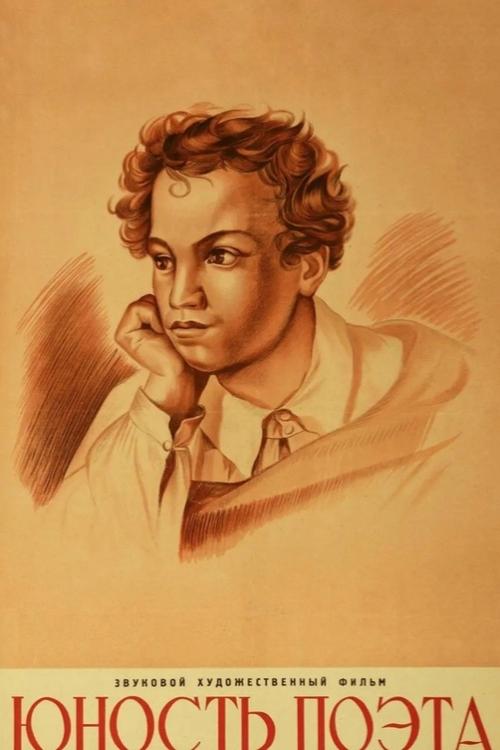
Biographical film "Youth of the poet", dedicated to Pushkin-Lyceum student. At the 1937 world exhibition in Paris, the film was awarded a gold medal. The Director managed to accurately recreate the historic era, to convey the atmosphere of the Tsarskoye Selo Lyceum in the years of the formation of the poetic genius of Pushkin.
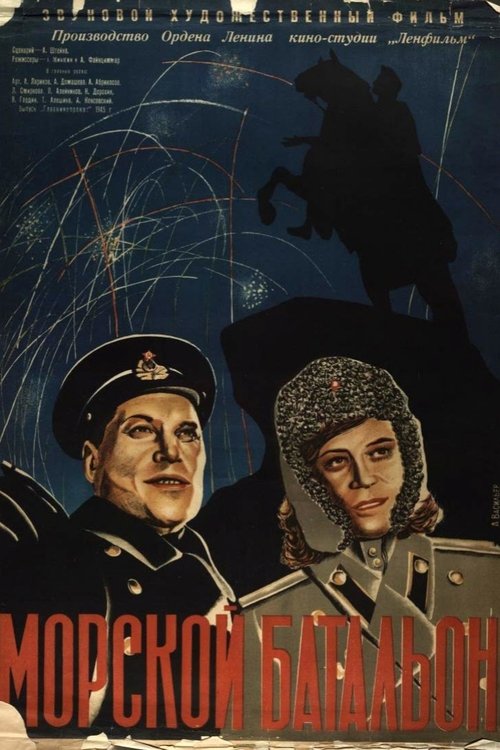
Soviet sailors boldly defend Leningrad from the German fascists.
The story of an effort to catch "wreckers" at work in a Soviet factory. The film’s title-song called "The Song of the Counterplan", composed by Dmitri Shostakovich, became world famous and was adapted into "Au-devant de la vie", a notable song of the French socialist movement of the 1930s.
No description available.