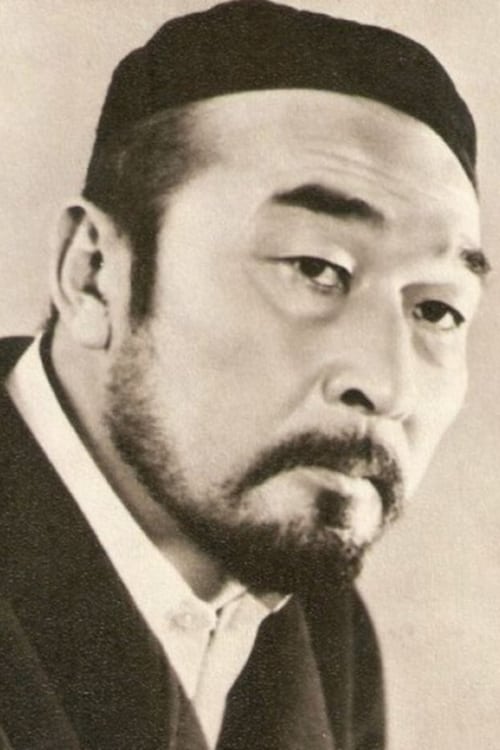
Nurmukhan Zhanturin
Acting
Biography
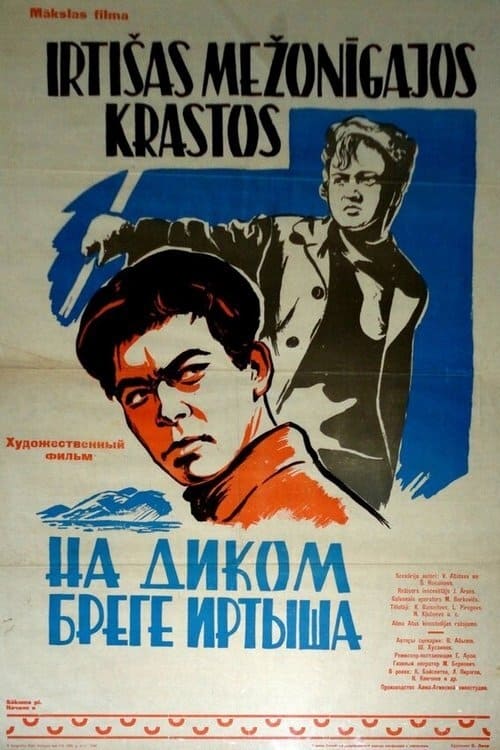
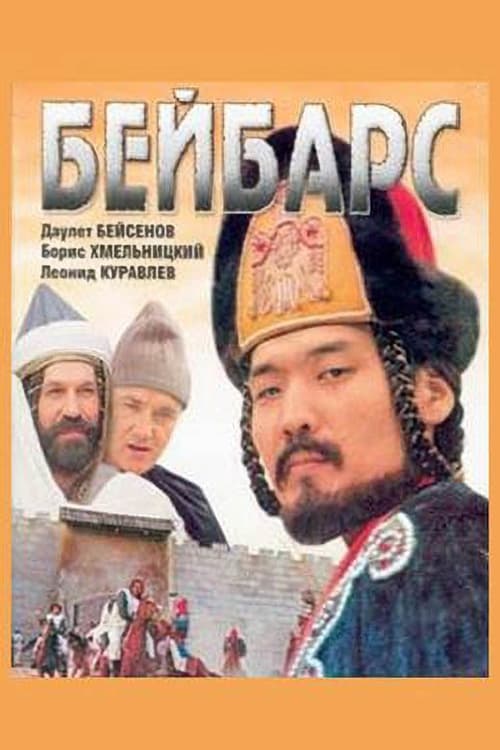
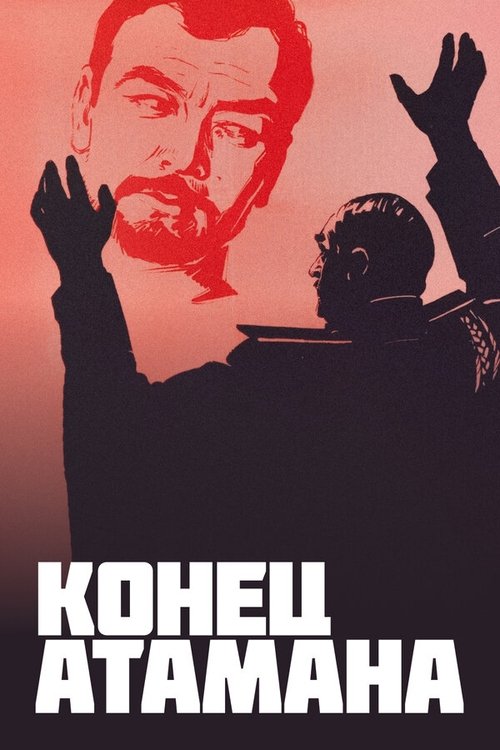
Nurmukhan Zhanturin was born in the settlement of Kondaurovo, Guriev Region (now known as Atyrau Region, Kazakhstan) on April 22, 1928. At the age of 14 he started working as an operator's assistant in a Guriev oil prospecting group, and later attended motion picture operator courses in Alma-Ata. He graduated from Alma-Ata Movie School in 1950 and the Acting Dept. of the Ostrovsky Institute of Performing Arts (Tashkent) in 1952[4] and soon joined Auezov Theater. His first screen roles go back to 1948, while 1967 saw Zhanturin officially employed at Kazakhfilm Studios. He returned to the theater in 1988 and continued to work there until his death in 1990. Zhanturin's best-known roles include Chokan Valikhanov (eponymous play by Sabit Mukanov), Kodar (Kozy Korpesh — Bayan Sulu by Gabit Musirepov), Kebek and Syrym (Enlik-Kebek and Karakoz by Mukhtar Auezov), Arman (One Tree Does Not Make a Forest by Abdilda Tazhibaev), Kaben (Unquenchable Fire by Zeinulla Kabdulov), Sanzhan (Unfunny Comedy by Akim Tarazi), Doctor (The Forgotten Man by Nâzım Hikmet), Sintaro (A Woman's Life by Kaoru Morimoto), Molière (The Cabal of Hypocrites by Mikhail Bulgakov), as well as Iago and Macbeth in Shakespeare's Othello and Macbeth (the latter in a production at the Seifullin Theater in Karaganda). Mark Donskoy spotted Zhanturin's talent when scouting the Central Asia for actors for his movie Alitet Leaves for the Hills (after a 1950 novel by Syomushkin). Nurmukhan played the role of a young man named Tumatuge. This first screen role paved his way to popularity. Nurmukhan's other well-known roles included Kerim (Daughter of the Steppes, 1954), Dzhoomart (Saltanat, 1955), Alzhanov (On the Wild Coast of the Irtysh, 1959), Abakir (Heat, 1962), Tagay (Dzhura, 1964), Tanabay (The Trotter's Gait, 1968), Ablaykhanov (The End of the Ataman, 1970), Kurmangazy (Kurmangazy, 1974). He first appeared as Shoqan Walikhanov in the 1957 movie His Time Will Come (directed by Mazhit Begalin). Zhanturin's eponymous role in Sultan Baybars brought him a prize for Special Achievements in Acting (shared with Nonna Mordyukova) at Sozvezdie-90 USSR national festival. He performed a total of more than 50 roles on screen
Known For

No description available.
Roads of Fire

Despite the restoration of Soviet power in the area, Basmachis continue to arrive from across the border, bringing death and destruction to peaceful villages. One of the bands of rebels is led by Khairulla who is pitted against the militsiya (local militia) leader Maxumov. At first it seems hopeless for Maxumov as the rebels capture most of his men, winning them over to his side. He has only one strategy left; to give himself up, and try to explain to the people that Khairulla has deceived them, turning the soldiers back to revolution. Later in pursuit of his enemy, he chases Khairulla across a river. He has only one bullet left -- the seventh, and he must not miss his target!
The Seventh Bullet

The film is dedicated to the events of the Civil War, the offensive of Denikin and Kolchak's troops on Uralsk, and the defense of the city. Historical facts are presented in it on a significant scale, through the personalities and fates of many characters, with a wide introduction of mass and battle scenes.
Steppe Roar

In one of the steppe regions of Kazakhstan arrives on Komsomol youth squad. Severe frosts, spring mud flows, exhausting work than their specialty - the development of virgin land does not come easy. But the young are young - they work, enjoy life, fall in love. In the center of the story - the touching romance secretary of the Komsomol organization and tractor driver Anne.
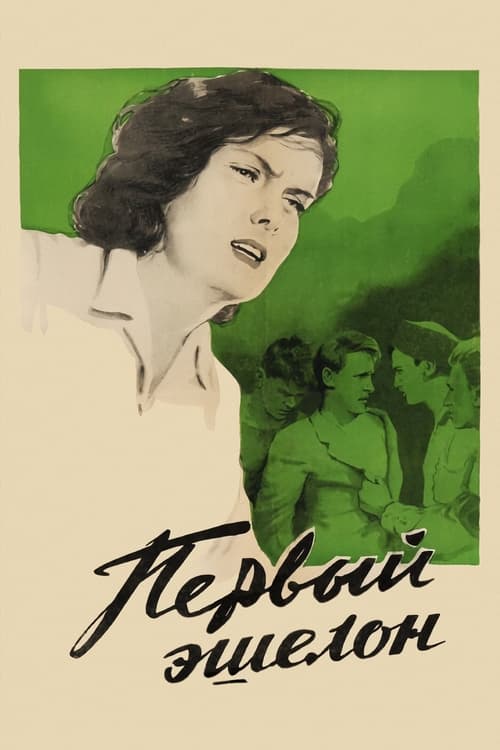
The First Echelon

Soldiers of the Russian-Mongolian Joint Special Detachment, who are carrying out a special mission, went to the front line of the war and assumed the responsibility of conducting a sharp emotional and ideological battle with words and sounds. Therefore, the contribution of these people in the battle of Khalkh River was huge. This film shows the Khalkh River War and its scope through the actions of the "Little Squad" and the thoughts of its heroes.
Listen, on the Other Side

The second part of a historical film dilogy based on the story “Emshan” by Maurice Simashko. XIII century. Equal to God, Sultan Beybars — the ruler of Egypt, who has the largest fleet in the Mediterranean, crushed the Crusader troops and countless hordes of Genghis Khan's descendant – recalls the life path he passed before ascending to the throne of the ruler.
Sultan Beybars

Kazakh scientist and traveler, Chokan Valikhanov studied at St. Petersburg University and was well known in Russia. When sent to war against the Kazakhs, Valikhanov was forced to make a choice between Tzar and native land.
His Time Will Come

Combine harvester operator Vasyl Bylan decides to leave for the Volga region for the harvest right after his wedding. There he receives a commemorative gift for his labor. He wants to return to his wife, but the guys call him to the Altai - snow has fallen there and the grain is perishing. He helps harvest the grain and it becomes clear that without him everyone would drag it off to their personal barns...
Reapers

The builders of the hydroelectric power station face a difficult task: it is necessary to speed up the work in order to provide electricity to a number of other industrial facilities in the region. Construction managers are taking different paths to solving this problem.
On the Wild Coast of the Irtysh

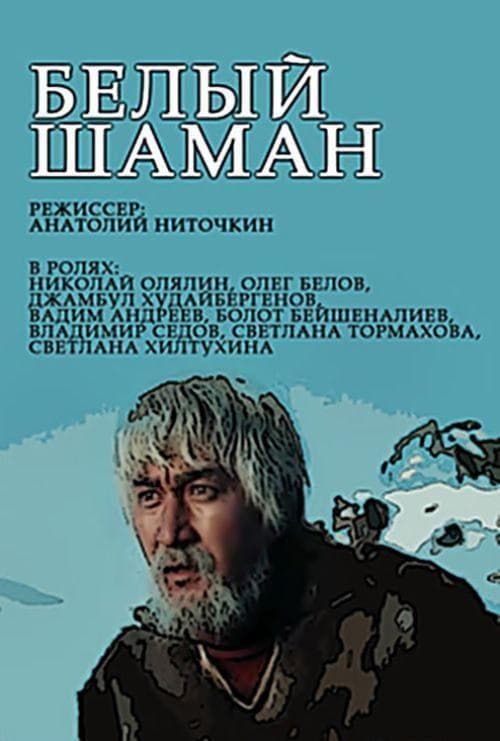
The action takes place in the 1930s and 1940s in Chukotka. With the establishment of Soviet power, changes are coming to the camp. The main character — hunter Poygin — does not realize the significance of what is happening immediately. There is a series of events: a collision with a Black shaman who tried to take away a beloved woman from a hunter, a meeting with the head of the cultural base Medvedev, etc. Poygin observes the events that ultimately determine his life position. He becomes chairman of the first collective farm in Chukotka.
White Shaman

A young boxer named Kuat, who is brought up in the ring by a wise and demanding trainer, achieves considerable success and becomes a good athlete. He finds his happiness in great love...
White Square

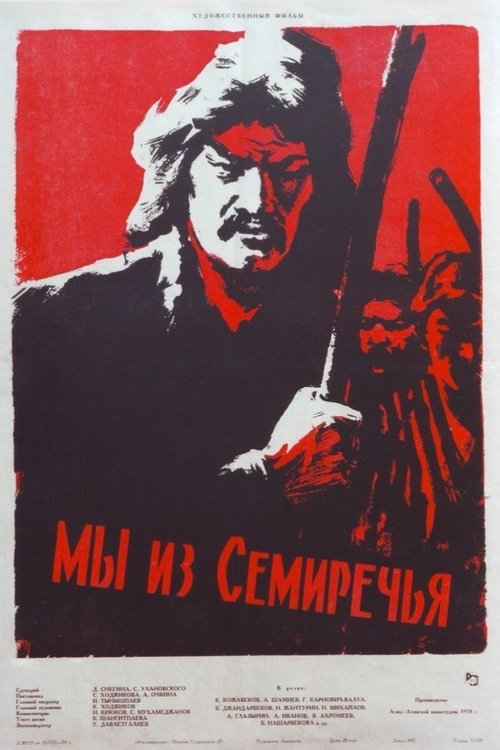
A Kazakh spy thriller: In 1921, at the height of the civil war, a Soviet officer is assigned to kill the ataman Dutov, a White collaborator. In order to get close to the ataman he infiltrates his gang.
The End of Ataman

An idealistic high school graduate goes to work on a state farm on the Kyrgyz steppe, only to clash with its authoritarian leader.
Heat

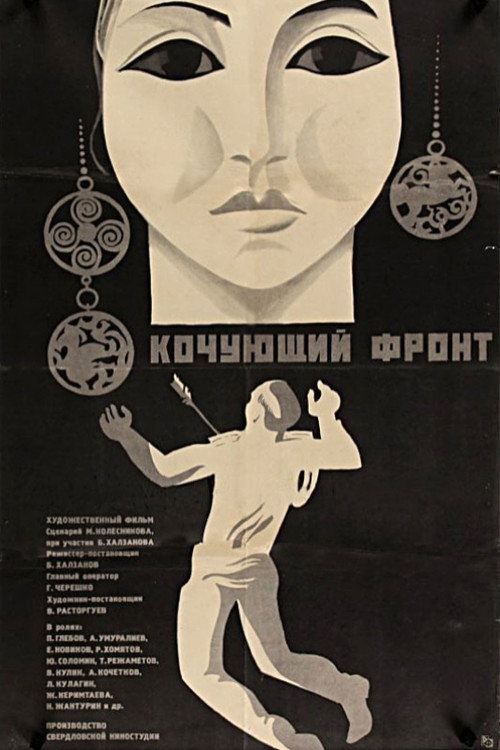
1919, Russian Civil War. Siberia was united under the rule of the White Guard General Kolchak. Unwilling to recognize his power, 32 common villages from the Yenisei province declare themselves the independent Soviet Badja Republic. The Badja guerrillas, led by the hero of the WWI Pyotr Shchetinkin, quickly become a serious enemy for the White Guard.
Nomadic Front

The end of the 1920s — the beginning of the 1930s in Kyrgyzstan. Parts of the Red Army are waging an uncompromising struggle with basmachi in Central Asia. The film tells about the formation of the character of the young Kyrgyz hunter Djura, who found himself in a swirling whirlpool of revolutionary events that swept the Pamirs. It shows the hard way from a simple young hunter, entangled in centuries of prejudice, to a conscious, seasoned in many battles with the Basmachi mature fighter, who believed in the great ideas of the revolution.
Dzhura

The youngest son of the herdsman Yerzhan — the ninth son of Yerkenzhe, goes in search of his father and eight brothers, bewitched by the evil Tasbol into stone idols. By the power of his spirit, Yerkenzhe overcomes the spell of Tasbol and frees his loved ones.
Fear of the Ninth Son, Oh Enemy

1734. In the north of the Urals, in the impenetrable forests of Orthodox Russia, one of its small nationalities lives — the Voguls, who have preserved the rituals and customs of their ancestors. Like any nation, the Voguls have their own history, traditions and gods, the main one of which is the golden goddess, the patroness of the Voguls. Once upon a time, many centuries ago, she stood on the top of a mountain, and anyone could come and ask for her help.
Golden Woman

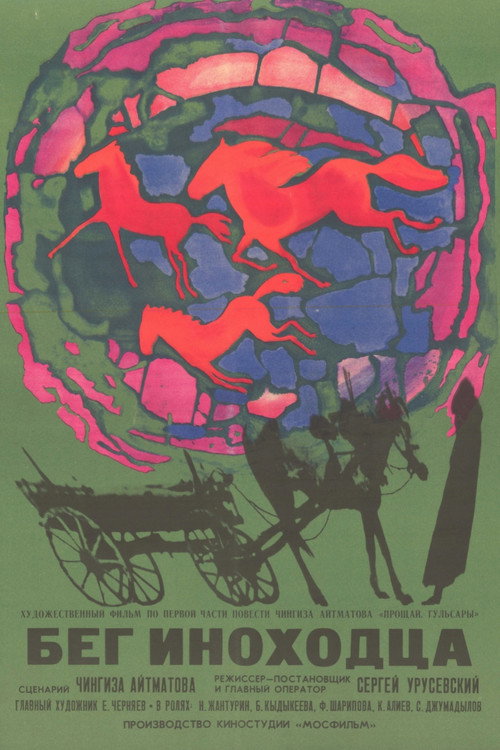
Based on Chingiz Aitmatov’s novel "Farewell, Gyulsary!" The story of Tanabai the blacksmith, father of three children, who upon his return from war became a herdsman, and his tragic love for the soldier’s widow Byubyudzhan. The lyrical poem has an additional storyline concerning the horse Gyulsary and his master Tanabai.
Goodbye, Gyulsary!

The film tells the story of Anzirat, an elderly woman who lives in a small village in Soviet Uzbekistan with her son, daughter-in-law, and their ten children, all boys. Because of her strictness the villagers call Anzirat "Grandma-General". Back in the 1930s, Anzirat headed the main farm of the village and went through many hardships. Even when she gets old, Anzirat does not want to rest and cannot put up with the laziness, greed, and negligence of some of the villagers. She tries to put things in order for her family. Her son, however, instead of helping his pregnant wife spends all his spare time building a family football team. Only after Anzirat's death do the residents of the village realize how empty their village is without her. They feel that Anzirat was the conscience of their village.
Grandma the General

Film about a Russian Master of Martial Arts, Andrei Khromov (Rostotsky). Based on a true story. A young man travels all over the Eastern republics of the Soviet Union. He is studying various systems of self-defense in order to develop his own system that would make him unbeatable.