Robert W. Paul
Directing
Biography
Robert William Paul (3 October 1869 – 28 March 1943) was an English film pioneer and scientific instrument maker. He began producing narrative films as early as April 1895, initially shown on Edison Kinetoscope-style devices, and by 1896 he was projecting them—around the same time the Lumière brothers were developing projected cinema in France. In addition to his filmmaking, Paul achieved success as an inventor, notably creating the Unipivot galvanometer. In 1999, the British film industry honored his contributions with a commemorative plaque at his former workshop at 44 Hatton Garden, London.
Known For
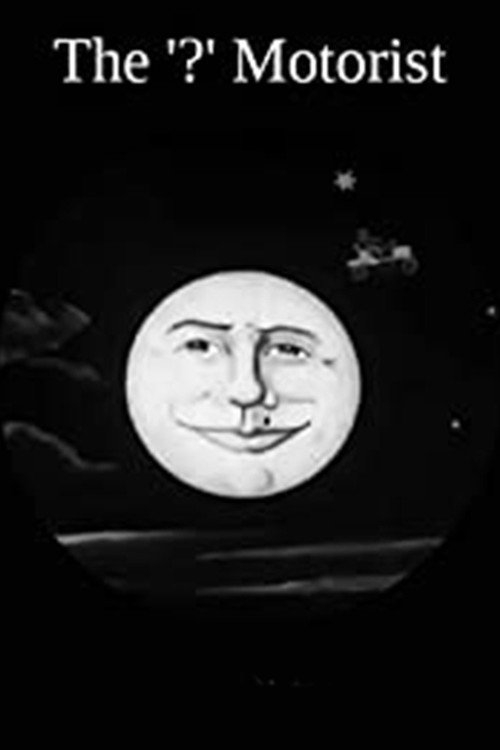
A magical glowing white motorcar ignores policemen, drives up buildings, flies through outer space, and can transform into a horse and carriage.
The '?' Motorist
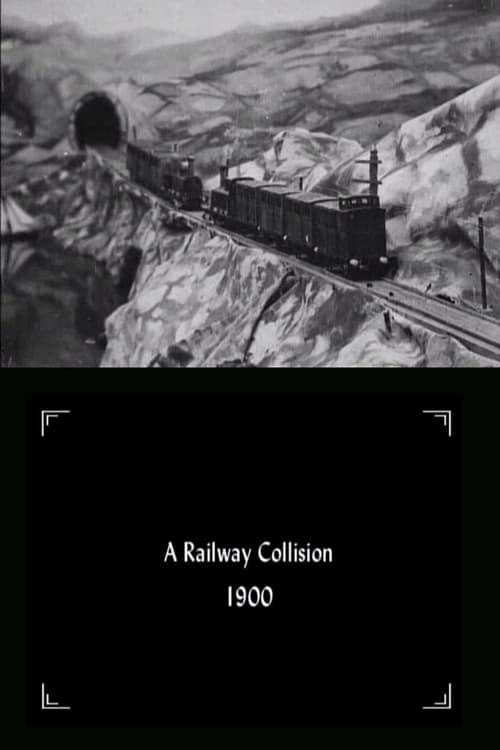
The scene is a railroad track on the side of a steep mountain, with a tunnel in the background, toward which a train is running at a high rate of speed. At this instant the audience is appalled at the sight of a second train rushing out of the tunnel. Both trains are on the same track and traveling toward each other at a high rate of speed. They collide. Cars and engines are smashed into fragments and thrown down the steep incline. (Edison Catalog)
A Railway Collision
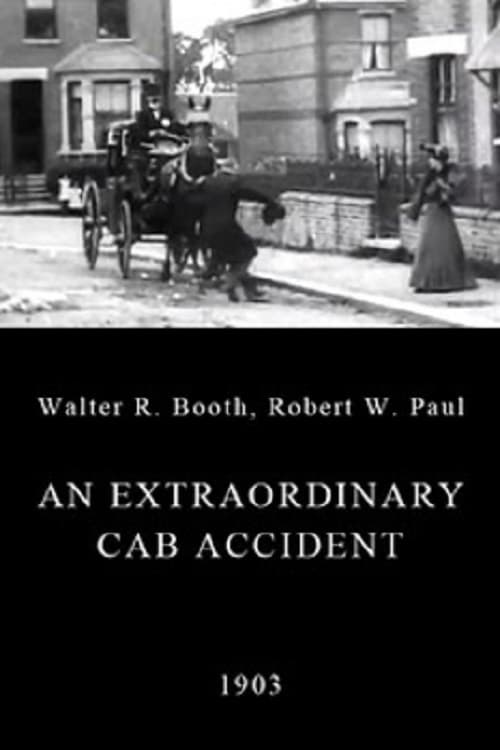
A man and a woman talk beside a street near a corner where a cop stands. Just as a horse-drawn cart rounds the corner, the man backs off the sidewalk saying good-by to his companion. The horse and cart flatten him and continue on, out of the camera's stationary range. The cop runs after the cab, the woman dashes to the body. The cop brings back the driver; is the victim dead?
An Extraordinary Cab Accident
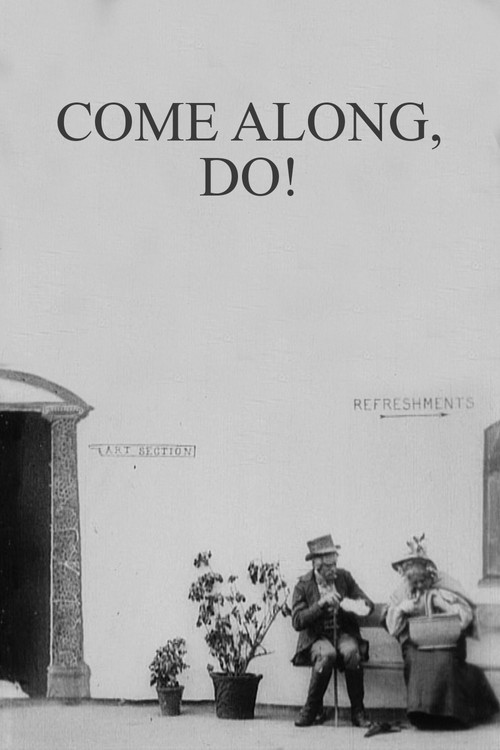
Come Along, Do! is an 1898 British short silent comedy film, produced and directed by Robert W. Paul. The film was of 1 minute duration, but only forty-some seconds have survived. The whole of the second shot is only available as film stills. The film features an elderly man at an art gallery who takes a great interest in a nude statue to the irritation of his wife. The film has cinematographic significance as the first example of film continuity. It was, according to Michael Brooke of BFI Screenonline, "one of the first films to feature more than one shot." In the first shot, an elderly couple is outside an art exhibition having lunch and then follow other people inside through the door. The second shot shows what they do inside.
Come Along, Do!

A stationary camera, looking diagonally across a racetrack toward the infield, records the horses as they race past. Once they are out of view and the race is over, police officers run onto the infield. The crowd moves around.
The Derby 1895
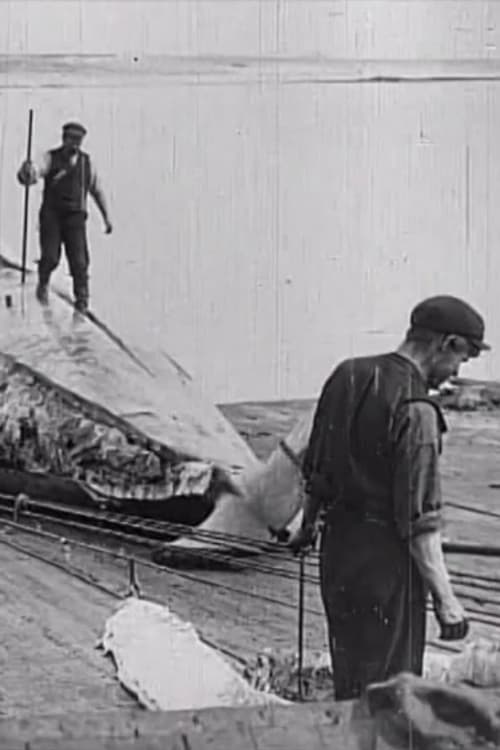
A short documentary about industrial whaling. The surviving footage runs for approximately 12 minutes.
Whaling Afloat and Ashore
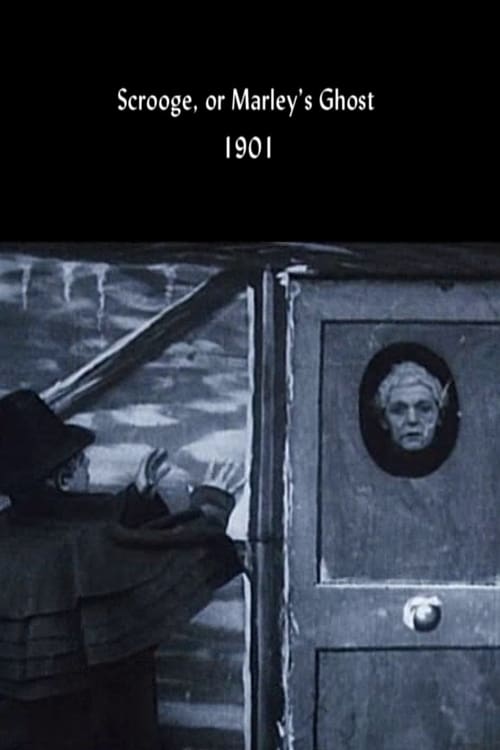
Filmed in 35mm and in black and white, this short silent film was produced by the English film pioneer R. W. Paul, and directed by Walter R. Booth and was filmed at Paul's Animatograph Works. It was released in November 1901. As was common in cinema's early days, the filmmakers chose to adapt an already well-known story, in this case A Christmas Carol by Charles Dickens, in the belief that the audience's familiarity with the story would result in the need for fewer intertitles. It was presented in 'Twelve Tableaux' or scenes.
Scrooge; or Marley's Ghost
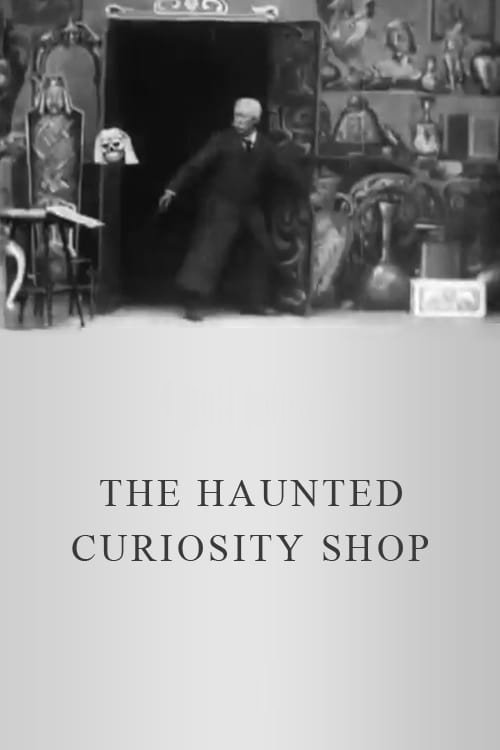
An old proprietor is startled and haunted by the strange happenings inside his curiosity shop.
The Haunted Curiosity Shop

The first part of the film shows an actuality street scene of traffic in the Strand. Behind the traffic we can see the entrance to the Gaiety Theatre on the Strand, advertising its latest show 'My Girl'. The second part is a different film altogether, spliced onto the first and is R W Paul’s Turn Out of a Fire Brigade filmed in November 1896 in Newcastle at the Westgate Road fire station. The film date is 1896.
London Street Scene / Turn Out of a Fire Brigade
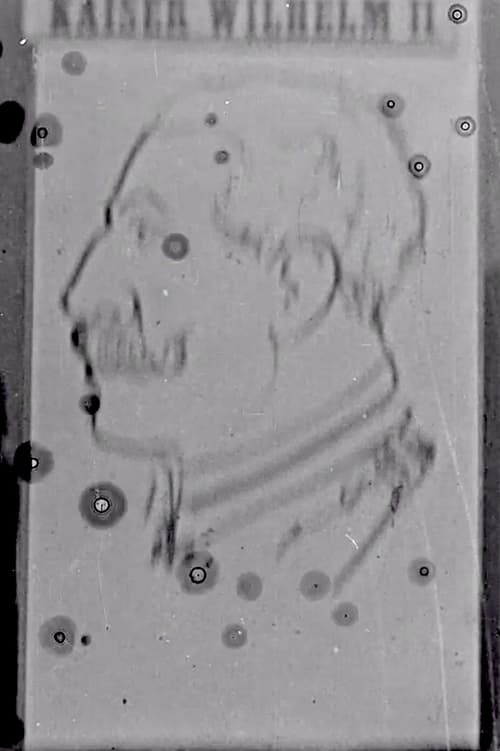
A tiny fragment of an actuality film of Tom Merry (William Mechem), a 'lightning sketch' caricaturist performing his act for the camera and producing a large profile caricature of Kaiser Wilhelm II. The loss of the rest of the film has bequeathed us 6 seconds that are of Mechem standing next to the completed portrait and sadly, that is all there is. An early film made by Birt Acres for R.W. Paul. (see release information for further detail).
Tom Merry, Lightning Cartoonist, Sketching Kaiser Wilhelm II
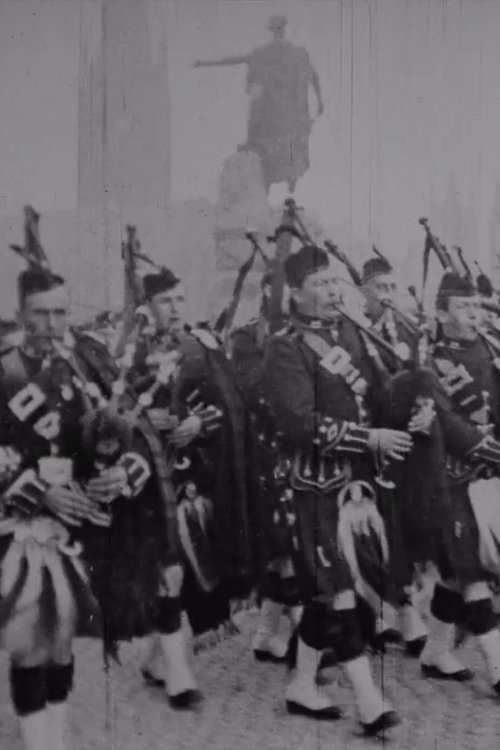
A parade of Gordon Highlanders in dress uniform march through the centre of Aberdeen on their way to the Boer War. Small children run around in excitement but are moved aside by a member of the regiment. Directed by Robert W. Paul.
Gordon Highlanders Leaving for the Boer War

Taken from a motor cab running at full speed along Piccadilly and through the Circus, narrowly escaping collision with various buses and cabs
On a Runaway Motor-Car Through Piccadilly Circus

No description available.
Sirdar's Reception at Guildhall
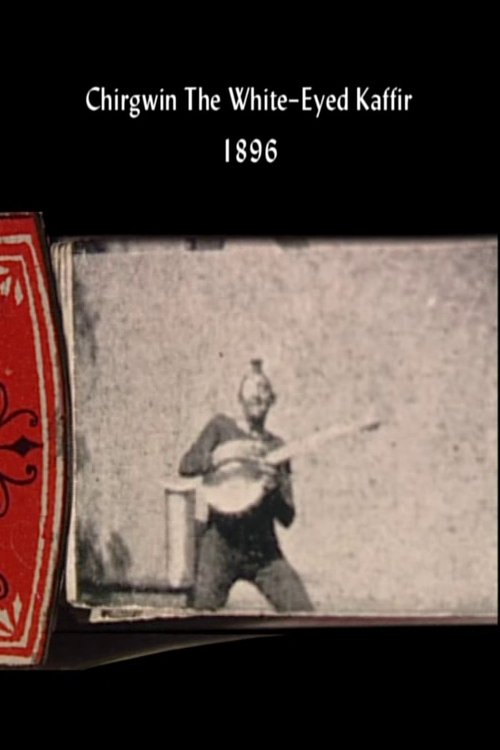
'The White Eyed Kaffir' performs with top hat.
Chirgwin in His Humorous Business
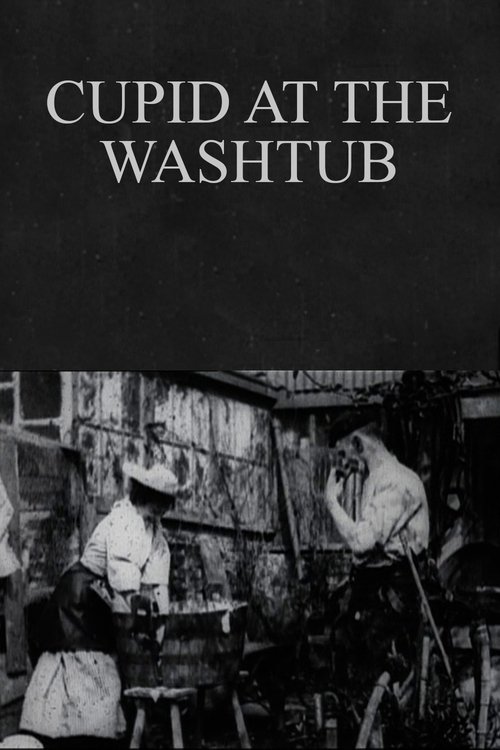
A playful variation on A Soldier's Courtship, producer Robert W. Paul's smash hit from the previous year, this film spies on a young man trying to tease a kiss from a young girl doing the washing at a tub. For his efforts, the man receives a dunking in the tub himself and much hilarity follows.
Cupid at the Washtub
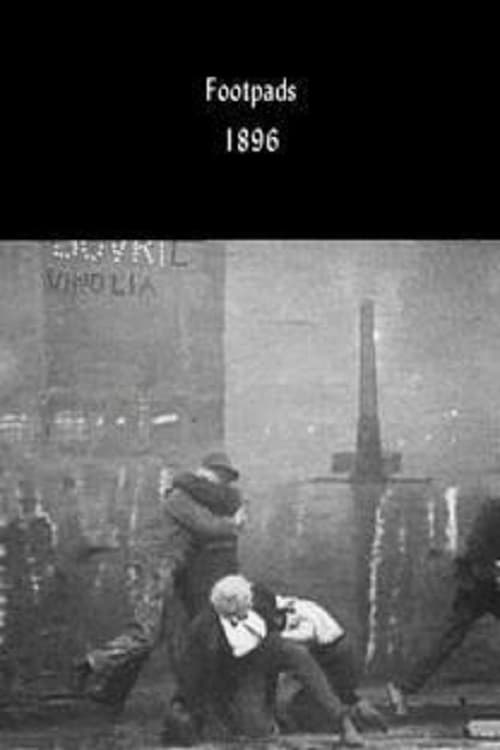
A man strolling in a city street is attacked by three assailants. A policeman comes to the rescue and the men struggle with each other.
The Arrest of a Bookmaker

No description available.
The Derby
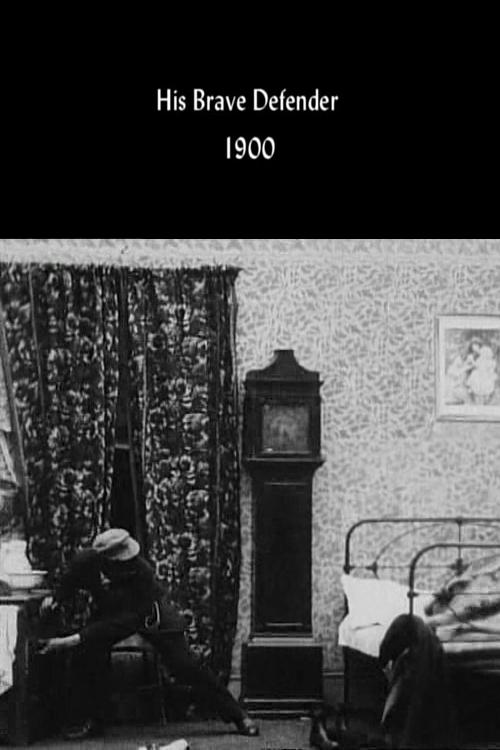
No description available.
His Brave Defender
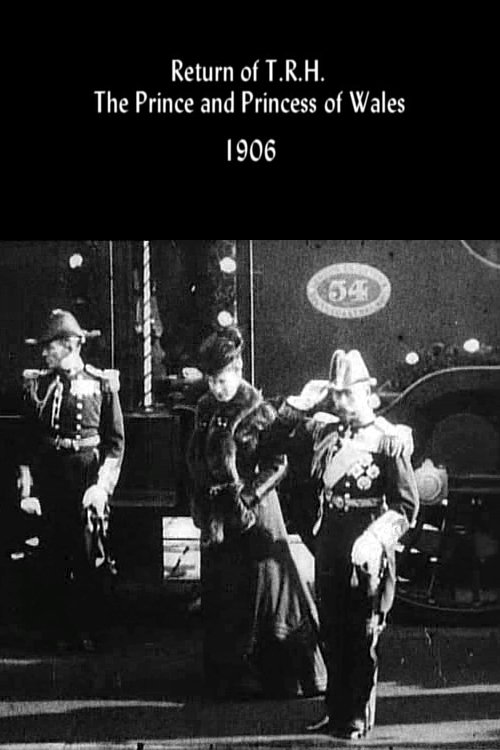
The Prince and Princess of Wales visited India from November 1905 to March 19, 1906.
Return of T.R.H. the Prince and Princess of Wales
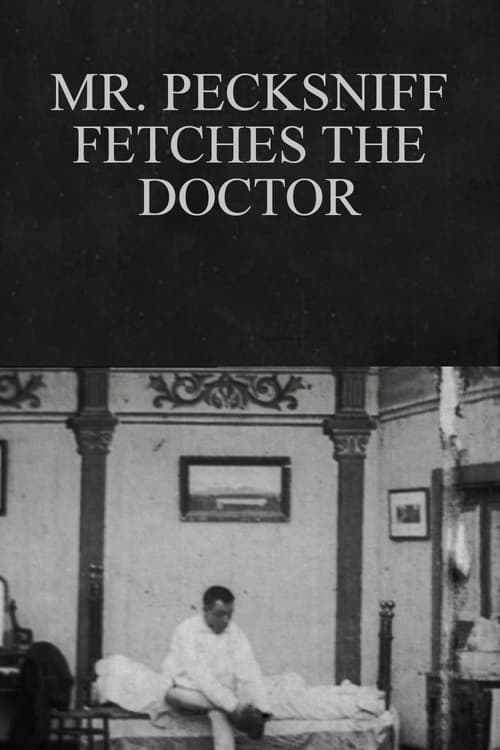
A husband rushes for a doctor and his wife has triplets.