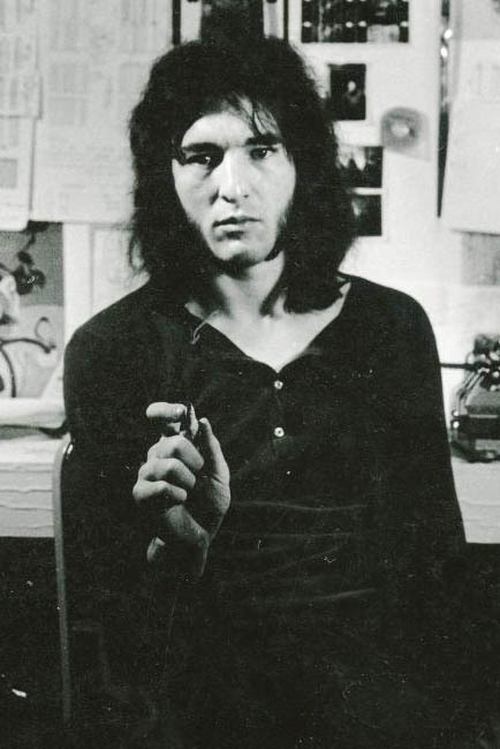
Paul Sharits
Directing
Biography
Trained as a graphic artist and a painter, Paul Sharits became an avant-garde filmmaker noted for manipulating the film stock itself to create a variety of fascinating, abstract light and colorplays when projected on the screen. Fans hail the effects hallucinogenic, while his detractors find them garish. Sharits is also known for establishing experimental film groups at prominent universities, including one at the University of Indiana where he studied. He later taught and developed an undergraduate film program at Antioch College. Between 1973 and 1992, Sharits taught at the Center for Media Study at the State University of New York. His films can be seen in various U.S. and European museums, film centers, and libraries. Much of his work can be found in the Anthology Film Archives in New York City. ~ Sandra Brennan,
Known For

Cinématon is a 156-hour long experimental film by French director Gérard Courant. It was the longest film ever released until 2011. Composed over 36 years from 1978 until 2006, it consists of a series of over 2,821 silent vignettes (cinématons), each 3 minutes and 25 seconds long, of various celebrities, artists, journalists and friends of the director, each doing whatever they want for the allotted time. Subjects of the film include directors Barbet Schroeder, Nagisa Oshima, Volker Schlöndorff, Ken Loach, Benjamin Cuq, Youssef Chahine, Wim Wenders, Joseph Losey, Jean-Luc Godard, Samuel Fuller and Terry Gilliam, chess grandmaster Joël Lautier, and actors Roberto Benigni, Stéphane Audran, Julie Delpy and Lesley Chatterley. Gilliam is featured eating a 100-franc note, while Fuller smokes a cigar. Courant's favourite subject was a 7-month-old baby. The film was screened in its then-entirety in Avignon in November 2009 and was screened in Redondo Beach, CA on April 9, 2010.
Cinématon
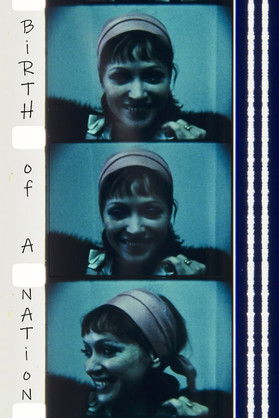
Jonas Mekas assembles 160 portraits, appearances, and fleeting sketches of underground and independent filmmakers captured between 1955 and 1996. Fast-paced and archival in spirit, the film celebrates the avant-garde as its own “nation of cinema,” a vital community existing outside the dominance of commercial film.
Birth of a Nation
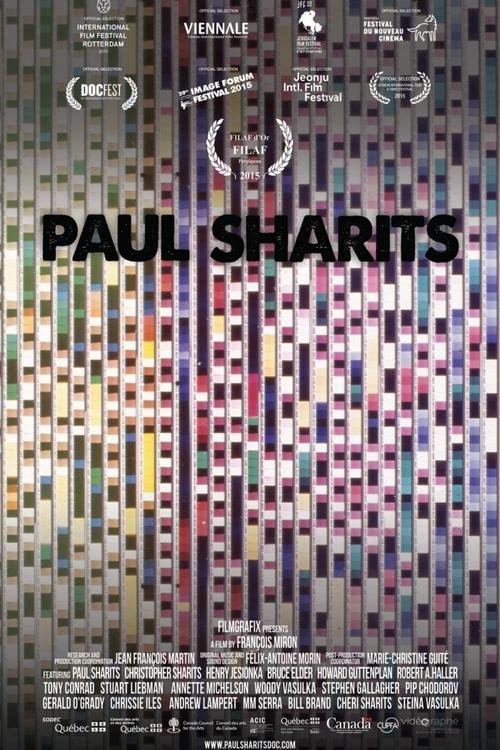
Long after his premature death, the impact of Paul Sharits lingers on. The prominent iconoclast and innovator provoked with fast-flickering, pulsating, colourful mosaics. The many interviews and testimonies are also a portrait of a generation of leading voices in experimental filmmaking.
Paul Sharits
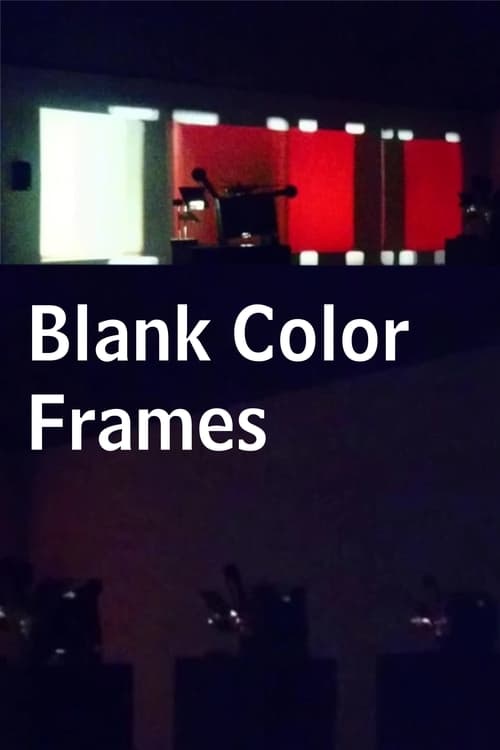
Like ANALYTICAL STUDIES I, these short works each develop a different rhythmic and/or melodic idea using only rapid successions of color frames. The "Specimens" are called such because they are the "subjects" of (rephotography) analysis: "Specimen II" was intended to be the subject for the film EPISODIC GENERATION - although the footage, in itself, was successful, I did not find it adequate for its intended purpose; therefore, "Specimen IV" was created and was used (rephotographed) for EPISODIC GENERATION. The other works were studies for sections of the film DECLARATIVE MODE. (After titles, focus should be shifted to sharpen the edges of the screen.)
Analytical Studies IV: Blank Color Frames
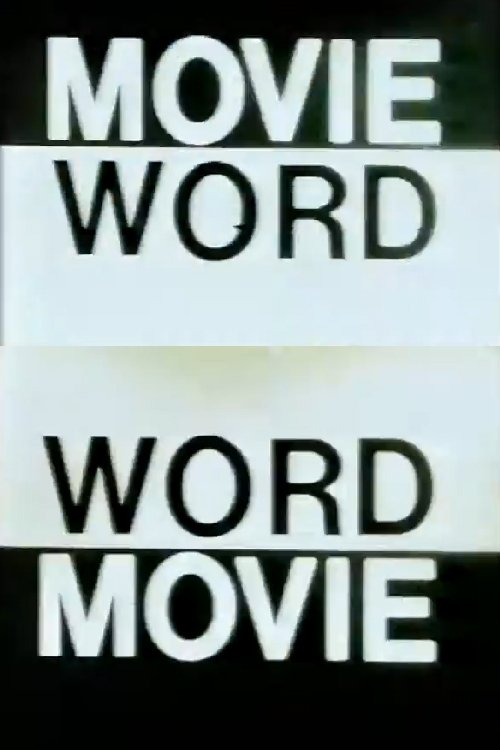
Single frame exposures of words.
Word Movie
The film is a transfixing “flicker” film that distills the cinematic experience to projected light and color patterns, allowing “the viewer to become aware of the electrical-chemical functioning of his own nervous system.”
Ray Gun Virus
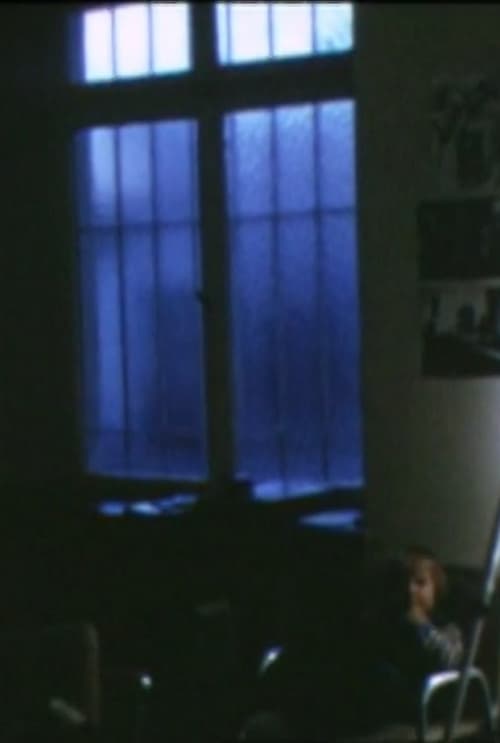
Home movies shot on Super 8mm by W+B Hein over 10 years.
Home Movies 1971-81
Particles throb in three dimensions.
3D Movie
Feature-length compilation program presenting 37 out of 41 original fluxfilms produced and directed in the 1960s by Fluxus artists, including George Maciunas, Nam June Paik, Yoko Ono, Robert Watts, Paul Sharits, et al.
Fluxfilm Anthology 1962-1970
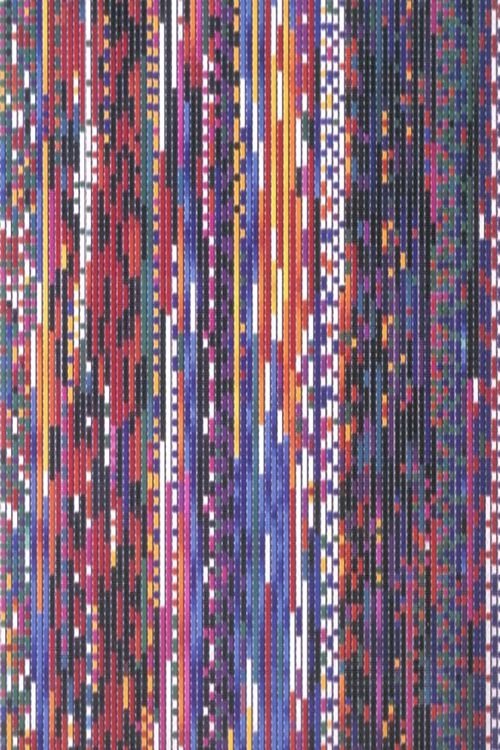
The film consists of two identical prints shown simultaneously, one projected inside the image of the other. The inner image is out of sync one second in advance of the larger image creating a dynamic inter-play between the overlapping frames.
Declarative Mode
The footage, in order of appearance, is: 1. rock strata – along the banks of the Niagara River, before it empties into Lake Ontario, 1975, while an artist-in-residence at Artpark, Lewiston, N.Y. (Originally a three-screen panorama study); 2. flow patterns of the Niagara River. Same place/time as the rock strata. (Originally a four-screen panorama study); 3. fire juxtaposed to a rhythmic flow of cloud formations. Shot during S.W. American desert trip, 1971. The fire is a burning car which Indians had set on fire to attract and trick passing cars at night. The Indians sat off in the darkness, getting a great deal of amusement from watching concerned travelers come up to inspect the scene of the “disaster”; the Indians were having their laughs, as if watching a hilarious TV program. The clouds were shot to create a sort of inventory of “cloudness” – thousands of shots of thousands of different cloud formations; these are edited in rhythms like those of fire’s flame pulses.
Element Studies: Earth/Water/Sky/Fire
No description available.
Synchronousoundtracks

'Rapture' is a fierce vision of a Dionysian experience, a tightly controlled visual statement about the abandonment of self to heightened transportive states. It is also an exploration of the similarity between 'religious' and 'visionary' ecstasy and psychotic states.
Rapture
The film consists of seven sections: the first section, "Specimen I," a "flicker" film, is the subject for the other sections of ANALYTICAL STUDIES III. ... "Specimen I," as with most of my other works, also exists as a "Frozen Film Frame," wherein the entire footage of the film is cut into strips and aligned serially between sheets of clear plexiglas.
Analytical Studies III - Color Frame Passages
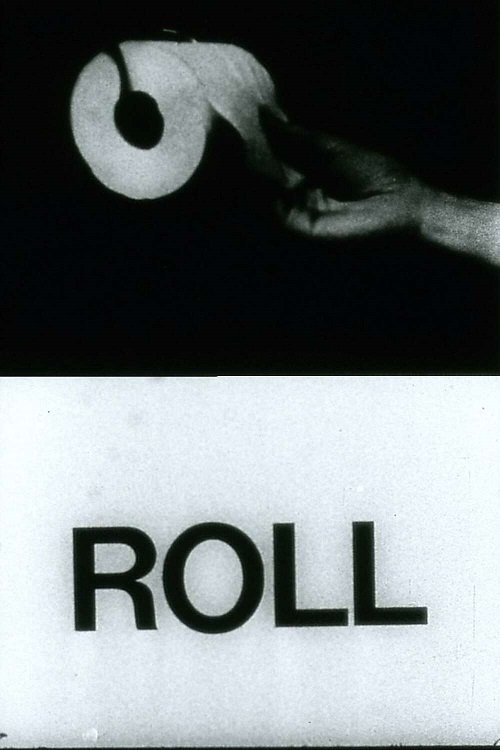
Toilet paper event, single frame exposures.
Unrolling Event
No description available.
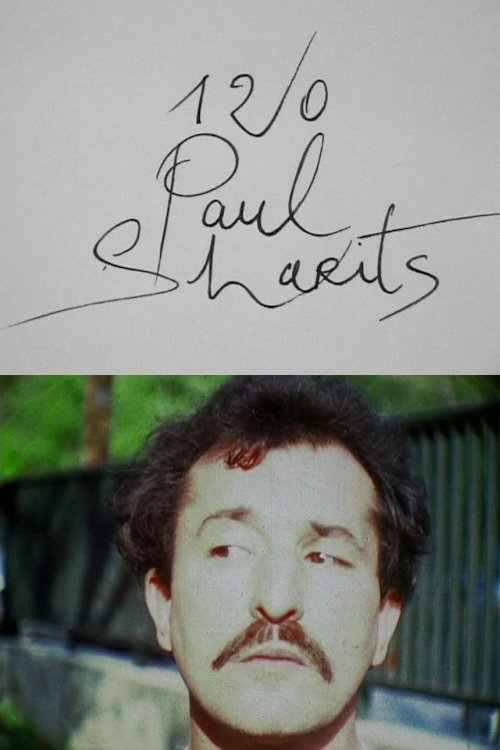
Cinématon n°120 : Paul Sharits

“Freud established that jokes were structurally akin to dreams in their use of condensation, displacement, representation by opposites, punning and ‘nonsense’. All of these strategies are much in evidence in (Land’s) marvelously duplicitous ON THE MARRIAGE BROKER JOKE… [...] so clever and original a filmmaker as to make most others – not to mention his critics – seem flat-footed by comparison. ON THE MARRIAGE BROKER JOKE harks back to Bunuel’s early work. Not only is it structured like a dream and filled with sexual imagery, but like Un Chien Andalou, it smacks of being an insider’s joke played upon the avant-garde. Where Bunuel used the insights of psychoanalysis to satirize Christianity, Land– with an almost equal perversity – reverses the process and uses Christianity to send up Freud.” – J. Hoberman, American Film
On the Marriage Broker Joke as Cited by Sigmund Freud in Wit and Its Relation to the Unconscious, or Can the Avant-Garde Artist Be Wholed?
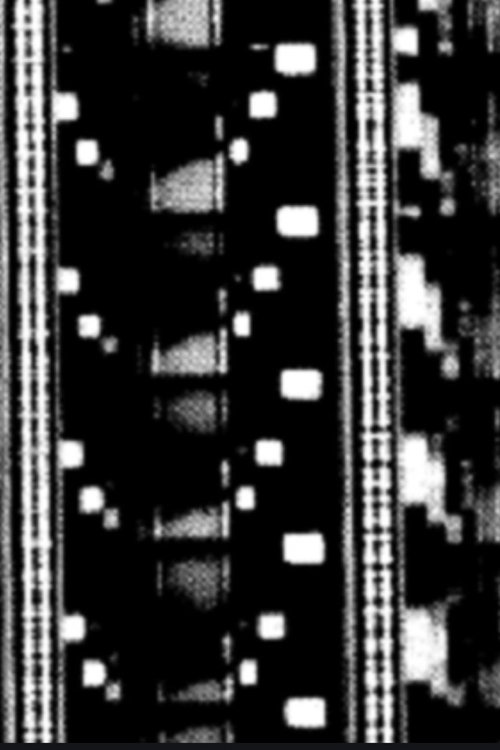
The visual "degeneration" of the image ... through successive rephotography is paralleled by the compression of verbal information to the point of its loss of legibility; yet, both the "degenerated" sound and image are perceptually engaging, even in the most advanced stages of "degeneration". It is obvious why the film has its title, because of the strategies of its coming into being, but, paradoxically, at the level of effect, its dynamics arise from its "Episodic Degeneration".
Episodic Generation
Discovered in summer of 1985, of a set of “haiku-imagistic films” I did before coming to my characteristic style, as in Ray Gun Virus; I thought I’d destroyed all these pre-pure films, in about 1969-1970, the time of my separation from my first marriage. The film concerns my marriage, which lasted seven years; it was shot during its first year, when I was a painting student at the University of Denver. It is full of apprehensions, in a montage style which counterposes “opposites”: sexuality and religion; seasonal opposites; hopefulness undercut by fears of eventual separation (the image of a statue of two women, arm in arm, reading a book). I find it visually and kinetically interesting, after all these years. (Paul Sharits) —Canyon Cinema
Wintercourse
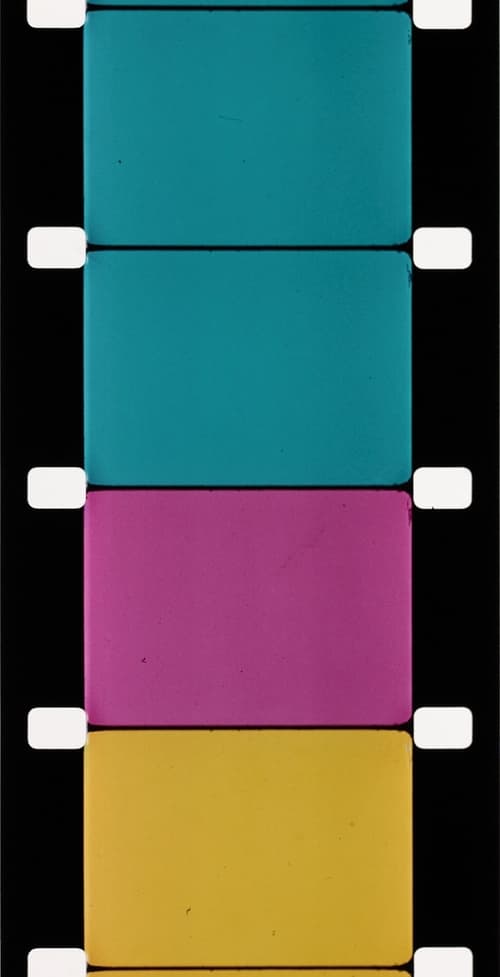
A set of short pure color studies, usually exploring one dominant hue. Most of these works were studies for longer projects. The last four "migraine" studies are rhythmically based around the five-cycle-per-second oscillation pulse of the typical fortification illusions preceding a migraine attack; this onset period, with its visually dynamic effects, is reported to be a quite vibrant and enjoyable state.