Acting
No description available.
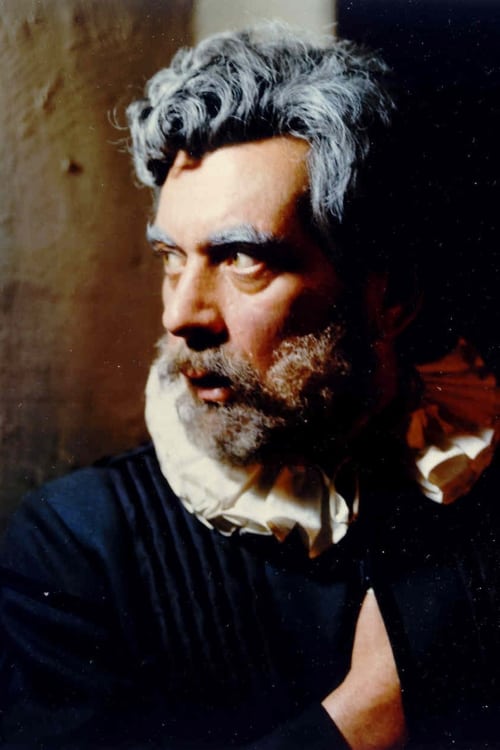
Series about the life of Renaissance anatomist, scholar and politic Johannes Jessenius. Already legendary series today, was produced by Czechoslovak Television Bratislava, directed by Slovak director Miroslav Luther in the first half of 80's in Barrandov Studios in Prague. The story and screenplay of the series wrote Czech writer Vladimír Körner. Five-episodes epic historical narration is a biographical story of distinguished Renaissance scholar, anatomist and politic of Slovak origin, Johannes Jessenius (Ján Jesenský, 1566–1621). It displays his life from the first studies and successes. In 1594 he became professor of surgery and anatomy on Wittenberg University, which he had attended years before. From that moment, his life went through social and personal wins and losses, to the sad end on the Prague Old Town Square gallows, among 27 noblemen, knights and burgenses, after lose Bohemian Revolt in 1621. His destiny was coupled with key events of Czech history in the break of 16th and 17th century, when Renaissance and European humanism slowly fade out.
The drama of a young Slovak army officer who gradually realises the horrors of fascism during the fighting in Ukraine. On his return to Slovakia, he joins the SNP. However, he cannot overcome his loner attitude or his doubts about the meaning of partisan activity.
In Slovakia, they also created a pair of investigators who have appeared in several films. Volanie démonov is the third of them. The police officers, one Maigret-like, thoughtful, the other humorously hasty, this time solve a fire in a furniture factory and the deaths of two employees - one burned himself, the other fell into a dry well. The investigation of the complicated case takes a long time, but in the end it turns out that revenge can be extraordinarily strong and persistent.
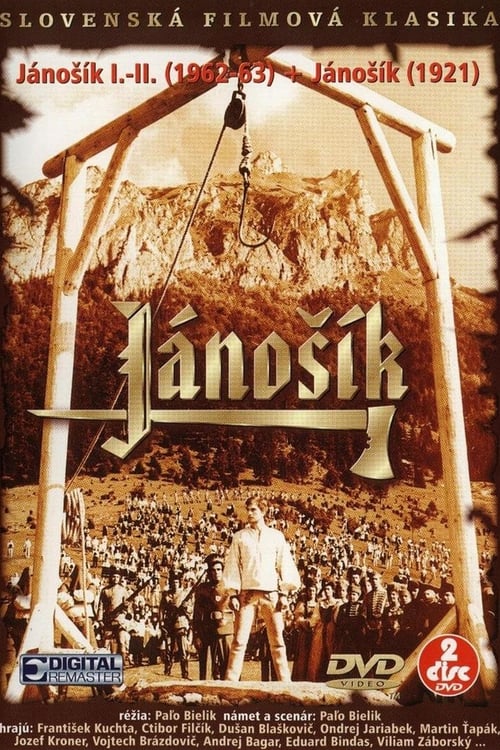
This film is one of the most popular pictures of Slovak cinema and relates the story about the legendary folk hero and brigand Juro Jánošík [1688-1713] and the social situation in Slovakia of the late 17th and early 18th centuries. The first part talks about Jánošík's childhood, studies and return to his native village. In the second part Jánošík leaves for the hills, where he organizes his band of brigands and starts an anti-feudal resistance. The film concludes with Jánošík's execution.
Television adaptation of F. Kárinthyho's story about how important it is to have a sense of home. The apricot jam symbolizes the home, family well-being, which the little boy Ferko, living with his parents in a Hungarian town of the 30's of the 20th century, desperately hopes for. A mother with an unfulfilled desire to become a famous pianist and a father with an even more distant dream to be a world-famous and wealthy writer to a son have no time or even a loving word. His loving companion is only Manci, who, however, leaves for misunderstanding with his lords. Ferko remains alone, disappointed and reluctant to accept the friendship of a new maid of Rózy. But he also has his great dream, and Róza will help him meet him.
Jakub, a dreamer and budding magician, juggles between parcels and services rendered to the villagers. His eyes cross that of the beautiful gypsy Jolanka. Together, they will try to live a first and big love, despite the pressure of their respective communities.
The series depicts the history of Slovak society in the first decades of our century and leaves a deep faith in humanity and the nation. It tells the life story of Pavlínka, the daughter of a laborer and innkeeper, whose fate is filled with love, social ambitions, and unfulfilled dreams, and who ultimately returns to the basics of life, to naturalness and wisdom.
A dramatic story based on the book of the same name by Peter Holka. The story of a teenager who falls in love with a drug-addicted friend. He tries to help her, but indirectly becomes addicted too, because he first starts stealing from home for her drugs, then starts dealing and loses his judgment, just to provide her with drugs. His love for a girl who can't stop being an addict ultimately costs him his own life.
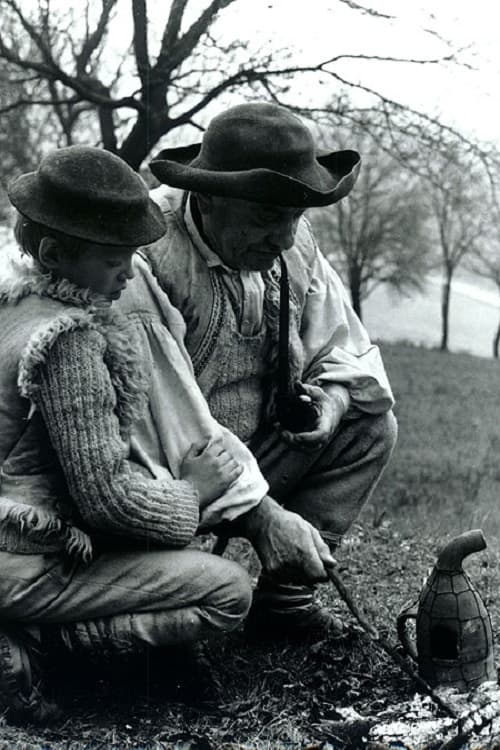
The Old Beekeeper brings a suggestive reflection on the pure soul of a brave simple man who strives to live honestly and selflessly. His relationship to the order of the world and nature also reflects his relationship to people, and he achieves harmony in life through his ability to live in accordance with his conscience and moral principles.
An apocalyptic story of three wars in three film tales encompassing the end of the WWI,WWII, as well as a vision of the world destroyed by nuclear weapons. This film was honored at the film festivals in Venice and Sorrento. Immediately after that the copy with Italian subtitles was locked in a safe as evidence of the anti-communist activities of the director, who used real footage of the Soviet invasion.