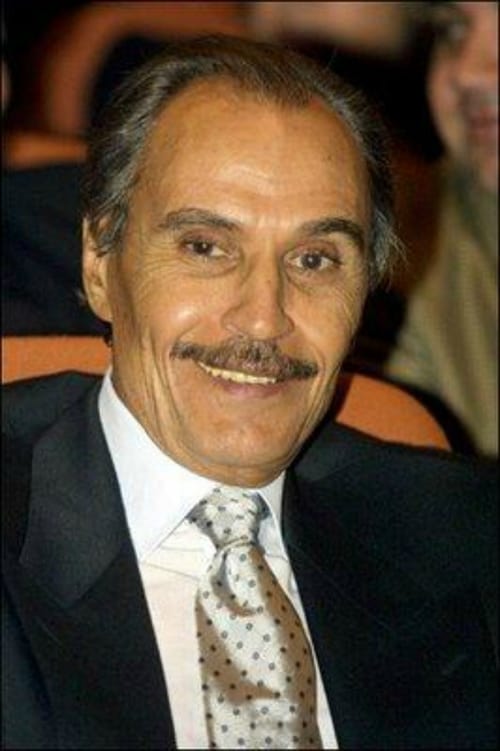
Ezzat Al Alaily
Acting
Biography
E’zzat Hassan al-A’laly Hassan was born in the “Bab al-Sha’riyah” district of Cairo. He received his bachelor’s degree from the Higher Institute of Theater Studies in 1960. E’zzat is married and has a son named Mahmoud who works as a dentist. He also has a daughter named Ragaa. Ragaa has a degree in law and is married. In his early stages, art was something of a dream for E’zzat as he had four sisters for whom he was responsible seeing as his father had passed away. He thereafter made his way into art and performed in several TV series an example of which is “A’bd Allah al-Nadeem”. Amongst the stage productions in which E’zzat has assumed leading roles are “Dimaa a’la Malabis al-Sahra” (“Blood on the Evening Gown”) and “Ahlan ya Bakwat”. E’zzat has also written several plays amongst which are “Thawrat al-Madina” (“The City’s Revolt”) and “Al-Touffan” (“The Flood”). E’zzat al-A’laly has received numerous awards and has also performed in Algerian and Lebanese cinema. He is considered a unique acting talent who can give lively depictions of any character he is asked to portray, no matter how diverse. His natural talents and build have helped him in his career. E’zzat can be observed in excellent form in “al-Ard” (“The Earth”), “al-Ikhtiyar” (“The Choice”), “al-Muwattin al-Masry” (“The Egyptian Citizen”) and “el-Sekka Matt” (“El-Sekka is Dead”).
Known For

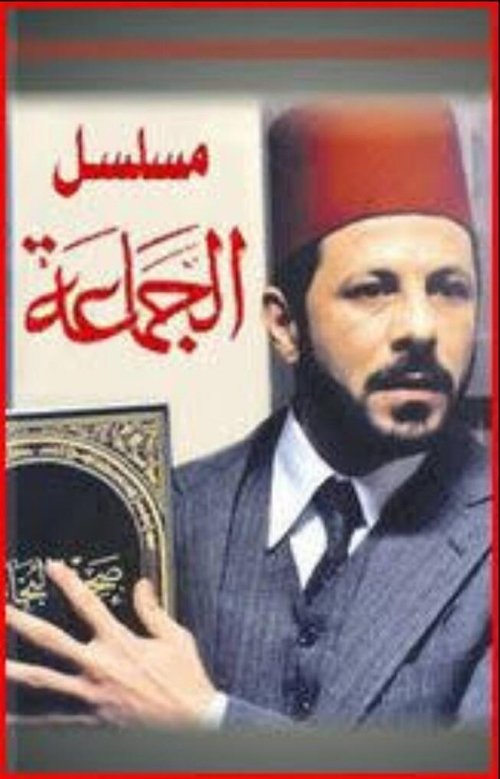
Al-Gama'a is an Egyptian television drama, Historical and Political drama series written by Wahid Hamid, directed by Mohammed Yasin and produced by Kamel Abu Ali. The series began filming in January 2010 with a budget of 50 million Egyptian pounds. The show deals with the rise of the Muslim Brotherhood, Egypt’s largest Islamist political group, which was officially banned but nonetheless tolerated to an extent before the revolution. Critics have decried the show's pro-government stance, charging that it plays into the Egyptian government's agenda prior to the 2010 Egyptian parliamentary elections.
Al-Gama'a

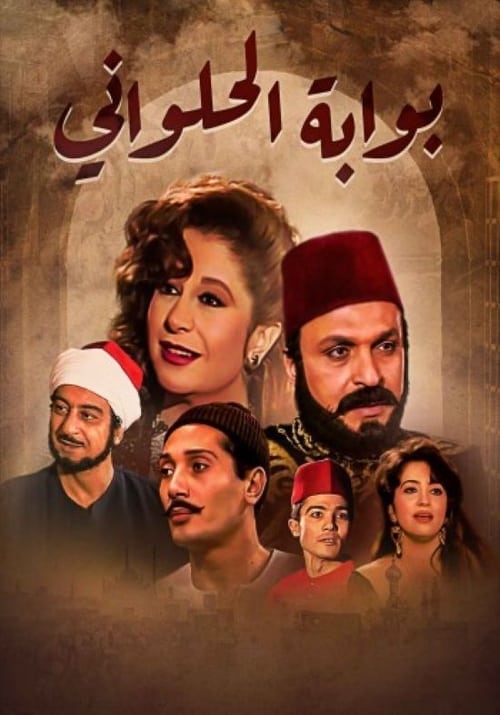
Bwabet El‑Halawani brings to life the human stories behind Egypt’s transformation during the Suez Canal era. Through craftsmen, families, and dreamers caught in political and social upheaval, the series blends history with personal struggle, showing how ambition, sacrifice, and resilience shaped a defining moment in Egypt’s past.
Bwabet Elhalwani

Wolves That Do Not Eat Meat is an Arabic narrative film from the adventure and suspense films produced in 1973, represented by Izzat Al-Alayli in the role of "Anwar", Nahed Sharif in the role of "Thuraya" and Mohsen Sarhan in the role of "Saleh", and from Kuwait Muhammad Al-Mansour in the role of "Al-Saffah" Khaled Al-Saqabi in the role of “The Officer” and Ali Al-Mufidi in the role of “Al-Akhras”, and from Lebanon Silvana Badrakhan in the role of “Linda” and Les Sirkisian or actress Iman as she was known later in the role of “Nihad”. And directed by Samir A. Khouri. All the movie clips were shot in the State of Kuwait.
Wolves That Do Not Eat Meat

The series revolves around the struggle for money, and the fierce battles of two families and their differences because of a conflict over inheritance, and how the parties will ignore the blood ties for wealth.
Family Tie

Taha works as a pharmacist and lives a normal life with his disabled father. When a mysterious murder occurs, Taha's world changes forever. He starts tracking down many secrets that leads him to unlocks a whole melancholic world of crime!
Diamond Dust

Salem falls into the trap of greed when he finds a treasure in a well in the seabed, and soon his life changes and flees from his country, and soon he returns to the past to haunt him while everyone tries to reach him to obtain their right to the treasure.
The sea said

The Spider 1973 is an Egyptian black and white TV series based on a story by Dr. Mustafa Mahmoud and starring Mahmoud El Meligy and Ezzat El Alaili. It is one of the few Egyptian TV series that dealt with a science fiction story.
Spider

In 1969, a group of Egyptian frogmen target and destroy two Israeli vessels in the port of Eilat during the War of Attrition.
The Road to Eilat

No description available.
من أنا؟

No description available.
حرس سلاح

No description available.
موعد مع الوحوش

No description available.
قصر العشاق

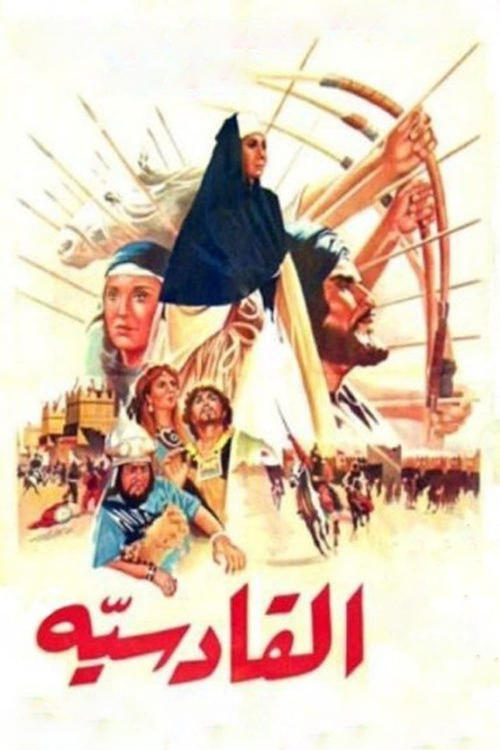
A historical epic about the battle of Qadiseya, which was helmed by the Arabian knight Saad Ibn Abi Waqas, and which enabled Muslims from conquering Persia in 636 A.D.
Al-Qadisiyya

Fatima returns from America after earning her doctorate, she meets Galal who works as a tourist agent. When she returns home, she finds Galal in her bedroom and warns her from marrying Osama her fiancé, he tells her that he is a demon who is in love with her. Fatima refuses Galal's request and orders him to stay away from her as she is the only person who can see him.
Humans and Jinn

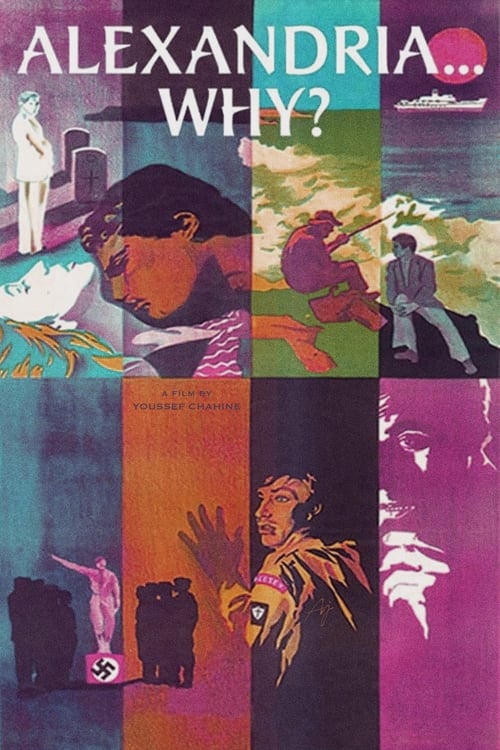
Amid the poverty, death, and suffering caused by World War II, 18-year-old Yehia retreats into a private world of fantasy and longing. Obsessed with Hollywood, he dreams of studying filmmaking in America but struggles to pursue his dream, given the constraints of his life in the middle class and the horrors of war.
Alexandria… Why?

The construction of the Aswan dam as seen by those who took part in it: engineers, workers, Egyptians, and Soviets.
The People and the Nile

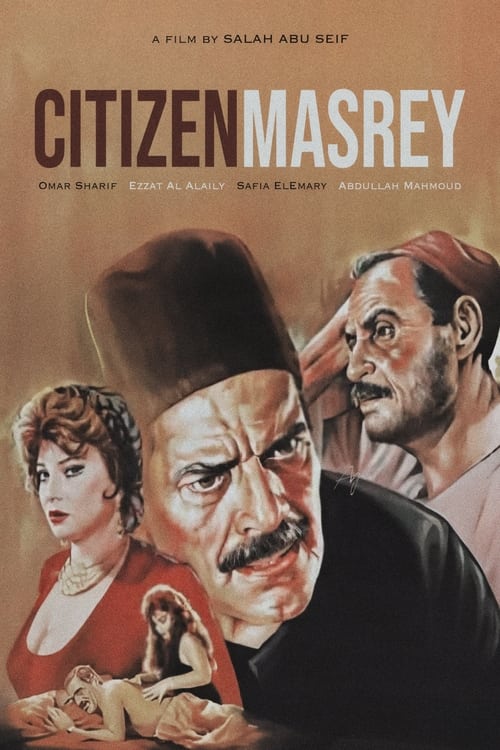
The story of Mayor Abdul Razek al-Sharshabi (Omar al-Sharif) when his younger son, Tawfiq (Khalid al-Nabawi) is called for army recruitment, his wife (Safiya al-Omari), rejects it, suggesting to send someone else to go instead. So the Mayor persuaded a poor father named Abdul-Muqeem (Izzat al-Alayli) to send his only son Masrey instead.
Citizen Masrey

A famous actress retires and marries a rich man a customary marriage. Then his family forces him to divorce her. He waits till she gives birth and steals the marriage paper and escapes. Then she kills him with his new wife and is sentenced to imprisonment and her child is adopted by a family.
Woman on the Margin

Set in 1933, the mayor informs the peasants that the share of irrigation of their land will be split equally between them and feudal lord Mahmoud Bey. The peasants send Mohamed Effendi to submit a petition to the government. Mahmoud Bey then proposes a project that would require taking part of the peasants' lands.
The Land

Colonel Suleiman Al-Dahshan confronts the gang of pursuers led by Jaber. Suleiman also devises a plan to arrest Adel, Jaber's nephew, who is accused of killing Saeed, for revenge, even though Adel is innocent and fails to prove his innocence. Adel tries to convince his uncle to stop committing crimes.