FEEL IT.STREAM
?

Morgan Fisher

Directing

Biography

Morgan Fisher is an American experimental filmmaker and artist best known for his structuralist and minimalist films referencing the material processes of celluloid film and the means and methods of producing moving images, including the camera, the director and crew, and the editing process. Fisher's work has been noted for its relationship to the Southern California landscape and its architecture during a time when the region was staking an aesthetic and intellectual claim in the larger art world. Since the 1990s, Fisher has also been producing paintings and installation works. His work has been included in three Whitney Biennial exhibitions, 1985, 2004 and 2014. He was awarded a Guggenheim Fellowship in 1987.

Known For

Messiah of Evil
6.2

A young woman searching for her missing artist father finds herself in the strange seaside town of Point Dune, which seems to be under the influence of a mysterious undead cult.

Messiah of Evil

1975
Remembering Messiah of Evil
N/A

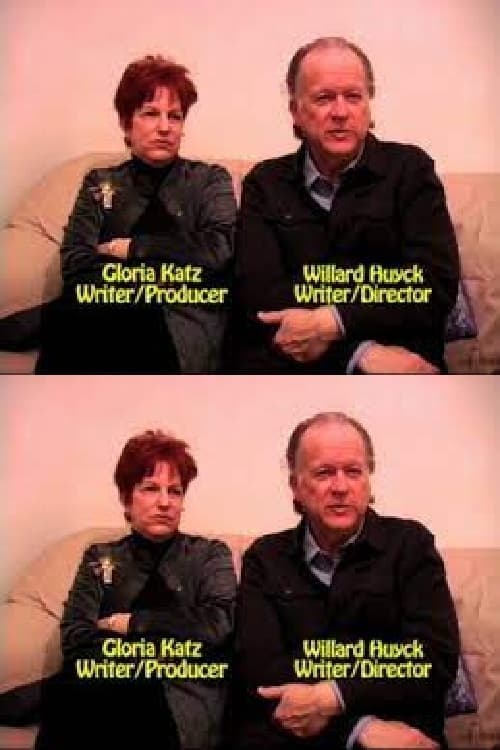
Documentary on the making of "Messiah of Evil," the surreal horror cult classic written by Willard Huyck and Gloria Katz, directed by Willard Huyck. Includes interviews with Huyck and Katz as well as cinematographer Stephen M. Katz, editor Billy Weber, co-editor and actor Morgan Fisher.

Remembering Messiah of Evil

2009
Dorothy and Alan at Norma Place
N/A

In 1963, living a routine life on Norma Place in Los Angeles, recluse writer Dorothy Parker and bisexual husband Alan Campbell recall their often-rocky relationship, started thirty years earlier.

Dorothy and Alan at Norma Place

1982
Projection Instructions
N/A

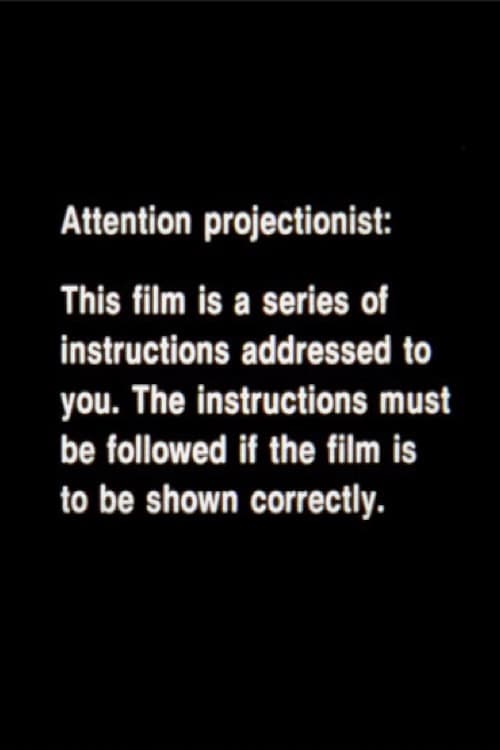
Regrettably, the labour of projectionists is usually only considered by the audience when they ‘screw up’. This film offers an alternative opportunity. Preserved by the Academy Film Archive in 2014.

Projection Instructions

1976
Standard Gauge
6.3

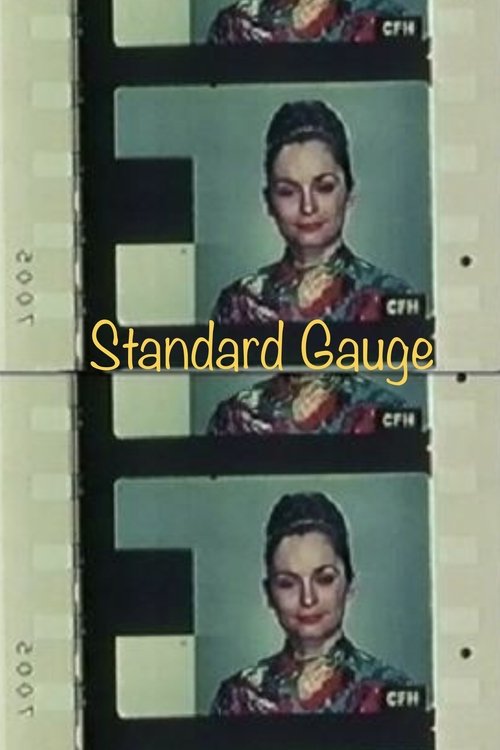
Standard Gauge is an autobiographical film that examines Morgan Fisher’s work as an editor in the film industry. The film goes through scraps of rejected material along with commentary on the meaning of all the scrapped images. This film is an account and critique of the processes of meaning within film production through an examination of both materialism and the institution of film itself.

Standard Gauge

1986
Eadweard Muybridge, Zoopraxographer
7.2

Thom Andersen's hour-long documentary adroitly combines biography, history, film theory, and philosophical reflection. Muybridge's photographic studies of animal locomotion in the 1870s were a major forerunner of movies; even more interesting are his subsequent studies of diverse people, photographed against neutral backgrounds.

Eadweard Muybridge, Zoopraxographer

1975
The Wilkinson Household Fire Alarm
N/A

Morgan Fisher has long explored the space that segregates art cinema from industrial movie making. The one-minute-thirty-second-long Wilkinson Household Fire Alarm, an eye-blink homage to Marcel Duchamp, is more obviously engaged with conceptualism than with studio manufacturing. What you see is what you hear.

The Wilkinson Household Fire Alarm

1973
No image
N/A

Red Boxing Gloves / Orange Kitchen Gloves was shot in 1980 in Polavision, an instant movie format that the videocassette made obsolete. The work is in the form of a pendant pair, a convention that arose in seventeenth-century Holland. The pendant pair consists of two paintings with subjects that are complements of each other. In the classic case one painting shows a husband and the other his wife. Together the two figures make a larger whole. The two pairs of gloves express this same relation in figurative if conventional terms. A few years ago I transferred the films to DVDs; far simpler to show them in that form than as films.

Red Boxing Gloves / Orange Kitchen Gloves

1980
No image
N/A

A static close-up of a clock. Preserved by the Academy Film Archive in 2007.

Phi Phenomenon

1968
Color Balance
N/A

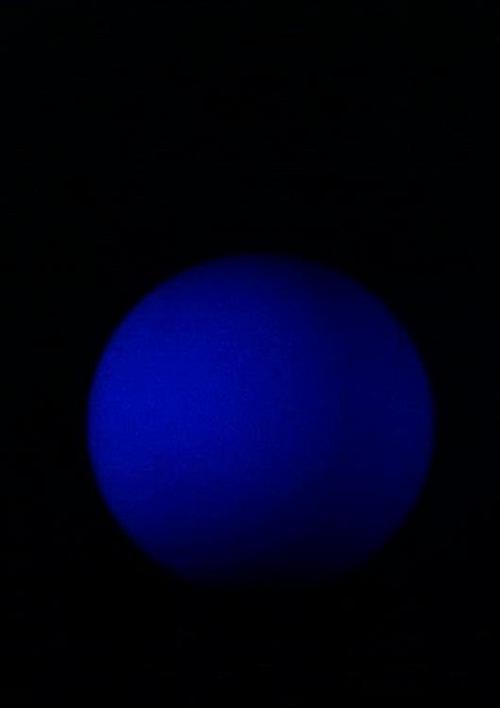
A 1980 video art piece by American artist Morgan Fisher, a multi-projection work featuring floating spheres of different colors (green, red, blue) projected simultaneously.

Color Balance

1980
No image
N/A

Experimental short shot on reel to reel video tape and preserved by the Academy Film Archive in 2008.

Turning Over

1975
Protective Coloration
N/A

Protective Coloration shows Fisher seated at a mottled table. He wears short-sleeved hospital garb, surgical green ‘scrubs’. Nose-clips block his nostrils while a mouth-guard that looks like fake lips covers his mouth. Over the course of 11 minutes he masks his face and covers his hands with bright gear in colours that accumulate to resemble those of the standard reference chart: he puts on orange eye-caps, then a yellow bathing cap; covering his nose and mouth and the gear already there, he dons a black gas mask; a silky black sleeping mask voids his already covered eyes, a cyan blue bathing cap caps the yellow; yellow rubber gloves snap on his hands and forearms; puts on cyan eye goggles, then struggles with yet another bathing cap, hazmat orange, over the other two. A silvery transparent shower cap tops the caps, itself topped by a plastic green helmet. Finally heavy-duty magenta gloves hide most of the yellow rubber. Preserved by the Academy Film Archive in 2008.

Protective Coloration

1979
No image
N/A

In a static medium shot a narrator seated at a table delivers an explanation of the combinations and permutations which the sound and picture elements of the conventional monochromatic sound motion picture afford, as the film itself undergoes them.

Picture and Sound Rushes

1973
Releasing Human Energies
N/A

“A film about control. A refinement of energy for purposes of conserving resources, materials, impetus, potential, so they might all be narrowly channeled toward an unquestioned goal of maximum profit with minimum waste. Capitalism, in this example, as a process of understanding how to make use of someone as efficiently as possible to get the most out of them that is desired. Instructions for keeping people on task.” –Mark Toscano

Releasing Human Energies

2012
No image
4.7

As its title indicates, the subject in Production Stills is a series of production stills of a film that was never made, and that at the same time is the film we are watching. A perfectly enclosed narrative of its own production: the image is one long take (11 minutes) of a wall on which a hand sequentially pins a number of Polaroids, one after the other. The Polaroids depict the crew making the film; the synchronous sound allows us to hear in ‘real time’, their chatter and the hum of the still camera, so that we can anticipate the photos and assign faces to the voices we hear. - Artefact Festival

Production Stills

1970
Another Movie
N/A

No description available.

Another Movie

2018
No image
6.2

P. Adams Sitney, Professor of Visual Art at Princeton University, wrote a short essay for Artforum International "Medium Shots: the films of Morgan Fisher" in which he describes the film "()." "Fisher's most recent film, (), succeeds astonishingly where Frampton's parallel effort, Hapax Legomena: Remote Control (1972) failed; it uses aleatory methods to release the narrative unconscious of a set of randomly selected films. () is made up entirely of "inserts" from feature films organized according to Oulipian principles. Inserts were usually shot by assistants when star actors, large crews, or expensive sets were not needed. These include details of weapons, wounds, letters, signs, tombstones, machinery, games of chance, timepieces, money, and even intimate caresses.

()

2003
No image
N/A

Naturalness willfully corrupted by inevitable self-consciousness, unwittingly corrupted by unavoidable naturalness, a role played with incredible nuance and complexity by Maurine Connor. Preserved by the Academy Film Archive in 2007.

Documentary Footage

1968
On the Marriage Broker Joke as Cited by Sigmund Freud in Wit and Its Relation to the Unconscious, or Can the Avant-Garde Artist Be Wholed?
5.1

“Freud established that jokes were structurally akin to dreams in their use of condensation, displacement, representation by opposites, punning and ‘nonsense’. All of these strategies are much in evidence in (Land’s) marvelously duplicitous ON THE MARRIAGE BROKER JOKE… [...] so clever and original a filmmaker as to make most others – not to mention his critics – seem flat-footed by comparison. ON THE MARRIAGE BROKER JOKE harks back to Bunuel’s early work. Not only is it structured like a dream and filled with sexual imagery, but like Un Chien Andalou, it smacks of being an insider’s joke played upon the avant-garde. Where Bunuel used the insights of psychoanalysis to satirize Christianity, Land– with an almost equal perversity – reverses the process and uses Christianity to send up Freud.” – J. Hoberman, American Film

On the Marriage Broker Joke as Cited by Sigmund Freud in Wit and Its Relation to the Unconscious, or Can the Avant-Garde Artist Be Wholed?

1977
No image
N/A

An actor and director screen a film and comment on it.

The Director and His Actor Look at Footage Showing Preparations for an Unmade Film (2)

1968